Even Stranger Music

Ever since my early programming days, I’ve had music playing to help focus my mind.  I often used classical music, but things have waxed and waned over the years.  I still often have earbuds at work.

I’m a fan of Blade Runner.  I often request Final Countdown (Europe) at weddings.  I clearly have a strong reaction to synth music, preferably without any vocals.  The music birthed in the 80s just seems to click.

Both seasons of Stranger Things really hit that cord for me, and I suspect others.  Even the title sequence has a solid track aligned with it.  Enough to recognize it anywhere.

This isn’t to say the rest of the soundtrack isn’t good, but it’s less ambiance building, and more event driven (like the music at the Snow Ball dance).  Playing the Police – Every Breath You take – has a specific meaning to the lyrics and theme, while the instrumental pieces are more for emotions.

Example.  Hans Zimmer.  If you’re a gamer and have watched game recaps on say YouTube, there are very strong odds that you’ve heard his music.  He isn’t pure synth, but there’s a very strong push for it in nearly all of his music.

Enter Spotify.

That is a rat’s nest of lost time and adventures.  I’m sure I’ve lost months of time to Wikipedia – and Spotify is moving on up.  I search for a soundtrack, find something like Blade Runner 2049, or Interstellar… then it suggests similar artists.  Pertubator.  Wave Shaper.  Lazerhawk. Dynatron.  Dozens upon dozens.  Some are good, some are bad, some are great.

I’m going down the rabbit hole.  Don’t bother checking on me.

Stranger Things – Season 2

Finished it late last night.  Thoughts included.  Slight spoilers.

  • Bob (Sean Astin) is really an interesting character.  I think he’s the dad most geeks would have wanted.  There’s a particular scene that is 80s horror trope, and you see it a mile away, and it really drives home the theme of this season.
  • Joyce and Hopper seems forced.  Joyce finally moves away from hysterical to driven, and goes deep into mom-mode.
  • Hopper spends an entire episode making horrible decisions.  Narratively required, but not justified.  There were other methods to reach the same end point, this was a poor writing decision.
  • Jonathan, Nancy, and Steve triangle doesn’t work as well as it should.  Jonathan and Nancy clearly have better chemistry.  It’s forced and corny, but you can see it underneath.
  • Nancy provides too much exposition and little character growth.  Until the last 5 minutes of the series.  Seems a tad wasted.
  • Jonathan does a serviceable job and surrogate dad, big brother.  He moves further away from self-doubt.
  • Steve.  My man.  If they made a series just about Steve, I’d watch it.  He is the star of every scene, and continues to bring a level of realism/grounding to the surreal events.  His character arc is just amazing, coming to terms with the mortality of his fame, his role in the big picture, his openness with Dustin.
  • Dustin has highs and lows.  There’s some good growth here, and he’s that trash talking kid everyone got along with.  His buddy comedy with Steve is the backbone of the tail of the season.
  • Luke is great.  The rage he felt in the former is replaced with trying to protect people in the second.  His relationship with Max is believable, full of the same hurdles all teens go through.
  • Max is interesting but takes a bit too long to develop, then just seems to stall.  Everyone seems to have a role, but hers goes away too quickly.
  • Billy is something else.  Our version of the upside down monster.  There’s just enough there to realize that he has his own demons, and that he’s riding a knife’s edge to keep sane.  Borderline psychopath.  Some solid potential.
  • Mike.  He’s there at the start and there at the end.  More of a lost puppy than anything of real value.  He’s the heart of it all, certainly, but that’s about it.  His dislike for Max seems forced… he’s a team leader but rarely acts like it.
  • Will.  I won’t spoil it but he needs a character arc that makes sense for the next season.  He’s only there for exposition and story purposes.  Well, minus the first 3 episodes, where there’s potential.
  • The supporting cast is top notch.  Paul Reiser goes against type and delivers.  Kali (8) hits the right note for someone who had to grow up alone and is full of anger.  Her posse isn’t too bright, minus Funshine (Kai Greene).
  • Eleven has 2 solid episodes of growth.  The 2nd one feels forced, and teaches her the difference between killing and being a killer.  Her relationship with Hopper works, from her perspective at least.  She’s a bit too much the “golden gun” for the overall arc, as most of the other characters provide minimal value (‘cept Steve, that boss!)

The overall horror arc has bits that work, others that don’t.  The start is more John Hughes, and the middle gets into Steven King land.  Overall, I’m certainly satisfied but it does less than the first season.  The main issue is that we know 6 of the main characters in many situations (Mike, Dustin, Luke, Eleven, Nancy and Steve), and how they act here isn’t exactly new… and when they don’t stay in character it’s jarring.

It is still binge-worthy. It still makes you want to see what comes next.  It’s still one of the better series that we have available.  And any series that has a Mindflayer as a main villain, I’m in.

Blizzcon & WoW

Meh.  I wasn’t expecting much and that’s pretty much what I got out of it.

WoW launched at this time in 2004.  I played, at least when the servers were stable.  I raided enough, stopped at AQ.  I truly question people’s sanity who think fondly of those days – at least from a game mechanics perspective.  Grinding past level 20, farming materials (tubers!), resist gear, prime rotations, farming tranq shot, running into whelps…looking back you get to realize how far the game has come in 14 years.

I have enough trouble emulating a WinXP or a DOS game today, I can’t fathom how much trouble that would be for an MMO that dates to back then.  I do understand the allure of progression servers, to take that entire trip once again.  I do not understand time locked servers.  But if there are people willing to pay, you can be sure someone is going to find a way to make it work.


Even the expansion seems to backtrack on expansion progress over the years.  Mechanically getting rid of the artifacts is a good step.  Level scaling across the board is good.  Lots of dungeons, open groups, all good things.  Ignoring the story, it looks like it can work. It’s the first expansion where I am I not curious, in the least bit.  Borderline apathy I guess.

I’m sure that some folks were quite pleased with what came out over the weekend.  The general theme though appears to be somewhat neutral, if a bit negative.  Maybe it’s due to the lack of a content drought?  Or maybe that there are just too many options on the table today, and people’s time is just not as available as it once was. Curious thoughts.

I am disappointed in the lack of Diablo news.  D4 could be something neat.  After having played a lot of Path of Exile (awesome), Grim Dawn (recent expansion), the loss of Runic (for Torchlight), and Marvel Heroes seeming to go dark… we could use a decent ARPG.

Big Missions

I’ve been relatively spoiled in this front, mostly due to RPGs.  Seems forever that there have been very large missions or boss fights in RPG games.  And I don’t just mean damage sponges… but real tactical bosses.  They really are more like puzzles than they are endurance bouts.  MMOs took this up a notch, though the detriment to that is that everything that isn’t a boss is considered “trash”.

As I play more of Warframe I am noticing that delineation of mission types, and events.  There are certainly “bosses” but not so much in the context we are used to.  They are damage sponges, with some light tactical elements.  The real challenge and rush comes from either defense or survival missions.

Defense missions have you protecting an object over multiple waves of enemies.  The object is usually assailable by many fronts.  Every 5 waves you get a bonus, and those bonuses follow a specific reward framework – A, A, B, C.  This means that after 20 waves, you’ve had access to all the loot tables.  It also means that there’s a “softcap” on how long people will run a mission.

Survival missions are more like horde missions in FPS games – non-stop enemy spawns.  You are continuously losing “mission health” that can be boosted by certain enemy drops, or clicking on spawning items that show up every 60s or so.  Rewards are provided at 5 minute intervals, again with the A, A, B, C reward structure.  Getting to 10 minutes can be a challenge, getting to 20 minutes requires serious firepower.

It’s not to say that other missions aren’t fun, they are.  But they are too focused on a specific activity, rather than just playing.  Spy missions have you go through a trap filled room based on a timer – fun the first time, not the 10th.  Interception has you defend 4 capture points, impossible solo, hard with a duo – and a bit too much like defense missions.  Again, the directed missions are fun, but not as the core.

This is ignoring Nightmare missions (harder, with special conditions like no shields or exploding bad guys), Sorties (like raids), or the recent Plains expansion.  I’ll get there one day.

The more I play, the more I realize that the Big Missions are not the ones with a focus, they are based on the structure and events that I make myself.  The “trash” of other games is the actual fun part.  It’s an interesting twist.

Stranger Things – Mobile

Link off first

I like Stranger Things.  I think the 80s are a great setting of tropes and set the standard for a lot of the media/art we see today.  The 90s were nihilistic, the 00s were new discovery, but the 80s… they seemed self-aware.

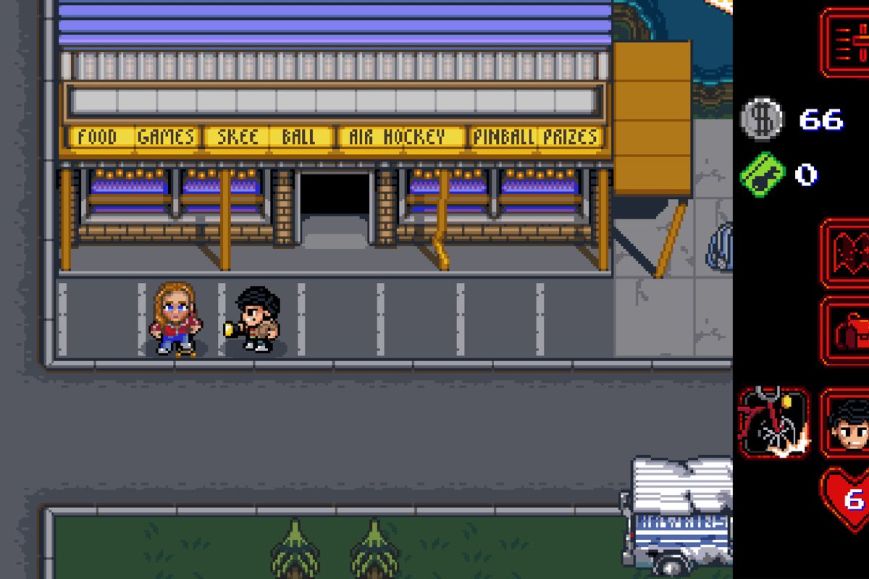
Fancy enough, there’s a mobile game out for Stranger Things.  Free.  No in-app purchases.  It’s a call back to 80s exploration games.  Midi-sound track and all.

91qwqqffhhl-0

It’s not a terribly long game, maybe a few hours. But it has a lot of collectibles, pretty much everything from the series, but isn’t really beholden to the series storyline.

In all honesty, I am overly surprised at the sheer quality of this game.  No news about it until the release showed up, no glitches that I’ve found, no crashes.  Just smooth 80s gaming.  Extremely easy to pick up and play too.  The overall challenge is simple enough for all but the library (act 5) and some of the collectible puzzle.  The upside-down world puzzles are more Sokoban than anything else.

I cleared the main story, now I’m onto the collectibles.  I find myself smiling a lot while it’s up.  It scratches just the right itch.

Deadlines

Interesting word, that.  The line after which things die, which is of course hyperbole.  Of all the times the word deadline is uttered, it rarely ends up being fatal. Might be out of a job, or lose a house, or some other very negative thing, but most of the time it’s just fake pressure.

That’s not to say that the deadline itself isn’t important.  If it wasn’t, or if people we’re serious about it, no one would care.  There absolutely has to be some accountability for it, as there is always a cause.  Poor planning, poor finances, poor resources, unforeseen issues.  Someone, somewhere, has to manage those dates.   Then you need to manage expectations from your bosses about moving dates faster, or damage control if they slip.  Fun times.

All that to say that the project I’m running now has multiple dependencies outside of my control.  Outside of my boss, and his boss’ control.  There’s certainly some pressure, with daily updates to the VP, weekly to the president.  It’s a fun balancing act of keeping the staff shielded from that, allowing them to do the work they do best, and somehow keep the bosses happy with progress.  Or at least explain why there are delays in such a fashion that they a) believe you and b) accept it.

There are days where I feel more like the meat in a sandwich, little to show for the day’s work.  There are other days where there are large breakthrough, acceleration on activities that were planned to take much longer.  Others where the opposite occurs and a key dependency indicates that they haven’t actually done any of the work yet and don’t know when it will be done.  I certainly try to focus on those good days, because people need some sort of hope of the end of a project.  I try to find ways to mitigate those dependencies, maybe have some sort of interim solution in place instead, isolating that group.

End result is that long-term relationships get built, destroyed, and re-built over a project.  I am not one to throw someone under the bus, and sometimes tough calls have to be made.  We each go home at the end of the day, and we’re not exactly curing cancer.  The real end goal here is reputation and trust.  Saying you’ll do something by a certain date and keeping track of that date.  When a date slips and people know about it, people are working to correct it, then that builds some level of trust.  The opposite behavior degrades trust and makes conversations much more difficult in the future.  No one ever goes it alone, and it’s important to know past behavior will influence future.

Still a few months to go before the major delivery is done.  Quite a few good contacts and relationships made over the duration so far.  Some… maybe not so good.

By the end of this project, I expect a few news articles at the start of the new year, a lot of personal and professional growth, a team that has achieved more than they originally thought possible, and a big shift in the way our organization works on a daily basis.  And then a month-long vacation.

All if we can meet our deadlines.

Many a Road

I don’t exactly have rose-colored glasses for old gaming memories.  Early MMOs had some positives certainly, but they also has some horrendous mechanics.  UO was my first kick and regardless of what people the shard split, it was needed.  EQ provided a “safer” space in true 3d, but it came with a massive grind and hard requirement to group.  WoW took all of that, got rid of everything people complained about (and hired EQ guild leaders) and presented an “optimized” gaming experience that pretty much everyone could get into.  Optimization unfortunately brought simplification of some systems.

I personally like the concept of multi-tiered crafting.  This makes all items relevant in the crafting process.  UO started with this, where that ingot at the start of the game is still relevant at the end.  EvE does this too.  There are multiple ways to find these “ingots”.  It isn’t just one location, and one method.  Find them with miners, find them on enemies, trade them, NPCs trades.  There are some rare materials, or rather less common, but they follow the same thought process.

Warframe follows this as well.  Of the dozens (and dozens) of missions, there’s a lot of cross-over of materials.  Some missions are better at some sources, and some areas require a bit more work.  The end result is that no matter what you’re doing, it’s rewarding and (somewhat) relevant.  It also means that as much as you have vertical progress (levels) you have horizontal progress (options) at the same time, rather than closing off content.

This is a flipside compared to the modern “ubisoft sandbox” model.  All the icons are things to do, but once you do, then there’s no real reason to go back.

The system isn’t perfect but it does work.  Keeping all the content relevant for longer periods of time is a smart investment of resources.  Also means that players have a lot more options to play through as the product keeps evolving. Choice is good.


Warframe – Hand Holding

Warframe’s greatest strength is also a weakness.  There’s a theory on the paralysis of choice.  Like when you need to buy toothpaste and there are 60 different kinds.  Why?  Sandbox/open world games really suffer from this (or excel).  Minecraft has zero goals, so the fun you have is the fun you make.

Warframe has so many things to do and see, and each one seems to impact another, that it’s a fine mess.  Expected in a 4 year old game, but after years of WoW (and clones) that completely isolate one activity from another, it’s jarring.  I’ll give a rather lax example.

There gate on Mars (to reach Phobos) requires 3 things.

  1. Kill 150 enemies in 1 mission on Mars
  2. Open 3 Lith Void relics
  3. Scan 3 Cephalon fragments

The tasks seem fairly clear, SMART even (dammit).  All non-endless missions have about 100 enemies.  Endless missions have continuous waves of enemies attack you, increasing in level over time.  Mars has 1 of these missions (defense).  If you play in a group, then you won’t get 100% of the kills, so you have to solo it.  I was able to get it just by the 10th wave (you can leave every 5 waves).  Ok, not too bad.

Opening Lith Void relics requires you to a) have Lith Void relics and b) have Fissure missions. I have not found a practical way to “farm” for a), it just seems to happen randomly.  For b) there are one or two available most of the time.  I should have mentioned c), understanding that this system even exists and how it works.

Finally, the Cephalon fragments.  You need to a) know what the hell these things are and b) find them.  I could not find any reference in game to what these were.  I could not see them on any map.  I went wiki-hunting.  Sure enough, here they are.
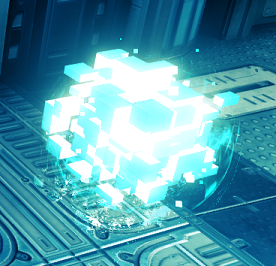
Ok, now I know what they look like.  It also seems that for b) one randomly spawns in every regular map.  I have played 4 planets, dozens of missions, maxed out a few things.  Never saw a single one.  I’m not saying they are hidden, but they are not on the “main path” of a level.  I tried actively finding them, running some short/easy missions.  No luck.  Most people who have issues, recommend getting a Thief’s Wit mod, so that you can see them on the radar.  That’s another post.  Anyhow, I’m currently at this phase.

Objectives

Each mission has a goal (or goals).  There’s a yellow (do something), red (kill something) or green icon (exit the map) on the screen (radar and actually play screen) that shows where to go.  Without this, it would be impossible to navigate the maps, as there are many branching paths.  Heck, I get lost even with those icons.  But they do a great job of telling you “go here”.  Simple, effective.

The meta objectives though, ouch.  Where to find items to craft.  What an item actually does.  What is on what planet.  What the terms mean.  What the next goal is.  How to actually attack a boss!

This may sound like a complaint, but in reality it is just a comment.  5-6 years ago, when we didn’t have Wikia, this would mean hours pouring over game forums.  Nowdays, people have ideas and they post it out of the game.  The developer can focus on developing rather than training the user base, letting them discover as you go.  For the most part, that discovery works.  It isn’t being thrown in the deep end, you learn gradually.  The irksome part is when you reach a hard wall, where there are no hints.  Where you’re given puzzle pieces without the large image to reference.  What’s the next step after this one?

After years of hand holding in some many other games, it’s both frustrating and refreshing to have to actually learn again.


Warframe – Part Deux

A bit more time, a bit more information!  I will go over some high level points first.

  • Aside from a few trading hubs, and the clan hall (dojo) everything is instanced.  Think D3, or Neverwinter dungeons.
  • Chat in combat is not really viable.  Voice is the way to go.  Expected in any FPS really.  General chat is a mess (as in every game).
  • From what I can tell, nearly everything is free in this game, minus customization (icons, colors, skins).  There is a LOT of free customization, but the bigger ones have a cost.
  • Acquiring new items is time gated.  Hours up to 3 days.  Can spend money to speed it up.
  • There are two ways to progress.  Item levels, and character levels (mastery).
  • There are many items.  Warframes (classes), ranged, melee, small fire weapons.  It’s actually hard to keep track of it all.  Each can level up to 30.
  • Each item can be modified with Mods.  The level of the item determines how many and how strong the mods are.  Mods impact pretty much everything you can think of – speed, damage, crit, health, elemental attacks…it is very complex.  Adding and removing mods is free.
  • Mastery has a cap of 29.  It is raised by getting more level 30 items (and some small mini-quests along the way).  It opens up more of the game, and capacity.  It also gates progress as some items have minimum mastery levels.
  • Mods are life.  You can upgrade them.  You can mix them.  You can make a speedy crit master, or a super tank.  Some enemies are resistant to X, others are not.  You need to make conscious decisions before heading to missions.
  • There is no progress under regular MMO terms.  Assuming you have access to all the level 30 Warframes, each Warframe has a specific use for a specific mission type.  Each weapon is the same.
  • I have played FPS before.  This is not a ranged FPS.  The rooms are generally tight, enemies run up and there is a lot of opportunity for melee.  The parkour movement makes defense more about not getting hit/always be moving, rather than soaking damage.
  • The actual controls are ok.  It takes a few hours to get used to the rather insane speed and to get your eyes used to what is around you.
  • The art-style works for me.  Mileage will vary.
  • There is actual lore, though mostly gated through quests.  You can scan everything and their mom to build an information log though (and there’s a faction for this too).
  • Factions (syndicates) are present, with reputation gains.  Aligning with one may impact another.  Poor rep causes hit squads to come after you.  It’s like Vanilla WoW factions more than factions as we see them today.  There’s a choice to be made. Yay!
  • There are bosses to farm.  Bosses are quite different.
  • Each planet has 10-12 missions to complete.  Leaving a planet requires achievement based goals.  e.g. kill 150 enemies in 1 mission, kill a boss, scan 3 statues.  You can’t just skip to the last planet.  There are good and bad aspects to this.  It does prohibit catch up work, but item and Mastery levels are the true gates.
  • The Archwing is not good.  It’s a 3d space sim shooter.  It is bad for 2 reasons.  First, it’s in 3rd person, which means you can’t see half the screen.  3rd person is designed for forward, one axis movement.  Second, the radar/map is not built for 3d combat, so it doesn’t show anything.  You end up getting attacked from all sides, with no notice, and no ability to see them.  Thankfully, this thing is not critical for game progression.
  • There are a dozen mission types, then variants of those mission types.  Assassination, decryption, tower control, rescue, wave defense… all but tower control can be soloed.  Variants adds different enemy types, objective modifications and higher rewards.
  • Default LFG for every mission, for up to 4 people.  You get a bonus to everything in a group.  It is a great way to experience the game.  Solo if required for some specific objectives.
  • Tutorials are not good and do not do justice to what’s in the game.  You learn by playing and asking questions.
  • The combat, art, and mechanics are polished.  Way more than I had ever expected.  This thing runs super smooth and responsive.

High level…. yeah right.


The important thing to remember is that there is always something to progress towards, always something to do.  It’s as if you mixed an FPS with an action RPG.  Think Hellgate for those that played it (I did).  The lack of focus or general direction can make it challenging for some people, but if you like settings your own path, this scratches a bit of that itch.

I hit Mastery 3.  I’ve yet to max any item or warframe.  I have a pet that shoots ice beams.  I shoot fire bullets.  I spin through the air like a dancer, and land with a giant axe.

I am having a lot of fun doing it.


Sleep is Underrated

Lots of work, crazy deadlines, busy family, and then a chest cold.  Makes for a great weekend of flop sweats and 12+ hours of sleep a day, still feeling exhausted to start the week.  Good news is that there’s light at the end of the tunnel.  It feels entirely achievable.  Plus, the VP here sees the work being done and the need for additional resources/structure.  That bodes well long-term.

My eldest had 2 hockey games this weekend.  On her team, 11 other girls are first-time players, so the understanding of the game just isn’t there yet.  They lost Saturday 10-0 on  team that had that understanding, and won 3-1 on Sunday when you could see it start clicking.  I spent some time watching a men’s league game on the other ice pad, folks mostly in their 40s-50s.  They were smart hockey players.

I played about 12 years when I was a kid, but I’ve been back on the ice for another 12 since.  All of that pretty much competitive play.  The skill is less important than the thinking now.  We have a few skaters on one team where even though they are young, they just don’t have that mind-set.  Great skill and effort, but that 6th sense just isn’t there.  Work smarter – not harder.

Full circle a bit then.  Work is in the same bucket.  I’ve had enough crazy deadlines and projects to have a decent sense of what is actually important and what is noise.  I know some members of my team are concerned at my lack of attention on some things, and deadly focus on others.  It’s a practical thing.  Tough calls are needed, and there’s only so much good will to go around.  It’s difficult, but sometimes you need to let those spinning plates fall to the ground.

Warframe

I read Isey’s comment on my last post and want to extract the gibberish.

When I found that I had Liths via the codex (bur no clue what to do with them) eventually I noticed the prompt on the NAV screen, found the mission, jumped in with others, and got my 10 reactants to unlock.

This reminds me of 90% of Wilhelm’s EVE posts.  I couldn’t make heads or tails of it.  Then I played a bit more and unlocked Venus (the 2nd planet in the unlock chain).

Ok, that sentence makes more sense now.  Liths are lockboxes that can only be completed by doing a certain mission (Void Fissures). In those missions, enemies sometimes drop “reactant”, and after 10 pickups and a successful mission, you get to open the Lith.  These missions are not terribly common (at least at the start) and the one I did was quite difficult.  Next topic.

I don’t understand what the levels mean on missions.  I have a level 11 Warframe (the class, Excalibur, good with swords).  I have a level 12 Braton (automatic rifle).  There are some mods on each to augment certain things.  The Warframe has + health and + shields.  the rifle has a flat + 40% damage.  Taking on a level 5-8 mission is a challenge.  Not so much that I am very worried about kicking the bucket, but more so that enemies are bullet sponges and I need to pay a lot of attention to ammo levels.  No ammo – little damage.

There are missions on my map.  I complete them to unlock more nodes on the map for more missions.  I am not seeing any power curve (or rather it appears logarithmic) and future goals are not all that clear.  Some missions are 5 minutes, others are 20.  Wave defense is fun.  Spy missions are not.  Overall, the feedback loop is good so far.  But I’m thinking I need some viable measure of progress in the next 4-5 hours to keep me going.  Using the same class, same skills, same gun for 10 hours…there’s a limit.