Steam Deck + EGS

One of the most interesting features of the Epic Games Store (EGS) is the weekly free game. During the holidays, it was a game a day – I hope you picked up Marvel’s Guardians of the Galaxy! EGS has a slew of different games than Steam, which has it’s own pros and cons. Ubisoft has first pick with EGS, and Alan Wake 2 is only found there. If you have a PC, no real big deal here running 2 different storefronts.

And yet, EGS does have some rather glaring issues. I won’t get into the overall maturity of the storefront, it’s clear that Steam has years and years of experience here. I don’t mean trading cards here, I mean just basic configuration options. I use a Dual Sense controller on PC, that simply will not work with EGS, so I “sideload” EGS through Steam and it works better.

Now, I’ve been signing praises of the Steam Deck for nearly a year. Any pick up and go game plays wonderfully on the Deck, Metroidvanias absolutely shine. Some games, where you truly want an immersive experience are better on the PC (Alan Wake 2 is a great example), but you’d truly be surprised as how awesome the experience truly is. Given Steam’s bajillion title library, this generally works.

Where stuff gets LESS fun is when you’re integrating into something that isn’t on Steam. EGS is the main culprit here, as other launchers generally don’t do well with handheld gaming (GOG, ActiBlizz and so on). You need to figure out how to get EGS into the Deck, then ensure the games themselves can be played with a different overlay. There are dozens of ways to get there, and they all boil down to sideloading launchers. Some are insanely complicated, others a bit easier to get through. You can try this integrated tool that integrates it all fairly well: https://github.com/moraroy/NonSteamLaunchers-On-Steam-Deck/releases

  • Steam Desktop mode (hold the power button for 5 seconds)
  • Download a browser (I used Firefox), click the above link, download the first asset
  • Look in downloaded items, execute the file
  • Select the launcher you want to use, watch it download. 
  • Load the launcher while still in desktop mode to finalize some configs, such as logon
  • Once it’s working, go back to handheld mode

And that’s pretty much it. You just load the launcher from the Steam interface and everything works. Well, sort of. Anything that has a dual launcher (like Ubisoft Connect, loaded through EGS, loaded through Steam) is going to be more painful to navigate through, but it will still work. And loading it through this convoluted way should ensure that cloud-based saves also work.

This is one of the few parts that the Nintendo Switch ecosystem does a great job at managing. Everything just plain works. But, if you want access to pretty much any PC game in the last 20 years, and play on the go, the Steam Deck is without hesitation, the best way to get there.

Steam Deck

I’ve played a ton of my Switch, with a significant portion of time spent in Mario Party and Mario Kart. The thing just works, which is supremely enjoyable. That said, there are some issues with the Switch. First is just performance in general, as the technology inside dates from 2017. This is normal for Nintendo, as none of their consoles have ever been horsepower machines. Offset by game quality, right?

Second, is the actual game library. 1st party games are light’s out (Mario+Rabbids is great!), but also quite expensive. The general lack of any sales, especially for games that are 5 years old, hurts my brain. 3rd party games are almost always available on PC, and for a fraction of the price. Further, I have zero interest in paying for a subscription to access a game library of 25 year old games… a library I’ve had on hand for quite some time.

Third is the walled garden. If you’re a console fan, then this doesn’t make much sense. If you’re on PC, then you likely understand why this matters. Being able to configure your gaming environment with a slew of options allows you to play almost any electronic game, in the way that suits your needs. Want 4k at 60fps? Do it. Want a customized controller? Done. Want to stream music in the background while playing? Ok.

I’ve been looking at a Steam Deck for some time, or at least the concept of a portable PC form factor. I already have a gaming laptop (MSI Raider GE), which is an awesome rig. While I enjoy the workstation that the laptop provides, the use of the Switch has convinced me that there are better ways. Frankly, this is why consoles are still sold… couch & co-op gaming on a big arse TV is legit fun. PC gaming rarely affords this flexibility, and there’s an intersect that’s been sorely missing.

Take the Plunge

The Decks went on sale (10% is a sale, right?) and I opted to pick one up after sitting on the fence for a while. I opted for the largest drive, as 1) I can afford it, 2) I don’t want the hassle of swapping/configuring an upgraded drive, and 3) SD cards are “good enough” and cost efficient. Shipping was like 4 days from order to door.

Importantly, the form factor is oddly comfortable. It’s heavier than the Switch, but doesn’t feel a burden. Button layouts are good, a little less ergo than the Switch. The extra back toggles are nice addition, helping with the PC additional controls… and the trackpads are oddly responsive. It’s not the most intuitive layout. granted, but will adapt over time.

The initial setup was simple, and the UI is basically Steam Big Picture mode. Simple is good.

I started with Hades. The initial load was about 30 seconds, but then the game itself ran identical to the PC variant. Visuals are better than the Switch, and the sound doesn’t have that metallic echo. The Deck is louder due to fans running, but that seems to be sporadic. The screen itself is impressive, even with the anti-glare coating. It works perfectly indoors, regardless of lighting angles. I came away from that thinking that this is how Hades is meant to be played.

Compatability

Next up was Final Fantasy 9. I have the series on Steam, collected over the years. SquareEnix ports are generally bad, and the modding community has to rescue them. FF9, in the default state, looks horrible, has annoying bugs, but comes with some QoL boosts. These issues are all addressed by the Moguri mod. I would not recommend playing without it.

The challenge here is that the Deck clearly indicates the FF9 is not compatible. Which is sort of true. The game needs keyboard/mouse inputs at certain times – notably naming characters. If you want to install the Moguri mod (yes, you do), then you need to break down the walled garden. Enter Desktop Mode.

Holding the power button brings up the ability to enter the desktop mode, enabled by a Unix UI. The interface is simple enough, allows web access, more applications, and the desktop interface for Steam. This makes it very simple to download the mod, extract the ZIP, and add it as a non-Steam game. It’s the tip of the iceberg when it comes to customization options… I think it’s rather wild truthfully.

Where things get a bit more complicated is the gaming mode and file explorer. You need to know the folder structure and manually enter it (not navigate), which is not exactly intuitive. Guides are essential, and after a year there are plenty available. Running the mod requires a file path the first time, and once done you simply load FF9 directly and everything is golden.

Moving Forward

I have nearly 200 items in my Steam library. Quite a few would be interesting to explore on the Deck. I am frankly amazed at what I’ve seen so far and more time is needed to figure out all the quirks (battery life is one I want to figure out).

A docking station and controller pairing is something I’ll get sorted out before the summer. Getting any of the Lego games to play on the TV with extra controllers would be a great time with the kids.

I also want to tinker around a bit and see how I can get my Epic games on the Deck. I’ve accrued a fair amount of the “free weekly games” and this is a great opportunity to give it a shot.

Finally, I want to see how this thing works in Airplane mode. Portability means intermittent or lack of network connections. How does that impact the gameplay and integration? I mean, I’ve read the notes and it works, but the details are bit murky to me.

This is just an initial view of the Deck, so it seems all roses right now. Obviously I am going to find some annoyances along the path. So far, this actually seems to be the real deal. Portable PC gaming. Wow.

Twitter 2.0

I’ll preface this that I am not in the personality cult of Musk worshippers. Credit where due, but also accountability. Making inefficient processes efficient, I’m game. Filling in a niche, okie doke. I’m still waiting on solar panels and something other than Jules Verne’s version of tunnels (high speed rail is in every respect a better choice). The whole Twitter debacle is hilarious to me, as this is a man who has not experienced any sort of consequences and is an absolutely amazing grifter (SpaceX subsidies would make you shiver).

He ran his mouth, put in an offer for a company with horrible financials, accepted terrible conditions, and tried to back out. Clearly the lawyers were salivating at the prospect. I get that the folks working at Twitter are worried about job cuts – they will get fired and collect severance and the talent gap for those skills means another job (hybrid no doubt) is an option. The change certainly sucks fierce, but there are much worse situations. So he’s now leading a company with staff that have one foot out the door. Culture issues abound and headhunters are at the friggin’ buffet.

As for the actual mechanics of Twitter, this is even better.

Twitter makes all its money on advertisers, which is funded on two core aspects. First is metrics. There needs to be a lot of accounts and volume of activity. Bots be damned, the pump those numbers! Second is message control. Ain’t no company that wants their ads to show up in the middle of racist tweets or death threats – so content moderation is an eternal struggle.

So if bots are removed, metrics go down, advertisements go down. If content moderation is removed, advertisements go down. So that’s 2 plans that won’t make $$$.

Hmm, so let’s see if the content (you) can become the source of income. The absolutely insane thought of negotiating in public with Stephen King has to rank really high in my list of “shit that I never thought I’d see”. Apparently those who want a blue checkmark will pay $8/m to keep it. Which is such an astoundingly dumb idea as these are the people generating the content advertisers want. Freedom of speech has a monthly fee.

And finally, how can anyone in their right mind think that this person can be the CEO of yet another company and actually accomplish anything? If ever there was evidence that tech CEOs don’t actually provide any value, here’s the perfect use case.

This is Bond-level villain stupidity. And I’ve got my popcorn.

The Netflix Dilemma

In some news circles, it came to note that Netflix lost subscribers for the first time in 10 years, and that their stock value dropped ~20%. In addition, they are looking at cracking down on password sharing (making the plans “household” rather than “family”) and examining a pricing tier supported by ads. These are interesting business aspects of a company that feels obligated to their shareholders to maximize growth and profits.

Streaming has existed since the days of Napster. People wanted content on demand and without commercials. Pirating was simply a necessary hassle to get there. Steam figured this out a long while ago. Netflix read those tea leaves quite well and offered a price-attractive option…

I’m old enough to recall, and have used, Netflix’s mail order system. I was there at the dawn of streaming. The pickings were slim at best, with maybe 4-5 things you’d actually heard of available. Time went on and Netflix dominated the scene with some rather impressive network routing choices to make sure the streaming experience was positive. The catalogue expanded to have more options of both familiar TV favorites and a decent selection of major films. Then they opted to develop their own series (Orange is the New Black), or pick up some stragglers that had niche appeal (Black Mirror). While binge watching was possible before with a DVD set, you could really binge an entire series with a couple clicks.

And then some interesting bits started happening. Series that garnered larger appeal were cancelled within a week of launch, effectively making a season a pilot episode (quick, name me 3 series cancelled on any other streaming service). The user interface simplified the voting process to thumbs up only (a precursor to YouTube’s removal of the downvote I suppose). The prior historical selection was picked up by other streamers – the loss of Friends was very noticeable. New offerings were thinning out, or perhaps becoming more global in appeal. Other streaming services came about and offered objectively great content. Heck, Disney+ was driven almost entirely on the Mandalorian, and The Boys drove a ton of folks to Amazon. The ground shifted subtly over time. Netflix no longer was the only fish in the sea, and the idea of simply gobbling up all the possible content wasn’t really much of a viable strategy.

These changes cost money, and if you’re not able to get more people into the system, then you need to charge existing people more. The average annual price increase has been 5%, over 10 years. It’s still less than $20 a month, which is a fraction of the cost of cable. Yet, it’s also competing for eyeballs and pocket change from a half dozen other streaming services. Which brings us back full circle to the cable days of paying out the nose for the odd chance something good is on.

Netflix is at an interesting crossroad. They are still the pack leader, at least in the global sense. If they veer one way, it gives an easy out for other streamers to follow. Losing subscribers means losing a fair chunk of revenue, let alone shareholder ire. Choices are present to either stem the losses, or find a way to reverse course. Yet Netflix is not operating in the same space they were 10 years ago, or even 5. Netflix doesn’t have a flagship product (Stanger Things may cause a bump, then a drop)… and folks know that they can easily cancel and return if something does show up. They had managed to build a brand loyalty, where consumers had a hope that something new was coming around the corner, or that a series would continue in a little bit if they just stuck around. Years of that was investment has been lost, and I can’t think of any example where that was successfully recovered.

The choice appears to be how best to survive, and nearly all of the options are going to sting.

Gaming Trends

It feels like ages ago, but it was only a year or so where I posited that the largest shift this generation for gaming would be cross-play. That was related to Dauntless, and it’s ability to link any version together. Frankly, there are nothing but benefits to having MORE people play in an online game. We’ve seen some bits of it moving forward – Fortnite, and PUBG do it now, Apex Legends is in beta. Genshin Impact is another big splash. I still think this is like the largest change to all gaming.

With these OS/hardware refreshes underway, fancifully called new consoles, there’s a common ground in that the foundational platforms are the same. No significant architecture changes, just “new” assets. It’s allowing for backwards compatibility for nearly anything currrent-gen, without real issue. It also means that the efforts to make crossplay work in the past are still valid. There’s more in common across platforms than not.

Some thoughts on current trends and where we’ll end up.

Exclusives

Last gen really only saw Sony do this with their 1st party games. Many GOTY candidates were in this basket, and XBOX users were left in the dark. Last of Us, God of War, Horizon, Ghost of Tsushima to name a few. XBOX was meh. Forza, Gears, and Sea of Thieves. This does explain Microsoft’s insane buying spree of late, Bethesda of note.

I’m sure we’ll continue to see exclusives, but only in relation to timed exclusives for say 6-12 months from the Microsoft team. Sony is a question mark, the drive a serious amount of console sales from their software. The trial run with Horizon’s on PC is the likely future, with again a timed exclusive model.

Software as a Service

So this is a buzzword that can be used for so much, but this is more like the PS and XBOX monthly gaming passes. This allows the platforms to have a consistent cash flow in exchange for keeping a useful digital library. This provides a ton of value to gamers who float from game to game, and tons of value to platforms for those who stick with a game for a long duration. It dramatically changes the cash flow for developers, where they are putting in millions of dollars and not getting that $70 one time buy.

Consoles are going to invest in partnerships with developers to get access to their services (EA and Ubisoft in particular) to increase the attractiveness of the service. Again, due to the shared architecture with PS, XBOX, and PC, the library of games just keeps on growing.

Updates and Networking

XBOX is in a decent spot. PS4 is so much better than PS3, but holy moly the amount of system updates preventing you from playing is annoying. Sony has said that this is further improved in the PS5, so time will tell. A big change here is more related to hardware, with SSD drives being so much faster than disk drives, which should dramatically speed up the install times. Game load times will be SUPER fast (Monster Hunter on PS4 takes 90s to load a zone that takes 5s on PC).

Now for games themselves, this is actually going to get much, much worse. We’re going back to the early CD days where you had multiple install disks because the storage media couldn’t handle everything. The XBOX S only has ~350gb and doesn’t have a disk drive. That’s about 6 standard games, but for the very big ones you may end up with only 1 or 2. As much as we have modular storage upgrades, my gut is telling me that industry is going to go the game streaming route instead.

Production Values

Graphically there isn’t much here that hasn’t already been seen on PC. 4K + ray tracing, everywhere. We won’t see 8K (nor can people really afford those TVs). That said, a console today is cheaper than a PC video card.

Voice acting is everywhere today, even in indie games. Musical scores are astoundingly solid and memorable. The mid-days are long dead. I don’t see much progress in this department, other than just a new baseline.

The weird spot here for me is going to be character creations. With all the AI tools we have around us, I’m surprised we don’t have a more mature “replicate this picture” in games.

Game Mechanics

This console run we saw “open world everything” and “rpg every system”, with Ubisoft certainly taking this to the extreme. With better processing power, I’d expect more procedurally generated content that increases replayability. I’d also expect there to be better support for player-generated content. To me it seems strange that things like Minecraft and Dragon Builders, and I guess No Man’s Sky, are not being explored in more depth. Hell, Roblox is a cash cow.

Rogue likes are everywhere, and mobile is covered in the concept of incrementals. We haven’t seen a big budget version of this yet, unless you’re counting FPS games here. We’re due.

Integration into the mobile space is severely lacking. I don’t mean ports to mobile, I mean having a companion program to “games as a service”. There’s an insane amount of money left on the table here, if only in the ability for the companion app to be in the players pocket during all waking hours. It obviously would need to be optional, but since all the consoles support Bluetooth and cloud connections, this shouldn’t be hard to sync up.

I would be ultra surprised if we don’t end up seeing Early Access games on consoles this generation. If there’s a way for a developer to make money on a broken game, damn sure they will do so. There’s a GOOD argument to be made around Fallout76 and Anthem being examples of this behaviour. Maybe EA gets a subscription service instead.

Maybe this is the generation where we see a return to Myst-like games of exploration, using FMV and VR. The PS VR toolset worked well, and Oculus 2’s requirement for permanent big-brother Facebook links is putting a ceiling on adoption. Using a standard framework, this is a great opportunity.

Mobility is weird one. Consoles are not exactly tied down like a desktop, but they aren’t exactly mobile either. Streaming would allow you to play the console from anywhere in your house, or from another location if the network supports it.

PCs

The days where consoles drive gaming progress are long behind us. Their best bet is home entertainment units, and at a stretch, a potential VR interface. PCs will continue to dominate the bleeding edge, and the indie scene is where we will see new game mechanics iterated upon.

I do think PC has some serious hurdles to get over, primarily on the absolute insanity of custom PC builds to play potato-quality games. Or, at a more extreme level, having to modify the core settings of a game (or find a mod) to allow a game to use all the parts in the PC. Driver support alone is bonkers. The future of PCs is in the hardware space. Larger/faster storage options. Smaller components with non-PhD cooling solutions. A continual price reduction on pre-built gaming rigs.

Mobile

Here is where I think the largest change will take place, specifically in the streaming area. Right now, Apple and Google “own” the app delivery method and they take a 30% cut. Game streaming services mean the game never really exists on the device, and all the compute is done remotely. Assuming the network speed is sufficient, you should be able to play pretty much anything through a streaming service.

Ok, an example. Fortnite right now can’t be played on iOS for fun reasons. Imagine Fortnite being deployed as a gaming stream rather than an actual app. This would likely break the Great Firewall of China and a whole slew of other interesting hurdles. Bluetooth controller, USB-C to HDMI, a TV, a streaming service and you have gaming on the go.

Future

Gaming today feels like magic. The audio/visual fidelity is right at the edge of the uncanny valley (RTX is crazy good). They bring more and more people together. The provide long term goals and a sense of continual progression and community. There are options for everyone. To me, the future is going to focus on gaming where you want with who you want. It’s going to be awesome.

Netflix and Commercials

An interesting report came out on the amount of commercial time saved through Netflix.  9 days is a LONG time.

I cut cable nearly 10 years ago and haven’t looked back.  My kids never really saw a commercial until we went on a vacation.  I can still remember them asking why they were stopping the show and how we could skip it.  I can still recall when VHS was viewed as the devil (speeding through commercials) and then TiVo.  How far that has evolved…

Back to the topic… that 9 days of commercials is a major source of income.  That’s money that isn’t being replaced, and I’m frankly impressed that the streaming services haven’t found a way to monetize that.  I mean, I don’t have any need for cable as there’s too much on Netflix (or other free services) than I have time to watch anyways.

My wife being a teacher, and me having some younger folks working for me…it doesn’t look like anyone under 30 actually has a cable plan anymore.  They just stream it, either with a plan or not.  (side note, this is certainly good for personal sanity by not having access to 24/7 news channels).

I’m a bit of the mindset that this is a FOMO issue.  Today’s society isn’t based on having a TV dinner on the couch.  You can watch almost anything at any time.  Live sporting events are the only wrinkle left in this… and the money there is draining faster than expected (*cough*ESPN*cough*).  When you don’t watch something like Game of Thrones, sure you miss out on the water cooler chats.  But then again, you miss out on the water cooler chats.  Fair trade.


Fundamental Physics

Right, so this one has nothing to do with gaming or social stuff.  It’s pure science. Two step background.

Stephen Wolfram is hopefully a familiar name since he’s the brains behind Wolfram Alpha.  Google gets you clicks.  Alpha gets you answers.  He also developed a natural programming language (Wolfram Language) which is not what most programmers are accustomed.  He’s also a trained physicist, with a focus on theory.

Next, physics has two main branches – relativistic and quantum.  The first works well for things we can see with our eyes, the latter with things we can’t see.  We know they are related, but we’re not able to say how.  There’s been work for many years on a unified theory.  It’s been the holy grail if you will, and so far tremendously out of reach.

He recently put up a very long post on progress on reconciling physics using his own toolsets.  I am amazed at both the material and the simplified explanations provided.  Theoretical physics is a different language that only a few people understand.  The explanation provided in his writings is simple enough that someone with a high school education should be able to follow most of it.

The real kicker here is the approach.  He’s starting with a near blank page and applying a single rule to modify a starting point.  Then he repeats that single rule multiple times and checks the results.  He’s found dimensions, gravity, black holes, quantum bits through the patterns.  He hasn’t found the right rule for our 3D space, even after 1000 rules.  He also realizes that simulating our model would need run through 10^500 times.  Some of that can be compressed, some cannot.  That means that there’s still tons of work left to do, but the signs here are just mind blowing.

Does this have a practical impact on day to day life?  Right now, no.  Even if we found the answer today, it wouldn’t impact us for 20 years.  Yet that development would change the foundation of other research, and most likely change the direction of science as we know it.  Quantum Computing was a pipe dream 10 years ago.  It’s here now in the trial stages and still has a while to go, but if it works at scale… holy shit.  A unified theory could finally help us breach the media-based propulsion challenges (e.g. you need fuel and can only go so fast).  It could change communications to be instantaneous across the globe.

Still no definitive answers, but this is the closest I’ve ever seen for a unified theory.  Wowza

Epic Game Store

I’m not on the hype wagon that Epic Game Store (EGS) is a new type of cancer on gaming.  Not surprised at the amount of gatekeeping present in gaming circles, but hey, to each their own.  People fear change, and Steam has been the mainstay of PC gaming for longer than gaming memory.  (Side note, the last “successful” launch of anything Valve related was DOTA 2 in 2013.  Aside from the twice-annual fire sale of  every PC game ever made.)

Does EGS offer everything that Steam does?  Hell no.  Neither does Origin.  Or Arc.  Or Battle.net.  Or the dozens of other storefronts/launchers.  Is EGS coming to take your babies?  Maybe.  Will it activate your webcam and stream you out to Russia?  Certainly.

And exclusives are a problem now?  Remind me how again I can purchase Diablo 3 on Steam?  Or Anthem?  Right.  (There’s an irony on this point that I get to later.)

Does it suck that I have to remember yet another password/id?  Sure.  Just like I have to remember 50 different ones for every website/service.

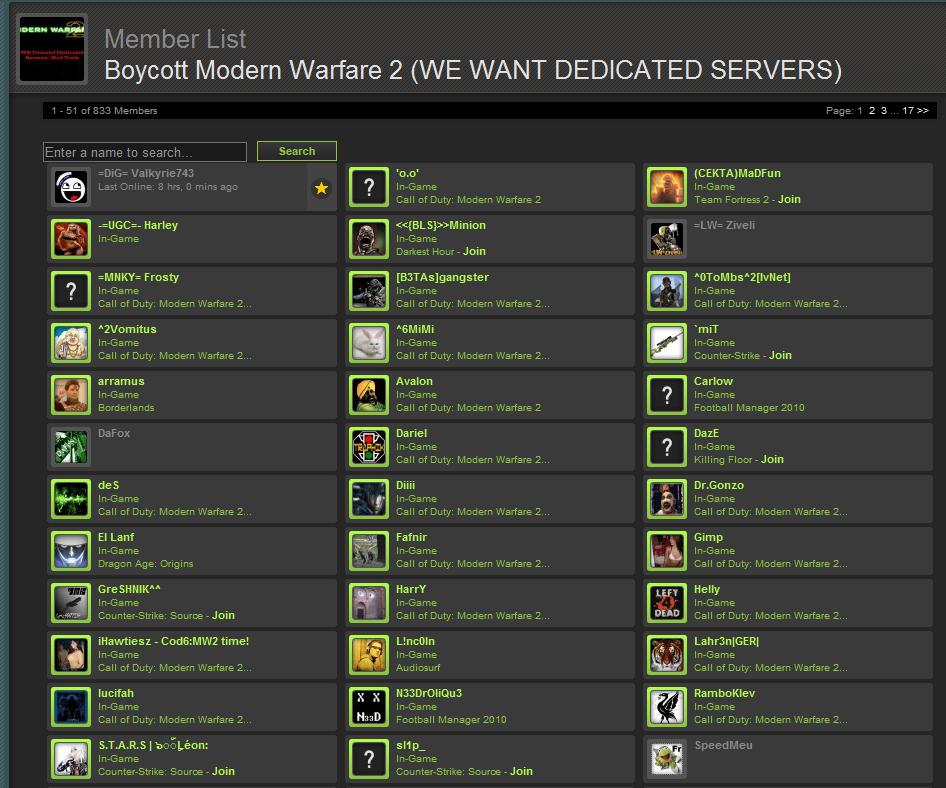
Gamers are notoriously fickle, and the things on reddit are often so blown out of proportion.  Mainly due to the fact that the largest complainers have the least amount of spine.

imbvmjptlpz01

Real effective boycott…

Game companies have learned to navigate through the sewers of gamer miscontent, and find out what motivates players.  And that point is almost entirely based on money.  If EGS has the same games as Steam, but offers them cheaper… then guess where people are going to buy their games?  Doesn’t matter if you have achievements or not.  Or trading cards.  Or wish lists.

I-Win Button

The thing that many people are skipping over is that Epic already has a multi million (~250m at last estimate) player install base.  Across every single platform.  PC, XBONE, PS4, Switch and heaven almighty – mobile.  That simply dwarfs anything else.

And the next logical step?  Cross-play.  Let’s be clear on one single and vital point.  Console companies have been notoriously proprietary – Sony worst of all.  Fortnite broke Sony.  10+ years of people trying.  EA certainly pushed hard.  Yet a single game, in about 2 months effort, broke Sony.  You can play Fortnite on any device – with a single account.

From a developer perspective, this is a major benefit.  Online games win/die by the amount of players available (since they are often the content).  Imagine having a game suddenly have 6x more available players due to a code change.  You haven’t sold more boxes… just allowed them to see each other.

Mark the Calendar

Epic released cross-play SDK tools in December. 2019 is the year that cross-play becomes an expectation in gaming. In an ever connected world, Epic managed to break down walls with barely a whisper.  I am both amazed at the quick transformation, and terrified as to what comes next.


New Rig

All that fussing and I decided to just go with it.

Of all the features I listed previously, there were really only 2 options that presented themselves – either the MSI Raider or the ASUS ROG Zephyrus/SCAR.

20190226_134819.jpg

Lots of pretty keyboard colors

As you can tell, I went MSI.  Three main reasons.  1) MSI is significantly less expensive for the same specs (I’m essentially losing out on Thunderbolt) , 2) it’s actually available in Canada, and 3) it has an expandable storage slot.  It also shipped in 3 days, which is pretty neat.

The slight quirk in this is that the model I wanted, the GE73 Raider, was practically impossible to find at a decent price.  I ended up spending $200 more for the GE75 Raider, which came out in January.  Four things impacted – the display (120mhz vs 144mhz), the graphics card (RTX 2070 vs GTX 1070), the display bezel is much smaller, and the lid doesn’t have strobing lights – yay!   Honestly, I didn’t realize what a difference a small bezel had.

I took the 500GB SSD main drive, with a 1TB HDD.  It has an extra NVMe / PCIe slot so I can add another super fast SSD later.  16GB of RAM, expandable to 32 if need be. The setup phase is the fun part, and to avoid having to download GB of games, I’m in the process of transferring what I can from Steam et. al to the new box.  Thankfully that’s pretty straightforward – just

One of the good bits is that MSI doesn’t have much bloatware.  One game optimizer, one to controls the keyboard lights (I turned them of to give 90mins more battery life), and Norton (which will soon be removed).

Anthem

The game doesn’t load all that much faster, which is a real disappointment.   I’m running it off the NVMe drive that has the highest possible read/write on the market.  The computer boots super fast, and other items are near instant… so this is clearly an Anthem issue.

I disabled motion blur, and have a few more tweaks to apply on the video.   It runs ultra smooth, with significantly more detail, and the display is so much crisper.  Feels a lot like when I swapped my my standard TV for an HD version.  I’d have to run FRAPS or something similar to get a FPS reading.  This is not the RTX 2070 MaxQ (that’s a smaller form factor).

I’ll need to run some other bits to see how it goes.

Other Bits and Bobs

I like the keyboard and numpad.  Good size, distribution, movement and weight.  That looks weird when I type it out, but people who use a computer daily understand the value.  Trackpad actually works, which was a concern for me with MSI.  Not that I actually use, what with a gaming mouse.

The sound is ridiculous.  It has 2 speakers and 2 woofers, which is better quality than all my bluetooth speakers.  The sound range is impressive.  The speakers point down, which isn’t much of an issue since I have a cooling pad.

Tons of lighting and performance options on this rig.  It’s going to take a while for me to figure it all out.  I have never been a fan of keyboard backlighting (it’s off now), but lighted USB ports in a dark room isn’t a bad idea.

The fans max out with Anthem, and are noticeable.  Less so than my older Clevo/Sager, but you know they are present.  Can barely hear them at normal mode – or when casting a video through Chrome.

While the same screen size, it is an all around smaller laptop.  Fairly close to 15″ laptops I use from work, as they have a larger bezel.

Older Laptop

I’ll need to reset some of the settings and clear some room to make it a family laptop.  More than capable to keep running for a few more years without needing to pump out ultra settings.  I’ll certainly need to transfer some things to the NAS, and other bits to the new box… and as with everytime I do this, I’m going to forget a few things.

Nice Gift

I am not a frivolous spender, and I tend to over research things.  Pretty obvious if you’ve been reading this blog the past few months.  It took a bit of self-convincing that this was the right time, and that the funds could be spent for what I wanted.  The good news in this is that since the bitcoin mining phase is dropping, now’s a great time to get a GPU.

Gaming Laptop Redux

When I was a kid, I really dug into every PC spec I could.  I spent hours building the darn things, and from x486 until about 5 years ago, I would help other people build theirs.  It was ridiculous the amount of info required to make that work, especially in the pre-internet days.  But then again, most people had a sound card and not a video card – and here we are with the ability to link multiple cards together, and have a hard drive the size of a business card.


Technically, the foundations of PC builds are relatively the same.  It’s the extra flavor bits that make it interesting.  The video above is both fascinating (200fps is bonkers), and worrying in that the amount of POST/OC config options take an engineering degree.  (Side note, the RTX2080ti used in the video goes for about $1200US.  There are 2 in this box.)

I’ve mentioned the debate on PC vs laptop a few times now.  Laptop just seems the most practical way forward for my particular situation.

Honestly, 95% of this drive is because of the technical issues with Anthem.  Sure my rig isn’t brand new, but it was top of the line 3 years ago.  I’ve played most anything on ultra/high without problem.  Yet Anthem makes CPU/GPUs melt, leverages Denuvo (I think) which makes HDD melt, and pretty much makes any non PC-enthusiast rig look like garbage.  Let’s just say that the bar to entry to enjoy Anthem is at the highest I have ever seen.  Day 1 patch is trying to lower that bar, otherwise I don’t see how consoles could ever make this work.  Reddit seems to think that the patch did address this.  Maybe not perfect, but the 90s load times from the beta seem closer to 30s.

Anyways, back to specs.  As much as there are advances in the desktop space (PCIe NVMe bridges!) laptops are not that far ahead.  The good news is that it’s a simpler affair, with only a few places where it will muck up.  Let’s go over the basics.

CPU – i7 Gen 8 – 8750H

There’s very little reason to go i9 on a laptop, as you’re going to end up with a tank of a machine, for minimal value.

RAM – 16GB, DDR4

Most games will take 8GB, so having double and room to expand again is important.

Storage – 256GB SSD boot, 512GB+ NVMe M.2 PCIe

This is really interesting!  SSD for boot, I think it a given.  Sizes are all over the place, and experience says 128GB is going going to be running near 80% capacity.  Active drive is more fun.  Traditionally laptops come with a 7200rpm HDD as the 2nd drive, and maybe a 2nd drive for NVMe.  The important part here is to note that not all M.2 drives are the same – there are SATA and PCIe variants, with the latter being much faster.  GEEK ALERT – SATA3 = 0.5GB/s, while PCIe = up to 15GB/s.

GPU – GTX 1070

While RTX are available, the gains are minimal and only 1-2 games actually support ray-tracing.  The question then becomes which one in the GTX10 field.  1050s are too old.  1060s will give 1080p, which in practical terms is going to give you ~60FPS.  1070s will not reach 4K, but they will get you to the 120FPS mark.  1080s are 4K ready and real beasts.  Also cost an arm and a leg, and can cook an egg.  There are sub variants of GPUs as well here, like a MaxQ.  Just don’t.

Display- 17″ with 120Hz refresh rate

17″ screens are found in really small form factors.  They also allow for a larger battery.  15″ I find I am squinting for details.  The refresh rate is tied to the FPS.  Well, not technically but they are close enough that you can map.  60fps = 60Hz.  If you can get more than 60fps, then get a better display.  Unless you are loaded with money, a 4K laptop is out of the picture.

Networking –  Killer

Not much debate to be had here.

Ports – 2x USB 3 + USB-C/Thunderbolt

Need at least 1 port for a cooling pad (with fans) that also acts as a USB hub. Maybe could get by without.  1 port for the mouse.  You need powered USB ports!  Rest usually works itself out.  The USB-C/Thunderbolt port is gravy – massive transfer speeds and is the best way to get a docking station / external monitor to work.  This is the hardest bit to find in a laptop, you need to know the exact model you’re looking for.

Ergo/Placement/Battery – Personal

I want a trackpad on the bottom.  17″ laptops should come with a numpad.  Speakers should be on the top of the keyboard tray.  Cooling is out the back/bottom.  Thin is ok, but a “standard” size is fine too.  I’m done with the giant 10lbs bricks.  Battery life should be at least 4 hours for non-gaming.

Summary

I’ll be honest, it took nearly a month to get that shopping list complete, with daily research bits.  Finding the exact machine that has all these parts in it… I won’t lie, that is a friggin’ challenge.  Right now it looks like a GE73 Raider.  Maybe a STRIX/Zephyrus.  The Alienware boxes are just too expensive.

Time to set a product watch and wait for a decent deal