Finding Joy

I’m in a weird mental state lately.  My winter hockey has restarted (and I’m short a couple guys).  Both kids have started too, I’m coaching one of them, and I’m the association’s webmaster.  A vendor at work is nearly 4 months late on a critical delivery.  There’s a rather significant re-org underway too, with some new opportunities presenting themselves.  There’s something wonky with my back/shoulder, making it hard to get a good workout.  Our social circles seem to be going through midlife crises.

A lot of spinning plates that are taking up both physical and mental real estate.  Feels like I could use a couple more hours a day.  Blogging as a whole has taken the side.  I am feeling the need to focus on the things that bring me joy/energy, and let the rest of the stuff just wash over.

Hockey

The older I get, the more I realize that playing hockey brings me a ton of joy, as long as the rest of the team is all on the same page.  If I’m playing rec, then it’s a rec attitude.  Comp is the same.  When those two worlds mix… things get less fun.  But there’s always a good beer after the game.

Coaching, that brings something else altogether.  There is something to be said about seeing 15 kids grow before your eyes, and being part of their enjoyment of the sport.  I’ll need to write another post about my process for coaching, but it would appear that it’s popular as a few kids this year put in requests to transfer to my team.

Working Out

We all need to move, or things just stop working.  I’ve been doing strength training for a few years now and it’s made a world of difference in nearly every aspect of my life.  It requires planning (since time is limited), focus (to not get injured), tracking (to see progress), consciousness (smarter eating choices), and provides a solid example to my family.  I can tell you that when you have 225lbs on your shoulders and you’re at the bottom of a squat, if you’re not focused then you’re going to have a bad time.  It’s a different form of meditation I guess, and the endorphin rush you get is a great high.  Plus, when you hit the pillow, you sleep like a rock.  Completing a workout, setting a new lift record, seeing changes in the mirror… all great feelings that push out the rest.

Baking

This is a family root type of thing.  Baking requires planning, patience, and confidence.  I had a pile of recipes from older relatives that just say “a fist of flour”.  Decoding all that is half the battle.  Yet when I am able to replicate a recipe my grandmother made me when I was a child… that hits every single right spot.  It’s a great way to spend time with the kids too, and teaches them a pile of lessons with a great result at the end.  We end up making ~500 cookies as Christmas gifts every year, as well as the boys getting together to make ~50 tourtieres in the fall.  You can’t rush baking…

Active Listening

You can be a wallflower and just listen, or you can be a jabberbox who’s just waiting for their turn to interject and one-up the conversation.  I dislike both, and prefer to have a conversation where the other person(s) get to share, I take it in, and I get to share as well.  That means paying attention, asking clarifying questions, debating ideas.  I enjoy this with my kids… it has them spend more time thinking about what they are going to say.  More enjoyable even with my wife, who brings an entirely different perspective on nearly all topics.  Hockey boys are similar with all types of views.  Does a decent job of avoiding the echo-box that social media builds around us.

Breathing

This sounds corny, but just taking a breath when things go a bit sideways is a great tool.  It’s common enough that my team at work recognizes it as a sign.  I dislike reacting, because it often lacks forethought.  There’s a way to say something is dumb without saying it’s dumb.  Getting that piece of news, taking a breath, allowing digestion of it and looking at potential options… that allows me to focus on the bigger picture.  Example: a team member inadvertently disabled 8,000 clients, and caused a 8 hour outage.  It was entirely accidental, happened while fixing another problem that wasn’t ours and running on little rest, and mistakes happen.  I mean, they know they did something wrong and me reacting negatively is just going to make it worse.  Breathing, focusing on getting them involved in the fix, and away from the mistake… that’s the only way to grow.  Seeing them come out stronger.  One breath makes all the difference.

Next Little Bit

The next few weeks are going to be a bit in the same rough spot, but it should even out at the start of October.  One breath at a time, one day at a time.  Things are good.


AC Complete?

I finished the last (first) DLC the other day.  That felt like a more traditional DLC or “more of the same”.  One of those cases where the plot moves the characters rather than the other way.  The naval portions were more meh.  I can see why people were not really enthused by it on release.  Fate of Atlantis is like a triple decker sundae compared to ultra vanilla.

I would be hard pressed to call the game complete though.  I still have a dozen (?) side quests to run through.  A fair chunk of land to fully explore (15%?  something like that).  More levels to gain – I’m 79 of 99.  Some more builds to test out – I’m 5% away from a 100% crit build.  Then there’s the super side quests (blue ones) that need to be run through.  Fair guess is there’s at least another 10 hours of content to go.  And that’s not counting the weekly quests that take about an hour to complete.

I can easily see how people would have spent over 100 hours here, which frankly is bonkers in 2019.

Overall thoughts:

  • Main storyline is ok.  Kassandra (female) seems like the logical default choice.
  • Combat is much improved on Origins.  The various skills allow for a lot of horizontal growth.
  • Engravings are neat, but end up game breaking at top levels
  • Enemy variety is what you expect from AC. A fort is a fort is a fort.
  • Boss encounter can be fun and hectic.  The dodge mechanic makes some of them trivial.
  • Naval warfare still isn’t at the AC4 level – but considering the setting it’s still decent.
  • The seemingly infinite ability to climb anywhere doesn’t get old.  Old Greece is surprisingly vertical.
  • Customization of armor pieces is neato!
  • The world is crazy massive.  (the game engineers who allow this size and not have my PC melt deserve a bravo.)
  • Fate of Atlantis is worth the price of admission alone.
  • It’s very pick up and play.  Most missions are 10 minutes or less.  But you’re always getting that just one more thing feeling.
  • The MTX store is never in your face… I barely noticed it at all.  Not sure how revenue positive it was, but I greatly appreciate it.
  • Nearly every single system was dramatically improved and expanded upon from Origins
  • The next game (Vikings I hear) has some massive expectations to meet.


There are better games out there.  But I struggle to think of any game that costs this much and gives this much quality in return.

AC:Odyssey – Fate of Atlantis

School started, life’s getting back into some routine.  Hockey for the kids starts this weekend, scouts in a bit.  Rather be busy that not.  Makes it a bit hard to write though.

I’m farther along in AC: Odyssey – much farther.  The main line game “stops” at level 50, but the actual cap keeps on going til 99.  The 1-30ish portion is just chocked full of content.  A stupid amount truthfully.  The road to 50 past there is still dense compared to nearly every other game, but it’s also clearly more focused on the main quest that pure exploration.

I completed the main quest, took out all the cultists, and have completed something like 50% of the map.  It is hard to explain how much stuff there is here.  I killed a Minotaur, solved a Sphynx, killed Medusa, did Hercules journey, fought a dozen conquest battles, cleared hundred of forts, took out dozen of leaders, killed at least 100 bounty hunters, dove for sunken treasure, found hidden tombs, found engravings, customized weapons, solved murders, caused them too.  It’s like everywhere you turn, there’s something to do.

There are 2 DLC that follow the main quest.  First is about following the footsteps of assassins from Persia.  I’m only a small bit into there since it takes place in the main map.  The other one is the Fate of Atlantis, which I recently completed.

It smartly removes the systems that didn’t work all that well (ship combat, conquest battles, bounty hunters) and instead focuses on story and exploration.  There are still some fights, and enemies are more complex and deadly.   But that’s more the exception.  You go through 3 (large!) maps, solve a bunch of quests, and get a good look at the Isu civilization that underpins the entire AC series.  Quest choices have consequences.  It’s a great capstone and probably worth the purchase of the game all on itself.  Honestly, the last DLC to even come close to the sheer amount of content is XCOM2 – War of the Chosen.

The downside here is that as you get more levels and more ways to upgrade items, you start becoming a walking god.  Where in the main game I would have to sneak around, I have enough engravings and boosts to items to be running with 100% crit chance, +150% damage, 35% faster cooldowns and a single attack (Hero Strike) that takes down every enemy in 1 hit.  Bosses may take 4-5.  Even Rush Assassinate can chain kill 4 enemies.  Entire bases are cleared out by just walking through rather than taking out strategic targets.  Sure, it makes sense to become all powerful, but it takes a lot away from the mechanics (probably why the Fate of Atlantis is so focused on not having combat).

Still have to take out the first DLC to consider the game “complete”.   Still stand by my initial reaction that this game offers more content than pretty much anything else out there.  I’m a little sad that I waited this long to pick it up.


Weekend Ramblings

Warning – RANDOM.

Went to a pool party for a few friends that were hitting 40 this weekend.  I think it’s the 6th such party I’ve had this year, each one with a completely different vibe.  Mine was axe throwing & a pub.  This particular group’s history with pool parties dealt a lot with actually being in the pool.  That was not the case here, and it was extremely mellow.  There were tacos from a local truck.  Mellow people tend to have odd conversations.  Refreshing since it’s not at all small talk, but still out of left field.  The really neat bit was that there were people taking differing views on all the topics – far from an echo chamber.

Weather

I live in the national capital (Ottawa) and we get some wild weather swings in a year.  We’ve had:

  • Coldest = -33C (including wind) (-27F)
  • Warmest = 43C (including humidity) (109F)
  • Most snow = 25cm (101.8cm in Jan)
  • Most rain = 35mm (300mm over Apr/May/June)

It was a 76C swing between hot and cold, and there are few places on the planet that have those swings.  It was also the year with some recordbreaking snowfall, and a repeat 50-year flood from 2 years ago.  Oh, and a couple tornadoes to boot.  We shouldn’t be breaking records every other week.  This isn’t the Olympics.

US Electoral System

What pool party doesn’t talk about this???  I’ll withhold comment on the current administration, there’s more than enough people to pipe in on that.  What I will talk about is the insane electoral system.  No rational person can think that this is a reasonable system, right?

  • 1980 election – Reagan wins with 50.7% of the vote but 91% of the colleges.
  • 1984 – Mondale wins 40% of the popular vote and gets 2.4% of the colleges.
  • 1992 – Perrot wins 20% of the popular vote, 0% of the colleges
  • 1996 – This was a really close race, and the person with more votes lost. 537 votes in Florida (0.009%)
  • 2012 – This was also a close race, though not as close as ’96.  Nearly 3m total votes more (2%), yet lost the colleges by 77 (14%).

It’s utterly fascinating to see that machine at work, and the absolute insane amount of gerrymandering at play.  This was a problem in Canada a long time ago, but there’s an independent group that draws elections lines based on population totals – politicians have no say in it, except at municipal levels.

It’s one of those odd things were there’s a special list of countries that endorse gerrymandering.  I wouldn’t think any of those countries are on a top 10 destination list, if you catch.

Elon Musk is Lex Luthor

So deep thoughts on this one.  Elon is clearly at the genius level intellect.  You don’t manage to do what he’s done if that’s not the case.  Plus, you don’t build a working flamethrower and sell it.

He really does have all the comic book signs of a super villain.  Rough upbringing.  Makes wave as a teenager.  Successfully builds and runs multiple multi-million/billion dollar industries, in different genres (IT, auto, power, engineering, heavy machine, rocket propulsion, AI).  And it’s not like he’s Warren Buffet-owns-tons-of-stock leadership here.  He’s the face of all those companies.

His stated goals match the Foundation series, where all his actions are meant to improve/prolong humanity’s chance at survival, and reduce the change/duration of a dark age.  That he has the actual power to accomplish these goals…

So if you look at the current Lex Luthor, there’s a lot of maniacal drive move forward.  A lot of ends justify the means, where only he can do it and no one else.  There is an ultra fine line, and the absolute best comic book villains thread it (Victor Von Doom).

And More!

There were plenty more conversations that had nothing to do with each other, but none were really debated/discussed as much as the above.  There’s a part of me that’s both confused and impressed at the types of conversations that exist when you’re not throwing an axe at a piece of wood.  I really should go to more pool parties.

Final Fantasy Series

There are lines here to read.

The first FF game launched in 1987.  FF15 in 2016, and FF14’s recent MMO expansion a few weeks ago.  We’re over 20 years in this series, with expansions/DLC/offshoots a plenty.  It’s one of the few Eastern RPGs to actually sell in the West.

Each game in the series has similar foundational elements, builds on previous systems, and takes some new twists.  Whether it’s adding classes, improving skills through use/osmosis, random battles, auto-battles, or a dozen other systems that either worked, or tanked.  Everyone has a favorite in the series (mine is FFX).  The series fans will generally try the next “main line” iteration, meaning sales are somewhat baselined.

Where this model and the MMO model differ, is that players cannot play their favorite versions, they have to play the most recent one (or play a pirate version of the old one.)  What keeps them similar is that everyone has a “perfect” version of the game, a time-boxed version where they as players, and the game meshed.

I loved Rift at launch, it was a great time in my life to play an MMO of that genre, and it hit all the right notes.  Summer vacation hit, and when I came back there were some big changes in the game that made it less attractive.  I tried the nostalgia server for a bit, and it certainly felt familiar.  As a player though, I had changed and the model just didn’t hit the same notes.

I’ve probably “finished” FFX a good 6 times now.  It’s an 18 year old game.  The first complete playthrough was something like 60 hours, and I did that as a dedicated game.  I gave it another go last fall, and got to the monster hunting phase with a couple celestial weapons.  I played it off/on for a few months, as a side project.   After a few days of not playing, I figured I’d just get it over with and take out the last boss (which is like 1 shot when you’re looking to max characters).  Didn’t take down a single Dark Aeon.  It was still good, but there were other interesting things taking my time.  I didn’t need it, but I certainly appreciated it.

Other games in the series are OK after FFX.  FF11 asked for way too much time from me.  FF12 was really impressive mechanically, but I felt it was really bloated in the middle.  FF13 looked great, and had some strong strategic options near the end… but it also had a 20 hour tutorial.  FF14 is solid, though I’m an expansion behind.  FF15 simply never clicked with me.

I’m aware that this is my perception and that other folks are fascinated by nostalgia.  I mean, war re-enactments are different level, but there’s plenty of people fascinated with 50s fashion.  Certainly enough for niche markets to develop.  And we’re in the age of remakes for movies.  I mean, I get why industry is doing this.  Past money often means future money.  Why risk a new IP that will tank, when you have an existing client base?  I can count at least 12 releases of FF6.  Chrono Trigger can probably be played on a fridge now.

Yet… selling a box and supporting a box are two different things.  Opportunity costs abound. RIFT Prime is gone.  EQ’s progression server management has generated at least 100 posts from Wilhelm alone.  UO tried and it didn’t fly (though emulation servers abound, with wildly different rulesets).  Even WoW’s classic version is full of debate of what “true” vanilla is, and there’s certainly a lot of questions on both sides about what happens once Naxx is released.

Seems like everyone’s past is for sale.

Personality Profile

Lots of interesting talks lately with the other half.  A particular comment that struck was that there are a lot of people considering taking large steps in their life but not actually taking them.  Makes sense, mid-life crises are built around finally having the time to be introspective.  Likely have a career, kids are not requiring 24/7, most finance/health items are under control.  All of a sudden you have time to think.

Yet, while people are often stuck in the rut of complaining about something rather than taking action.  They are paralyzed in the “what if” scenario.  That, perhaps, with motivation the external factors will change into a positive one.  That the next roll of the dice, or lottery ticket won’t be a bad one and they will strike it rich.  Rather than simply picking up and stop playing the game entirely.

Don’t get me wrong, no one can succeed in life alone.  I am far removed from being hard-ass to the point where other people around me have to follow my way or get out of my way.  I truly believe that everyone is good at something.  It’s just that often people are not doing the thing they are good at.  And people will not simply take an external voice and agree to change – that has to be driven internally.

I used to see this particular psychologist and she articulated the mindset with a single question.  “What’s likely to happen, and can you live with it?”  The person that’s 300lbs and is wondering what to do.. well, they either going to be healthier and live longer, or they are just going to stay obese.  Is it harder to eat better and take a walk, or struggle to get out of bed and use the washroom?  The person in an unhappy relationship, counselling either improves communication and the other party wants to succeed, or it solidifies the fact that there’s no salvage to be had.  Either way, it’s better than waking up to someone you don’t get along with.

The older I get, the more I realize how I fit into the spectrum of “let it be” and “let’s do something”.  In the wide majority of situations, I want to do something, and I want to do it with other people.  If those other people don’t want to, I won’t go around convincing them… I’ll either do it myself, or find other people to do it with.  I feel much better looking in the mirror and saying that I at least tried to make a positive change, compared to just complaining.

Not to say that people aren’t allowed to blow off some steam.  There are times when things get just right under the skin for a short period and you just have to deal with it. But we all know plenty of folks who have been singing the same tune for months/years and nothing to show for it.  If they are stuck in talking about all the things wrong and never thinking about what control they have over improving things…I’m finding that my relationships with those people are getting frayed.

Introspective post that’s a mix of all over the place.  That’s the reason this blog exists, letting me put some structure to the thoughts.  Hopefully it has a similar impact on readers.

tldr; don’t complain or ignore, do something for positive change

Odyssey – The Scale Batman!

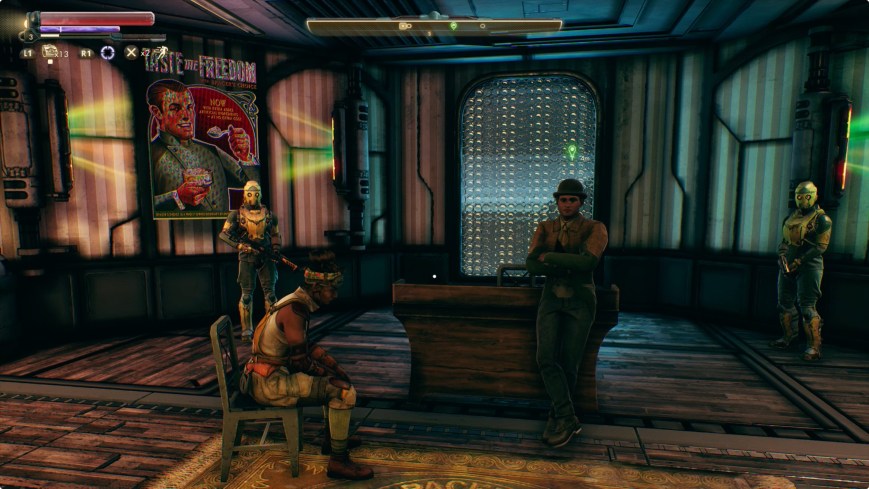
I’ve have Assassin’s Creed: Odyssey on my Steam wishlist for a while, and it recently went on a big sale with all the DLC.  I did play Origins, and found that world massive, busy, and bland.  I mean, there’s only so much you can do in a desert in terms of visuals, right?  In terms of potential though…jeebers that game was chocked full.

Odyssey, so far (level 20) is what happens when a company is in the refinement phase of a product.  The world is absolutely massive, and the NPC coding here is astounding.  Athens alone takes nearly 10 minutes to cross and every NPC is doing something. Greece is an island nation, so the ship play is more in line with AC:4, and there are plenty of ships abound.

What really takes the cake here is the amount of choice presented.  Sure, you have the traditional minimap icon-fest in all Ubisoft games, but the actual locations are much more thought out and purposeful.  Forts aren’t just there for plundering, but work into a larger political game to challenge local leaders, and then a battle for supremacy.  Crafting loot has been dramatically simplified, meaning that Alpha animal kills are as much for their material as they are for the large loot chests in their caves.  Speaking of caves, they now have much more vertical space to play in.   There are fewer tombs (yay!), which makes each new one an interesting adventure rather than the same old device.

And it’s good looking.  Good golly, there are some spots where you just completely stop what you’re doing to just stand still.  And you realize that every single bit of it was placed/built by someone.  The world building team here is simply amazing.

That said, there’s still an experience level factor here.  Anyone 2 levels from you is going to be very challenging.  5 levels and you will die in 1 hit.  The main quest line is not sufficient to keep you at the right level, so you’ll need to do other things.  At least the other things are fun and varied.

There’s the same lead choice as in ME, either male or female.  I took Kassandra, who looks like a cross-fit champ.  I’ve taken a look at the male alternatives in videos… I made the right choice for me.  Hats off to the devs to have the character’s names spoken aloud – no Commander Sheppard here.

Assassin's Creed® Odyssey_20181210182219

You can visit everything you see here

There’s a weird balance between meaningful and busywork. here that I did not find in Origins.  You can still take a 2 hour detour of things to do while on a main quest.  I’ve done it enough.  But the things you are doing in the middle of nowhere have an impact on the rest of the world (sidequests, engravings, mercs, cultists, nation power).  Maybe it’s the bird.

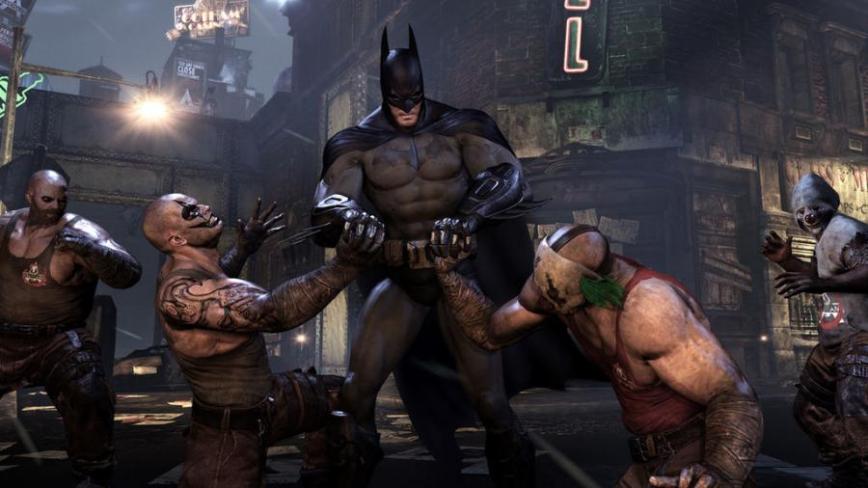
Let’s talk about that for a bit.  The Batman games have a fundamental problem – most people only play with the Detective Mode on.  That allows you to see bits of scenery and enemies based on purpose.  Grates you can enter, enemies with guns or stuns, and so on.  Seeing this with your regular eyes is all but impossible… just as it’d be damn hard to do in real life.  It’s cool and all, but it’s a crutch of game design.

AC games have had a similar, though temporary mode.  Still there now, but it’s practically useless in open spaces.  Origins gave you a scouting bird to sort of enhance that feature.  It was a neat gimmick, but not much past that since it was still open fields.  Here though, it’s vital for any large enemy base, since it’s mostly closed walls.  Identify all the enemies and targets, methodically make your way through.  Controls are a lot tighter now too.  It’s detective vision since everything is tagged, but you still see the real world.

Quests.  There are simply too many to track, and the menu to do so is straight out of the late 90s.  They are generally better than previous games, but if you do any exploration before picking them up, odds are the locations are empty by the time you go back.

Combat is much improved on Origins.  Same inventory system of gear, but now you have stats on each piece that tends towards ranged/melee/assassination damage.  With 8 pieces, you’re looking at ~100% more damage of a given type if you slot accordingly.  You need to do this if you want to 1-shot any enemy with a bow.  You should do this if you want to 1 shot enemies with assassination.  Melee is honestly an afterthought since the wide majority of damage will comes from a single assassination skill (Hero Strike).  I will say that kicking someone off a mountain, that doesn’t get old.  I find it more varied than previous entries, and depending on the enemy type, even 1v1 battles can end poorly.  Rather impressed, truth be told.

Overall, the game takes the foundation/re-build that Origins put out and improves on nearly every single aspect.  Looking objectively at what Ubisoft crammed into this game really makes you wonder how big their dev team is.  There’s a case to be said that there’s too much here, and the amount of time required to consume it all is probably on-par with MMOs.  As a distinct game, it’s insanely impressive.  As a gauge of game development, if the next game has the same delta improvements as between Origins/Odyssey, I truly struggle to imagine what that would include.


Virtual Worlds and Video Games

Bel made a comment on my Classic post, in that the feature set differences do a good job of delineating the difference between a virtual world (classic) and a video game (post Cata).  While on the surface I agreed, the reason why was what interested me more.

Clearly the first step is figuring out the definition for each.  So let’s invert that a bit.

Video games: something players can consume, alone or with groups, where the impacts of that play are limited to the players doing the consumption.  By that I mean that in the broad sense, only the people doing the act have any results from the actions – dungeons are instanced, mobs respawn, loot is shared, grouping is automated.  Not that it’s necessarily easier but that the social mesh doesn’t really exist.  This applies to pretty much every game out there.. with exceptions to the survival genre (e.g. ARK).

Virtual worlds: something that players co-exit with, with both consumption and production, such that the world shared between all players.  In that sense, players build/destroy the world in such a way that players that they don’t know are directly impacted by said actions.  The game is predicated on a healthy social fabric.  For a long time, this was only in the MMO space, since most of them were glorified chat boxes.  Ultima Online is the one that immediately comes to mind for me.  Also includes things like Second Life, the original EQ, and WoW Vanilla.

There’s a particular note that many early MMOs were virtual worlds – the golden age if you will.  Why that is the case I think has more to do with the type of player/dev rather than the type of game.  UO is a prime example of Garriott building a game that he wanted to play, and that was a crapshoot to make money.  EQ and WoW are similar, in that they were longshots by dedicated developers.  Given that internet access wasn’t all that popular in the late 90s early 00s, it bears to reason that people playing those games were of a similar cut.

When MMOs were proven to be popular, they attracted the eye of investors.  MMOs came up every other day, though often developed by people who were not as passionate, didn’t have the opportunity to learn from the mistakes of early games, and focused on replication of popular games.  Quality was really poor (think of the game crash of ’83) and the bottom fell out.  MMOs need to maintain a LOT of players, for years, in order to keep running.  That takes either a hell of a head start, or a heck of a back account to float.

All that to say that virtual worlds still have a fan base.  But they are clearly not the only fish in the ocean, and competing for eyeballs means that they either double down on their model, or branch into video-game features.  Or that nostalgia is enough, since in 10+ years gamer tastes have changed.  There’s an entire book’s worth of comments on how society today is built for consumption rather than production… but I’ll leave that for later.  Suffice to say that many people today get their sense of belonging / value from Twitter/IG/Facebook/YouTube, and that they don’t need games to address that gap.

Not saying that we won’t see another mega-hit virtual world, but more so that it’s not going to be primarily a video game… and instead be pushed through social media-like structures.

The Long Game

A few recent posts from both Isey and Kaylriene got me thinking. in relation to long term development.

In the micro level, development focuses on the immediate.  You get the assets you need for the game you are building, and think about how they could potentially be reused within the same game.  Sure, you maintain a code library for potential use elsewhere, but its not the primary goal.  You spend money and you want to recoup that cost soon.

At the macro level, planning is on the annual basis and across multiple streams.  For someone like Ubisoft, they are thinking how Assassin’s Creed, Rainbow Six, Watch Dogs, For Honor, and Far Cry can help each other out.  The more overlap they have, the less it costs to develop each instance, and therefore the larger the profits.  I would think that most people can understand why this is important.

Where things get complicated is when a developer is willing to absorb and significant loss when they are looking at the potential of a future investment.  We’ve all seen news articles where a company will purposefully take a loss in order to offset some higher profits elsewhere.  While hard to understand why someone would NOT want that money, complex tax laws make it more efficient, and likely to cross multiple years.

In my work experience, I have dealt with a few vendors who were willing to take a loss on one contract in order to ensure higher profits on the next.  The scale of that loss is where things get interesting.  Sometimes it’s on purpose, other times it’s about minimizing loss.  Maybe there’s some really interesting IP/coding that comes from it that can be used in a future project, or resold.  If you look at Epic Games, they certainly appear to hold that model.

Which brings me to Anthem.  From the outside, and the various reports, it seems like the management team had a vision that came too late, and it’s been a scramble to get it working since.  It would be folly not to see this launch as a failure – in the micro sense.  Anthem did not reach its goals, and its roadmap is massively delayed.

However – it did help launch the Origin subscription service, there’s some online matchmaking code development that will certainly be reused, the lore IP is ripe for exploration, development of group-based dungeon instances is being refined, and they are on the hire for “loot based engineering”, which is clearly a long term investment.  None on their own will help Anthem recover, but as a whole they may.  Each on their own does have value for other development projects.

EA has a habit of shutting down games with short order if they don’t meet their objectives.  That this has not occurred yet would indicate that both EA and BW have some long term investment here at play.  That’s the good news – Anthem isn’t likely to go anywhere.  The bad (?) news is that the development moving forward has Anthem as a secondary goal, and is instead looking at how the pieces can be used elsewhere.  In really simple terms – Anthem is a beta test for BW’s asset development.

There’s some discussion to be had about how Blizzard is not doing this – aside from reusing art/lore assets in HotS/HS.  There’s certainly some network engineering shared between the various games, but systems don’t appear to have much overlap.  If Blizzard’s goal is to decrease development time (as per recent quarterly report), then it’s going to need to apply a much different approach to development than used in the past.  How that impacts the actual games… time will tell.

Classic Features

With the WoW Classic server coming up, I’ve been thinking more about Blizz’s method of iteration.  Credit where due, when Blizz decides a system isn’t good enough, they go to great lengths to remove it from the game (WoD housing is a prime example).  Most other games have an incremental approach, where systems are added over time.  This tends to cause a serious amount of bloat, as compared to Blizz’s more focused development.

That makes me think a fair bit about Classic.  I made a Rogue on day 1 (my main ’til MoP, and still at max level), and I did up to BWL before the cray-cray of organizing 40 people drove me to take a break.  Aside from the storyline (with minor retcons) and the general high level map, there’s not a whole lot from Classic that as survived.  Let’s take a look at some of the larger bits that simply don’t exist anymore.

  • Questing:  The largest change was in WotlK where phasing came by, but even in BC the idea that leveling through quests had taken hold.  Classic has very few quests to level with, and past level 30 it’s mostly grinding out in the wild or dungeon runs.
  • Leveling speed: I still have an old guide I wrote to optimize leveling in Classic. 5 days /played.  Today, you can level from 1-120 on 2 characters in the same time.
  • Weapon skill: To hit with a sword, you needed to swing a sword – a lot.  There were plenty of people who got great drops at 60 and simply couldn’t use them until they raised their skill in the wild.
  • Hit rating: Enemies dodged from everywhere, and riposted from the front (hit you back).  Dual wield penalties too.
  • Ranked skills: Hit every other level, go to a trainer, get a rank increase to do more damage/heal.  Down-ranking was the process of using a lower ranked skill as it was more mana efficient.
  • MP5: Mana users only regenerated mana after not casting spells for 5 seconds.  Chain pulls in dungeons were not possible, and in raids… well you had healing rotations where people just sat down until their mana came back.
  • Gold:  Getting 1 gold was a great event.  There were no daily quests, so 99% of the gold you received was from farming.  Repair costs ate most of what you had.  It felt very rewarding to have 100g.
  • Mounts: Mounts were not only slow, but they came at level 40 and cost nearly all of your gold to acquire.  There’s zero flying, and you automatically dismount in water.  (Side note: MoP’s Water Strider is/was popular for a darn good reason.)
  • Flight Points: You could only do 1 at a time, so AFK while travelling wasn’t an option.
  • Talents: Every level you got points to put into a talent tree.  Getting lower in the tree required unlocking earlier skills.  A very traditional model.  Thing is, there are many choices that are not just weak, but detrimental.  Making changes had an ever increasing cost in gold – making spec swaps very difficult.
  • Hunter pets: They were only good for DPS, and attack speed was king.  Nearly everyone had a cat for that reason.
  • Spec variety:  Nearly every class had only 1 viable spec until late into Vanilla (some waited til BC).
  • Guilds:  Tabards and guild chat.  Oh the days of DKP.
  • Soloing: Classes took forever to solo, and could only really handle one enemy at a time.  Healing outside of combat required food, and death was extremely common.
  • Grouping:   Meeting stones made groups, but didn’t summon anyone.  You need to travel there and find the entrance.
  • Dungeons:  BC had great dungeons.  Vanilla…less so.  Gnomeregan, Sunken Temple, Razorfen Downs/Kraul, Blackfathom, Mauradon were either very hard to get to, or a near maze to complete.  The good bit here is that there were 19 different dungeons, which account for ~20% of the entire game!
  • Raids: You needed to attune for a dungeon before getting access.  That was a crazy adventure!  Multiple steps, and often steps that could only be completed by 1 person at a time (imagine running a dungeon 40 times to attune an entire raid).
  • Crowd Control: You needed to sap/sheep/hex targets in order to progress with dungeons.  AE attacks were few and far between because of it. When’s the last time anyone has seen a sheep?
  • Whelps:  Leroy Jenkins was a thing because whelps were a thing.  In fact, being feared was usually a wipe in any dungeon.
  • Resistances: You couldn’t really complete MC without fire resist, or BWL without shadow.  AQ needed a ton of nature resist.  Resists don’t even exist anymore.
  • Item drops: Leveling item drops were not targeted but random across any 2 stats.  STR/SPI on a dagger?  Sure.  Made from some horribly useless bits but also one of the only ways to gear up while leveling.
  • Mods:  The big ones of the day were threat meters, titan panel, and map markers. DBM didn’t matter, since most fights were tank/spanks and all you had were raid checks.  It’s practically unheard of to play WoW today without mods, and even the base game has incorporated some into the basic UI.  (Classic will support a LOT more mods than original Vanilla.)


Not a single one of these systems is even remotely recognizable today.  Every one has been iterated and streamlined.  While a lot was changed in BC and WotlK, Cataclysm (9 years ago) really was the break point between the older model and the newer one.  In one way, you could say that we’re playing WoW 2+ today.  I’m sure there are plenty of people who want to see this older version, where the people connections were essential to enjoyment.  I’m just curious as to how large that audience is as compared to every other gaming option available today.