Hyperbole and Analogies

I generally avoid posting about real world things, it’s depressing enough. Current events though, holy cow. This post will be full of hyperbole and analogies, stretches of reality that are meant to emphasize a point.

Old saying first: It takes years to build trust, and seconds to destroy it.

If I was in an abusive relationship, where my partner of many years decided to start beating me, and then threatening to beat me more, then say ‘don’t worry, we’ll make this work’, and then beat me again, it would be a sane response to GTFO. It would also be a sane response for me to defend myself against future abuse and absolutely not trust the other person.

Let’s say that I am in a small town, and my options to exit said relationship are very small. Even if I do leave, I need to share the house with this person as there’s nowhere else to go! Neighbors want to help, but they are afraid that they will be targeted next (and rightfully so, as they have been threatened as well). What that then means is that I would be meeting these other people in secret, or at least out of my partner’s earshot, to make escape plans. I’d be open about some things, just to avoid suspicion, but there’d be a lot of hush hush talks.

These new and stronger relationships would be subtlety antagonistic towards my partner. No one would want to be singled out for their wild and unpredictable behavior. We’d all actively work to undermine the partner, lull them into a sense of comfort, and they would do all the work to declaw themselves. And when they realize it, they’d complain and blame others for it.

No relationship is without compromise. No relationship can be dictated. They all succeed based on finding a balance between the individual needs and the group needs. When one party decides their needs are more important than another’s, well, the results are destructive. And, truthfully, there are some relationships that simply cannot work, no matter how hard people try.

Unfortunately when nations are in relationships, the ‘cannot work’ part gets super complicated and has very wide ranging and long-term impacts. And now here we are, with the globe seeing a world leader proudly proclaim ownership of the issue. And in the very interesting words of the younger generation, we’re entering FAFO land.

Upsides

The Musk/Twitter saga continues, with ever impressive results.

Dictating that remote work is no longer possible when people have been hired with that construct, that certainly didn’t work out. There are some cities where it’s just not possible to be “in the office” because there’s no housing. Changing the terms and conditions of employment with no notice, welp, that’s a heck of a fun event that employment lawyers will enjoy.

Oh, and then coming back 2 days later saying “actually, you can continue to work remotely, manager’s will be accountable for it” is yet another genius move.

The real kicker though, is a 48hr ultimatum that you will need to work nearly double the hours, with no timeframe of duration, and no incentive to doing so. Or door #2, take 3 months pay. Which is certainly more effective that yet another firing wave (which will cost them more for reasons). Then to be surprised at the number of people who decided to nope the heck out.

We’ve all had bosses where we’d probably climb through glass for, knowing that they’d be right there with us and celebrating as a group at the end. Musk has done everything in his power to alienate the entire workforce, and no sane business person would want to engage with him in the future. Not that they necessarily disagree with his result, Bobby Kotick will gladly fire anyone, but moreso in the way he’s doing it. There’s a balance to be had where you may hate the CEO, but you like the company and have some belief there’s a future. Not much of that right now at Twitter.

The pundit math right now indicates that Twitter employee count has dropped by 88% since Musk took over. We may have found the fastest way to lose $44bn on record.

There’s bound to be an upside here.

Mike Fahey

Some sad news, Mike passed recently. I had read that he had suffered another medical event in the spring, and the complications were the last bit. It’s a weird thing to mourn a person you’ve never met.

Mike was an old-guard of the gaming blogosphere, and was the only reason I kept with Kotaku over the years. He had a quirky sense of humour, and a calming “uncle” vibe that was always entertaining and safe. He was the old geek we aspired to be, and felt like the final bastion of corporate takeover of gaming media.

He wasn’t a serious journalist by any means, just that friend who liked stuff and you wanted to hear what he had to say. Snacktaku in particular was a highlight of the very odd things that people put in their bellies. His participation in the various Kotaku podcasts were always entertaining because he genuinely liked the people he was working with and had no podium to stand upon.

It’s a tough loss for the community, and moreso for his family.

End of Summer

With younger kids, the summer is primarily bookended with school. This week, the kids are going back for their next year. That comes with a slew of other activities and a tonal shift for all the family activities. Looking back though, it’s been quite an interesting one.

First the elephant. This was the most “normal” summer we’ve had since 2019. COVID is absolutely still a thing, and plenty of friends have been hit, but the impacts are a fraction of prior. We’ll hit another big wave with schools opening, but with luck, we should finally be in the endemic phase. Huge impact – people are joyous to be out and about.

As a Canadian, particular one in my neck of the woods, we often talk about the weather. There are few locations on the globe that truly have 4 seasons – with a typical 60C swing between, up to 80C if it’s really bonkers. This summer was oddly calm, with a stable sunny stretch without too much to harp about. We only had a week of heatwave, and aside from the last week, next to no rain. A spectacular summer in that regard.

I found some “balance” in the working from home and driving around this year. Past years I’ve tried to work remotely, and that didn’t really work out. I’ve come to terms that I need a separation between work and personal. Working from a cottage is borderline depressive when everyone else is having fun but you. Finding a dedicated working space though, I’ll be seeing if I can sort something like that out in the future.

Summer financials were wild. Gas hit insane price points (more than double for a while) which was crazy to absorb. I had a rather expensive repair that came out of nowhere to manage. We’re through it and things are getting closer to normal, but holy heck.

I did skip playing hockey for most of the summer. I picked it up a couple weeks back, and thankfully no heart attacks. It’s fascinating how ingrained that activity is in my mental health. The past say, 5 years or so, I’ve tried to find as many activities as possible to help with mental health. That’s worked out well enough I suppose, in that not having 1 activity doesn’t cause a cascade effect. There are certainly preferences in those activities, but there’s enough there I never feel lost.

The amount of prep anxiety for start of the fall isn’t all that strong this year. There are certainly things to take care of, Back to School shopping isn’t just magic, but it’s also not things that take 50 hours to do. The kids are getting older, and we’ve spent a lot of time teaching them planning skills, that it’s quite easy for them to build a clear list of things to do. And then they do many things on that list themselves, and can live the rewards of those actions. I think that’s one of the larger joys in parenting… seeing your kids grow in autonomy, while still being kids. Hard to explain, one of those “if you know, you know” I suppose.

A long-weekend to go, and that will be the real transition to the Fall. Fingers crossed we can stay in “normal” for as long as possible.

Psychopathy Rewards

Psychopathy is a neuropsychiatric disorder marked by deficient emotional responses, lack of empathy, and poor behavioral controls, commonly resulting in persistent antisocial deviance and criminal behavior.  ref.

There was a time where we didn’t like psychopaths. The neurological disorder was tightly bound to serial killers and the outer edges of society. And then we reached the 80s, where “Greed is good” and we actively started rewarding people with this trait. When the almighty dollar is king, then that’s what people cherish. The CEOs that most people know have these traits, and the most egregious of them all get rewarded handsomely for it. These people are generally quite intelligent and leverage this lack of empathy towards “success”.

I won’t hard on it for long, but Trump is clearly a psychopath. Boris Johnson. They’re not alone, there are a slew of elected officials who require this trait in order to twist the truth to meet their agenda. The gap between the neurological state and learned behaviors is an interesting one, which is why we have the adage the power tends to corrupt, and absolutely power corrupts absolutely. In 2022, this often manifests in a cult-like worship (think about how far that spans for a minute…)

Elon Musk offered to but out Twitter, and staked a $1b minimum transaction on the deal. Elon Musk doesn’t actually have a salary or income, he has Tesla shares. Shares he needs to sell/leverage to have money. He has so many shares, he needs to declare he will sell them to the SEC so that he doesn’t “tank” their value. If he wanted to see in a month, he says so now, then in a month it goes through. He only gets value based on the stock in a month, so it’s in his best interests to make that number go up.

Tangent – When Musk announced a return to work for 40hrs/week for salaried employees, it was clear he needed to cut operational costs, which he announced the next day. When you force a change like this, a company loses the “top quality” talent, as they generally have a better ability to find somewhere else to work and the flexibility to afford time without pay. It’s a fascinatingly bad management decision.

Unfortunately for almost everyone involved, Mush has poor behavioral controls and has managed to cut the value of Tesla by nearly 50% (aware that stocks in general have taken a beating, but that’s closer to 20%). His ability to buy Twitter is based on the value of Tesla stocks, which are now worth half of what it was before. And now he wants to back out of the Twitter deal. Which is simply fascinating to watch, just like a slow motion car crash.

The general idea is that Musk over-extended the offer, on an artificial value of his own stock boosted by his love for Twitter. The deal made very little sense to start. Since that time, Musk has continued to stay in the spotlight, relishing the ability to share his thoughts with the public. The more he did, the more time was allowed for the market to correct itself. He was overpaying then, and even more so now, with half the funds available to pay it. He’s going to do everything in his power to back out of the deal.

Is this enough for society to get a wake up call that the people we reward are the ones with the least useful traits for our survival? Quite unlikely. We’ll go for the person who takes advantage of people who are not us. There’s a term for that…

Just About Enough

These last few years have felt like a non-stop dumpster fire. Just a barrage of events, some within control, others outside, that have been draining my sanity.

My city (and others) just got walloped by a massive storm this weekend, knocking out power to seemingly half the population, and efforts are still underway to restore it for quite a lot of people. Farms destroyed, roofs ripped off, it’s something that frankly should not happen in our area. We’ve had two 100-year-floods in the past 5 years. It’s a special type of person who isn’t concerned that things are getting worse and what we should do about it.

There’s a months-long war in Ukraine, held aloft through nearly 2 decades of enabling a dictator because of our global dependence on gas/oil. Decades of wars for oil, and it took Ukraine to be the proverbial straw here.

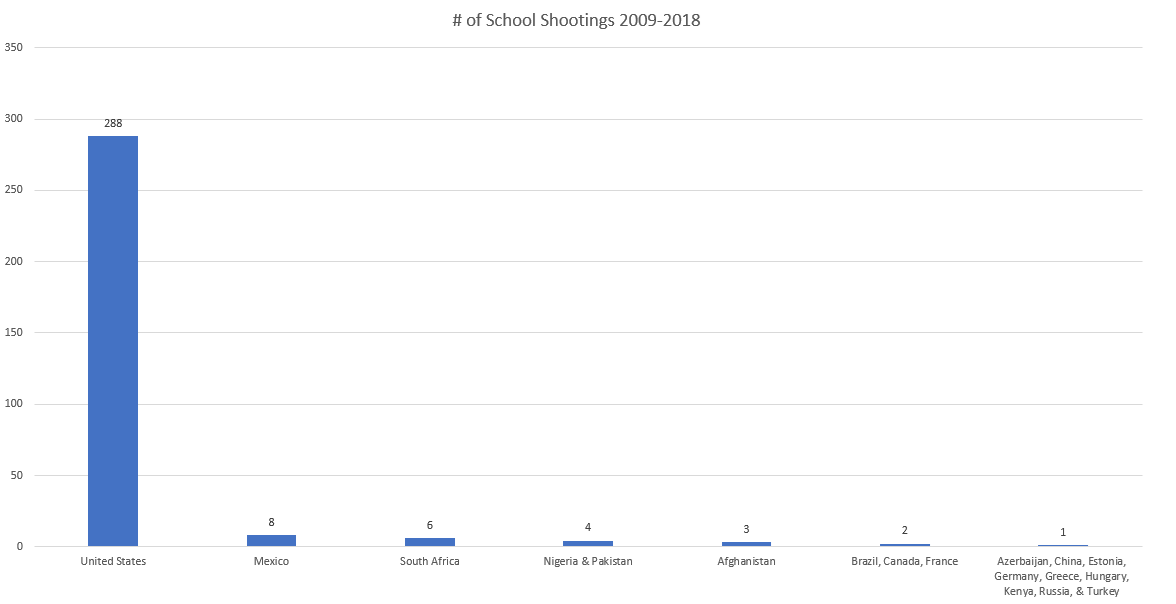
And for some reason abortion is a big deal in the States, yet it’s not a big deal that school shootings continue. The factory of dumb that comes from the US in general is just mind-numbing, where people are proud of their stupidity instead of ashamed of it. I mean, I can understand why folks are looking to the fringes when their elected officials don’t care about them, and their CEOs are bleeding them dry. The inmates are about to run the prison.

The whole Musk-Twitter-Tesla debacle is a really great popcorn show of billionaires gambling and thousands of people crossing their fingers as to where it lands. If that isn’t proof enough that billionaires should not exist, I don’t know what else would show it.

Can we maybe go through the summer months without a new level of emergency going on? Let people catch their breath and just hug a neighbor? I could certainly use some bits of good news.

Inflation vs. Scams

These are rough numbers as the tax structures vary wildly.

Inflation in North America is at crazy highs right now, near the 7% mark. This has a massive impact on people with limited disposable income (read: middle class and lower), as they are now faced with making much harder decisions. They are likely making the same income, but the value of their dollar is much less… fuel in particular. Odds are if you live outside an urban centre, a truck is in the driveway. At $300 per tank, that really limits options. There are only a few possible counters to inflation that actually work at a larger scale and unfortunately, pay raises is not one of them (it is an outcome though!) The primary tool to manage inflation, in a neoliberal market, is borrowing rates.

Why? It’s because inflation is not caused by the bottom, but the top. Inflation is a market correction for an overvalued economy, which is grown from speculation. Speculation is funded through easy access to credit. Let me rephrase this a bit. Let’s say you took a $10k loan from the bank… you’d probably pay 5-7% interest because it isn’t backed and isn’t large enough. Let’s say you take a 2nd mortgage and get $500k instead, that rate is likely to be closer to 1.5%. You can do the same with other forms of equity, such as other investments. These lower rates were seen as stimulus after the crash of 2008.

So let’s pretend you borrow $500k at 1.5% in 2010 and invest it in the stock market. By 2020 you would have made a ~160% return. Invest in real estate, and the returns are similar (2020 – current you would have gained an additional 50%). Depending on where you are, you are taxed at a different rate on your gains… over here you pay on only 50% of those gains at a nominal rate – which effectively means you are taxed at ~20% on all the gains. To break even on the 1.5% borrowing rate, you need to make ~1.7% return. This is a machine to print money. And once you made that money, you can leverage it to make more money. The problem here is that access to the seed funding to invest at these levels is next to impossible to acquire for people without assets to leverage. It’s not possible for someone making minimum wage, trying to put food on the table, to get approved for any meaningful loan without crazy interest rates.

The mean wage during this same period increased by about 40%. If you worked and were not able to invest, then you were making less money than someone who didn’t work and solely invested. If you worked and started at 500K, you’d have gained ~600k (pre-tax) by the end. If you didn’t work and solely invested, you would have started with 500K and gained 1.3m (pre-tax) by the end. By investing once and never touching it, you would have gained twice as much as a worker. By doing nothing. That’s our version of capitalism.

Crypto is like this, except access is much easier to acquire. 1 stock of Apple is $145 today. You can buy any amount of crypto you want, it’s all broken into smaller pieces. Have 5$, you can buy crypto. Bitcoin only hit $1 in 2011. In 2020 it was worth nearly $30k. If somehow you had invested $500k (not technically possible, but the argument is the point) in 2010, buy 2020 you would have $15b dollars (Sep 2020 to Feb 2021 Bitcoin went from 8k to 55k). For a lot of people who have no concept of what investing is, and simply focus on the % returns, crypto seems like the simplest thing in the world.. it just prints money. Except the value of crypto is not linked to anything but the value of crypto… and therefore almost exclusively inflated and therefore extremely volatile to trends.

If by chance, you had 5k invested in crypto and you needed that money suddenly because of inflation pressures, then you would take that out to spend it. If enough people do this, then it deflates the value in the currency. In the stock market, the % of trades required to impact the market are massive, and there are balances to reduce the impacts (generally). It is really hard to have a run on the market. In crypto, a totally unregulated market, there are no such controls and runs are extremely common. Enough that the market has dropped ~40% value since Jan 2022 (hell, Luna lost 99% value in 24 hours). The stock market as comparison is down ~10%.

The larger problem space is that it may appear that people are playing the same game, the truth is simply that the rules are different. The value of crypto in particular is based on the last person who invested, making it effectively a giant ponzi scheme (as evident multiple times). The stock market is certainly bad, but there is something on the other end of it that is tangible.

Back to the original point… if you want to tackle inflation it’s not about pumping more money to people at the bottom… they don’t have disposable income in the first place. It’s about removing the amount of easy money entering the top, who are made up entirely of disposable income and are frankly gambling against a house that has been paying out at a crazy rate for nearly 40 years. They don’t care an ounce that gas costs triple… it could cost $2000 a tank and they wouldn’t know (they would from a profit perspective if they are running a business). The outcome of inflation being controlled is that the non-stop increased in costs are reigned in, which would then allow for incomes themselves to catch up.

There is no model that fixes this without changing the way the people who manage the majority of wealth are taxed. (Top 1% own ~40% of income, bottom 50% are 20% of the income. Top 1% = assets >$5m, annual income of >$500k). If you were in a hockey stadium with 20,000 people, 1% of those people would fit on a single articulated bus.

There are larger reforms that can help here… but the people who have benefited the most from the broken system are the ones running the system. Crypto was a great option to say “here’s an option for the plebs” (Poilievre in Canada said “...it can also let Canadians opt out of inflation, with the ability to opt in to cryptocurrencies.”) If you’re voting, and finances are of any interest, dig a bit. Soundbites are fun and all, but the actual decisions that make a difference… been a long time since that’s happened.

Supply Management Systems

Supply chains are notoriously complex, but fundamentally a simple thing. People make things, people buy those those things. The people orchestrating the sale want to find a price that meets their operational costs, and people buying things want to find value. Both need information in order to make those decisions. It’s why there are grocery flyers right? Find the best deal on canned soup and whatnot.

In the larger sense, most large scale retailers dominate the sales market and can both set and negotiate better supply prices. COSTCO and WalMart operate with this model… they will just buy all your stock but pay you half price for it.

Supply Management Systems start at the bottom of the pole, with a laser focus on raw goods. They have a few purposes:

  • protect the market from wild price fluctuations
  • give the producers some semblance of guaranteed income and an effective quality floor
  • give buyers an effective “floor” for the lowest price and assurance on quality
  • proposes protections to the national market from external “flooding”, typically through an import tax
  • supports the internal development of new products

Canada has supply management on major agricultural goods – grain, eggs, milk. This means that all large size eggs are bought from suppliers at the same price. There’s been a bun fight for quite a few years about the dairy market, as it hasn’t been as flexible as it could have been. There are specific types of cheeses that simply are not made in Canada and the import fees make it so that we likely never will see them from other countries.

If you’re a consumer, this can be seen as a bad thing as there’s less variety and you are “technically” paying more for the product as no one can undercut. The problem here is that of personal bias. You getting the cheapest possible eggs means that it’s a race to the bottom for the farmers to cut every corner possible to beat the next guy, or just close up shop. You may win, but the farmers lose and eventually there just aren’t remotely enough farmers left.

Second, is the protections it provides to a national economy. Dairy is a great example. Wisconsin, a single state in the US, produces 50% more dairy than all of Canada combined. Wisconsin doesn’t have supply management, and the farmers there are over-producing dairy, to the point of dumping stock. (They are subsidized, so it actually costs less to pump and dump the milk than to produce less milk.) Without a supply management system in Canada, they would flood the entire market are put most of our farmers out of a job… or force the government to subsidize equally.

Subsidization is an interesting topic in itself. The US subsidizes nearly everything because it’s functionally easier to control at a global scale as compared to import taxes, and can be done at the state level.

The best global example is crude oil, which is traded globally. In the US and Canada, we are both nearly self-sufficient in production, marginally in refinement. The lack of a supply management board (and the extreme power of OPEC) means that it makes no sense to sell locally when you can sell internationally at 4x the rate. If you’re wondering why the war in Ukraine impacts your gas prices, it’s because oil prices are “managed” internationally instead of nationally. Capitalism dictates that companies maximize profits over all else…they could sell it locally but that would be a significant loss if they instead sold it on the global market.

As with most things today, complex systems are reduced to soundbites. I’ve barely scratched the surface of the topic, and there are certainly multiple improvements that could be applied to the systems. Fun times.

China and Russia

I am not a foreign policy hawk, but I enjoy reading up on the subject. The world as we know it has 3 primary super powers – the US, China and Russia. They are, in extremely simplistic terms, focused specific areas of market. Russia in raw goods (primarily energy), China in manufactured goods, and the US in services. There are other countries in the mix, but none of them are large enough to direct their market share like these three.

Politically, these 3 countries have a lot in common, in that the politicians are run by business interests. The slight difference here is that the head of state is all but permanent in Russia and China. Both are also ex-communist countries that still have that generational echo where the country is larger than the people within. This is a complete contrast to the US, where the individual takes precedence over everything (lawsuits don’t really exist in Russia/China, at least as we recognize them).

In terms of military strength, all of them are capable of mutually assured destruction, which is the only bar worth measuring. Digital war strength, well, the advantage is clearly with both Russia and China, primarily because they also control the methods by which information is shared within their countries. China is particularly resilient because of the Great Firewall. Russia has little defence, but a tremendously effective offence.

Foundations set, all 3 countries have a desire to increase their influence/control, as this increases the amount of money they can make. Recall the markets they control, and you get a better idea as to the type of control they desire. For a long time the US wanted more oil security, Russia wanted it’s raw resources back, and China needs more secure borders and material to make goods.

The US empire has been on a steep decline for a good decade now (this is a fascinating subject), their ability to expand is in the traditional sense is all but gone. Russia and China however are both relatively new to the scene and have been taking advantage of this retreat. Both have blustery leaders who will gladly throw a threat around with no intent to follow through. Which is also the case for retaliation, where there’s only so much bluff calling possible when you’re on multiple war fronts. The war in the middle east never truly pivoted, with that focus taking away any global ability to counteract other offensive acts. As any opportunist would, others took advantage. There really hasn’t been any noticeable resistance against either Russia or China.

The war in Ukraine (that’s what it is) is different for many reasons. Importantly, Russia dramatically underestimated its capacity to overtake the country and resistance capabilities. These are not protesters or poorly armed rebels. This is two countries at war. The quick attack and follow up propaganda just didn’t work, and that means that attacks will get more desperate as time draws on. Second, Russia underestimated the western resolve to impose sanctions. Russia makes nearly all of its income from raw material, which has been all but shut off. Now it’s a game of chicken of how high gas prices will get before the west caves, or Russia runs out of options. A desperate country with a deranged leader and nuclear capacity is not a good mix. Without firing a shot, the west has crippled Russia, and it’s a matter of time before their reserves run out.

Which in turn makes for an interesting view in China. Their method of power play was to put countries against each other. With a unified front, they are certainly doing the math as to how the country could potentially resist any similar sanctions. They could certainly survive, with an absolutely massive cash reserve, but it would be a constant drain on their reserves and push a lot of the millionaires/billionaires to lose money – those who are keeping the government in power. There’s a threshold here, where only a certain small % of the folks can be targeted (Jack Ma was untouchable until he wasn’t).

This is just a simplistic view of a hyper complex and interconnected puzzle. It’s not possible to isolate any one part and not impact another… that’s what globalization has done. No country can be self-sufficient in this age, to the point where their lifestyles can be maintained. Higher gas prices is one thing. Empty Walmart shelves… that may be a bridge too far.

The next few weeks are going to be very interesting on the global stage. With hope, this can de-escalate and find a long term solution without the continued loss of innocent life. But it’s a turning point all the same for how this tiny blue dot moves forward.