Betas, Early Access, & Persistence

Isey has been “beta testing” the online MTG game.  It sounds fun, if complex.  My issue here is persistence.

Back in the day, betas were actually betas.  They were for testing bugs, and some final polish.  There were regular resets, and there were testing templates.  Sure, you put in time, but only a portion of that was ever lost.  The resets were frequent enough that you never acquired a mountain of investment, and resets often provided you with a quick path to return to the previous point.

I remind folks of the EQTest debacle from many years ago as a core point to this. EQTest was an Everquest server that was essentially client testing – people were there to test patches.  It had permanence.  If you ever played EQ, then getting to the end game was a month’s long investment of time.  EQTest, rather than provide testing templates, simply never wiped anything.  A few times they did, but provided a migration mechanism to restore progress. Until they stopped doing that, and EQTest players went bonkers.  SWTOR had a similar issue with their test server if I recall…

Still, I think it’s fairly self-evident that if the goal of testing is to test X, then you want to get X in front of as many people as possible.

Today

I have a level of despise for beta and early access that borders on old man syndrome. In 50% of cases today, it’s just presales.  In the other 50% it’s an actual launch, but with a promise that they will deliver functionality at a later date.  Fine.  Some people can’t help themselves and they’ll fork over money on a promise.  That’s how kickstarter work after all.  I mean, how many EQNext/Landmarks do you need before you get a “success” like PUBG (which still is not optimized)?

The kink here is that some games claim persistence, and that the step between beta and live is a wipe.  That part actually makes sense.  It’s the overall concept of persistence & investment versus the length between wipes.

Let’s say a game is ranked based.  Ranks are acquired through a lot of play.  Beta is designed to test that ranks work.  People gain experience in game, and out of the game – they become more proficient.  If the lack of wipes is long, then people get invested in that rank.  The concept works on live, under the name “seasons”.  It works because it doesn’t erase the previous season, it doesn’t repeat it, it adds something new.  The difference between beta and live doesn’t exist.  What you did in beta, you have to repeat in nearly the exact same way, for the same rewards you already had.

Let’s say a game has an interaction between real money and RNG, in that you spend money for the chance at a power increase.  All card games are like this.  You could spend a lot of money / time getting the right RNG to land to build something you like.  Then it’s gone, and you need to do it again (and get lucky again) on live.  It doesn’t really matter if they credit the expense, you aren’t buying the actual items, just the chance at items.

Then there are games that mix both together.  You pay money to get a hero, and then need to level that hero.  The sense of investment is even higher.  Which is honestly ironic, given that if people calculated how much they get paid per hour, and the hours of investment in a game… that’s the real exchange.

Forward

I see this model getting worse.  As much as it benefits the developers, it is often a detractor to the progress of the actual game.  Players lose time invested, but that’s actually part of the deal of beta testing.  It’s the game that suffers for multiple reasons.

  • The negative feedback from players when the wipe does occur
  • The lack of actual testing of mechanics and feedback
  • The lack of testing the progress systems due to lack of wipes
  • The false positive feedback system that focuses feedback on the last mile, rather than the underlying mechanics.  (e.g. this change provided more money, let’s do it again)
  • The lack of change control as players assume it’s “live” (e.g. the now-now-now mentality)
  • The lack of retention after live, which is a death knell for multiplayer games
  • Public betas for long durations are invitations for copycats, that can do it better as they don’t have a player base to support

I’m thinking the beta / early access moniker needs to have an expiry date.  It can’t last for more than 3 months, then it needs to either shut down access for a week & wipe, or go live.  Long public betas of neat ideas are going to crash and burn, as the industry is built on the concept of copying other games and tweaking some small bits.

I don’t think player behaviors are going to change.  The masses are by definition too dumb to think for themselves.  They will devour on thing, move onto the next, and don’t really care what the overall implications are.  They just want to be part of the bigger group.  That’s fine, games are there as entertainment and few people want to think as part of entertainment.

My gut is that the industry is going to chew up all the little guys in this particular model, and a new funding/player model will take it’s place with some indy developers.  Small MOBAs are gone.  The BR craze is just starting, so we have a year or two of that to see it burn up.  Funding the next big thing…that will be fun to watch.
WoW Legion Retrospective

With Legion coming to a close, let’s take a look back.

Launch

Relatively pain free as launches go.  Zones and dungeons were all working well.  There were a lot of good changes at launch for quality of life.

  • Transmog:Appearances to help people sort out their looks
  • Up to 5 players can tap an open mob, making world quests a lot more pleasant
  • A simplification of stats (spirit, armor, multistrike, spell power were removed)
  • Re-specing out in the wild for free
  • Removal of glyphs
  • Max gold increased to 9,999,999
  • Max characters per realm upped to 12

The scaled content was well balanced in Legion zones, and made each area fairly similar in terms of challenge.  The loss (for some) of flying for leveling was offset with the flightmaster’s whistle.  The emissary quests were a good way to compensate for dailies, and there was always something to do when you logged on.  Small shout to the hookshot ability.  I found that to be a super tool.

The dungeons provided were all quite good, though Maw of Souls, Eye of Azshara, Vault of Wardens, and Halls of Valor were the ones that worked best for me.

7.1

We got Karazhan, Trial of Valor, Suramar Part 2 (Nighthold), more world quests – and Falcosaurs.  For a small patch, it did delivery some nice things.  It was nice to revisit Kara…and the nightmares of TBC.

7.2

This was a big one.  Broken Shores was launched, which brought new dungeons and a raid, demon assaults, class mounts, flying (!!), class hall upgrades (and followers), and pet battle dungeons.  It was a surprising amount of content for a patch.

7.3

Argus.  Which I would argue is a refinement of the Timeless Isle mechanics and lessons learned from the Broken Shore.  Invasion points worked for me.  99% of Argus as a quest / lore location worked for me.  The closure of the Burning Legion saga was really nice to see through.  The downside I have for Argus is that flying was removed for that zone.  The teleporters certainly helped, and trash was well spread out, so not too bad in the end.  Plus, it rained purples.

Artifacts

Giving players weapons of supreme lore/power was neat.  A bit jumping the shark, as there’s nowhere but down to go from here.  The customization of passive talents was fun for the first bit.  The Artifact Knowledge gating mechanic (to make the weapons stronger) was broken, and dramatically rewarded grinding.  When class power is measured in Maw of Soul runs… there’s a problem. It also made off-spec work a real pain in the butt to manage.  It also made alts a whole lot less fun.

The appearances of each artifact worked for me.  Collecting them was a fun challenge.  For most classes at least.  Some were gated behind weekly bosses, which was pretty dumb.  Still, the concept of power and bonding to a weapon worked, and clearly the Azurite system is a reflection of that.

I will say that it’s going to be funny to be replacing something like Ashbringer with a green sword that drops from a spider.

Crafting

I liked the ranked concept of crafting.  I didn’t mind the quest gating too much, but some of it was annoying when forced to do high level dungeons on an alt. You needed to gear them, then boost their artifact, then quest, then do more quests.  It was too long, and provided minimal value for most.

I’m not surprised that First Aid is gone the way of the dodo.  I am surprised that Inscription has not been merged with Enchanting.

Class Halls

This was generally better than garrisons, as it wasn’t about micro-managing.  It was thematic, and provided a reason for class fantasy.  The follower quests were not fun.  I further dislikes quests/dungeons/raids being behind these gates.  It was a lot of busywork.

But if you ignore the followers, then the rest of the class halls worked.  The people within the halls, the various quests, or even just the hall itself – lore-nuts were ecstatic.

Suramar

This entire zone worked for me, end to end.  Parts were open, the city felt like a city, there were tough areas, the questing was solid… it just worked.  The central quest to restore the tree was fun.  The pet zombie scenario was fun.  The costume worked.

Mythic + Dungeons

I ran a few of the lower level ones.  I had some fun.  The additional constraints changed the thinking of how those were run, though in 90% of cases it was better to run with a pre-made group.  I am in the camp that thinks that this type of content will replace raids as the top tier activity.

Character Alts

It was bad in WoD, as the garrison work was character specific.  Once you put in the time, then it was a crazy amount of busy work to manage it, but provided an insane amount of gold-making opportunity.

Legion seemed to double down on that theory.  As mentioned, artefacts were a serious grind for one spec, let alone one character.  Throw in the legendary (with 4 item cap) that had a dramatic impact on playstyle and it compounded the frustration.  Suramar dungeons were also gated per character.

I get the concept, Blizz wants people to be invested in a single character.  Well, it’s 2018 and that mindset needs to be tweaked.  Put in roadbumps for alts… fine.  Bigger ones for optional branches, but the main power line should be streamlined.  I don’t think we’ll ever see FF14s system here, but there’s a middle ground to be had… something like Rift’s core classes, or SWTOR’s Legacy system.  At least something given that they want people to re-roll their characters for a new skin of the same class.

Overall

Aside from the penalties to alts, I think Legion delivered an amazing package.  The timing of content release was good, the content was relatively bug-free, the lore was solid, the flows inside each zone worked…it was all rather seamless.

And there seemed to always be something to do, a reason to log back on and achieve something.  At least for a good long while.  I’d guess retention here was much better than in previous expansions because of it.

#D3 – Season 14 – Greed

The thing about action RPGs is that the fun has to be in the moment to moment gameplay.  It’s not much different than a 1 armed bandit for the long haul, as you kill things for gear, to kill stronger things for better gear.  Many ARPGs struggle finding the balance of speed/power/fun.

Going to pick on Path of Exile for a second.  I really like the game’s flexibility, seasons, classes, crafting… pretty much every mechanic in the game works for me.  What doesn’t is the slow & muddy feel of combat in some areas.  Some zones really work well (the Ledge is a good example), while others feel too restrictive and repetitive.  I can put in a lot of time if I get a good string of zones/skills, but hitting a rough patch has me log off for a while.

I play D3 once a year it seems, though rarely for more than a couple weeks.  Typically at the start of season, or a large patch.  Season 14 has a neat buff of double goblins in the world.  The way loot drops work, it isn’t exactly a huge buff but there is always going to be that reaction when hearing the goblin laugh.  And who doesn’t want an extra free pull on the slots?

I’ve played all the classes, numerous times through.  There really isn’t anything “new” to be learned here.  There have been some tweaks to the numbers, but the skills generally all do the same.  A multi-shot DH from 3 years ago is pretty close to the same thing now.  I really like speed – so traditionally it was monk/WD for quick movement.  I decided to try the opposite and went with the Crusader – who is arguably the slowest bugger in the entire game (minus a specific build).

The leveling portion is pretty much the same as always.  Get Leoric’s Crown at the start, slot with a ruby, run Rifts until 70.  Considering WoW sells max level characters, I’m a bit surprised it doesn’t happen here.  It is a useless process in a season.  Maybe 2 hours the first go at it if you solo.  With a power level, it takes less than 10 minutes.

Haedrig’s Gift gets you 2/4 pieces of set armor very easily.  The last 2 pieces require you to craft/find some decent leveled gear, in particular a weapon.  I am still amazed at how dependent D3 is on the weapon slot.  Theoretically, you could see a weapon drop the second you hit 70, and never find a better one.  The power boost from a well-rolled weapon + ramaladadingdong’s gem slot dwarf any benefit from other pieces of gear (minus legendary bonus affixes).  Ah well.

So I’m a few hours in, trying to clear some stuff on T4, with a Crusader at paragon 50.  Let’s see how long this one lasts, shall we?  Likely not too long with the sun out, and a cold one waiting at the cottage…

WoW Apathy

In the same vein as Tobold on this one.

I think there’s a ying/yang effect with WoW expansions.  I am under the thought that Vanilla/BC are the baseline, then each expansion past is solid, with the next being ugh.  WotLK was good, Cataclysm was meh, Pandaria was good, Warlords was meh, Legion was good, BfA…?

Of important note, the devs have been pretty clear that there are no items left before launch… all that’s left is number tweaking.  If a skill is broken, it will be fixed “later”.

Story

Let’s face it, the story in Legion was impressive.  The whole ant vs. god trope was in full effect and you took down the largest threat to the universe.  BfA is back to the Horde vs. Alliance model.  You know, that conflict that Pandaria showed was useless?  In both Warlords and Legion the factions worked together against a common foe.  I don’t quite get how time passes in WoW, but in the real world we’re around 4 years of being chummy.

It’s hard to argue with the logic in a game with dragons and tentacle demons…I concede that point.  That said, the best stories are the ones where character behaviors are consistent across multiple events.  It would appear no one learned any lessons.

Loss

Legion added a bunch of neat ideas to the game, and most worked out fairly well.   Order halls, artifact weapons (the concept, not the grind), leveling, open world questing…even Argus was a neat approach.  Most of that is out the window.

Normal with expansions, out with the old, in with the new.  But the new has to at least be attractive.  Feral, Shadow and Shamans are basically a bit broken from a fun perspective at launch, with numbers being boosted to make them competitive.  Which is odd.

Stat squish doesn’t bug me.  The GCD changes are a bit odd, which will certainly slow down the game.  A lot of those were rolled back, which is good. Curious as to how that plays out.

Raid sets are also gone, replaced with generic role-based armor.  Paladins and DKs will look the same.

Gain

What’s new aside from levels, zones, and dungeons/raids?  Artifacts/legendaries are being replaced by a new neck piece.  This works a lot like the Netherlight Crucible, were after certain power levels, you get a passive boost.  Lots of PvP options.

There aren’t any new classes or races.  Scratch that, there are new skins on existing races.  Not to the same scale of Goblins/Worgen, or even close to Pandaria itself.

Maybe

Perhaps this just means that WoW has hit its apogee.  Legion did some amazing things to the overall game.  Mythic dungeons were a great way forward.  Leveling was much better than in previous expansions.  Broken Shore / Argus were great improvements on the Timeless Isle mechanics.  The pacing of patches was solid.  The storyline made sense.

What Legion made difficult was alts (heck, even alternate specs).  Sure, leveling them was easy enough.  But tradeskills and power levels were taken behind the barn.  Artifact Knowledge / Power, random drop quests for crafting, horrible RNG for legendaries, Titanforging…all of that seems to be changed in a positive way.

Could simply be that this feels less like an expansion of mechanics compared to previous expansions, and more of a large patch instead.  There’s a lot of tweaking, but no large sweeping changes, or shiny new carrots to keep people going.

Must Be Getting Old

When I was a wee(er) lad, I can recall E3 being a time of amazement.  Most years were giant reveals, amazing gameplay, and neat ideas.  I’d buy gaming magazines and surf what was the dredges of internet 1.0.  It was like entering a candy store of new things.

As time has worn on, E3 has lost it luster.  The breaking point for me was the XBONE / PS4 presentations.  One was of head scratching boneheaded moves, followed by another that was just continual *mic drop* moments.  Maybe I was just naive but until that time I truly thought E3 was about the gaming culture and way forward.

Now, not so much.  E3 is full of bullshots.  Not exactly new to the world, but in today’s market of “good looking games” it’s annoying to see something gorgeous at E3 and then comes out looking like a potato.  Or to see gameplay mechanics that in no way resemble the actual game.  Or to announce a game, then never release it.

That’s not even talking about the tone-deaf presentations.  The FIFA presentation is a good example, where you could download a demo of the game right now! and that fell to complete silence.  Or the headshaking in the crowd on the EA presentations.  Not that every game has to have people yelling at the top of their lungs, but it really seems like there’s a growing disconnect between the companies and the gamers supporting them.

The days of new ideas and IP are long gone.  Most of E3 is sequels or bandwagon hoping.  The sense of wonder and amazement is just drained when you’re seeing Gears5, SSB:U, or Battlefield5.  Some of the mechanics may be tweaked, but I know what to expect otherwise.

Side note – hats off to Microsoft for realizing that games sell consoles, and focusing on cross-play.  They have a heck of a hill to climb, and some of the stuff there looked interesting.

I think as I get older, the less I care about what happens in a year from now in the gaming world.  I have much less time to game, so it’s not like I am at a loss of quality games to play today.  Not to mention the fact that I’ve played all these games before.  I’m not disappointing, or even looking forward to it.  Just apathy really.

Until the game gets closer to actual release, and people I trust (odd term for the internet) have sunk their teeth, I choose to dwell on other items.  And given today’s gaming mantra of “day 1 patch to fix everything”, in most cases I’m better off waiting a few weeks after release to actually play it.

Pillars of Eternity 2 – Quick Thoughts

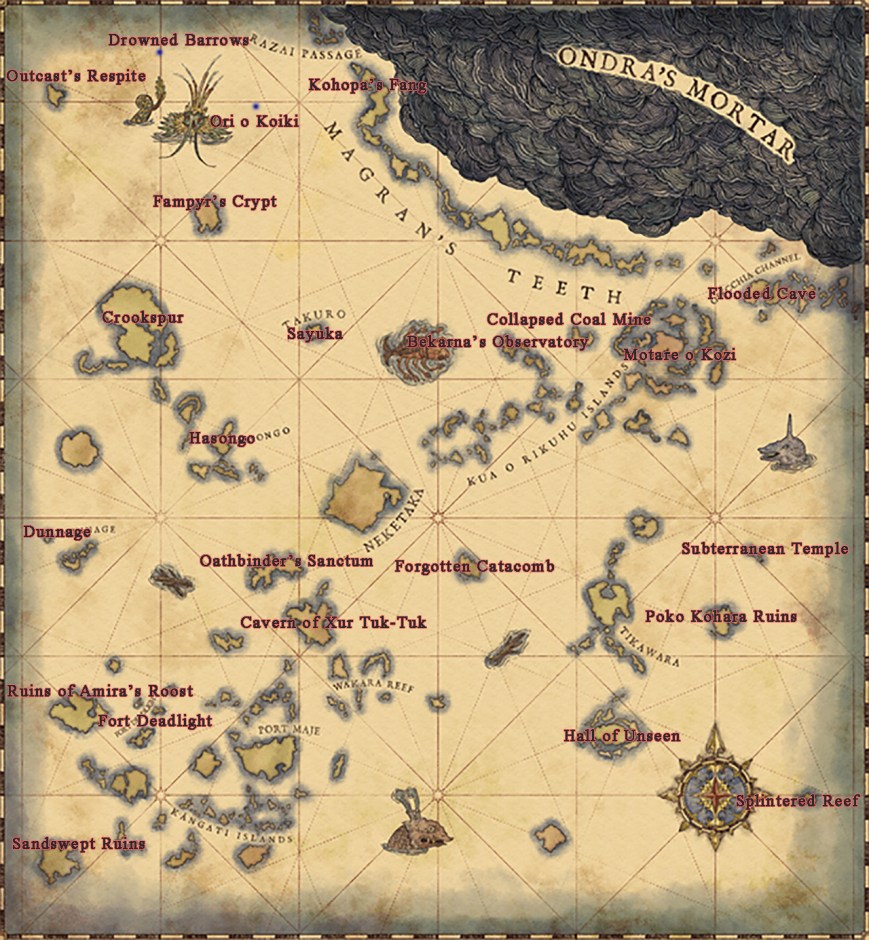
I played the original, and Tyranny as well.  I’m a few hours in, and PoE2 is good with a few hiccups.  I have not reached Nekataka because I like exploring too much.

I mentioned the bit about character creation in a previous post.  There’s a wide gap between that and Tyranny’s more open-ended character builder.  PoE2 is a throwback to more traditional D&D games, and the mechanics within.  It feels more restrictive here, and the choices matter more.  It works.

  • Combat is faster and more open ended that previous.  You’re not as limited with attacks/spells between rests.  It also feels smoother and more meaty than previous games.
  • Itemization and crafting is still not fun.  I’ve yet to find any RPG where crafting was fun, so it’s 99% me in this case.
  • Multi-classing is great for the main character.
  • Less so for companions as you don’t get to pick their “best” 2nd class, you don’t get specialization options, and you get they at a specific character level with existing skills.
  • The companion AI is good enough for most combat.  They won’t fireball your party.
  • The new AI companions I’ve met so far are all interesting. Xoti, and Serafen.  They fit the setting well.
  • The boat I’m 50/50 on.  I think the concept of exploring islands is neat, and mini locations to explore.  It’s a bit of “choose your own adventure” which works well.  The minutia of managing the boat is much less fun.  At the start when money is a bit tight, you are restricted in food/water.  Eventually, it becomes so cheap that it’s nothing but busy work.
  • I have yet to experience true ship combat.
  • I like the overhead map for travel.  It gives you something to look at.
  • I do not enjoy the concept of movement in this game.  At least 80% of the game so far is just walking.  I am heavily spoiled on fast travel.  It is just annoying having to wait minutes of travel to talk from one NPC to the next in a chain.  Boat travel seems longer still, with a very large map.
  • The overall setting feels like a Knight in King Arthur’s Court compared to the previous game. The main character and setting do not appear to fit well – like they’ve traveled in time.
  • I like the individual story lines and quests.  Nearly all have multiple options that are skill dependent, great voice work and a lot of grey responses.  In nearly all cases I had the necessary skill to pass a given test… with 1 exception where I was clearly 10 levels below.  I am chalking that up to bad design as the game leads you to this place very early.
  • I am a fan of the ant vs the god story trope, where you are the ant.  Blizzard has made mint off this, GoW is entirely about that struggle, Horizon hits that out of the park.  That wasn’t dug into in the first game until the very end.  It is core of this story and I think it works really well.
  • No bugs so far!
deadfiremap

You start in the SW Ruins.  It takes 2-3 minutes of real time to travel straight to Neketaka.

I’d guess I’m only about 10% of the way in.  Level 5/20, and the majority of these games have a very long tail end with side quests and whatnot.  First impressions are good, just not stellar.  I enjoyed Tyranny quite a bit more, and thinking about why really contrasts PoE2.  The choices in Tyranny were much more interesting, the pace was frantic, and the character development options were wider.

Maybe PoE2 is just a slow burn until that part opens.  I’m certainly enjoying the game, which is the entire point of this adventure.  I’ll keep focus on that.

Fallout 76

Online Survival Game.  Who’d have thunk it?

Given my previous low expectations, this met them brilliantly.  May have even exceeded with the line of “coop/solo” mode too.  Maybe that’s more in the line of EQ: Landmark.

  • Online-only likely means no mods
  • Focus on building, which was my least fun part of Fallout 4.
  • PvP, though as mentioned it appears optional
  • Fire nukes at others…which seems beyond stupid given the context of the game.  Maybe launching Death Claw attacks would be a better way
  • Set in West Virginia, 4x the size of Fallout 4
  • It’s due in November, which is much faster than I would have thought
  • If it gets more people playing the Fallout franchise, maybe it will fund the next core game
fallout76_e3_powerarmors_1528639320-970x545

The 4 Lone Wanderers.

In the end, it sounds more like they took the generic survival game and slapped on the Fallout IP.  Doesn’t mean the IP doesn’t fit, it is about survival after all.  It’s the core mechanics and what came before that makes this seem so odd.

A bit like that C&C re-imagining on mobile devices.  It’s so different that core players feel disillusioned, and potential new ones (from that genre) don’t quite get it. Then again, not sure what EA was expecting after the Dungeon Keeper fiasco.

I was certainly interested last week.  Now, not so much.  It’s not the game that I wanted, but it’s probably the game that someone else did.  I’ll keep it on the calendar for launch and see what happens.


Age and Time

Kids have a way of making time seem ephemeral.  I’ve had pets, I’ve been single, I’ve been in relationships.  There is nothing in my day that makes time fly by more quickly than kids.  DINKs, that’s the way to go!  I have a few friends that are in that boat.  They can put in as many hours as they want at work, spend time with their S/O, travel, relax.  Have a lot more money.

And this isn’t about fulfillment.  I know quite a lot of people who are happy and feel fulfilled without kids.   Just like I know people with or without kids who are depressed.  It’s just another piece of life.

In my case (as I can’t write about yours), my kids are a window into a different way of thinking and being.  I have a passion for learning, and they are nothing but sponges.  Mundane items are spectacular to them.  They have zero concept of time – “are we there yet”, “is it lunch time?”, “bed time already?”  they just flit from one thing to the next, with no cares and a focus on just being happy.

The heck is wrong with us adults?

What with work, eating, mandatory chores (washing, groceries) I am down to about 6 hours a day to work with.  That gets filled by time with the kids, a workout, a guitar lesson, optional chores (garden), hockey, fishing… and at some point games and sleep.  And the older I get, and the older my kids get, the less overall free “me-time” is there.

But it’s not a bad thing.  Spending more time with the family, and the kids, means that more stuff is shared.  Simple example is just having dinner together and listening to the banana reactions from the kids.  Or asking my eldest what happened on Trollhunters.  She lit up and explained everything over 15 minutes.  I get to play hockey / basketball with the kids.  We go fishing as a family.  We play really interesting zombie boardgames.

I’m rather enjoying this phase of life.  It’s a thousand times hectic than before, and I always feel like I could use a nap, but that’s a fair trade.  I’ve passed on things that make only me happy and now can do things that make me and other happy.

As I grow older, I find myself more content with the general chaos.  Or perhaps just growing used to it.  And as long as I go to sleep and wake up with a smile, things are working out just fine.

Now for some nice weekend weather!

The RPG Creativity Curse

I love me some good RPG.  That feeling you get when the dice roll your way, the story is working, and your character is built the way you want to play… like ice cream on a hot day.

Only few console games allow you the freedom to truly build a character.  You may customize a character, in how they look and a few of their skills.  Actually building one is something usually reserved for PC games in the D&D vein.

Open world games like Elder Scrolls/Fallout do have some building, but aside from what you look like and a few initial perks, you aren’t painted into a corner down the road.  You can eventually unlock the majority of the character skills.  You can, with time, become a master of all.

This post is focusing on the more traditional RPGs, where your initial decisions reduce the options of your character – in terms of power, skills, and story.  A solid game provides a lot of options, where poor decisions can be negative but not painfully so.  I would argue that Divinity: Original Sin has “correct” builds, and if you do not select one of those you are unduly punished for it.  Other games simply have builds that aren’t optimal – but are still playable and fun.

A long time ago, I wrote a guide for Dragon Age: Origins (still on gamefaqs if I recall) about character builds.  I spend a stupid amount of time crunching numbers and seeing what I could make out of the various characters.  I replayed that game half dozen times from start to finish, to unlock every secret and every advantage.  My blood mage tank was a wrecking ball, with near full immunity.  But if it wasn’t built just-so, it would break under the first sneeze.  And this was a game with only 3 classes.

Compare that to something like Baldur’s Gate… and you may have spent more time at the stat rolling screen than the combat.  And I know way too many RPGs where I reached 10-12 hours and realized I made a mistake at the start… usually because I didn’t even know what the choice actually meant.

Enter Pillars of Eternity 2.

classnames

All the classes and subclasses

Without a lie, I spent 2 hours going over this list and the various previewed skills to get an idea of the character I wanted.  I played the original a few times through and preferred both the Monk and Cipher roles.  They had interesting mechanics, and good damage potential if played smartly.  If played poorly, then you face tanked the ground.

With multi-classing, it was then about picking 2 classes that complemented each other.  I started looking at the Cipher and then it’s lovely 3 lovely sub classes.  One was a spell battery, where it took time to charge but then entered god mode.  Another was increased damage on targets vulnerable to stealth (paired well with Rogue).  The last was a glass cannon that blew all its spell points on a massive attack.  My focus was on that last one, and shoring up the weakness of not being useful before that shot was available.

There are therefore two modes to be used here… one is to generate Focus (points to use the cannon shot) and then a strong weapon for that shot to be based upon (two-handed weapon).  Focus is generated based on hits that connect with targets, so Perception (accuracy) is key.  That means that I need a sub-class that excels in two-handed weapons (fighter/barb/paladin) and that have a decent chance to hit.  Interestingly, the Paladin has a subclass that has a single strike attack with +10 chance to hit – a perfect fit.  That meant an Inquisitor.

All that time was spent looking at the skill preview trees and trying to see if the pieces fit together.  Call me crazy, but I found this process a lot of fun.  PoE does a solid job of presenting a lot of data early on, so that while you may spend lots of time thinking, it doesn’t feel like you’re picking in the dark.

Which is a tad ironic given that in the traditional pen & paper RPGs, you had a dozen books to refer to nearly 50 years ago.  It’s taken this long for the PCs versions to catch up (ignoring wikis that are not part of the game).  Progress.  Fun progress.

The Art of Unlearning

Inspired by two articles – Zubon’s on Scaffolding  and grumpy ol’ Matt’s on Tanking/threat changes in WoW.

The core argument in 2nd post is how BfA will revert a rather longstanding tradition that threat is a meaningless item in group content, and bring back active management.  This reminds me a bit of Blizzard’s attempts to bring back crowd-control into group content – and that died a horrible death.

For better or worse, any game that is meant to played over long period of time has an issue with static difficulty and growing power curves.  This means that as the game progresses, players get stronger (numerically) and smarter (tactically), while the actual game remains the same.  Things just become easier.  The longer the duration of the game without a difficulty reset (an expansion, a large patch, a gear reset, scaling content) then the more players become accustomed to that “easy mode”.

WoW really found this out the hard way with Lich King.  The start of the expansion had some difficulty – in particular with the optional trials on boss fights.  The tail end of that expansion had a lot of length, and the power curve provided a “permanent farm mode” on nearly all the content.  People were simply too strong and the culture of “go-go-go” took hold.

Cataclysm tried to revert that easy-mode to the earlier LK launch.  The start of the expansion had groups dying on the first few pulls.  People had to re-learn to play the game.  Fine, this was a restart after all.  But the devs went a step further and curtailed the power curve by applying mechanics that could not be absorbed through numbers alone.  Even if you were decked in super gear, you still needed to avoid Shatter.  This was not met with smiles.

MoP went a very odd route and said at the start that small group content would only be relevant for the initial launch.  Gear progress was better off in raids and daily quests.  I won’t even both talking about WoD – that was atrocious.

Legion though, there’s an interesting bit.  Dungeons started off quite easy.  Stayed that way too.  What was added was Mythic+ mode, with increasing difficulty.  To succeed at high levels, you needed both good players, the right classes, and adequate stats.  CC/Stuns are required.  There was easy-mode (ala Raid Finder) and then hard mode.

So it’s an interesting model to re-jig the base game towards the lessons learned from Mythic+ mode.  I get the feeling that Blizzard saw that people were able to ignore specifically designed mechanics to progress further than they had planned.  Game the system if you will.  And the majority of the “controversial” changes from BfA are meant to address that exact issue – more abilities tied to the GCD, this threat change, class revamps, breaking down the homogenization of classes.

People that have spent years on “easy mode” without Mythic+ will have to relearn the game. And if WoW has shown us anything, it’s that wide scale base-game changes are rarely appreciated when they add difficulty.  I’m quite curious as to how this all plays out a few months after launch.