Mock-Up Prices

I’m Canadian, so we pay for things in Timbits.

Let’s start with assumptions first – any piece that is listed as the same for PC and laptop, the laptop variant will have at least 15% less performance.  HDD and RAM are the only 2 components that can be swapped on laptops – restricting upgrade paths.  PC have much larger screen areas, and much better options.  I used the canadian version of NewEgg  as the price search tool, just for consistency’s sake.

Now understanding that this is not ever going to be apples to apples, at least conceptually it should be close.  The requirements are then:

  • i7 8700 (8th gen CPU)
  • 16GB DDR4 3000 RAM
  • 512 GB SSD HDD1
  • 2 TB HDD2
  • GTX 1070TI video card

Laptops

Given the fact that I can’t build a gaming laptop, I will be paying a premium for the build.

  • ROG Zephyrus M is $2500
  • MSI GP series for $2100
  • MSI GS series (thin) for $3600′
  • Razer Blade 15 (GTX 1060) for $2100

A “regular” sized laptop with a 1070 and a 60mhz screen seems to be the best price point, just around $2100.  It’s ~$500 more for a thin version, and another ~$500 for a 144mhz screen.

PC

This is more complicated, since I need all the parts, and arguably there is 10x more selection.  For the sake of simplicity, I will add baseline parts that are “middle of road”.

CPU  i7 8700K 500
MB Asus PRIME Z390-P LGA1151 160
RAM Corsair Vengeance LPX 16GB (2x8GB) DDR4 3000MHz 185
1HDD Samsung 970 PRO NVME M.2 2280 512GB PCI-Express 3.0 x4 SSD 220
2HDD Western Digital Purple Surveillance 2TB 3.5″ SATA HDD 100
VIDEO Asus GeForce GTX 1070 TI 8GB GDDR5 570
COOL Corsair Hydro Series H60 90
SUPPLY EVGA 750 B3 750W 80 PLUS Bronze Power Supply 100
CASE Corsair Carbide SPEC-06 Tempered Glass Black Mid Tower Case 120
WIN Windows 10 180
Total 2225

Now, I could shop around for better price points, hopefully all from the same supplier.  I still would need a new monitor.  And again, this rig would be ~15% more powerful than the laptop, perhaps a bit more.

Getting a custom PC build with this setup is ~$600 in extra costs as a minimum.  Some places had it closer to $1500.

One suggestion was to build a cheap box with my kid as a learning experience.  A quick search on that comes to around $700, assuming I don’t want it to catch fire.  Pretty much everything is 50% less cost, the video card is $0 (for onboard instead), and the CPU is around $100.

Conclusion

There is no viable conclusion on a blog, when cost comparing PC parts.  That’s farcical.  However, my gut telling me that I can pay near the same price between two products and get more for my money is quite attractive.  Further understanding that the PC build will last longer since it’s parts are inherently replaceable is also motivating.

I guess religion, politics, and PC/Laptop are topics that have no easy answers!

Technology is Crazy

Or maybe we’re the crazy ones.

After my daughter and I finished up her hockey practice, I decided to go and pick up the RAM for the laptop.  I had already done some digging into which specific specs I had in the box.  I need to properly set the picture.  We had stopped at Booster Juice so she was standing in the computer store with this big container and straw, looking at what most sane people would call a junk store.

Anyhow, I catch the guy at the counter and he asks if I have the old stick.  I don’t, but I spit out the important bits:  DD3, 8Gig, 1600Mhz, 1.35volt.  (Say that out loud for a second.)  The look from my kid like I was talking some sort of space language…It’s enough, and he looks through a wall of RAM to find what’s needed.  This tiny little thing and we leave the store.

There were a lot of questions in the car ride back.  I start explaining what all that jargon means, and she asks that golden questions “why is it so complicated?”, followed by the geek question “can we build a computer?”.  To answer “to make people feel smart” and “sure, but we need to to some studying first.”

Computer Jargon

Or perhaps, I should say the abundance of ridiculous choice.  There are a half dozen viable choices of thermal paste today.  RAM comes in multiple sizes, speeds, and voltages.  CPUs are near indistinguishable (i7 has been around for 6 years).  It’s near impossible to pick a motherboard, or know what you’re buying.  And video cards…sweet baby jeebers – the GTX1080 has 3 variants (base, VR, TI).

And that’s aside from things like proper cases, power supplies, hard drives, and cooling systems.  Feels like I need an engineering degree so that I have a chance to see reflections in a puddle.  It’s such a ridiculously high barrier of entry.

I won’t talk about POST tests… argghgg

Simple Solutions

The PC market isn’t dying, it’s simply getting a smaller form factor.  I do get that PCs are even more niche now, but let’s be honest, laptops are the way forward.  At $500 you can get one that can do nearly everything you need, including some basic gaming.  For $2500 you can get a super slim ultra powerful laptop too – know that it’s entirely covered by warranty, and that it will work when you boot it up.  And with decent power management options, it can get through a day of work without charging.

I could build a PC for half the cost, but it would be physically stuck in a single place and 3x the size.  It’s pretty hard to “co-game” with someone with a PC, while a pair of laptops is stupid simple.  A port replicator gives that desktop feeling too.

Next Steps

As much as I would like to build a PC, I think for practical reasons it will be easier to get a gaming laptop.  Practical in terms of use, not purchasing.  Looking at options:

  • Sager/Clevo custom build (exact specs, great price, massive size)
  • MSI make some amazing rigs, at different form factors.  Stealth is almost an ultrabook.  Titan is a tank.  Raider seems a reasonable size.
  • Alienware was bought by Dell and reports are all over the place.  Build quality is strong, but cooling & fan noise seem to be a problem.  They look amazing.
  • ROG fits in-between the last two, with odd price points.

Key points I’m looking for:

  • 16GB of RAM
  • 256 SSD + 1TB of hard drive
  • Upgradeable storage/RAM
  • Thunderbolt 3 port (for docking/daisy chain to other things)
  • GTX 1070
    • Not enough games actually support ray tracing, and this card is still gives 4K, at less than half the price of an RTX2080.
  • 8th gen i7 CPU
    • 9th gen is marginal performance (5%) for ~$100 more.
  • Solid cooling to keep CPU < 80, and physical laptop < 32
  • Low noise levels when fans are at load
  • Screen size isn’t all that important, but a 17″ would be nice

That fun stuff runs around $2500 – with that Thunderbolt port being the tough one to find.  More digging required…and no real rush either.

Gaming on the Move

I’ve been building PCs since middle school.  Not sure why it clicked back then, but it was a pretty big deal for a long time.  And frankly, back then I could build a PC in about 30 minutes – with the OS build being the longest part.  Today?  It’s still easier than most people think, but it’s more of a science.

It’s been about 10 years since I built my last box.  I certainly enjoyed it, and the super flexibility of applying upgrades over time.  Replacing RAM or a video card is pretty simple.  Replacing a CPU… well that gets rougher.  Cooling options were starting to get a bit too complex for my tastes.  The next upgrade was a gaming laptop – a Clevo tank.  It provided all the benefits of desktop gaming, but allowed me to move around with it.

There are downsides to laptop gaming.  Replacing parts is more complicated.  Hell… just getting the parts is hard, as most video cards are only sold to resellers.  Plus, it’s not like you can get a new keyboard, or a new monitor.  It’s a complete package, and you’re going to pay a premium for it.  Plus, the thing can get hot as hell so a laptop tray is often a good call.

The last one I purchased in 2015.  Solid box at the time, with a 970M card.  The 1070M  is ~100% better, but I can’t really find one to buy.  Box currently has 8GB of RAM, which could certainly use a boost to 16GB.  CPU is an i7 but a 4th gen.   I am pretty sure I can upgrade to 7th gen, if I can find a chip, again not exactly common.  I can’t get an 8th gen (let alone 9th), that will require a new motherboard and new RAM – essentially a new laptop.  So really the only viable option here is more RAM – $50 should be able to get a new 8GB stick.

I think I’ll spend the new few weeks scoping out other options.  I like the idea of building a great gaming rig and then streaming that in the house.  Pretty sure I could build an entire super rig for ~$1500.  Another top end laptop, that’s more like $2500.   Been a while, and the rust is showing.  Still, fun to shop!


Demo Impressions

It’s a solid experience.

As with all games, there are some good bits, and less good bits.  For the most part, the good bits make the rest sort of not matter as much.

It’s a BioWare game, and Tarsis is the “story hub”.  The demo only gives you 3 quests, but as a sign of the rest I think it will be a fun run through.   Of the coop shooters I have played, it’s better than nearly all the others in that regard…sci-fi but not so weird it’s hard to follow (Warframe can be tough on that one).

The art, music, design are all top notch.  I think it caused my GPU to melt, as the PC shut down a few times.  Rarely are you unable to see where to go, or what’s going on, which is honestly a tough bag in any 3D game.  It’s a demo, so customization options are limited, but it’s pretty clear there will be a lot of options.  I do like that there are so many dye options, easy to get creative and lose time there.  It’s also good that each Javelin has their own outline, so that they are easily recognizable regardless of their armor sets.

Mechanics are decent.  There are some overall number issues, spawn rates, that sort of stuff that can be balanced without too much trouble.  Enemies aren’t just meat shields, they each have their own preferred tactics, weak spots, and strategies.  Shielded enemies need to be flanked.  Head shots matter.  The giant spider has weak points on the back.  You need to always be moving, dodging, or evading attacks (even as a tank).   The scar enemies attack in groups, and sometimes it feels cheap to be attacked by half a dozen enemies, who all eat through your shields in 2 seconds.   In particular in open areas.

Where things go a bit off the rails are on the environments.  I am used to cover based mechanics, or maybe that you can use the environment to avoid damage.  Large objects, that generally applies.  Smaller objects, like walls, that doesn’t seem to work.  One battle has you take on 3 fire giants who have massive fire AE.  Walls did nothing to stop that from hitting.  All too often I can’t hit an enemy but they can hit me.  The giant mech battle is a really good example of this too.

Flight mechanics I can’t get used to.  In a straight line, sure that works fine.  Anytime you need to actually move, or gosh forbid you’re underwater, it feels like you’re driving a rear wheel drive in the snow.  The amount of oversteer is insane.  It is a major distraction and I am really hoping there’s just something wrong with my control setup.  I’m still tweaking the sensitivity settings…

Javelin diversity works well enough.  I think there’s something wrong with the colossus though, as it seems entirely built for support.  Maybe it’s just the limitations of the demo, but having pure support in a shooter (with no real healing, or faster rez) doesn’t seem to jive so much.  That and that the defensive toolkit really doesn’t work when you’re getting attacked from multiple directions, and bosses still chew through them.  Will be interesting to see that class grow.  Ranger is fun, if your standard meat soldier.  Storm is the glass canon, but really the canon part could use some tweaking.  Their ultimate is insane, I’ll give it that.  Due to the elemental effects (fire, ice, or electric) it makes for some really interesting builds.  Interceptor, I don’t have much experience with, and I rarely saw any in the groups.

Weapon diversity is pretty much what you’d expect in a demo.  Rifles, snipers, shotguns, grenade launchers.  Some minor diversity within, short burst, full auto, that sort of stuff.  You cant upgrade weapons, and they don’t have a unique appearance… but maybe they do later on.  I will say that comparing weapons isn’t all that practical in the numbers game.  It’s nice that you have playstyle choice.

The game feels like it has a persistent memory leak.  I’ve crashed numerous times, hit an infinite load screen nearly every single mission, creatures suddenly pop in or out.  It’s just weird, and I fully expect that to be addressed at launch.

Honestly, a demo is a crappy way to look at the meta.  I won’t dig on that.  The moment to moment stuff, that really works well.  It’s clear there are some balance changes that will be applied for launch, since this is a 2 month old build.  But the tiny moments are fun.  It’s great to take on a giant mass of enemies, and barely scrap by.  It’s fun to take on a boss in a giant room, full of waves of enemies.  It’s fun to use abilities as a group, see some interesting combos come from it.

Pleasantly surprised by the end.

Poor Planning

I am anxious by nature, and one of the mechanisms I use to control that is planning.  I used to overplan, to the n-th degree, but over time I’ve learned to let some things just slide.  I think in reality, I’m just better at managing odds and the low percentage events get a whole lot less attention than they used to.

At work I oversee a team that supports a critical service for a whole bunch of clients.  Outages mean freakouts and long hours, so we go to great lengths to manage the risk.  IT, after all, is a commodity now.  And you only notice a commodity when it isn’t there (like water, electricity).  Planning of large changes takes a fair amount of lead time, and we need to do a lot of testing to make sure it works.  Part of that testing includes load/stress/failure, where we throw everything we can at system and see what happens.  We test at daily load, peak load, and critical load – meaning what do we normally see in a day, what is the highest number we see in a day, and what have we planned for before it melts.

For starting companies, launching a new product, this can be really hard to do.  Maybe the architecture/platform is new.  Maybe there wasn’t enough research to estimate the load.  Maybe you get really popular before you can grow.

For larger, established companies, these items should not occur.   The ol’ error 37 in Diablo 3.  The inability for Sim City to work for nearly a month.  New MMOs that melt for the first week.  Typically, this is borne from a) poor testing and b) poor market analysis for load (you are popular).

How do you know if you’ll be popular?  Today you can check pre-sales and the number of accounts registered.  Social media trends.  Analysis from gaming blogs.  Plenty of data to give you a pulse.  If you’re big enough, then you have extra hardware on stand-by anyhow, since you’re running a cloud-type data center.  May not be able to turn them on in 5 minutes, but a day or two should be reasonable.

Which brings me to the VIP demo for Anthem, and the servers “melting”.

The reason this is confusing is that the VIP demo is only for players who have

  • Pre-ordered
  • Active on Origin Premier
  • Have received an invite and linked it to their account

That is a fraction of the launch day user base.  It’s an even smaller fraction than those that will use the open beta.  Plus… it’s not like EA has no experience running online games – Battlefield V is only a month or so old.

So maybe the server architecture is too complex to spin up.  Maybe they had already planned to add capacity and the equipment came in late.  Maybe their stress testing wasn’t accurate and this is the fall back plan (my $$ on this one).

Regardless, it’s good news that they are able to react this quickly.  Glad the days of waiting weeks for server capacity are behind us.  And really, the entire point of this demo is to test the infrastructure for load and bugs.  Better now than on launch.

Guacamelee 2

Or rather, how Celeste has spoiled me.

I never had the chance to play the first game, but I always heard it was a nice gem of a game.  The metroidvania genre has always been a fun time.  Super Metroid really did a bang up job there, and most of the DS Castlevania games hit it out of the park. The genre does seem somewhat relegated to the indie space, as it doesn’t translate well to 3d games.  Darksiders tried that approach, and there’s a bit of it in the Zelda series, but I can’t really think of other examples.

guacamelee-2-review-shot-18

All the red will kill you.

The game seems to be aiming for satire more than much else.  The skill upgrade nodes are straight out of Metroid.  I get the stereotypical/pun heavy humor.   It generally works, and makes the story move forward. The art and music is top notch too.  Feels like a realized world, which is oddly important.

Your character unlocks various abilities over the course of the game, but those abilities seem at odd with the fundamental concepts of the game.  I mean, you’re a wrestler.  Should you not know how to body slam from the start?  The various directional slams are used in combat, and also used to destroy extremely obvious blocks, for extra areas.  There’s an entire subset of the game dedicated to the chicken form (yes!) and it’s skills.  You’ll go an hour only being able to punch up, then 2 hours of punching sideways, then you finally unlock punching down.  Meh.

The good thing, is that the map is extremely detailed, and shows you exactly which blocks are where, and what treasure chests you’ve seen but haven’t yet acquired.  It diminishes a lot of the secret finding, as the map is likely more obvious than the game screen, but it’s a welcome addition.

Where I am spoiled is in the controls.  Celeste has perfect controls.  It has perfect level design, down to the pixel.  You don’t scrape by a spike, you hit a spike.  You don’t hit imaginary walls, momentum means something, and it’s crystal clear each puzzle was tested to infinity and beyond.

Guacamelee 2 is very loose, and the timing is off.  Many of the more challenging puzzles require multiple sequential button presses, and specific directions to complete. It may go something like, jump, slam, punch, pull, slam, pull, pull, punch, dash.  And at no time can you touch the ground.  Celeste taught me that was achievable and that I simply had to learn the timing.  Guacamelee 2 has nothing to do with timing.  It has pixel correction and the art does not match the pixels.  Some spikes are wider than others, even though they look the same.  Momentum is not applied consistently.  You character will get animation-locked in a specific direction.  What I mean here is that the puzzles are well designed, but poorly implemented.

Thankfully, nearly all of the puzzles are optional.

Take the puzzles out and the rest is really top notch.  Battles are fun, the world is great to explore, the chicken mode is great, there are multiple alternate costumes, plenty of side quests, a neat skill tree, and really fun boss fights.  The important thing, is that it’s fun.  Well worth the buy.

Clues on the Interwebs

Syp’s nostalgia tour with Quest for Glory had me itching for a replay.

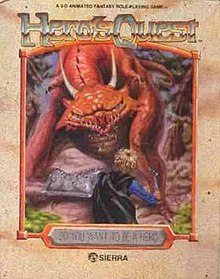
There are a few childhood memories that sit with me still, those of just pure joy.  I can clearly remember opening a Christmas gift and looking at a dragon, trying to figure out what was going on.  Turning the box around, I saw it was a computer game and read every inch of that manual before getting home.

220px-qg1cover

So old school it’s a different name now.

There’s a special place in my brain for Sierra adventure games.  King’s Quest’s pass or die mechanics were not exactly attractive, but QfG’s skill-based checks were amazing!  1989 brought the concept that repeated skill use meant you got better at the skill.  Completely novel at the time.

I still remember getting lost in the game and having to resort to those really cheap “red screen on red text” guides to help me through the tough bits.  Not because the individual quests were hard, but because of the interdependence of those quests.  (Incidentally learning of the benefits of black box testing.)

I played the 2nd one when it came out, and having to draw my own complicated map of the city.  Dying in the desert to pretty much anything that looked at me.  Trying to figure out how to become a paladin.  Back again to the red-screen books.

The 3rd one I bought with my own money, and I can still recall my mouse driver not working for 6 months.  Every play a click adventure without a mouse?  Wow!  This is the game that taught me that you need to go everywhere, at least twice, and at all times of the day.  Without finding the thief at night in Tarna on day 3, you couldn’t beat the final boss on day 20.

The 4th (same as Syp is on now) was a rightful mess of A-B-C quests that all started near the same time, could overlap, and then ended at different times.  It looked and sounded cool but was insanely buggy.  The Mad Monk swamp quest would remain incomplete for 10 years (and the end battle) due to non-stop computer crashes.  It’s ironic that everything but the mechanics of the game were amazing.  But the SCII engine was clearly pushed beyond it’s limits.

The 5th and final entry was bought on nostalgia more than anything else.  First foray in 3d, the mechanics worked decent enough for the time.  The issue was the quests – in particular the Iblis portion.  It was entirely possible to paint yourself into a corner, with no way out unless you completely restarted the game and put in different skill points.  The puzzles themselves were quite fun, and not really needing much of a guide at that point (well, maybe cause I was older).  Then ending did cap the overall story, and was pretty much the end of the adventure-RPG genre in my eyes.

Finding Help

The adventure genre (Sierra in particular) was notorious for obtuse puzzles, and puns that were supposedly clues.  One in the 4th told you about throwing something that’s not a bird, and a yellow one on the ground.  Apparently that means throwing a rock and leaving a rubber chicken on the ground.  That said, one of the novelties was the multiple solution quests, where each class could bring a new approach.  So where the warrior would through stones, the mage could cast force bolt, and then fetch their goal.  That added flexibility/complexity really came into it’s own in the 4th entry.

Still, there were some pretty big brain stumpers.  And those red-screen guides were my go-to well before the interwebs.  Prima Guides didn’t really exist for much more that stat books (great for RPGs), especially if you only wanted partial spoilers.  I would never have killed a single Dark Aeon in FFX without gamefaqs.

Nowdays, I get spoilers for everything before the game has even launched.  It is a rare occasion that the gameplay has some sort of puzzle that cannot be solved with a quick google/discord search.  And it’s not like we’re forced to look these things up, it’s just that they are so damn accessible.  Heck, I’ve written my share of guides.  It’s an interesting shift, where there’s a general lack of mystery and gumption to get through rough spots.  I still very much enjoy the learning aspect, the trial by error.  The Room series on mobile is a great example of puzzle games, without major fail conditions.

Dunno, maybe it’s the competitive nature of gaming.  Maybe it’s the sheer amount of games that release. A combination of other things.  Right now, it feels like a buffet and I’m asking for instructions on how to get through it efficiently, rather than truly taking the time to enjoy the meal.

Raising Girls

/rant

The whole Gilette ridiculousness is just more hot air on a topic of division.  I get it, people are tired of being told what to do.  The irony here is that there’d be no need to remind them if they’d just treat people as people.

Being a man today is harder than it was 20 years ago.  No question.  But it was STUPID EASY being a man 20 years ago.  Everything in the world was built for a you.  Nearly all sports, school, jobs, cars, vacations, commercials, movies were built with a man in mind.  It was like shooting fish in a barrel.  A super example is China’s 1-child law, where boys were prized above girls, and where the projection is 30 million more men than women by 2020.  I could write a book about the social impacts of such a disparity.

I have 2 girls, and I live in Canada.  Honestly, they won the damn jackpot.  They don’t need to get married at 8.  They don’t need to work in a rice field instead of going to school.  They can’t be discriminated against in terms of career choice – they are measured as equals in terms of skill/knowledge.  We have access to high caliber women’s sports.  They are, by law, treated as equal.

But you know what?  They still have a 1/3 chance of being sexually assaulted.  They will be judged more by what they wear, than what they say or do.  They will be told that STEM is for boys.  They will have to always have to travel in a group, else risk being attacked.

The problem with laws is that we need them.  There are assholes all over the place, and most of them don’t even think they are assholes.  If you’re being told to not grope women, and you somehow find that offensive, then then problem is you.

Here’s a quick test that can help prove the point.  Name 10 male role models, and time how long that takes. Doesn’t matter what they do, as long as you think they are role models. Good?  Now do it again, but for female role models.  Did you even get to 10?

But I get it.  Men have been in power for centuries.  We’ve been raised that we are better.  We are stronger, wiser, and a dozen other -ers.  Bullshit.  Men are cowards.  Cowards hide, and lie, and complain.  Strength comes from sharing and growing with others.

When people learn that women can be as vindictive, as evil, as troll-like, as corrupt as men, maybe then they will get the equal footing that is still lacking today.  Women can be more destructive than men, no question.  When we start using the same rules for both, then we can have progress.  It has nothing to do with women being better than men.  It has everything to do with them being equal, judged by the same rules.  Not special treatment – equal treatment.

Feminism isn’t coming after football (CTE is).  It isn’t coming after beer (liver disease and drunk driving are).  It isn’t coming after your job (merit-based appointments, and automation are).

This /rant brought to you by stupid people, who think that their mothers, wives, daughters, and friends deserve less respect than their male counterparts.

Anthem – 2 Weeks Out

I’m writing posts about Anthem for a few reasons.

  • really want BioWare to have some success.
  • I like the coop squad shooter genre, in general
  • I think the game is a bellweather for both EA and gaming-as-a-whole general direction, more so after Bungie split from Activision

Technically, we are 5 weeks out from general release (Feb 22) but we are also technically 2 weeks out from a VIP demo (Jan 25-27), and then a few days later a general demo (Feb 1-3 – a relatively important date).  Which in years past would be called stress tests.  Pretty close.

Anthem, for better or worse, is compared to Destiny and Warframe – sci-fi squad shooters.  (To some extent, the Division as well, but that setting and focus on in-game PvP sets it apart.)  Point is, it’s not new to the market, and it’s competing for eyeballs from games that already have an established user base.  Which begs the question, what user base is BW expecting a) at launch and b) as monthly users?

The Push

As a general rule, people are stupid.  Individuals not so much, but people for sure.  Easily susceptible to peer pressure, and targeted media.  The current state of the US/UK is a pretty solid example of that.  Point here is simply that with a relatively minor investment in marketing, this game could be the general talk of the town.  It’s barely getting a mention.

Sure, IGN has quite a few videos posted from the November alpha.  It’s barely present on “anticipated games” lists.  My gaming feeds get a mention spike every month or so, the most recent one relating to match-making-for-everything.

At this relative time previous, Destiny 2 (even the first one) was in a major media blitz.  TV commercials, articles everywhere, near full saturation.  Maybe EA has plans for Superbowl weekend (the Feb 1-3 date I mentioned earlier)?  It would certainly hit a ridiculous amount of eyeballs, but the costs must be quite insane.

The Gameplay

All I have are videos.  The game looks faster and more movement based that it did before.  There are still some rather massive bullet sponges.  It does not appear that tactics ever matter, simply spamming every ability on cooldown.  Everything is speculation pending actual gameplay experience, so I’ll withhold further comment.

I think the relative few bits of information we have about the game relate to managing expectations.  It is always better to under-promise and over-deliver.  Something that games like Monster Hunter excel at, while Destiny 2 / Division have paid a tremendous toll.  Smart.

The Focus

This summer, Casey Hudson mentioned that the game would never have PvP.  A recent interview stated something a bit different, in that PvP may come at a later date.  The game also comes with matchmaking for all activities.  Of all things, these two items are clear lessons learned from the previous attempt at multi player games from BioWare and one of the largest criticisms with Destiny.  How that is actually implemented is a different matter (either auto-LFG or some sort of group-posting option) will be interesting to see.

Yet a clear focus on one game mode (PvE) is a good thing.  No game can launch with a kitchen sink approach.  Do one thing, do it well.  Grow when the opportunity presents itself.

There are also no lootboxes (smart) and all microtransactions are cosmetic driven.  Maybe, just maybe, this is what will actually be delivered.  I would love to know what I’m buying.

The Future

Speculation only here.  I expect Anthem to have a fair share of issues at launch.  That is simply BioWare’s MO (close to Bethesda).  There will be a massive day 1 patch, and then more along the way.

I don’t expect gangbuster sales, but more of a sleeper hit.  It seems more like it’s targeting word of mouth (which has been generally positive), rather than day 1 sales.  An interesting approach.

My overall expectations for the game were extremely low this time last year.  As the small bits of news have come out, BioWare has done a good job of addressing player concerns.  It is a rather large departure from any new IP launch in terms of marketing, but perhaps this lower investment allows for larger returns.  I do hope it has some success, again in terms of BioWare’s continued existence and in the ideal situation, a more sustainable/conscious approach to game releases.

Players as Content

I would think the trend of the last few years, at least in terms or big games, has been to have players be the actual content.  E-sports wouldn’t exist without this concept.

I make this akin to board games.  As much as I do enjoy your standard competitive games, I much prefer the cooperative ones.  Where Descent is a gold standard for miniature combat such as we see in D&D campaigns, I prefer something like Shadows of Brimstone where everyone at the table is working together.  Instead of trying to outwit a DM (who in 95% of cases knows every bit more of the game than anyone else), you are battling RNG.

Video games are similar in that regard. While there are certainly a lot of coop games, there are so many more competitive games out there.  The difference being that coop games focus on you working together to beat some computer code, and PvP games nearly always focused on defeating the other team (rather than say, achieve the goal faster than the other team).

That distinction is key, as a developer has to put in relatively minor content updates to keep people coming back.  (I won’t bother going into why F2P games have faster content cycles… that should be fairly obvious.)  Less content means less development costs, and a better MAU (monthly use).  In financial terms, it appears to be the best direction.

But then you get into the question of actual game design.  Not all competitive games are designed equally.  MOBAs seem simple, one where simply cloning another model should be an easy way to cash out.  See Infinite Crisis for an example of how that works.  The competitive nature of people is an adrenaline kick of being in the thick of things, having some feeling of control, having fun, winning, and then being able to show that you’ve won.  Each piece of that is important to the whole.

And game design impacts each piece of that puzzle.  Many developers focus on only one part, or perhaps only have skill in one part.  Some take an existing design and then try to insert another model, providing a more monstrous design that either source could achieve alone.

Which does get me back to a previous thought that Anthem would be so much better served without PvP.  BioWare has a horrible track record for that aspect of game design, and their majority player base is not in the game for that reason.

Also related, WoW’s BfA design of PvP everywhere.  Fair to say that BfA is not exactly winning accolades for that decision, and certainly not gaining players for it.  Seems rather to be much more news about the inability for design to balance PvP in relation to the fact that the entire game model is based on PvE.

Long story short, design a game is hard work.  Either coop or competitive is hard enough, and mixing both together is more than the sum of the parts.  People can’t complain that content is broken if it doesn’t exist in the first place.