MHW – Bring Out the Cheese

Monster Hunter World is based on the simple concept that you kill monsters, make gear from their loot, and kill harder monsters.  Rinse and repeat.  There’s, for the most part, a linear structure to the power curve.  Think Diablo; you get more powerful stats to get stronger.

I have currently “red completed” all the optional quests to 7*, which I consider having completed the proper game and entered “end game” – the tempered monster hunt.

Further, MHW is split into 3 tiers.  Low Rank, High Rank, and Tempered.  The first two follow the same power curve, the latter does not.

Low Rank is split into 3 sub-groups of monsters, in terms of general difficulty – Great Jagras as the low end, Odogaron at the high end.  That works, and there’s a somewhat clear path to progression.  It’s also fairly linear, meaning the change is gradual.

There’s a major milestone when High Rank is unlocked, since the needed power level is just a tad more than what Low Rank can provide.  You need to offset that power need with better gameplay performance.  Git gud.  High Rank has 4 sub-groups of monsters (elder dragons are the 4th), and once you are comfortable with the low end, moving to the high end isn’t too bad.  The gaps between the sub-groups are larger than low rank, so killing something like a Laviasoth is a challenge if you only have gear for a Pukei Pukei.

Still, it works and you can see progress.

Unlocking these enemies is also rather straightforward.  They all have a preferred habitat and you can generally find them within a minute or two.  This also unlocks investigations and optional quests to hunt them ad-infinitum.

Tempered enemies are different.  These are the same enemy types as in High Rank (3 subgroups), but they are at much higher power levels.  A tempered Bazelguese will kill you in a single hit if you’re not adequately prepared.  There is no power increment (HP/Attack/Defense) from gear to offset this change.  You need to start crafting potions.  You need to select specific gear sets, with specific skills.  You need to have a specific set of decorations (gems) for even more skills.

Potions are easy enough to farm up.  The pieces can literally be farmed from the Tree in Astera.  Gear isn’t too bad either, since all the drops are from High Rank enemies.  Some pieces are a bit more rare (Wyvern Gems) but it usually works out in a couple runs.  That leaves decorations, which are randomly dropped, and have 4 drop tables (A, B, C, D).  There’s a whole hidden table on this, and multiple YouTube guides to make the best of th situation.  The point is, that you need to either be a) lucky or b) gaming the system to come out ahead.  And there’s no path of progress… you simply loot the decoration or you don’t.  Even the Melder (to upgrade 3 gems to 3 other gems) is randomized.

Did I mention that these quests are not optional, and to find investigations you need to track down tempered tracks in the maps?  There are about 8 tracks per map for Tier 1 monsters, 4 per map for Tier 2, and 1 per map for Tier 3.  Getting an investigation is random, and the monster assigned for that investigation is also random. In fact, in order to get Tier 3 Tempered investigation missions, it’s best not to complete the HR49 mission for a Tempered Kirin, and simply follow it collecting tracks.

From Low Rank to High Rank, the path is both clear and somewhat linear.  From High Rank to Tempered, the path loses that clarity and is dependant not only on hidden systems, but RNG on top of other RNG.  After WoW-Legion, I have had nearly enough of that model.

My guess is not enough people have hit this milestone.  It honestly takes quite a few hours to get here, and even once there the problem isn’t exactly evident as you’re still working on gear sets.  I am also guessing that Capcom is going to modify this sytem in a future patch, to make it both more transparent to the player, but also to open up more challenging hunts that don’t require RNG to unlock.

Until then, I think I’m going to take a step back.
Transhumanism

Wikipedia article to get you started.

The concept that humanity can evolve from its current trappins and dramatically expand both intelligence and physical limitations.  I’d argue it’s where philosphy, technology, and religion intersect.

For a long time this was the domain of the golden age of sci-fi.  Tomorrowland.  Star Trek’s utopia.  Meritocracy.  Some would say, the childish naivety of the greater good.  My favorite book, Childhood’s End, covers this topic.  Foundation and Empire finishes with this.

Then the age of computers came upon us and we went through the cyberpunk phase.  Phillip K. Dick took the concept and turned it sideways to practical mental disease.  Rather than ask what’s next, it was more like what else is there.  We’re moving from the digital age into the quantum one now, where things are so small, things are so integrated, that it’s becoming much harder to see the line between human and machine.  Siri, Alexa, OkGoogle… all are integrated into society to a degree that we only realize they are there when we’re out of range.

And all of this is predicated on a singularity – a single transforming event.  We won’t likely understand it when it happens, but we’ll be able to point back to it.

Small Steps

Time is the ultimate currency.  You can always make more money, but you can never make more time – hence it’s value.  Opportunity cost is based on this principle – given the choice between two options, which provides the largest overall benefit?

It’s a simple fact that automation is here to stay, and will take over more and more of our lives.  Driverless cars seem neat, but driverless trucks are going to put thousands of people out of work.  Even super menial jobs for teens are going away (see Flippy).  Assembly lines and mining/timber have been gutted with this fact.  Regardless of what is being said, those jobs are not coming back.  Even the countries that were outsourced to in the past 20 years are moving away from hiring people.

People require food, rest, space… robots do not.  One robot working 24/7 replaces at least 4 people in terms of time, and likley dozens in terms of productivity/accuracy.  The math is not hard here, and the people doing the math are the ones without any interest in the people. If you have any stocks, then odds are you actually have no idea what the impact is to the workers on the other end of that stock.

Everytime we make something more efficient, or connect something, or share something, we are taking smaller steps to a collective.  It’s hard to articulate the tangible differences between someone in north america and someone in Autralia – aside from culture.  Even culture is blurring… there are more 2nd language English speakers on the planet than native speakers.

The Big Question

What makes you, you?  If you were to replace a bit of you every week(eye, arm, foot) with a robotic part, when do you stop being you?  If you were to completely swap human bodies, but kept your mind, are you still you?

What proof do you have that you exist?  If memories are just triggered synapses, could they be faked?  Sensory input is just electrical charges, those can be replicated (see Matrix for one argument, and many bionic limbs do this as well).  It is possible, though unlikely, that we are just a few days old – the imaginings of a more powerful set of beings.  No different than restarting from a save point in a video game, and we go back to some default state.

How can anyone prove either for or against?

Progress

It’s our unfailable certainty of our own existence that keeps us sane and grounded.  It’s the basis for science, in that what is observed is fact.  It took a long time for science to delve into things we cannot see (the 4 forces, notably), and even longer into things we cannot easily comprehend (quantum mechanics for starters).

At each step of progress, there’s the discovery and then the integration into society.  We can’t imagine a world without electricity, but even 100 years ago it wasn’t all that common.  Nowdays our kids are infinitely connected to all sort of people and things, and privacy is a 4 letter word.  And there’s no going back, that genie is out of the bottle.  Best we can hope for is an educated consumption of technology.

But how do you educate when society changes so rapidly?  Facebook hit its apogee years ago.  Kids (well college age folk) were all over it, then younger kids came onboard.  Time has gone on and as much as grandparents use it, today’s youth wants nothing to do with it.  They’ve moved on.

The blogging community is somewhat unique, in that we live in a world of tech, to differing levels.  I can generally understand the technology presented to my children, and I can communicate my set of values and ethics within.  But it doesn’t prevent them from finding a youtube channel by chance, that is full of content I don’t want them to see.  I have to be extra vigilant, and take the time.  I can near guarantee that the majority of my social circle doens’t even process that thought.

Change for the sake of change.

What’s Next

VR & automation.  We’re at the cusp of both being integrated into our daily lives.

VR is a much higher fidelity now.  Even just augmented reality is on the doorstep.  People reprenting themselves with avatars has been commonplace for 20 years, but to integrate that concept with reality isn’t far off.

Automation not in the sense of robots, but in the concept of anticipatory intelligence.  I wake up and make a coffee most mornings.  Automation would detect me waking up, and based on my behavior patterns, make a fresh brew.  I’m a few years from asking for an “earl grey, hot” and it magically appearing.

As cool as it all sounds, I’m terrified.  I’m not altruistic enough to always make the right decision, and I’m not evil enough to take advantage of the situation. The future is much closer than it appears.


Altered Carbon – Message vs Medium

This post is going to be all over the place, apologies in advance.

I finished Altered Carbon this weekend.  Solid series and recommended, though there are caveats.  There will be some spoilers, but I’ll advise.

Lost

I want to start here because I think Lost hit a social nerve for those interested in TV + serial + mystery + fantasy/sci-fi.  Seasons 1, 2, and 4 were solid high points for me and if you ignore seasons 3 & 6, it could be seen as the “bar” for others to achieve.

What really sets this one apart from other series is that the characters each had their own motivations, mutliple layers of depth, and each moved the story forward through their consistent actions (minus Kate).  That’s just good storytelling.  Furhter helping is that it was set in a giant web of complex stories and rules, which each episode exposed a bit more – then waited an entire week for people to discuss and digest.

Sci-fi books are similar, in that it takes time to read them – time to digest what is on the page.  This part is important.

Ghost in the Shell

The manga is awesome.  The animated movie is foundational to pretty much every sci-fi movie of the past 20 years.  The core concepts of “what is the human soul” still has no answer, and we’re ~20 years from that being a reality.  It’s near-mandatory in order to watch Altered Carbon, and understand what’s going on.

Message & Medium

Some may be familiar with the saying that the “message is the medium”, a statement I think is even more relevant today.  The message is the story, the what.  The medium is the mechanism to tell the story, the how.  I could write an article on global warming, with factual references and logical thought – or I could put a 140 character tweet blaming it on the chinese government.  Apparently the latter has as much weight as the former.

Altered Carbon is a sci-fi film noir.  This means that it’s heavy on flashbacks, emotional relationships doomed for failure, confrontation, and a complex story line.  There are plenty of tropes in this place, but AltC does a solid job of not using that as a crutch.

My gripe with Netflix and the proliferation of binge watching is that the medium is subverted.  Altered Carbon is 10 episodes, and to digest the amount of message in these episodes takes time.  Hard to do when one episode ends and the next automatically starts after 5 seconds.  It means there are pieces that you barely have time to grasp and I found myself rewinding to key dialogue where I thought I saw something important.  In fact, I ended up watching the entire series with close captions to force me to pay more attention to details.

If you do end up watching it, I suggest you don’t watch more than 2 episodes back to back for that reason.

Netflix Series

It would seem to me that Netflix has a framework to series.  They are 8-10 long.  They has a pilot / intro that throws everything at the wall with little depth.  They have an entire episode dedicated to a flashback.  The penultimate episode is the best.  The last 15 minutes of the series are meant to set up the next one.  Most conflicts will end with a fight.

I dislike this formula.  I know why it exists – it has math to prove that it works.  I still dislike it.  Altered Carbon suffers for it.  It should have been cut by 2 episodes and the last episode was all exposition.  Ugh.

Series Overall

The concept is solid.  People are immortal due to technology keeping their “soul” intact, and they can interchange their physical bodies.  Any body.  It makes people, as we in 2018 understand the concept, be disposable.  There’s one scene in particular that I thought crossed a line, without enough forewarning.  Given the characters engaged, they also didn’t act as expected, which should have been righteous fury.

The series does a passable job explaining how these stacks were found, and of course it’s a mysterious extinct civilization.  Enough to say “there are reasons”, and enough to say “we’ll get to this later”.  It’s a bit too much like the Hyperion Cantos.  Could be better, and may be better in the books.

The concept of immortality & absolute power is not only hinted, but explicitly drawn upon.  Religious tones are throughout but not adequately explored except through fear.  It’s a simple fact that all life descends towards chaos over time – it requires energy and effort to apply order.  How those systems conflict with each other is a core concept of this series and it does an ok job at it.

The main plot point takes a detour, but a good one.  The world at hand has depth and complexity.  It shows potential for a Neuromancer type of sub-plot… in creating a heck of a monster.   There are some very good questions that come from this but there’s not enough depth by the end of it.  It is smart in that they avoid the Deus Ex Machina trope, but they don’t close that loop at the end of the series.

There are red herrings all over the place.  The reveal of the real bad guy isn’t obvious, even if you go back in previous episodes.  That part is well written.  The final reveal is exposition, and much too long.  The last 15 minutes are cringeworthy and wholley designed to set up a next series.

I do recommend the series, if only so we can get more complex sci-fi in front of people’s eyes.  There are hiccups, and the target audience is wider than a sci-fi crowd so there’s some dilution in complex ideas.  I’ll be posting more on the ideas presented within, over the next few weeks.

SPOILERS START

Reileen’s character arc is broken, or perhaps not exposed sufficiently.  Her methods make absolutely no sense given her stated goals.  It’s clear from the start that Tak protects himself from attachments, as much for him as for others.  Reileen is pure evil, revolting.  She is also underdevlopped given that she is by far the most powerful person in the entire story.

Oumou is so greasy that it is not possible to feel any pity for her fall from grace.  Her attempt at redemption makes no sense given the lack of development.

Ortega makes some smart moves most of the time, and is our tie to humanity.  She makes a near fatal mistake that would be out of character if not for the fact that she was abandoned by all her support team before that point.

Tak is an odd one.  There’s a lot of depth and complexity here.  He’s very smart and has heightened senses.. but rarely uses them.  He’s trained to take advantage of people, but doesn’t.  His main driver is love for people, but it’s one he actively avoids.  It’s weird.  Like if you watched Batman solve a crime but only as Bruce Wayne.

Lizzie is a problem, or the solution.  What her arc brought to the table was omnipotence.  It wasn’t explored, but it wasn’t closed either.  Either she is removed from the story line moving forward, or people realize that she’s the next step of human evolution.

SPOILERS END


Altered Carbon – Ep 1

I had not watched this series, and only had a tangential understanding of the plot from the non-stop Netflix trailers.  Duke and Copper mentioned I should take a closer look, so I popped it on while I was running on the treadmill.  As with most series, the first episode (usually a pilot on TV) needs to establish the main characters, the overall plot, and provide a reason to watch episode 2.  I think the first episode does a good job of this

Tangent to start.  Dark City is 20 years old.  You should watch it, because there’s nary a bad scene in this entire film.  Just avoid the voice over part before the title card… the director’s cut avoids this.  Watching this, you can see how tropes can improve a story.  Very much in the vein of “show don’t tell”, Dark City explores what it really means to be human, and what makes up reality if memories are all we have.

Back to Altered Carbon (AltC).  10 episodes, each 1 hour long.  Pushed like nuts by Netflix (to me at least, based on my habits I guess), then fell to the side when Cloverfield came out, then mute.  Maybe they expect me to binge?  I dunno, but the timelines for new releases are much too short.

The general plot assumption is that people’s identities can be stored in disks, that can be implanted in new bodies (sleeves) to essentially live forever.  How new bodies are acquired is an interesting question, in particular the one provided to the main character.  Looking forward to that.  The main character comes back to life after 250 years (more on this) in order to find the murderer of one of the richest people on earth.  There’s a lot of hints at a complex backstory to this character, and I will say that there’s some depth to it.

What works:

  • Joel Kinnaman as Kovacs does a serviceable job.  He is not a plot device, which is nice to see.  He has his own code of ethics, and methods.  He goes on a hell of a bender, knowing that his options are limited.  Most importantly, his decision making is consistent and rational.
  • The flashbacks to a previous sleeve work in the concept of character development and plot exposition.  There’s another arc that’s started.
  • James Purefoy is always an effective heel, or at least presents himself as one.  There’s an elitism to him that works really well here.
  • The main plot generally follows logical steps.  The scene at the end in the hotel works given the setting.  The opening shot is a bit of “ghost in the shell”, but we go back to tropes and water being a birth channel.  It’s a setting and is not abused.
  • There are fundamental rules to the universe that are consistently applied.  There’s no magic ghost that makes things happen because.  There’s also some religious bits in here relating to immortality that resonate well.
  • The art style works, and the VFX/sound work too.  Again, the art has a purpose relating to the classes.  Someone thought this through.
  • By the end of the episode, it feels like there was some minor closure on items, and that you’re about to step in the deep end of the pool.

What doesn’t work:

  • There are some logical/science issues that don’t really jive.  Kovacs already had multiple bodies before his recent death 250 years ago.  I can barely recognize the world 25 years ago.  It doesn’t make sense to have such a dramatic lack of societal progress after a quarter century.  This is a writing trope from the golden age of sci-fi, and will require some further explanation.
  • Where do the bodies come from?  Is it a financial thing to be immortal, because Kovac’s body is over the top quality to be left for scraps.  I don’t get this.
  • The religious tones are seen in the first 10 minutes, then dropped moving forward, which is a shame.  The concept of immortality is a great opportunity – see Hyperion Cantos for a great example.
  • If the main character is not a cop, then the cops in a series are dumb.  The main cop (Ortega by Martha Higareda) is written like a teenager in an adult’s world.  Her partner does a much better job.  Kovacs is essentially teaching them, which is dumb.  This works in Demolition Man, since cops have not seen a murder in 100 years, but it doesn’t work here.  For an example of a well developed cop, see Shi Qiang in Three Body Problem.
  • The kitchen sink is thrown at Kovacs when it comes to absorbing society, and he goes all in on a hell of a drug/booze bender.  It is a lot for a viewer to absorb, and Kovacs himself has trouble with it.  It’s bad in that I lost sense of the episode for nearly 10 minutes.  It’s good because when Kovacs comes out of it, he wants nothing to do with it, instead wanting to stick with simple/archaic entertainment.  Cutting this down a bit would have let other themes grow.


This first episode shows some promise; characters appear to have more than one dimension, and there are multiple plot points that are opened up, with a central mystery to drive the story.  It isn’t binge-worthy, mostly because it throws so much at the screen that I can’t digest it all in time, and the foreshadowing to the next episode isn’t all that strong.

Volume vs Margin

I have been forever fascinated with numbers, all shapes and sizes.  How they apply to so many situations. I never wanted to be a mathematician, but that was for practical reasons – no one really gets to see how the back end stuff works.  Numbers in spreadsheets though – that’s second nature.

When I was younger, I worked in a grocery store.  The computer system in the 90s was rudimentary – DOS based and made for ordering.  I thought it could be improved and allow for sales projections.  I made a deal with the owner to work full time on an new inventory system, just for the deli side of the business.  Going from paper inventory (every month) to digital was a big change, but it did open my eyes to some parts of the business.  Specifically that a deli was running 30-50% margins on the products because they had a shelf life.  We bought something for $1 and sold for $1.50.  Things with very long lives had ~10% markups.  Things with high volumes had even smaller markups, around 5%.  Each category made a similar amount of gross profit at the end, but through different means.

Games and Damage

Games are similar.  I played some D&D and the numbers for damage were always intriguing.  At level 1, it made sense to take a large weapon for the single swing and damage.  At level 4, well dual blade attacks were possible and mages had a large amount of spells at hand – meaning the single large swing wasn’t as useful.  Armor complicated things, but mages never really worried about that…

Enter computer games and the speed of dice rolling.  In the majority of cases, armor was turned from an absolute number, to a flat %.  This meant that rather than lose say 10 damage per swing, which impacted daggers much more than a greatsword, every attack was now losing 30% damage.  There are many such exampled, but let’s use both EQ and WoW to make the point.

Base weapon damage was “harmonized” to a great degree.  The damage per second was relatively equal per weapon type (ignoring spells for simplicity).  The difference makers were skills and passive benefits.  e.g. using a staff provided a defensive boost, while using fists provided more chance to provoke a status effect.  The choice was in the effect, not so much the damage.  This was a class-first approach.

Development eventually focused on items, and the age of weapon procs came to be.  They were originally % based on the number of attacks, but it was obvious that multiple fast attacks were preferable.  Harmonized again, and the procs then became capped per minute (PPM), and eventually fell out of favor in development practices as they were nigh impossible to keep relevant/balanced across all classes.

Back to magic users for a second… in nearly all cases it’s preferable to take a lower damage skill that can be used quickly (or in movement) versus one that takes a while to trigger.

This is a common thread in other game types as well.  FPS games certainly have sniper rifles / rocket launchers but they require time to set up and great skill to use effectively.  These large attacks need support from other groups to line up.  Card games are similar, it’s a long set up to get a payoff, compared to continually chipping at health.  In most cases, it’s better statistically to go for volume instead of one large attack.

Monster Hunter

The concept of volume and margins applies here, at different points in the game.  It wildly impresses me that all weapons are fairly well balanced, depending on the role that is played.  Dual Blades are all about volume, and they are amazing at applying status effects.  They recover quickly from missed strikes, and therefore favor a very offensive playstyle, and generally reward a critical based attack (affinity).

Charged Blade (and the Heavy Bowgun) are very slow but can deal tremendous damage – if you hit.  They dramatically favor strategic attacks and defensive play.  They have poor crit chance, and instead focus on raw attacks – high margins.

I’ll give two examples.  The Juyratodus is a rather slow water monster.  Easy to hit with the Charged Blade, and will drop over really quickly as there’s room for error.  Dual Blades still deal damage, but since it’s like hitting a barn, they don’t really shine.  The Odogaron is an extremely quick beast that jumps all over the place.  You need to memorize the patterns in order to get a slow/telegraphed strike to hit, or find a way to make him stop moving.  Barring that, Dual Blades can zip all over the place, avoid getting hit, and find flesh to strike the majority of the time.

There are plenty of videos showing what a fully mastered Charge Blade can do.  They all have the Rocksteady Mantle, meaning that you don’t get knocked back.  They all focus on stunning the target to reduce movement.  Reducing the number of variables so that the only thing that matters is damage margins.  Heavy Bowguns are the same… stop the target from moving.

In all honesty, I find it quite fascinating that a game is able to provide that level of flexibility and still maintain balance throughout.  In the majority of games that we see today, there are cookie cutter builds that work in 95% of the situations.  Sure, there are outliers (e.g. Warlock tanks) but when’s the last time we honestly saw true flexibility?  In a world of min-maxing…it is a breath of fresh air to try something and know that it’s more than likely viable.

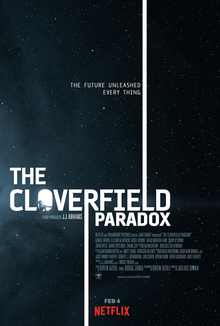
Cloverfield Paradox

Murph is watching old movies, I’m watching weird ones.  It so happens to be a genre I rather enjoy – speculative sci-fi.  That is, sci-fi that is just a shade off reality today and in the realm of possible.

Cloverfield Paradox is certainly in that genre, but it suffers for it.

cloverfield_paradox_poster

So just for a second, pretend like this has nothing to do with the Cloverfield universe and is instead just a sci-fi movie.  That makes it a lot easier to watch, since you’re not trying to find links (of which there’s solely one, and it makes the movie worse for it).

Actually, let’s first start with the word paradox.  A set of arguments that appear to be conflicting, yet work together.  The chicken and the egg, going back in time and killing your parents… that sort of thing.  It forces some critical thinking and challenges our perception.  There is no paradox in this film, other than a catchy phrase to talk about inter-dimensional travel that has no set of rules to be followed.

The premise is simple enough.  The world is running out of energy, nearing the brink of war, and countries pile together to send a science ship in orbit to build a particle accelerator to generate large amounts of power.  Convoluted perhaps, but workable.

From that point forward, the entire movie is predicated on sci-fi tropes.

  • multi-national crew that all speak and there are no language barriers (except Zhang Ziyi who can’t).
  • The scientist that no one trusts, with poor plot twist
  • The one dimensional commander who sacrifices himself to save the crew
  • The doctor who’s also a faith practitioner, and won’t perform medical procedures
  • The angry russian
  • The drunk/happy irishman
  • The giant catastrophic event that triggers the film is fixed with a simple solution
  • A group of scientists, hand selected and trained to think logically, make illogical/emotional decisions without justification
  • Random computer errors that kill people
  • Chekov’s gun

Don’t get me wrong, I can live with few tropes in a story.  Not everything has to be 100% original for it to work.  Europa Report is a good example of a small(er) budget sci-fi film that works, despite some of the tropes.  In the best of cases, tropes are vehicles used to expose or familiarize the audience with a concept to make the story go faster.  If you see someone with a cowboy hat in a spaceship… you get an idea of their background.  In the worst of cases, tropes are used to make the story progress.

The bright part of all this is that there are some really good actors/actresses in this film.  The lead part of Ava (Gugu Mbatha-Raw) has multiple dimensions and is generally relateable.  Aside from one decision point that lacks adequate background, she does an admirable job of keeping the story grounded.  The rest of the cast does their part, given the limited character development.

The art is solid, the CG top notch.  The filming style is straight from the 90s, of running sideways down the same corridor, endlessly.  The foreshadowing shots are over the top.  I was waiting for the mustache twirl.

After thinking about it a bit more, there’s certainly a director’s cut of this film somewhere.  There are bits of the story that simply do not make a lick of sense.  Things randomly decide to “phase between worlds” when the plot needs them to.  Oh, someone needs to get hurt?  Let’s phase a body part away.  Oh we need to show something is lost?  Let’s phase it into a body part.  And what’s with any of the scenes on Earth?  They serve zero purpose.  Cutting all of that out, then adding in more space station scenes should have been priority #1.

The thing about JJ Abram’s and his fascination with the mystery box is that someone needs to know what that mystery is.  The joy of the gifts at Christmas is as much imagining what’s inside, as it is in opening them.  And you can’t have a mystery movie if no one is in on the mystery (for reference, see seasons 3+ of Lost).  And that’s the largest problem here – the mystery remains a complete mystery by the end.  There are zero answers given for anything other than “MAGIC OF DIMENSIONAL TRAVEL!”.

I like sci-fi movies for their potential.  The ideas and concepts often work as warnings or guidance to society.  Pandorum is a great example.  Cargo is neat too.  They both have flaws, and tropes, but they succeed at telling a consistent story.  Cloverfield Paradox comes close… very close, but never truly delivers on that promise.  I really hope some aspiring writer pays attention here – this is what happens when an idea is not fully fleshed out, and the editor is absent.  A rough draft, which is really too bad.  I so wanted this to work!

And spoilers here.

The only rational explanation of the final shot of the film (again, a sci-fi horror trope) is that this films tore holes in all dimensions.  In that Cloverfield 1 was in dimension A, and Cloverfield Paradox took place in dimensions B and C.  There are a dozen other questions after that statement.

Olympic Fever

I’ve been following the Olympics for a while now, something my better half gets a significant amount of joy from watching.  Igloo-world is a winter Olympics country and we usually do pretty well.  Summer… let’s not talk about summer.  It only lasts 2 weeks here anyways.

The “traditional” medal sports here are hockey and curling.  Not that other events have not been medal contenders, but those two have for 20+ years been gold/silver conversations.

Hockey this year is a bit different, at least for the men. There’s no NHL players, so North American countries are a much lower caliber.  OAR and a few other european countries are in a better spot and taking Canada to town.  Women though, nothing much changed.  The US (gold) and Canada (silver) have dominated for 20 years.  There’s still a long way to go for parity.

Curling was dominated by Canada for nearly 30 years.  Just complete washes.  Over the years every country has gotten better, helpful for a sport that isn’t physical but mental instead.  The Canadian women played horribly, and the men just weren’t at the level needed to deliver.  Curling is measured by %shooting, or just rather accuracy.  Medal players shoot in the 90%s.  There were some odd shot choices, and mistakes that typically do not show up at this level.  That, combined with other nations consistently shooting above 80%.

With both of those traditional sports not delivering, it’s opened up eyes to other events.  Ice Dancing, moguls, downhill, speed skating, bobsled…lots of fun to watch events events with some interesting twists. The snowboard big-air competition was something else.   Watching Esther Ledecka win gold on downhill, and unable to believe it is my go-to story for this run.

It’s really something to see both the combination of athletic development (skill) and the ability to report on it (technology).  Some of the replays and art used is quite impressive.  We’ve come so far from tape and 10+ minutes of review.  Even Ice Dancing has a clear on-screen marker for technical score, updated while the skaters are on the ice.  Not to mention I can stream everything from my phone through an official app.  The exposure is great.

It’s also a nice thing to see the country being able to produce a record amount of medals (27 as of this morning) without the traditional ones.  Even those in 4th or 5th are better than the 7,600,000,000 other people on this planet.  Even qualifying is an achievement.

Hope other people are getting as much fun out of watching this as I am.

MHW – Campaign Complete

I finished up the 3 elder dragons after Nergigante, then the final boss Xeno’jiva, to complete the main campaign.  I won’t go into the hours taken, since there were times I just left the PS4 on… but my guess is around 20.

Of those 4 last dragons, none were the challenge of Nergigante.

Kushala Daora is a nuisance as there are tornadoes everywhere and getting into melee range is a challenge.  Flash Pods work wonders.  Fun little fight, but a ranged attacker will shine here.  The final “nest” zone is chaos, which is great!

Teostra is a fire dog, that has explosions everywhere.  Extremely aggressive and lots of damage over time due to the fire.  The final bit in his lair is a hectic run to avoid all sorts of explosions.  Cool drinks are mandatory to offset the heat HP drain.  It’s quite a lot of fun.

Vaal Hazak is an undead dragon in the Rotten Vale – plenty of Effluvium around.  There’s no way to avoid it, and you need to bring Nullberries to revers the 50% HP debuff.  He is rather weak and slow compared to the other two.

Xeno’jiva is a massive dragon, the largest by far.  Melee really only has a decent chance hitting the front paws.  It acts more like a mobile cannon, continually shooting beams from it’s jaws.  Deadly beams.  It eventually goes crazy and starts leaving fire spots on the ground, and when it rears up on the hind legs, it will generate a large 1-shot AE.  In fact, as a general rule whenever any dragon goes on its hind legs, run away.  Flash Pods don’t work here, and this thing has twice the HP of any other dragon.  Easy battle, just very long.  And sharpening the weapon can be a pain.


Closing out after 10 minutes of cutscenes, you unlock a higher HR (level), the ability to meld (use items to make other items, randomly) skill gems, the ability to use two utility devices (now you can always use the Bandit Mantle), and more quests.

I’m far from done with MHW.  It feels like the rest of the game opened up for fun, and I can finally see what I want to focus on as end-game.  Plus, many of earlier challenges are seemingly a lot easier.  My character’s power increase is part of that, but the sheer skill development required to beat some of the tougher monster (looking at you Nergigante) has honed my reflexes to a high degree.

I have two builds I want to try – one that’s crit (affinity) based for my dual blades that requires high sharpness, and another for raw single damage for my switch blade.  It’s neat to see so many skills available to try, though I fully understand the grind to get the appropriate decorations (skill gems) to finalize the build.  I’d guess a solid 40 hours or so before I consider this game “complete”.  Very rare for any game to hit that mark nowdays.


The Job-pocalypse

I work in IT, the field that specializes in making things redundant.  I have made a career out of making my current position redundant, then moving onto another problem area and repeating the process.  What’s left is automated processes for “mundane” activities, allowing people to apply skill to their tasks.  This has impacted jobs, fully conscious, though in most cases they were able to find something else to do.  Always more resistance than not, but human nature isn’t a big fan of change.

If you’ve been paying attention the past 20 odd years, the general theme is that automation has taken over most manufacturing jobs.  Even the overseas companies which were veritable gold mines of cheap labor (compared to robots) are losing out now due to price scales.

There is a single driving factor – money.  It’s cheaper to pay a robot, it’s cheaper in insurance, it’s faster, there’s less defects, and it can work 24/7.  The upfront cost is larger, granted, but the price point for robots and their abilities make them more attractive every day.  How many people have “smart something” in their houses to automate things?  That’s what an Instant Pot does, or Alexa.

Optimization

Society has always aimed for optimization.  Farmers have modified their techniques for generations to get more yield.  Houses are built with more solidity.  Travel paths avoid hazards.  Food last longer.  People are living so much longer.

Always striving to be better.

Industry Change

The trucking industry is 5 years away from being gutted with autonomous vehicles, shipping as we know it will be turned over in 20 years.  Hand made tools and parts are a rarity, and society as a whole isn’t willing to pay $60 for a wrench when they can get 3 for $5.  The energy and natural resources sectors are not coming back to what they were before, no matter what anyone tries to sell as an idea.  Coal is dead – solar is in nearly every single case cheaper to produce and maintain, and even if a mine stayed open, it would be robots running it to save money.

The majority of society has not accepted this.  Global society.  There are still plenty of people who have trouble getting water and light, so this all seems like magic.  That I can talk into my phone and order shoes, which will be delivered to my door tomorrow…hell, even my parents have trouble grasping that.

These are mundane jobs, in that the skill required is generally minimal, and transferable to another individual with minimal investment.  e.g. someone with minimal education, and a small amount of time being shown a task, can then do that task nearly as well as the teacher.  This is the job that “does”.  The advantage here is that individual typically can find another mundane job, though often at lesser pay.

Artificial Intelligence

This is the bigger one.  AI makes decisions on many factors, and executes at a rapid pace, far outstripping human ability.  This has changed the stock market, where nearly all the money exchanged is done through coded algorithms. People used to study piles of data, use their experience and knowledge, them recommend a way forward.   Now you let a computer do all the work.

There’s more an more of it too.  Analytical tools to monitor video feeds, to spot minor changes and alert a human for action.  I mentioned Alexa, or Siri, or Google “butler” services that listen to everything you say and follow on the task.   Computers are being taught to build art, and “deepfakes” is just an exploration of that idea.

Humanity’s ability to think rationally is the largest factor for our success on this planet.  Analysts, trades, masters… in each case we greatly value the unique ability of an individual to do more than another.  To take a complex set of data, rationalize it, and come up with a way forward.  We have rewarded the best of the breed that have that skill…every time someone has a success where another has failed, there was a decision made along the way that made the difference.  These are the jobs that “think”.  If a computer can do a better job than a CEO, then why have a CEO?

That’s a large paradigm shift.  One that most people don’t even realize has happened, since it’s been gradual, and for the most part, positive.  Who drives anywhere now without a GPS giving you the clearest way?  The even more interesting part is that we are directly influencing its learning.  Every click, like, share, interaction…it shows human preference and statistical probability.  We’re on the border of psychohistory – and some may say we’ve passed it with the recent US elections and aftermath.

Side note – BBC has an interesting article on AI used for these purposes.

Last Bastion

There is one trait left that has not had as much success as doing and thinking, and that’s creating.  While it’s an arguable point that every pop star is propelled through algorithmic decisions, true artists are still celebrated.  Sports, music, dance, visual art… all things that robotics can certainly emulate and enhance, but to spawn creativity is a different matter.

It’s not so much to paint a gloomy picture but to just point out that we’ve created something that is generally better at “doing”, getting better at “thinking” every day, and is on the border of “creating” in the next few years.  Those 3 done… well it makes for a good sci-fi story.

Rumor Mill: Disney Shopping Star Wars

Rumors have a tendency to be self-fulling, in particular when they are on the border of ‘ehh, I guess that’s possible’.  The more they are talked about, the more the folks involved can see if people like the idea.  It’s a well known tactics for a company to plant a rumor, just for that effect.

This one concerns the company I like to dislike.  Seems many others to too – but this is my blog.  Rumor is that Disney is looking for another gaming company to take over the Star Wars franchise from EA.

Neato.

The Good

  • I dislike EA and their business practices.  I used to love EA in the 90s but they, along with Activision, went bananas with greed driving every decision.  EA in particular has a notorious habit of buying smaller developers, and then laying them off.  Then using that company’s IP and re-branding the game with micro-transactions (Bullfrog and Dungeon Keeper are prime).  Anything that hits EA’s pocket book is good, and SW is a massive money maker.
  • It’s possible this goes beyond Lego Star Wars and the rest of the games, where Disney can license the material to many companies.  There is so much potential in that franchise… it seems wasted.
  • The SW mobile games by EA are atrocious – they need to go.
  • RPGs! Where are our SW RPGS?!  EA makes horrible RPGs, this is potential!
  • Rogue Squadron / Tie Fighter anyone?
  • Maybe BioWare can be bought by another company, giving them a second life.

The Bad

  • Loss of this franchise near guarantees massive job cuts.  It really sucks.  Hopefully they can follow the franchise to another company.
  • Disney is the largest media monopoly and the simple thought of this occurring is making waves.  That level of power/influence is scary.
  • Changing companies means a large dip in terms of timelines for a good SW game to let the other company come to speed.
  • There’s a risk that SWTOR closes if this goes through.  Which is unfortunate since it’s a decent game…

The Ugly

  • Knives in everyone’s back until this rumor is put to bed by Disney with a new contract.
  • Could be the complete end of BioWare as Mass Effect is most likely permanently shelved, and SWTOR isn’t exactly brimming with development news.
  • Disney’s driving force is a tough one to crack.  As much as they love money, they value reputation nearly as much.  SW:BF2 didn’t meet it’s market projections and made major negative media lines.  It’s entirely possible that EA addresses this, and this limping beasts keeps moving forward.
  • When giants topple, there are always little folk that get hit that we don’t ever hear about.