Diablo 4 – Itemization

Part 2 of the dev watercooler discussions is up, and it deals with thoughts on itemization.  Since ARPGs are typically driven by the desire for better items, it’s worth a read.  First though, some history.

Diablo 2’s character power structure was a combination of items and skills.  The point investments in skills has a generally larger impact on gameplay than items did, yet there was still a lot of value in grinding for that perfect drop.  I won’t even get into the insanity of Runes.

Diablo 3’s character power is entirely driven by items, and the scale of randomness on rolls made some drops “god tier”.  Legendary items were eventually buffed to apply skill bonuses that impacted gameplay, and some bad luck protection with Kunai’s Cube.

Diablo 4 appears to be aiming more towards D2’s model, with skill point investment and items making up the power levels.  They are planning to eliminate the RNG on top of RNG (Ancient drops) from D3, yet still maintain some element of greater power structure.

The addition of horizontal stats to grant additional skills is an interesting touch.  Get 50 Demonic Power total across all items and get +2 Fireball sounds interesting.  Clearly they want to keep the zero DPS (ZPDS) support roles as viable, and there’s some diversity here in the choice between +proc and +damage.  Balancing those two seems a near impossible task mind you.

There’s also some drive to make rare (yellow) items viable, by having a random drop provide legendary affixes to non-legendary items.  Which, I guess is ok.  But that would require the difference between Rare and Legendary items to only be affixes.  If they have the same stat ranges, then this is reasonable.  If legendaries can roll say 20% better stats, then this is a useless system.

I’ve made a point recently that added complexity does not necessarily make for more interesting gameplay.  There’s a benefit of doubt here since the D3 live team has done some solid work.

This does beg the question relating to player progression, which is still a bit mysterious to me.  I think I understand the intent, but the devil is certainly in the details.  I guess another month before more clarity is provided.

In the larger lens, these types of conversations show that D4 is long ways off.  These are not minor questions, they are the fundamental to the game.  The sort of questions that Anthem should have asked themselves and avoided a horribad launch.  So both a yay in the fact that D4 is taking the planning seriously, but also a oooh in that Path of Exile 2 is most definitely going to launch prior.  Should be an interesting 2021.

Life is Full of Plateaus

I’m in a reflective mood of late.  Usually happens when I’m overloaded and the brain simply turns inwards for some rest.

I was thinking back on the various games I’ve played this year, and while quite a few had actual endings, most of them had more stuff to show.  Yet I tend to move on from those games and with no real regrets.  I was asking myself why and came to the conclusion that I’d hit plateaus.

could have kept playing Jedi: Fallen Order and collected all the extra stims and cosmetics.  I could have completed every side quest in Outer Worlds.  Those are more achievements than actual content.  The parts I liked were closed, and I’m sure at some point I’ll give it another go.

The living games are a bit different.  Dauntless I went full in for a season pass, and took the next one off.  I’ve completed every single hunt, and the Beast Mastery system is an insane grind.  Drips and drops moving forward.  I’m more than content with the hammer, fists, swords, and guns as weapons.  I could learn pikes and axes, but I would need some serious crafting investment to make decent weapons.

Warframe is still there, but right now I’m simply looking for a 75% coupon for Plat to expand my inventory.  It’s like a buffet that never ends, and my ability to focus my goals is the real hurdle.  With Frost Prime and Soma Prime, I have one of the strongest setups.  Pretty much any other mix/match (for MR gains) is going to be a downgrade, or relearning.  I guess I should focus on getting all the nodes open for the first half dozen planets.

SWTOR I’ve done the main story quest for my dark side sorcerer.  Daily Onderon quests are there.  There’s at least 5 years of content that’s there for me to dip my toes into.  Plus the entire Legacy quests for the Republic side – on full opposite alts (e.g. Jedi Shadow).  I could run flashpoints til my eyes bleed for 306 gear, but then what?  I’m sure just regular bits will get me there eventually.  I am looking forward to the crew skill (crafting) update coming, cause woowee, is it ever a painful process currently.


I think this applies to a lot of stuff in my life.  I tend to go full speed until my main goals are achieved, never really striving for 100% but enough to consider myself a journeyman of sorts.  I’ll try things I absolutely have no interest in, a few times as well, and see if perhaps there’s something more to it.  Or, I’ll jump full to something I think looks really neat, only to see that the deep end is way deeper than I have time for.  Even at work, I generally only do one job for a couple years before I’ve learned everything I want to learn.  Not to say that I quit something, just that I’ve moved on to something else.

Hockey is a good example.  I’ve been playing since I was 5.  I’ve played all sorts of levels, and on a dozen+ teams as an adult.  If I don’t feel challenged, or that the team itself is “healthy”, I move on.  I took up coaching duties this year, and it’s certainly giving a different perspective on the sport.  Lots to learn, lots to share.

I still play games. That won’t end any time soon.  It’s just that the various goals I set for myself are achieved, even if there’s more to learn.  I hit my self-set plateau and choose to move on.

SWTOR – Time Travelling

By missing the middle part of SWTOR, I really missed out on the large changes in direction the game has taken over the years.  Sure, reading blogs helps keep somewhat up to date, but the details are generally glossed over.  I know Galactic Command was reviled, but without experiencing it, I can’t articulate exactly why.  Whereas I can at length and detail, describe why garrisons in WoW acted as a wrecking ball.

And to that point, SWTOR is a themepark MMO, and it’s judged in a similar vein.  How is the world built, how does the story flow through, are the classes interesting, does crafting have any merit, how many bears do I have to kill?  Each themepark takes a different approach to answering them, though in fairness SWTOR at launch tried to answer them by coping off WoW’s dev bible without understanding why.

I’ve gone over SWTOR at launch to a fair degree.  Bugs aside, it lacked a significant amount of social interaction, the worlds were open and empty, the classes lacked thoughtful design, and the game just ended at level 50.  Within a few months of launch, the game subs dropped by 90%, and the F2P model was applied (with absolute horrible mechanics).  Various attempts to salvage were applied, expansion packs and content at various degrees, and it’s in a relatively stable space today.  I’d argue in the west that SWTOR today is #3 after FF14 & WoW, though Daybreak may have a thing to say about that.  More to the point, dozens of MMORPGs have come and gone, and SWTOR is still kicking.  So ya to that!

Looking Forwards and Back

Having done the KOTFE/KOTET and the Onslaught storylines (or rather, the mandatory ones) I wanted to clean up some space in the legacy side.  I finished up my Sith Warrior’s storyline to get the entire Imperial story unlocked.  I also started up some Republic characters to see the starting areas once again.  Bear in mind, this is content that has never been retouched since launch (8 years ago!) and my mind is set in content that is current.  In WoW terms, that’s when Cataclysm launched and redid all the 1-60 zones.

The more recent SWTOR is focused, and designed with intent.  While Onderon may be a jungle planet, there are distinct areas to visit, and with a quick glance you can recognize your place.  Trainers are close by.  Transports are evenly distributed.  Quests follow a logical sense.

Compared to something like Corellia, where the zone is 4 times as big but has 10x less content.  Enemies are seemingly randomly placed, and the various objectives have you going to one corner, then another quite a distance away.  It’s like someone threw darts at a map on the wall.  Other planets aren’t much better.  Tython has you going through open spaces and over hills, plowing through raiders with no real rhyme or reason.  The world is artificially big, like it was padding for time.  Coruscant is a great example, in particular the sewer/power plant area which serves no actual purpose.  It’s just a wall of meat.

I can see the growth from KOTFE’s more linear structure through KOTET’s attempts are wider zones with clear paths.  The breadcrumbs throughout pull you along.  It feels like it respects your time more, with a narrower scope.  It forces you to do stuff rather than spend 75% of the time getting there and clicking an object, only to be told to go back to the starting point.

Always Forward

Every MMO hits a few crisis points along the way.  Some are caused by an individual, some by ignorance, some simply by accrual of bad bets.   FF14 took the trophy on that with the original launch, and since then has taken a very long term approach with every decision.  WoW looks only to the next expansion, and the lack of planning paints them into corners every so often.

I’m not sure how far SWTOR looks ahead.  I know KOTET was planned to be 2 expansions but due to feedback from KOTFE it was condensed to a single.  I would assume that episodic content in a similar style is in the cards.  From what I can see so far, it’s generally receptive to player feedback and course corrects where possible.  I don’t think it can really afford not to.  Moreso, with the Disney/EA partnership on Star Wars coming to an end, I’d expect that concrete roadmap plans are shared early in the new year.  Should be interesting.

That Pause

Life is ups and downs.  It’s full of contrasts and contradictions.  Canada loves the sun because we get bored of our dark igloos after a few months.  Utopia would drive me crazy, and certainly make it so that I wouldn’t appreciate it.  I need the challenging parts for me to properly recognize all the good I have around me, so that I don’t take it for granted.

And therein lies an interesting feature of top quality gaming, or at least what I consider top quality.  The ones that have stuck in my mind for ages are those where there are spots of reflection.  Spots where the story takes some time to breathe, to recall some of the adventure, and to prepare themselves for the next step.

I’m not talking about the calm before a storm, like the room before a boss piled with ammo/health packs.  That quiet is foreboding, it’s meant to build anxiety for what’s coming.  FPS games are all about that, and one of the main reasons they don’t click for me.  I mean those where the game simply stops being a game and turns into a story.

deumob8eo6ljsjsyftac

The gold standard

It doesn’t have to be a single time either.  While FFX certainly has the fire scene to both open the game and close the 2nd act, there are numerous other places where the game just stops to tell a story.  God of War opts to only have shorter versions (using the boat) while the major cutscenes are built for stress.  The Outer Worlds does it on the ship.  Celeste has quite a few interspersed scenes where she talks to her other half.

The best of those pauses allow you to take a few steps back and consider the world the developers are trying to build.  Some keep player agency (Dragon Age:Origins) and let you direct parts of the story.  Others turn to vignettes, where the characters take a breath and come to terms with what’s going on.  As graphics have improved, so has the ability to tell a story with facial expressions.

This set of clips from Jedi Fallen Order is what made the game for me.  This is just after Order 66, where all the jedi are gone, but it never really hits.  You visit various planets trying to find a list of Force sensitive kids, seeing how those planets lived.   Dathomir in particular has no respite, and feels oppressive. Every part of that planet wants you dead.  Then you meet Merrin, and the world turns into one of sorrow.   You’ve been playing for 8 hours by this point, then in a 2 minute scene you get it.  It’s also the point where Cal starts to question his place in the world, and the actual goal of his quest.

I’m sure everyone has a particular game and scene where their appreciation for it changed.  They make good games great, and have them stick in your brain for a very long time.

Interesting vs Complicated

WoW Classic has people clearing Molten Core in 30 minutes.  I remember taking 30 minutes just for damn roll call, let along the actual content.  Nearly every bit of content (except raids) has been a tank & spank in WoW.  Compare that to something like FF14 where if you don’t avoid the bad, you simply die.

As games have progressed, so have the mechanics within the games.  Playing something like Ice Hockey on the NES, it seems like space magic to get NHL20 to actually do what you want it to do.  Things are without question more complicated, but are they really more interesting?

Today, most games are built upon others.  Either they are sequels, or they take bits and pieces from other games to make something “new”.   Now, I like baking.  I like chocolate and peanut butter.  I like cookies.  I know that just putting PB & chocolate in a bowl is not going to give me chocolate.  Games are similar in that you can’t just put systems together in a pile and hope your Frankenstein monster works.  The complexity of these mechanics makes them very dependent on their underlying systems.  A very casual look at Anthem shows what happens when you have a limited idea of what you’re doing and throw stuff at a wall.

The point, let’s get to it.

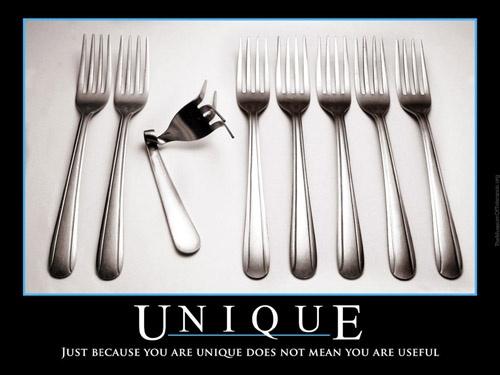
There’s a rather vocal part of the population that wants “interesting mechanics” to help evolve gaming.  When people use a word but don’t know what it tangibly means, that’s a buzzword.  I can look at plenty of games and think oh, that’s interesting.  Shadow of Mordor’s nemesis system is super interesting.  It can only exist in a procedurally generated world, where enemies are randomized and there’s a value in having named enemies.  Sure, Assassin’s Creed fits some of this criteria, but the story itself doesn’t make it a good fit.  Warframe recently launched the Lich mechanic which is similar to this, but it also comes with a crazy randomized grind prior.  The idea is interesting, the implementation is complex.

I’d position that the last few years of WoW’s development has been full of interesting ideas.  Artifact weapons, garrisons, heart of azeroth, island expeditions.  All of them are interesting.  All of them brought more headaches than benefits, each for various reasons that boil down to complexity.  Their basic premises are simple, but at some point in the dev cycle someone thought wouldn’t it be cool if? and people rolled with it.

unique-just-because-you-are-unique-does-not-mean-you-are-useful-quote-1

I get it, these games need to keep bums in seats and wallets open.  After a while of eating the best lemon pie, eventually it’s just lemon pie (I really like lemon pie, ok?).  In order to innovate, it has to be interesting.  Yet in 2019, there are very few great new ideas.  The absolute best games don’t do new ideas.  The take existing ones and perfect the mechanics so that they are not insanely complex.  God of War is a simple action game.  Celeste is a platformer.  Outer Worlds is a stripped down RPG. Fallen Order is metroidvania. Return of the Obra Dinn is monochrome!

It’s not that risks aren’t needed.  It was a big risk to think that Kratos could possibly be considered a decent protagonist (that game would not have been half as good without him as the lead.)  It’s rather that the risks taken are intelligent risks that are supported by the crazy awesome work elsewhere.  There are dozens of games like this, and we gamers recognize it near instantly when we see it.  And we are twice as fast to recognize systems that simply do not work.  And with such a large volume of games available, it’s an easy swap out of game that is no longer interesting to one that is.

It’s simply more interesting to have an idea well executed.

KOTET Complete

That was quick.

KOTFE had 16 chapters, and a fair amount of exposition in each of them (cutscenes).  Generally, combat was an afterthought and minor padding.  KOTET seems like a general change in direction.  The story is there, but it’s a background to the combat.  It also contains vehicle combat (twice!) which rarely is a positive (here included).  There’s a fair chunk of deus ex machina (both figuratively and literally).

I think this is due to focus.  In KOTFE you were aiming to take down Arcann by small bites.  You’re like a mosquito, and only rarely provoke his direct wrath.  This gives writers a tremendous opportunity to grow the world out, and frankly they do a solid job at it.  Yet I gather than when this was recent content, the rate of chapters was too slow, and sometimes only chapters came out.  The horizontal activities stayed pretty much the same.

KOTET compresses the story in half, at least.  You are literally at Vaylin’s heels the entire expansion, and her lack of dimension (until the very tail end) makes it hard to stay invested.  The best villains are those who do the wrong things for the right reasons.  Vaylin does the wrong things for the wrong reasons – continuously.  Two high points however.  Iokath is a cyperpunk’s dream – and absolutely ripe for some solid stories.  Nathema is one of those force voids that we saw in KOTOR2.  The planet isn’t interesting, but I’ve always found that Darth Nihilus utterly fascinating.  The death of the force would be an interesting storyline.

The twist at the end was entirely expected, but still delivered with quality.  It was nice to see how the choices made throughout both expansions culminated in a final battle against a demi-god.  The mechanics of that fight were not very good, but the setting and style were a-ok.

Running both KOTFE and KOTET now that a new expansion is out provides a much different view of the content.  The MMO-grind portion doesn’t exist.  I didn’t even have to touch the Galactic Command system.

Other Systems

I’m thinking back to playing an alt in WoW and the vast amount of story content available.  Blizz’s leveling speed made all of that irrelevant, as there is not a single quest that gates expansion content, and all the gear you get gets replaced in the next 10 minutes (unless it’s heirloom).  It’s entirely pointless.

Playing an alt in FF14 is the opposite.  All content is gated through the main story quest, even most dungeons.  It keeps all the content relevant, but imposes a significant hurdle on bringing in new players.  What’s effectively a mandatory tutorial is dozens of hours long.  But you only need to do it once, since the one character – multiple classes structure

I realize that SWTOR is not FF14, in that the “end game” is an apples and oranges conversation.  Yet the path to the end game is very similar, with the exception of not having any group content.  This gets more complicated when you realize the amount of times you’d want to go through it.  2 factions (guild restrictions) and 8 classes each.  There are some tweaks in that the story progress is similar between the classes, but there’s enough variance in choices to make it seem like it’s unique to you.  In that sense, it does feel like replaying an RPG-lite game, multiple times.  And the whole level scaling portion allows for replays at any level.

Forward

Onslaught is next.  The bits I’ve played so far seem more like Bioware throwing shade at Blizzard for their atrocious writing in BfA.  High level summary so far:

  • You brought peace/dominance from the world’s largest army as a 3rd unified faction
  • Republic and Empire are still crazy and distrust each other (clearly shown in KOTFE/KOTET)
  • You pick a side to support with your 3rd party (I went Empire)
  • Bad guy from original launch comes back to help lead
  • You do bad things for good reasons.

This works because you didn’t get the faction leaders to work together at any single point in time prior – you simply aligned their interests.  The largest difference here is that YOU are the hero in SWTOR.  In WoW you are a spectator to other heroes.

SWTOR KOTFE – Acronyms Abound

Is it an MMO if there’s no grind?

Coming into any MMO where you need to clear older content before getting to the new stuff always brings a different perspective than everyone else who saw it before.  And I don’t mean leveling an alt here.  I’ve maxed enough characters in WoW to know head to toe every bit of content from Vanilla to BfA.  It does not get better the 10th try, I can assure you.

But in SWTOR, I had never completed the Knights of the Fallen Empire content.  I had started it and my hazy memory puts that somewhere near chapter 4 (of 16).  In the original launch, the first 9 chapters were released in a go, allowing you to set up a new base.  From 10 to 16, chapters were released every few months.  You filled up that time with a new Alliance system (faction based quests) and a new solo mode.  I can’t comment on any of that time sink system – I simply don’t need to do it to progress.  What I get instead is pure storyline.

Spoilers expire after a few years… so the gist of it is that the big bag guy from the baseline game (Vitiate) has super mega powers and took over another part of the galaxy.  From appearances, the leadership he had over there was deemed positive in the larger scale (yet oppressive in the immediate).  He had 3 kids (twin boys and a girl) and showed little affection.  Time goes by, one of the boys wants to strike his dad and ends up killing his brother.  You eventually show up in time to see another fight and kill the emperor.  Who then proceeds to haunt you while you’re stuck in carbonite for 5 years.

Let’s just say the setup is right up there with plausible Star Wars storylines ok?

As mentioned, chapters 1-9 are about you setting up a new base, finding new companions, and a footing around all the stuff going on.  10-16 are about strategic attacks, culminating with a rather interesting/epic boss fight.  The neat part in all of this is that a large chunk of player companions (across all classes) show up in the story.  Generally, it’s the more interesting of the bunch – Gault / Vette is one of my preferred combos.

There are a lot of cut-scenes and dialogue choices.  They all have varying effects on the story.  I never felt like I had to make a specific choice to keep the story going, I simply did what I thought was in character (Darkside Sorcerer).  It’s impressive how you can be merciless, yet also a decent leader.  There’s a couple major twists present that generally work.  Characters make choices based on their personalities rather than plot points – which is a MAJOR frustration I have with the recent SW films, Last Jedi in particular.  Scorpio in particular is a heck of a wrench in the light/dark conversation, and one that’s effectively adds a new faction to the game.

Mechanically the expansion is ok.  There’s very little in terms of character power progression (which plagues most MMOs), but since that’s not the focus I don’t mind.  There’s zero group content, making this a more social KOTOR3 than much else.  I still find FF14’s group constructs the gold standard.  I am 99% sure there were zero flashpoints (dungeons) added in KOTFE.  That’s a topic for another post though…

Having completed the entirety of KOTFE in about a week and not having to wait for the next expansion (Knights of the Eternal Empire) gives an overall very positive view.  The story is well presented and executed and a dramatic shift over what came prior. I never saw any grind or wait on content, which was great.  The lack of group content is troubling given that MMOs are meant to be social.

For now, I would recommend that anyone who hasn’t tried SWTOR give it a shot.  The main class quests (1-50) go fairly quickly, and still are quite relevant for half the classes.  KOTFE just kicks it up a notch.

Now onto KOTET.

Star Wars Kick

The only thing worse than coming back to a book after a weeks weeks away is coming back to an MMO after a couple expansions.  You have no idea what’s going on, things sort of feel familiar but new, and there’s a pile of plots points / items in bags that you need to clear out.  Getting back in Warframe was a kick in the teeth.  With both Fallen Order and Onslaught out, I figured I’d give SWTOR another kick.

To fall back, I had started KOTFE way back when, but only the first part and my interest had waned.  When the original launched, I was eyeball deep into the game, writing a ton of guides and simluators.  So I have a few level 50s standing around to tinker with, and I think some 60s given I had completed Shadow of Revan with more than one.  I opted for my Sith Sorcerer, cause Star Wars ins’t Star Wars without Force Lightning.

First job – figure out the inventory.  Since SWTOR offers a F2P version, I wasn’t “authorized” to use any single piece of gear.  More or less naked.  Took me a bit to figure out how to solve that through the Cartel, but done.  Then the bags.  I am a pack rat in MMOs, keeping things “I may need”.  I’m 90% sure this character ended up being a mule for the auction house, cause there was so much stuff he couldn’t use.  I ended up selling everything that wasn’t bolted down.

Second, figure out the skills and toolbars.  I don’t often use default UIs, and in SWTOR that is certainly the case.  Thankfully the UI layout is super modifiable, and after 20 minutes things were good.  Next up was figuring out the skills and rotation.  WoW feels like kindergarten compared to SWTOR’s text-heavy descriptions.  The actual rotations are simple, but figuring them out feels overly complex.  Added to this is SWTOR’s need to have combat nearly always be against groups, and the AE attacks are a different set of skills.  Took a few deaths, but I got it sorted out.

Third, what the hell am I doing?  Nearly all MMOs today have breadcrumb quests to get you in the new stuff.  Not here.  I knew KOTFE was the next step after Ziost, but I just couldn’t figure out how.  Not terribly player focused.  The main website didn’t have any information either.  A few message boards later and it seems you need a sub to get access to the content.  Fine.  60 days is $30, which should be ample to get through (and less than I spend on a team lunch that day.)

KOTFE

I had totally forgotten how jarring the KOTFE style was compared to the base game.  I see it as a huge improvement, much more in the KOTOR vein in terms of story telling, using the MMO toolset.  Somewhat similar to what FF14 does.  A noticeable gap here is the lack of group-based content.  This makes the odd time you see another player stick out.

In terms of storyline and presentation, this is really quite solid.  With all the Star Wars mania going on these past years, this feels like an adult wrote it to continue to world-space, as compared to the recent films which feel more like a tribute.  I’m not far into the story (act 6), but so far it’s sufficiently “epic” yet “personal”.

Forward

I tend to compare a lot between games.  Many of us do.  It’s hard to compare SWTOR to others, since the story-first lens is fairly unique.  Other games tell a story in the world, SWTOR builds a world to tell a story.  And that works.

I am curious as to how the social aspects will work out later on.  I know Onslaught added some bit, and changed the reward structure to a more “gatcha” model, but I’ll reserve judgment until I get there.

Right now, I’m quite looking forward to the journey.

Fallen Order Miscellaneous Tips

Yesterday’s post covered the general aspects of the game.  This post will cover more specific elements to assist with game play.

  • Play on Hard.
    • The default difficulty gives you the impression that an offensive style is manageable.  Go up one more and then you get a better gameplay experience.  It also allows you to actually use the in-game combos and look like a Jedi.
  • Explore away.
    • Exploration is the best source of XP
    • Branching paths have 1 primary and 1 optional.  If after a few minute you don’t find a dead end, or a ramp back to the original path, you’re on the primary path.
    • BD-1 drops off your shoulder to scan items – in particular after the first time you win a battle.  Pay attention since it’s a large XP boost.
    • Wall claws are the last skill upgrade you receive (Dathomir).  Once you have that, everything in the game can be accessed.
    • Chests only contain cosmectics.  Aside from your Poncho and BD-1 skins, you won’t really notice them.
    • Lightsaber crystal colors are fully unlocked after Ilum.
    • You cannot redo the final mission.  There are no chests, but there are scannable items you can miss.
    • Some puzzles can only be solved by using Slow.
  • Dual saber = faster attacks, lower damage, and continuous blaster bolt reflection.  Useful on slow targets and imp troops that shoot at you from a distance.
  • Single saber = slow and high damage attacks.  Fast enemies, or those with large defenses (bosses).
  • Find more stims.  I have 7x now, which makes a big difference in some of the tougher areas.
    • You can get 1 before leaving Bogano, and another quickly on Zeffo.  The others will require backtracking.
  • Parry is life.
    • Learn the timing.  If you get a perfect, time will slow and you can get in a free hit or two.  It will also stop the enemy’s attack.
  • Some skills are significantly better than others.
    • Force powers are only reliable when at a distance, and many tough enemies are resistant.  Slow is always useful.
    • Lightsaber Throw is crazy powerful.
    • Running w/ bolt reflection will let you close the gap on Imp troopers
    • Running attack allows for some solid damage, and likely some force regen since the enemy is blocking
    • Stance swap allows for long combos for high damage
    • Jump + ground smash is a good way to make some breathing room
  • Dodge sideways.
    • Many unblockable attacks are directed forward, so moving sideways will avoid nearly all attacks.
    • Once you get double jump, this is better than dodge.
  • The special troops (dressed in black) have crazy defense.
    • Two at a time is painful, use Slow to get in some free hits.
    • The dual blade bugger is especially annoying since he will easily break your defense, even with perfect parry
  • Identify targets quickly.
    • A fair chunk of combat is group based.  Take out the ranged attackers first, then the grunts.  Leave the tough ones for last.
    • Exception when fighting droids.  Take the out first and reprogram them to help you.
    • If the enemy is fighting themselves, let them sort it out.  The xp gains are minimal for combat anyhow.
  • Bosses require planning
    • They have red HP bars that can take a while to deplete, especially their ability to block
    • Large bosses should be taunted into attacking you by getting closer.  It’s best to counter after a parry/dodge than attack outright.
    • Exception if you have Lightsaber Throw.  There are very few ranged bosses (‘cept some bounty hunters) and keeping your distance will keep you alive.
    • The last boss is at a completely different difficulty level compared to everyone else.
  • If you are color blind, you are going to have a bad time.
    • Star Wars was originally white/black but is now red/green.  Bosses attack in red.  The final boss is fought in a RED ROOM.

Jedi Fallen Order – Quick Notes

Right, so the vibe heading into this game was more of a sleeper hit.  No one really expected EA to ever make a good Star Wars game.  Especially not one without a stupid amount of microtransactions.  Yet, here we are.  A good Star Wars game with no microtransactions.

So the meta of this game first.  Respawn developed it.  The company behind Titanfall and generally super strong in the multiplayer realm.  I don’t know how, but they delivered a really solid single player RPG.  This while they also launched Apex Legends.  Color me amazed.  Compared to what BioWare was able to launch with Anthem…I am somewhat confused as to how to address the EA giant in the room.  EA bad?  They certainly were, for a VERY long time.  They said single player games were dead… yet here we are.  Is this just an attempt for EA to keep the license?  Good attempt.

Fallen but not Forgotten

The game takes place after Order 66 but before Rogue One.  So we’re in the buildup of the resistance that lays the foundation for episodes 4-6.  You play as Kal Cestic, an apprentice Jedi trying to find a list of other force-attuned people, somehow magically locked away.  You visit various planets, fight some imperials and beasts, unlock some lore, and re-learn some lost powers.

The story line is ok.  You travel with 3 NPCs.  BD1 is a robot on your shoulder who beeps like you’d expect.  Cere is a renounced Jedi, who’s actions kick start most of the quests (and bad guys).  Geez is the scoundrel with a heart of gold.  So pretty much exactly what Ep 4 and 7 brought to the table.   The general story line explores planets that were only seen in passing in other stories.  A new force-sensitive race from thousands of years ago is the backstory.  It’s best to think of this as an excuse to explore and not think too hard on it.   I won’t spoil the last companion to join, but that one is the real wild card and the facial expressions are simply stellar.

Exploration is a mix of metroid, uncharted, and dark souls.  There’s a lot of interconnected maps that require upgrades to access.  There’s rope swinging, unlocking, puzzle rooms, and combat set pieces.  There are save points that cause enemies to respawn, and limited healing.  It’s certainly not required to go back to previous locations, but you do get a lot of cosmetic rewards for doing so.  They aren’t exactly stellar, since customising the grip on a lightsaber isn’t exactly something you’re going to notice moment-to-moment.  But they are there all the same, and the completionist appreciates it.

Combat is based on being reactive rather than offensive.  I will say the parry/dodge controls are well tuned, so even at the hardest difficulty, it’s possible to have near-perfect clears.  That said, there are times where the camera is your worst enemy.  Here’s the rub when it comes to lightsaber combat – this thing is supposed to saw through metal and rock yet a basic grunt can take 2-3 hits.  You can’t really argue realism in Star Wars, but it really does feel like a piece is missing.  I do feel like Dark Forces hit this one proper or even KOTOR, where you’d generally find a hard time against other lightsabers.  Meh.

The above video of Dathomir best exemplifies the exploration and combat mix, as it’s full of enemies that excel at lightsaber defense.

Overall, it’s an enjoyable game and one that succeeds mostly because expectations were so low in the first place.  I realize that’s a backhanded compliment, but after having played something like God of War, you quickly conclude that the bar for single player RPGs is very, very high.  It makes for an odd recommendation to purchase this from EA, but that singular act will hopefully show that this genre has more than enough gas in the tank left to remain sustainable.

And let’s be honest.  This game is likely going to be better than Ep 9.