Today is a Bad Day at Blizzard

First the news that WoW is down 1.3 million subs and only counts 8.3 million.  We never really know how many are playing, given that the Chinese playerbase is so liquid.  That being said, many servers are turning into ghost towns (not Stormrage, that’s for sure) where it seems that open world PvP is the main cause.  Guess that there’s real competition out now for those who want their kicks.

To contrast a bit, no other western game even has 1.3 million subscribers.  At 15$ a month, that’s about $20 million lost on a monthly basis.  Still, 8.3 million players after 9 years is something!

The second bit of news is that Diablo 3’s recent patch has destroyed the economy in a fell swoop.  A bug on the RMAH (for real money) caused massive gold duping, to where some people have amassed more money individually than the game had as a whole previously.  That link shows gold that is worth about $10 million real cash.  Given that the normal AH, that uses gold, had a cap of 2 billion per item, a lot of that money has been spread around to users selling item and caused hyper-inflation.  An item that might sell for a few million a week ago was going for the full 2 billion yesterday.  Not sure how this type of bug got through QA, considering it’s the main cash cow for the game.

And Blizzard isn’t considering a roll-back.

Quite a series of events.


Open Beta is Still Beta

A few more hours into Neverwinter and I’m still having fun.  The soft launch/beta issue is still quite evident, what with daily downtimes, sometimes more than once a day.  And there are bugs/exploits abound.  Bannings have even started for some people exploiting the Foundry.  I think bans are heavy handed, especially in a agreed-upon BETA status, though perhaps they are only banning people that haven’t spent money yet.  That exploits are being found though, that’s a good thing.  Means players are playing!

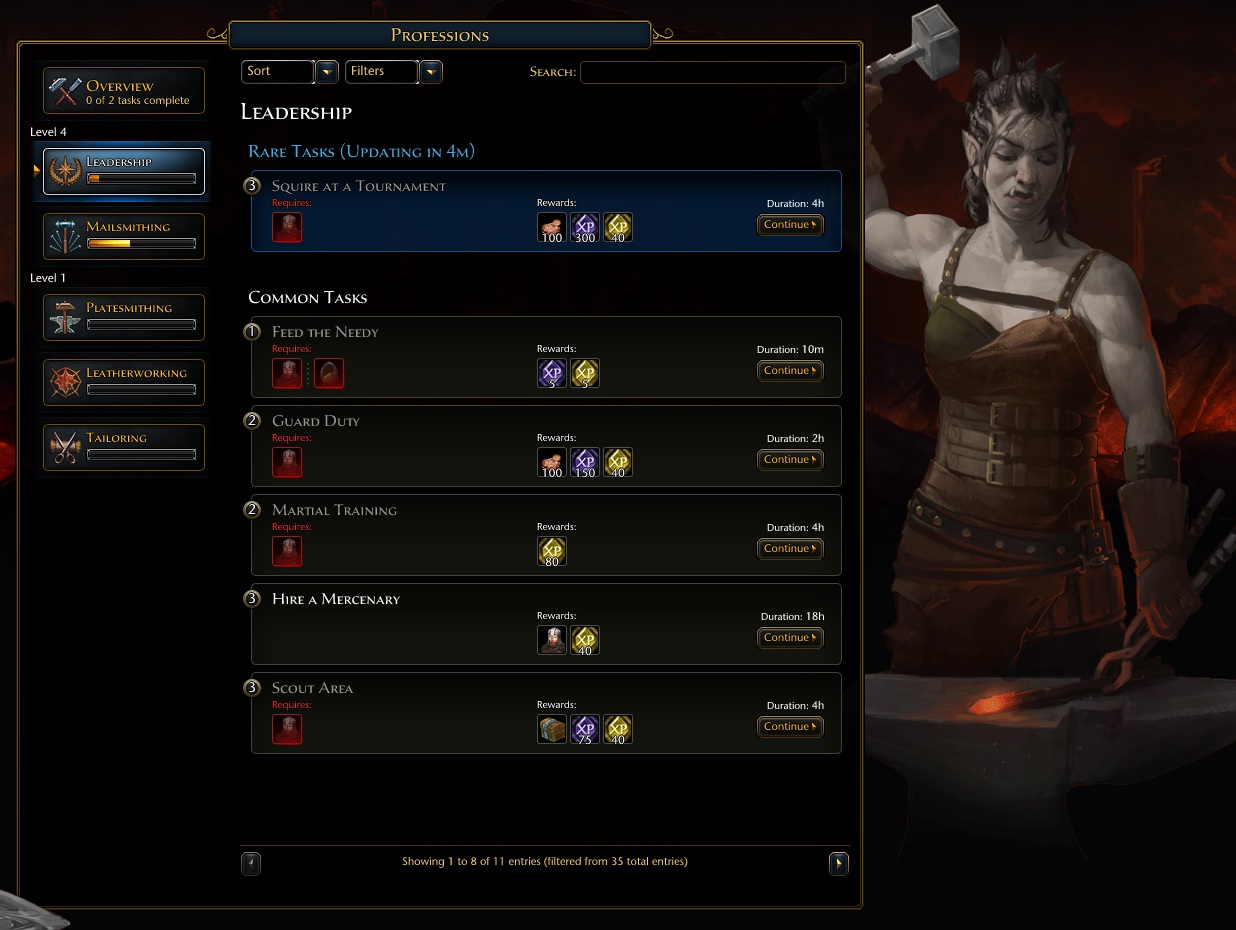
I have this thing with crafting in MMOs.  In Ultima Online I had 2 characters who only crafted, one of which was a GM tinker.  That might resonate with some.  EQ2, EvE and a couple others have complex systems but by and large, crafting in MMOs today is more or less a joke.  SWTOR embraced that thought and had crafting done by NPCs.  Neverwinter uses the same concept, crafting as a something you can do in combat, and puts in a web-service to manage it.  I am certain that I have more hours in the crafting queue than I have  played as a character in-game.  Right now, I have two 18 hour queues running.  And I still can’t make gear that’s high enough level for my character to wear.  /sigh.  I’m going to stick with it though, just to see what comes of it.  A good thing is the “rare” crafting items you can make, that appear on timers.  That’s cool.

Neverwinter Cleric

Chest piece at level 29

The game also comes with an LFG tool, one for skirmishes and one for dungeons.  The first one is simple enough, lasts about 10 minutes.  You’re likely to be in the queue longer than in the fight.  The dungeon queue is a tad bit longer but the dungeons themselves are quite long.  They are basically corridors of trash followed by a mini-boss.  Usually 3 minis then the big one.  They tend to all follow the same pattern.  At a given health percentage/time delay, they summon allies.  The problem here is that tanks are not able to pick them up quickly enough as threat management isn’t yet balanced.  On some end boss fights, I’ll spend the last 30% or more running around trying to not get hit by the spawns.  And that’s with every -threat skill I can get.  The health pools/damage abilities of the bosses aren’t yet balanced either.  One skirmish boss took about 5 minutes to kill.  Another dungeon boss could 2 shot some players.  Beta is Beta.

Another quirk for group play is the loot system.  Every magical item (green, blue, purple) is un-identified, meaning you have no idea if it’s an upgrade or not.  Every group I’ve been in, there’s been 1 guy(gal) who rolls a /need on every drop.  I can’t tell if it’s an upgrade or not and there’s plenty of restricted gear – i.e. a mage can’t wear rogue gear.  Why a mage can roll need on gear that they cannot use is crazy.  And boss drops, for me at least, have been static.  Meaning I’ve killed the guy 4-5 times and seen the same item drop every time.  Finally, there are chests in these runs.  Some can be only opened once, others multiple times.  It would be nice for some consistency.

Neverwinter Auction House

Gear can be expensive

I talked a bit about the F2P aspect, and the cash stop.  From what I’ve seen so far, there’s next to no need to spend actual money yet.  Sure, you need to spend real cash to get a 100%+ speed mount (default is 50%) or to upgrade your companion past level 15, but they aren’t really requirements as you can easily get by without it.  Even inventory management isn’t too bad.  The Astral Diamonds used for the Auction House are a bit different though.  If you complete 3 dailies (Foundry, Skirmish and Dungeon) you get 1000 diamonds a piece.  Run 3-4 skirmishes during the event, and you get 1000 per as well.  If everything lines up perfectly, you can finish the day with 5000-6000 diamonds.  I don’t see how you can reach the 24,000 daily cap yet but maybe that’s in the higher levels.  The best gear on the AH is about 200K per piece and by my math, you’re going to need to buy diamonds with cash or get lucky with drops.  The “cheap” stuff is 50K per piece and seems well enough.  We’ll see how that ends up in the end.  One thing I think will sell the most is Enchanted Keys, which open Nightmare chests.  You get these chest randomly (I have 20 or so) and the items are usable anytime once you have a key.  And the key only comes from the cash store.  Cryptic has been smart enough to send a system message whenever a player unlocks the “rare” mount from these, which appears to be every other minute.  A whole lot of “he won it, I should be able to as well”.  Still, for the average player, I don’t think there’s a huge motivation to spend money.  Maybe with more classes or races?

The next post on the game will discuss the Foundry system and player development.

In the meantime, here are my suggestions to the devs:

  • If crafting starts at level 10, let me make level 10 gear then.
  • Add a default option for loot rolls that you can only need equipment your class can use
  • Add some randomization to boss drops
  • Make all chests mutli-use or single-use.  If single-use, have a /roll option on the appropriate items

May’s Fool

EA acquires the sole game publishing rights to the Star Wars license for multiple years.

Please, someone tell me they EA is pulling a joke a month late.  I refuse to believe that a single person on this planet with any understanding of EA or Star Wars thinks this is a good idea.

Has the browser dark war and monopoly of IE not taught people that this type of agreement is bad for everyone?  Competition is good.  Madden’s been phoned in for 4 years.

Neverwinter Quick Run

Cryptic and I have a strange relationship.  I’ve played all of their games and wrote guides for most of them.  The last one out the door, Star Trek Online, was a massive rush-job which essentially destroyed the company’s viability without outside help.  Perfect World came about, and now the F2P model is all they care about.  Many have mentioned this in the past but a F2P game that isn’t designed from the start to be F2P is usually horrible.  This is the main reason I wanted to give Neverwinter a shake, to see what a “start-to-finish” F2P game plays.  And to be honest, I like what I see.
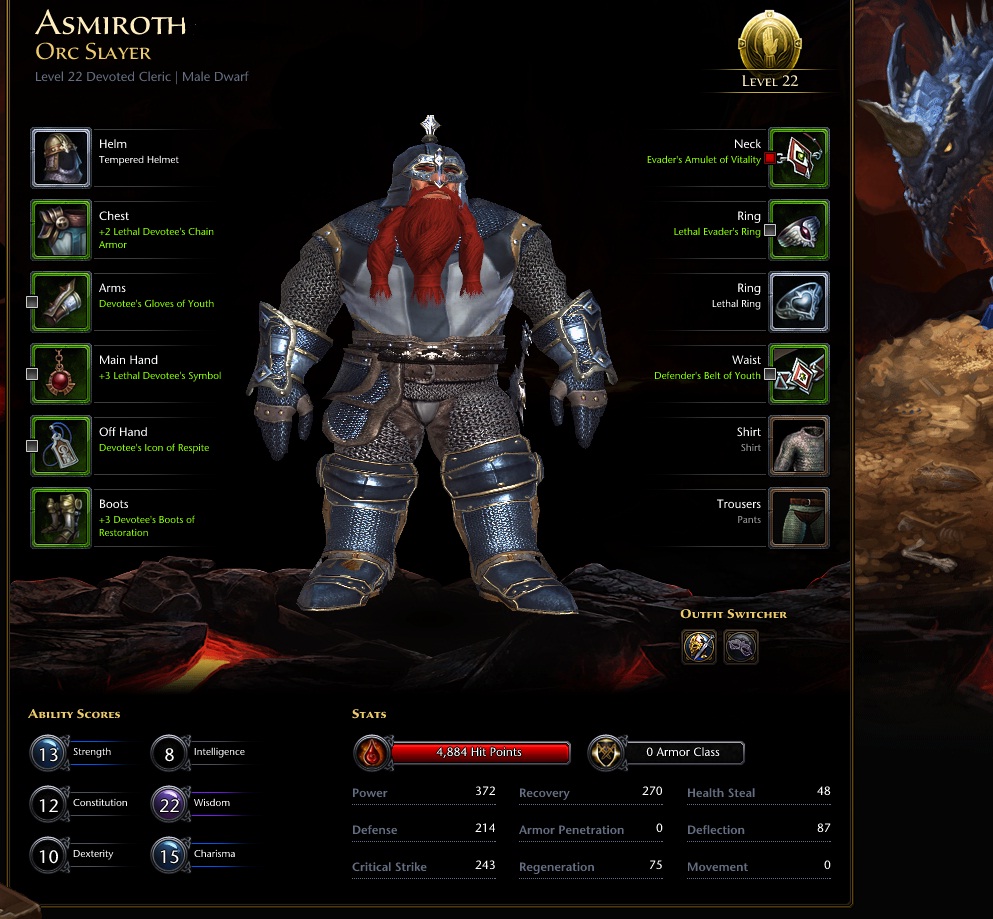
Neverwinter Cleric

First and most important, Neverwinter is in open beta/soft launch.  I mention this here so that people aren’t surprised when the server goes down for 4 hours for no reason one evening.  It would seem there’s significant downtime every other day, though it’s getting better.  If you want the full experience, don’t worry about waiting a bit.

Classes are a simple affair.  Tank, Healer, Range, Quick Melee, Strong Melee.  Each can play solo, though some fights will require solid use of game mechanics to get through.  I went the Healer  route (Devoted Cleric).  From my experience in the game so far, classes seem rather spread out.  Creating a character is a matter of selecting your race (for minor bonuses), rolling your stats (from a pre-generated list of about 10 choices) and customizing your character.  The customization is fun, if simple.  I mean, a Tiefling can only ever look red with horns, so you’re going to be limited.  I do wish the sliders for size had a larger effect though, it’s hard to see the difference between no waist and full waist.  Next up, is a quick tutorial.

Which I love by the way.  Fully voiced, good pacing.  Easy to zoom through on the 2nd+ character.  No matter what you do, by the end you’re level 4 and have 1 of every skill unlocked.

Neverwinter Boss

First Boss

The skill portion is where 4th edition D&D is supposed to come through and I guess it sort of does.  The concept of always available, sometimes available and rarely available is here, true, but the speed at which these becomes available is odd – especially when you put in the skill toggle.  At-will maps to the 2 mouse buttons and you spam the crud out of it.  Encounter skills have a 15s recharge (or close enough) and do more – AE heal, piercing attack, AE attack, etc…  Daily skills need power, which is generated from using the previous 2 types of skills.  Once you have enough, you can use a super-power of sorts.  One of mine had an angle fall from the sky, or a giant fire pillar.  It’s cool effects but you want to use them for tough enemies.  All of these skills can get unlocked or upgraded manually as you level.  It gives you some choice to specialize.  You can only ever have a maximum 2 At-Will, 3 Encounter and 2 Daily powers available for combat though, so choose wisely.  The final item is a skill toggle.  At level 15 you get this unlock that fills a bar on the middle-left of the screen.  Toggle with Tab and your At-Wills change to something deadlier and you other powers get upgraded while you have charge to use.  It’s like a super meter from fighting games, and makes combat that much more fun.

Combat is targeted with mouse-look, which is a welcome change from most games.  It uses an intelligent healing mechanic, which is good.  In a mass of enemies though, it can be hard to target a single one consistently.  It does make line of sight that much more important for PvP though, which is great.  There’s also a system of “tells” where a red spot appears on the ground and within a second or two, a spike of damage occurs.  You can move out of it but you have to wait for your combat animation to end.  Takes getting used to but you can avoid most damage that way.  You eventually get a companion to travel with you, which is great.  Same basic classes – tank, healer, range and melee.  The tank does an amazing job.  They level with you too, so that’s good.

Next up is the “what is there do to?” question.  Well, there’s a core quest line that can run you through the levels.  The Foundry provides player-generated quests that are a lot of fun to run through – but some bugs with how the game (not the quests themselves) runs can make some of them difficult to finish.  The rest is supplemented with skirmishes (5 of you fighting waves of enemies for ~10 minutes), dungeons (5 of you running a dungeon for ~30-45 minutes), PvP combat (arena-like), crafting (1 for experience, 4 for the armor type your class uses) and the auction house.  A cool feature is that every hour, for an hour, a random event occurs with extra bonuses for players.  So if Skirmishes are on deck, then the queue for running them seems to drop to a fraction of other times.  Skirmishes are quick-paced shooting galleries.  Dungeons are pretty cool and do require more than just aiming for the big guy.  This isn’t WoW’s AE fest.  All bosses seem to summon more enemies during the fight and as a healer, I spend the last 2 minutes running around healing myself, hoping for help.

There are currently 3 servers, soon to be merged into one.  The game is heavily instanced, so it really doesn’t make a difference in the end.  It does make it harder to find another player a 2nd time, compared to “sharded” game, but it does make everyone play in the same pot.  I kind of like it.
Neverwinter Gateway

Another cool part of the game is the Gateway online service.  Think WoW Armory + more. You can view your character, full access to the auction house, full access to crafting, guild panel and access to mail.  Up and down more than I’d like, but again, BETA.  It makes you wonder how any game can launch today without an off-line component.  I tend to queue items for a couple hours, then check back a few times a day to restart.  It’s great.

The F2P portion is where people might find issue.  There are 3 currencies – gold, astral diamonds and zen.  The first is in-game and used to buy most items.  By level 20 I had 1 gold.  I like that it’s hard to come by.  Astral diamonds are acquired from specific in-game tasks/rewards or can be refined from rough diamonds acquired from similar means.  You can only refine 24,000 diamonds a day.  That seems a lot, I’m sure, but some items are worth 2,000,000 diamonds – a hefty sum.  Diamonds are used primarily for the Auction House but also to speed up certain activities.  Zen is the Perfect World currency bought with real-world dollars.  You can buy diamonds with it (or vice-versa with free trade) or buy a slew of character customization options with it – respecs, mounts, extra characters, etc…  After 22 levels, I’ve had no need for either Diamonds or Zen.  I’m guessing that will change in a few levels.  I really don’t mind dropping a few bucks here and there if I’m having fun.

Neverwinter scratches an itch for simple gameplay in short bursts.  It doesn’t have depth but doesn’t pretend to either and you’re not paying for it.  I think there real beauty here is going to be the Foundry, once it’s fully up and running.  Maybe we’ll get to see group content in there too.  It’s well worth the shot and gives some needed competition in an admittedly clone-friendly market.

HardCORE

Exodus (some might know them as vodka), a large 25 man raiding guild in WoW, is calling it quits.  They were an ultra competitive group and the post summing up their exit is very interesting.  I’ll summarize the quote (bold for emphasis):

In the last few years this game (despite many people quitting and guilds dying) isn’t to blame for vodka/Exodus’ demise it’s the raiding community. You see… we’ve basically been killing ourselves off slowly since day 1. … the time commitment and the level of shear dedication and determination it takes and costs to be at the very top. Raiding for many many hours on end is fun, CAN be exciting, and at the end of it all can really prove who really wants that world first/us first/realm first the most.  Unfortunately we (hardcore raiders) pushed too hard. The competition is slim because the competition is literally eating each other (well not that literally). Good luck to everyone left in the race for this expac, but I don’t know how much longer this sort of thing can last.

I think it’s important to read the original quote but the TLDR; version is simply that hardcore raiding has a smaller and smaller pool of eligible players.  Those that do make the cut get burned out on the crazy race for world firsts. Many guilds run 16-18 hour days until that world first run is over.  No human being with children can run those hours or any with a typical full-time job, so you’re looking at getting people just out of school (or in post-secondary) to fill the slots.  There’s just too much competition for their attention at that age that it’s difficult to motivate them.  Especially if they haven’t been part of the MMO scene from the start.

This isn’t to through the genre under the bus.  I was a big raider in EQ and early WoW.  I knew quite a few in the real world before I met their in-game counterparts.  I made a choice for a family life and put the raiding away.  Some didn’t and they are quite happy where they are today.

That being said, it’s rather clear that today’s trend of a more social/casual attitude towards gaming is not a fad but a reality.  Games that want to attract a hardcore base will have to be niche from design as there simply aren’t enough people left in the general public with the time or energy to consume it.

Slightly related, Camelot Unchained hit its kickstarter goal (and passed by 10%).  I am glad it was able to make the mark and look forward to what is put out.  I hope that the game launches and gets some success, if only to break the MMO-themepark mold.

PvP for the sake of PvP

Darkfall: Unholy Wars launched a few months late but those who waited apparently enjoy what was given.  It does sound like a lot of fun and reading through that post gets me thinking about what I do like about sandboxes and what I don’t like about FFA PvP.  (To Syncaine’s credit, he has a fairly detailed post about a PvE sandbox that I would love to play someday.)

What I like is being able to do what you want to do, when you want to do it and never really having a schedule.  There’s no common ride and everyone’s adventure is slightly different than another’s.  I really liked that about UO and early SWG.  Community had a big part in it but the ability to socialize to consume PvE content was where it was at.  Killing dragons or liches, treasure hunting, animal taming, building a craft store – it was all great fun.

What I didn’t like was the open/FFA PvP aspects.  One person could ruin 20 or 50 other player’s nights for no other reason than griefing.  Goal-based PvP makes sense and it’s always around controlling PvE access.  I can’t remember a game where you hunted people for their ears in order to make a coat but there are plenty where you keep people away from a resource spawn point so you can craft better gear.  UO private shards all have this problem and typically move towards extremely aggressive PvP controls.

The thing that lacks most in PvP games is the moderation of the activities.  In the real world, there are laws and law enforcement.  Typically these two combined will keep the general population from attempting a PvP activity (theft, harm, etc…) and those that do are tracked down and punished.  This doesn’t exist in games for a few reasons.

First, players are not online, their characters are and not 24/7.  I could play Jim as a PvP dink and Paul as a savior and most people would never know the difference.  There should be tools to identify a player based on all their characters.

Second, law enforcement is a thankless job, with little bite and no compensation.  When a griefer does it for the lulz, there is no in-game punishment possible to stop them from doing it again.  Short of removing all their skills and gear, or simply access to the game, why would the stop?  Moderation then requires a higher level of authority and then you get into the “god complex” issues.  Mind you, League of Legends has a decent system, even if there are still hundreds of horrible people playing.

The sheer lack of social restraint in these games is incredible.  No one would walk down the street and say “wow, that’s a nice car” and then proceed to break the window, hot wire it and proceed to row down a street full of people.  No, what happens is that you approach the driver, compliment them on the car and have a quick conversation.  I mean, I can’t imagine anyone on this planet thinking it’s acceptable for a group of people to simply walk around town, shooting everyone and then say “it’s to teach them buggers a lesson that crime is always around”.

I get PvP, I do.  It’s the reason we have MMA, boxing or any other combat sport.  There’s a primal need to compete against live people.  There’s a superiority complex that makes us strive to be better, to improve.  What I don’t get is some people’s need to intimidate or harass other players and their ability to find enjoyment in it.

Dance the Dance

After having played the recent Batman series, I have found a new love for the combat dance.  In my younger days, I played a lot of arcade fighters and usually held my own.  There was just one local guy who could really whoop me and I learned the combat dance from him.  The dance is a series of timed moves that work symbiotically with each other, in what can only be perceived as “what I was trying to do in the first place”.  In older games, this was called (and might still be) juggling.  Today, there’s a rhythm to most games that involve combat so that when you watch an elite player, they don’t so much memorize the buttons as they memorize the pattern of the buttons.

As there is a difference in complexity between the Waltz and the Tango, so true is it in combat games.  If memory serves, Paladins in WoW have had a longstanding tradition of horrible dances.  The 2-4-6 combo was a series of 3 attacks that you cycled continuously on end.  Hunters are the same.  Most SWTOR classes also suffer this simplistic formula and Rift often suffers from the 3 button macro effect. Some games, like StarCraft for example, have very complex combat patterns and require not only dexterity to accomplish it in short time frames but also the ability to adapt on the fly.

Back to the MMO world though, and the thought process behind generation and consumption in terms of combat.  Abilities are limited by 3 main things – time, resources and condition.  The first one is usually just a cooldown, preventing you from continuously spamming your most effective abilities.  The second can be a bit more complex.  Perhaps your character has a single energy pool, where abilities need a certain amount in order to activate.  More complex characters have a dual pool, where you need resources from two separate pools to do something – like Rogues, Energy and Combo Points.  The third type is where a set condition is required in order to activate an ability.  Say they need to be poisoned, or you need to be at a certain distance.  All this combines into a complexity ladder for a given character and in turn, the popularity of that character.

Look at WoW and the seemingly immense proliferation of Mages and Hunters.  Both have a single resource, little restrictions in terms of timed abilities and very limited conditional factors.  Both are all over the place.  Then look at Warlocks and Rogues.  They are extremely dependent on time (due to Damage over Time effects), multiple resources and plenty of conditional factors.  And that’s just DPS.  For tanks, with changes in Pandaria to an active mitigation – where you need to press buttons rather than stack stats – this means that the combat dance becomes ever more complex.  There are your buttons for attacking, your buttons for defending and your buttons for “oh my god”, all of which use the same complex resource management system of the base class.  Tanks not only have to understand  dance with a dozen more steps, they also need to pay more attention to the music to even be able to dance without falling down.

There’s certainly a balance to be had between a simple dance and a complex one.  In all honesty, I think all classes should have a basic, smooth dance that allows for a player to add complexities when needed.  Rift does the former but not much of the latter.  WoW doesn’t really do transition between the dances all that well – either it’s dumb easy or carpal tunnel syndrome complex.  I think concept of easy to play, difficult to master should be the baseline.  If the game metrics are showing that people are having a really hard time with a class structure, maybe it’s just time for a complete re-write.

Social Framework – Part 2

To follow up on the previous post about social frameworks, I want to get back into the gaming space.  When multiplayer games started nearly 20 years ago, the mechanics were such that the people you played with were in the “Friends” group.  You had acquaintances, certainly but rarely did you ever have anyone outside your monkeysphere.  In UO for example, I knew my server’s top PKs and guild leaders and most dungeon runs were with the same set of folk.  It was a community.

A few people are posting about social fabric and the need to “focus on the multiplayer foundation” in order to avoid the 3 month life span most games are seeing today.  First to compare – other than the MMO sphere, no genre has ever lasted more than 3 months in the commons.  If they do, they are super niche.  In fact, today’s general gaming includes many MMO-like services (Diablo 3, SimCity, CoD, etc…)So while we can posit that MMOs are only keeping our attention for a small time span compared to previous, we can perhaps assume that this is due to them becoming more like other games – a convergence of styles if you will.

That being said, if you were to take the thesis to the end, you would have to revisit not only the structure of games of the past but the actual environment they were played in.  If I wanted to play with friends on a Monday night, I had to drive to their place to play.  Other than MUDs, which were highly inaccessible, in the year 2000 we had 3 options for MMOs.  Ultima Online, Everquest and Asheron’s Call.  Not really a whole pile of choice here.  When WoW launched in 2004, the landscape had expanded to a dozen or so choices, still pretty bare ground.  When the Looking for Group (or LFD) tool was launched in WoW in 2010, debatably the death of grouping, the market had grown exponentially.  Today’s market is even more crowded, what with the F2P games that allow zero investment players.

If you were to take a solid look at these games and found the core players, I would bet a year’s worth of salary that the total amount across all MMOs would exceed WoW’s peak numbers.  You have the same amount of players with deep investment, they are just spread out across more games.  I know a lot of my friends from the EverQuest days went to EQ2 while only a small handful went to WoW.  The Syndicate, the largest online guild in the world, has presence in dozens of MMOs, all with deep roots in the game.  The flipside to this is that a larger percentage of players are just tourists, trying out a game to see if they like it then moving on.  If only 20% of your base is invested, and you need to supply for 100%, you’re going to have trouble.   EvE succeeds because nearly everyone is invested.  WoW does it through sheer subscription numbers.  SWTOR couldn’t do it without turning the game into a casino.

To sum, it’s simplistic to state that MMOs have to focus on multiplayer.  Of course they do.  It is better to state that they need to focus on getting players invested in the long term through meaningful, non-punitive multiplayer foundations in order to covert as many tourists as possible into core players.

Social Frameworks

I want to talk a bit about social investment in terms of relationships.  There’s an old adage that says a marriage is like a bank account, you have to put something in to get something out.  All healthy relationships are like that.  There is a term called Dunbar’s Number (or perhaps more commonly as monkeysphere) that posits that any person can only maintain a stable social relationship with a set number of people – around 150.  Outside of this number, you ability to empathize/socialize is practically null.  This post will be about how both of those intersect.

My hypothesis on social structure is that an individual is only capable of a certain amount of social investment at any given time.  Their choices determine where that investment is made.  Below is a representation of social classification, in terms of relationship and their proximity to the individual.

Circle of Confidence


If you were to assign a 100% value to the entire set of groups, the heaviest weighting should be from left to right.  You should put more investment in yourself than in your Closest Ally and a whole lot more than in any acquaintances you might have.  In this I mean that all things being equal, given the choice between yourself and someone else, you should pick yourself (altruism aside).  This part really isn’t up for debate, as it’s a social construct that humanity has employed for a very long time.

What is up for debate is the quantity of people in each group, the investment in a given group and the ratio across the spectrum.  If you have 20 people in the Closest Ally group, you are unlikely to have any energy left for the remainder.  Ideally your immediate family is part of your Closest Ally group (spouse/gf/bf included).  You likely have a few friends in there as well.  Your extended family comes next, then a social group of friends you see on a regular basis.  Finally the Acquaintances bucket.  This is where people you know but don’t have any vested interest in are located.   There are people outside of this bucket but as the monkeysphere theory indicates, it’s unlikely that you have the need or want to acknowledge their state.

If you find yourself hopping from group to group and never really finding the time for quality social interactions, odds are you have too many people in your Friends group.  If you only have 3 people you consider friends, then likely you have invested too deeply in the Closest Ally group.  If your cell phone has hundred of contacts, odds are you have too many people in your Acquaintance group.

The flip side to this is that if you identify yourself as being heavily invested into a certain group, then you have a social profile.  Heavy on the left side and you’re likely introverted, focused and invested – maybe even smothering.  Heavy to the right and you’re likely an extrovert, unfocused and shallow.  It’s hard to have quality relationships if you’re at either extreme as you’re likely to have a distorted social framework to rely upon.  Either your sample size is too small and therefore unable to cope with change or it’s too big and you don’t have enough time to invest.

When most people leave school, they are on the right side of the structure.  A few will be on the left but next to no one leaves in a balanced state.  It takes years (sometimes it never happens) of conscious effort to find the proper balance and keep it balanced.  Sometimes your Closest Ally in school moves to be an Acquaintance, sometimes the other way around. Likely, you will find yourself with less people you call friends and more people you call acquaintances.  No matter what happens, embrace the fact that you’re going to change and that change is a good thing.


Buying a New Set of Wheels

With 2 squirts making a family of 4, our little Toyota Echo is getting cramped.  Pretty sure I won’t be able to fit a set of golf clubs in there anymore.  With the better half on maternity leave, this leaves us at an economic disadvantage.  To sum, we need something bigger and we need to pay very close attention to the price.

Given that we both enjoy the outdoors and that our eldest seems to feel the same way, we’re more or less road warriors.  That means cargo space + fuel efficiency.  I have a dislike for mini-vans, in that 90% of the time you’re in one, it’s just wasted space and therefore wasted fuel – even with a variable engine.  There’s certainly a stigma attached to it, and if memory serves, actual mini-van sales are on a crazy decline.  SUVs, in general, are giant pieces of crap.  They are often put on car frames, let you load up on passenger space but provide less cargo space than a box of donuts.  Plus their fuel efficiency is horrible, they drive poorly (due to the perceived notion that farther from the ground = better) and they are priced way above value.  All that to say we boiled it down to two main options – Subaru Outback or Golf/Jetta Wagon.

Being Canadian, our pricing structure is special like a snowflake.  Market value is based on suggested retail value (MSRP) and no one knows the invoice price (unless you pay for it, like CarCost).  This means you’re negotiating at an artificially inflated price with all the power in the salesperson’s hands.  The US market by contrast, provides invoice pricing to the public, giving them more negotiating power.  This also means that they are more options (trim if you will) when it comes to a given car.  In Canada, there are 5 variants of the Outback.  The US has at least 10 that I’ve found.  In the end, we found out that there’s essentially a 20% markup in Canada.  When you’re looking at a $30K+ vehicle, this isn’t chump change.  Another nice thing to consider is that the warranty coverage is usually the same in both countries.

One final caveat.  If a car is manufactured is not manufactured in Canada or the US, then you pay a 6.1% tariff on cross-border purchases.  The Golf/Jetta is not made here or there, so I’d have to pay.  The Outback is made in Indiana.  That’s ~$2000.

Now we get into the math and my love of spreadsheets.

If I buy the Outback here, the MSRP is about $34,000.  If I buy it in the states, the invoice price is $27,000.  I’ll be charged 200$ at the border to transfer the vehicle.  I won’t pay the state tax due to not being a resident but I will be charged the HST once I come back home.  I would pay HST here too.  Subaru is currently offering a 1.9% interest rate for 4 years.  Buying in the US means cash only and the bank is looking at giving me ~5%.  The Canadian dollar is at par (or better) lately, so that comes out more or less a wash.  Tabulate all that together and we get.

Total cost of the car in Canada: $39,000.  With interest: $40,500.

Total cost of the car from the US: $30,900.  With interest: $34,100

I save $8000 if I pay cash for both or I save $6400 if I wait 4 years.  Even if I had looked more at the Golf/Jetta, I would have saved ~$5000.  Hello!  Why would anyone buy a car on this side of the border with that type of saving?

Here are a few resources to help you out:

RIV – the Canadian government site

Monsieur Maggots – a step by step view of the process