Physical Stress

I’m about 5 days away from a major project milestone, the initial delivery. Quick rewind, I onboarded to this project in September, did some homework, and relaunched it at the start of October. So about 10 weeks to get to the first delivery point. Projects of comparative size/complexity usually take 2 years to get through, given the amount of gates & approval stages required. So delivering anything in this timeframe is already a major achievement, getting something useful is practically unheard of.

I remember watching variety shows when I was a kid. Sort of like America’s Got Talent today I guess, but it wasn’t a competition. I always enjoyed the magicians. There were a few acts that were edge-of-your-seat – think of knife throwers, tightropes and whatnot. One particular act involved putting bowls/plates on long poles, and spinning them. It started with 3 or 4 of them, and then they just kept adding more and more. You’d see the plate start to wobble, ready to fall, and they’d magically find a way to get it back on track.

Project management is a lot like this. It shouldn’t be, I’ll readily admit that. Not everything goes perfect in any project, and with adequate planning and time you can manage a few wobbling plates. With less time, a LOT less time, you still have the wobbling plates just not enough time to get between them all. As as result, you need to prioritize which ones need to keep spinning and which need to crash.

The biggest problem here is that while I am talking about spinning plates, the reality is that each one represents actual human beings. They have a vested interest in keeping that plate going. Most of the time, the wobbles are outside their control and they just need a quick hand to get things back on track. Telling a group of people that the work is a lower priority and therefore has to stop, well, that has all sorts of impacts. Sometimes they take it well, sometimes not. In the current work climate… stopping work isn’t usually a good sign that the work is going to exist long-term.

Right, more analogies.

We are all sponges. We can absorb a lot, but we need time to release it in order to absorb more. We each have different reactions to being oversaturated, sometimes mental sometimes physical. I know that my symptoms are primarily physical. The body just doesn’t want to fully cooperate, sleep is hard to come by. Without some relief, the mental part starts to fade with lower engagement and lower patience levels. I can still problem solve relatively well, but I gradually lose the ability to consider the people impacts and focus solely on the end goal in order to get some respite.

So right now, as I’m typing this, my lower back feels like it’s gone through the wringer. Sleep is fitful. Patience is low. The stuff I generally enjoy has lost a lot of shine. I am convinced that this will release next week, and I’ve already set time to take some steps back and breathe.

Looking forward to it.

Summer Break

Just coming back from a couple weeks away from the daily routine. I’m fortunate enough to own a cottage on some water, and moreso that I’m able to share it with friends. This was the first year without any major (day or more) project that needed to be done, so it was quite restful as a result.

I will add that the weather was both amazing and worrisome. It was a heat wave for a large part of it, and the temperature of the water hit a new record – 85.2 F. “Regular” temperatures are more like 78 F, and breaking 80 is maybe a couple days total. You would recognize the difference of a couple degrees… aquatic wildlife certainly feels this. Algae blooms are everywhere, and fish have massive worm infestations. It’s not debatable that it’s getting hotter in general, that part is measured. The why of it… somehow there’s debate. There’s a rant there but not for this place.

This was the first year where I didn’t buy anything during the Steam Summer Sale. I have a long wishlist, and nearly everything on it was reduced at some point. Some of them I do want to get. I just have this bad taste in my mouth right now and it traces squarely to the Microsoft layoffs. I quite acutely understand the realities of financial management and impacts on people, there are times when very hard calls need to be made. And ideally you make those calls before the house is on fire. Announcing record profits and then letting 9,000 people go (on top of the 6,000 in May) is hard to digest. This is quite similar to what EA a dozen years ago by buying companies and closing most of them, or Embracer’s approach to building an empire on a house of Saudi cards. The eternal quest for more money is self-defeating. There’s a rant here but not for this place.

This time of year tends to be my most reflective. Time away from work let’s the brain disconnect and think about other things. Similar to New Year resolutions, I tend to look at the past year and plan the next at this point. I have a growing appreciation for what I have and don’t have. I look at my kids and think we’ve done a damn good job. I look at my career and still am amazed at how much further I’ve exceeded my original plans. I look at my wife and I’m just amazed at how far we’ve come, mountains and valleys, to come out stronger. I look at the impact my family has had on the community, and the sheer number of positive relationships and think we’ve made a difference.

Stuff may be going to shit, but the things I have some level of control upon are doing pretty well. So let’s see what’s around the corner.

Vacation Time

Every summer tends to bring a different vibe to it. I remember being in my early 20s and not spending a single weekend in my own bed, spending as much time as possible up and about. As I’ve gotten older, I’ve found a better balance between busy and restful. Summers with kids has been absolutely amazing to experience. In the first part, the sheer amazement of new experiences for things I take for granted. The joy of discovery is certainly contagious. Then there’s the purity of it all, the near complete lack of stress and just plain enjoyment without thinking about bills, or work, or some stupid junk. And really, the best part about kids is the simple desire to just have fun. Almost all of them have that drive.

This summer has been a different pace. It’s been much less hectic and simply providing a space to relax with friends and family. Much less time in the car going to places, and more time just appreciating what we have. It’s been good.

In the gaming space, not a whole lot to report on. My gaming laptop has been on the shelf for a month+. The Steam Deck is the go-to device, and the sheer amount of games that are validated is quite mind blowing. The summer months push for portability and flexibility. I’ll get a small block of time while having a coffee waiting for the family to wake. It means that only a certain type of game works, and strategy ain’t on the list! Rogue-lites fit the bill properly. And the Kingdom Hearts series had a deep discount. In the fall, when the kids are back in school, I can give the FF14 expansion a shot.

Still a lot of time left to enjoy the summer months. I hope everyone (that is experiencing summer months) is able to take full advantage!

Knowledge is Preferable to Ignorance

I spent a day at the lake this weekend, staring out on the water and simply pondering.

As I am inundated on a daily basis by willful ignorance, I turn to look at my 2 children and ponder. What role do I have in leaving a legacy, or guiding them on their personal journey of self-discovery? What tools am I giving them to make their way through the multitude of opinions and power-grabs? What confidence can exist in a world governed by popularity rather than humanity?

I could, and do at times, fret over society’s joint ignorance and futile grasping at truth-sellers. To avoid the truth laid bare and accept a lie that comforts rather than confronts. To think that one person somehow has more value than another, simply by the conditions of their birth. That the stratification of education and knowledge is some duty born by self-elected gatekeepers.

It is evident that society resists change and that said change can take a very long time. We have ample evidence of such. Our growing ability to share is offset by our inherent need to protect. There is so much out there, that it can seem like staring into an abyss, and with that, who can truly judge someone simply turning around for the safety of the familiar.

Humanity has a beautiful flaw, in that it pushes back against the inherent chaotic nature of the universe. This is an upstream battle that will last well after we turn to dust. We kick and scream for a place at the table, where we are but a crumb on an intergalactic scale.

I get by on a word shared by many, and that is one of faith. Not faith in that the answers will be laid bare if I simply submit to the will of another, but faith in the grander humanity. I marvel at the magical randomness of cosmic order. That every day we unlock another fractional facet of this eternal mystery. I have faith not in that there are answers, but that we will search for them.

That is the path upon which I guide my children, the legacy of continual search for knowledge, and the character to face the abyss and not look away.

In Like a Lamb

In my part of the world, the weather has been all but impossible to predict for any stretch of time. There were parts in February that were under -50C, followed in the same day by a 40+C shift. It still wasn’t cold enough to have any skating on the world’s largest skating rink – a first in it’s history. We’ve had so many snow days my kids have only had 4 days of school a week. A derecho hit us last May, which acted as a sort of “god rake” of multiple mini-tornadoes that helped bring down the price of lumber. 2 weeks ago an ice storm hit that knocked out power for a million people. And this past week, we had 5 days straight of 25C+ weather, which is beyond wild. I went from snowboots and a winter jacket on 1 day, to shorts the next. It feels like we just skipped spring entirely.

I did use the term weather above, as climate is a different item. Climate change is a different topic, and frankly as debatable as the earth is round.

There’s a native proverb that goes something like “we don’t inherit land from our ancestors, but rather borrow it from our children”. When I was younger, I didn’t quite get it. Parts of it, certainly. Recycling has been around in my city nearly as long as I’ve been alive (which tangent, still amazes me how it isn’t everywhere in North America). When I had my first child, my perspective changed. Plenty of parents want the best for their kids – but that is often limited to the concrete. You can see that your kid is in a great school. It’s pretty hard to see that the land is better, or that you can do something tangible about it. I would posit that this is because “better” is often viewed as “more”, whereas talking about the environment “better” is often “less”. No one needs a lifted pick up truck, no one. A recent survey about SUV usage in Quebec came with some interesting bits.

  • 47% of vehicle owners have an SUV as the main vehicle
  • 74% have never used their towing hitch
  • 39% only use their cargo space at least once a week

Which seems to indicate that SUV vehicle purchases are more of a “what if” scenario. Personally, I have a SUV, with a hitch. I’ve used that hitch to a crazy degree, and it’s fully loaded multiple times a week. 10 years now and time to look for the replacement, which was an interesting conversation.

What do you want vs need?

My better half was interested in a Dodge Ram. The box was viewed as a boon for multiple hockey bags (with a cover naturally), and certainly better towing ability. Again the concept of “better”. My mind went immediately to the cost of a truck today – in particular fuel.

In my mind, we need a vehicle that:

  1. Fits 5
  2. Has storage for 3 hockey bags
  3. Can tow 3,000 lbs
  4. Great fuel economy, ideally a hybrid for city driving.

The first item is a simple one, nearly every non-sports car can do this – no MINI. I’m a taller person, so there are some limits, but test drives sort that out quick enough.

The second item is very limited through sedans. CUV are mind bogglingly worse than any other vehicle class in almost every aspect. That leaves SUV+ options, which are honestly more limited than people realize. Fitting a few grocery bags is much different than 3 hockey bags.

Towing capacity is fascinating. Most vehicles can tow, though primarily at the 1,500lbs level. 3,000lbs is a notch higher and the options are somewhat limited to larger SUV, vans, and trucks. Interestingly, a Mustang or a Challenger has tremendous towing ability.

Fuel economy is the great divider. There are many tools out there, and comparisons are easy enough to sort out. A Dodge Ram “hybrid” vs a Toyota Highlander Hybrid has a 50% difference in fuel economy – over a $1000 difference per year. And that’s ignoring the actual cost of the vehicle, where the Ram is already nearly $10,000 more than the Highlander.

Small but consistent steps

I personally may not have the largest impact on this, but at the aggregate if many people make small changes it can have a tidal effect. The “low hanging fruit” if you will, is to tax the hell out of private jet flights and industrial waste to fund green efforts. Lobbying there is at another level, and voters in general have etch-a-sketch memory, so my hope for actual change at that level is miniscule. It’ll be a ground swell effort, and some philanthropy. I have faith that there are individuals that want this to improve.

What a Week!

I’ve been down with the flu/cold for a week now, think I’m going to have the cough for a while sadly.

Crypto Stupidity

Reference the prior post.

FTX managed to lose “billions” in what appears to be a clear ponzi scheme that targeted investment firms. See, a ponzi scheme impacting mom and pop won’t make the news all that often, but you take money away from rich people with friends, and it’s a big deal. Crypto, in every single form, continues its amazingly clear path of scam. No different than stock market pump and dump / shorting scams mind you, just a more interesting flavor.

The most “famous” crypto, Bitcoin, has also managed to lose 75% of its value in 12 months. Cue the various pundits claiming that now’s a good time to invest. That’s how these schemes work, right?

Twitter Insanity

This has to be the most epic troll of all time, with the costliest bluff being called. $44bn because he went against someone other than government aid. Wild.

The rumor that he fired half the workforce based on code stacking is just too hard to believe. The best / most important coders are the ones who solve problems with less code, not more. The only reason this rumor seems even viable is the fact that they reached out afterwards to try and hire people back.

The blue checkmark fiasco suffers from hubris. The amount of trolling Musk has done over the years was no match for the interwebs. (Side, that Eli Lilly lost $20bn from 1 fake tweet tells you all you need to know about the value of that company). It has been an absolutely glorious time watching a “genius” continually pour gasoline on his money pile and make a truly concerted effort to push advertiser revenue away for good.

Oh, and Twitter’s fact checking of Musk’s lies is just pure gold.

US Midterms

This is more comeuppance than anything else. It’s been years of people decrying the horrible human being that is Trump, and his disdain for anyone that is not him. Imagine people voting on a platform FOR something, rather than AGAINST something *surprised Pikachu*.

The best part here is how the most ardent supporters are now turning their aims at Trump. Because he’s mean to their teammates. Like, where have you been the past 40 years?

Hopefully, the adults in the room can find some common ground and work for their people. The world could use some rational US thought again, across party lines.

That said, tomorrow is the 15th and Trump has a “big announcement”. The wolf in the henhouse may not be done after all.

September is Too Busy

I refuse to accept that this is what “normal” used to be. Things are just coming in at lightning speed and it feels like we barely have time to take a breath before the next event.

Return to school is always a fun time. There are tons of extra activities for the kids this year, which is all positive. I’m coaching both kids in hockey, which is just an insane amount of work to kickstart. Volunteer efforts are always a tough one, because there’s always more that can be done. Thankfully the majority of the administrative set up is done, and it’s about executing the year. Still… it’s going to be 8 tournaments and at least 35 games. Weekends are all but gone for a while. Fun weekends I expect, but time isn’t kind.

Side note – I did have an event with a parent at the first practice of one of the teams. Truly an astounding event that put everyone on the wrong footing. I get emotional outbursts, but parents really should know better. Not only do they look dumb, but their kids get some of the flack as a result.

Tons of health bits this last week. I pulled my back, relatives in the hospital, major surgery, and some horrendous C news. I’m in that middle curve where there will be more funerals than weddings for the next 10 years or so. I know that’s the reality, but it doesn’t necessarily blunt the news of any of the events.

Work is also at a crazy level. The summer months finally had people take vacation they’ve accumulated over the pandemic. The team has worked some absolutely insane hours, and time off just wasn’t an option (I don’t work in healthcare, that’s just *mind blown*). That didn’t stall items, but it gave time for some folks to come up with ideas and for some reason decide that we are going to try to keep pace with prior years. Even though every report on mental health says this pace isn’t sustainable. There are some key folks here that are able to rally the troops and keep folks sane. When those people decide they’ve had enough, stuff goes sideways very quickly. It’s not one of those things that’s linear… it’s a slow drip, and then boom, the damn bursts.

I dislike taking big decisions while under stress. I prefer to soak on it, at least 24hrs. That works for most things, but I do realize it means I tend to pile on more stress than may be healthy. The personal space is getting to a manageable state and there’s some light at the end of that tunnel. Work… that is more complex. I think it may be time to start exploring other opportunities.

Birth Rate Decline

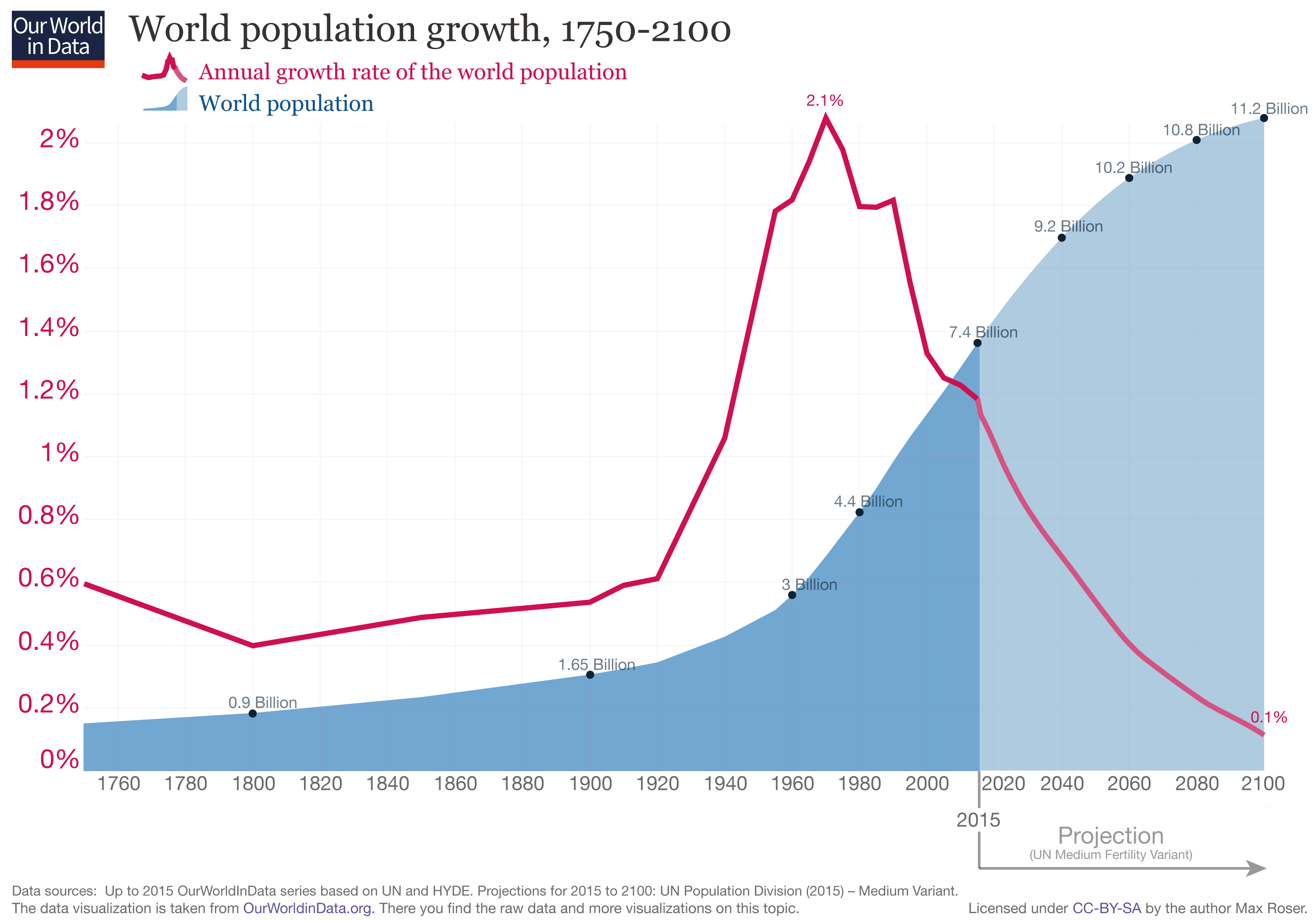
World Population as compared to Birth Rate
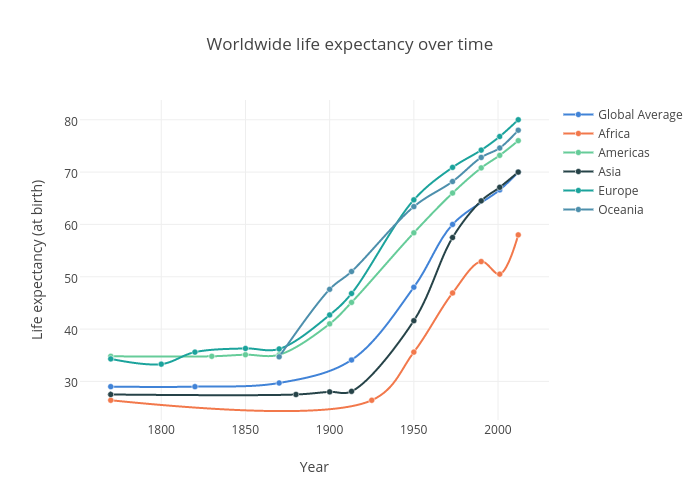
World life expectancy

The graphs generally align to start/end dates, hence their use. Many other ways to look at the data.

They say the only sure thing in life is death and taxes. Everyone will pass eventually, so that the global population, on a very long scale, is based on birth rate. For population to be “stable” it needs to be about 2.1 children, in order to account for early deaths (i.e. low life expectancy). For a multitude of reasons, the birth rate was such that the overall population growth tended to be around the 0.5% rate per year. Things grow at any rate over 0%, though slowly. The baby boomers are super evident, but also some absolutely massive advances in health care/education that increased life expectancy. People may be anti-vaccine, but the numbers don’t lie – the eradication of polio and wide use of anti-biotics added 20 years to the average life expectancy.

This is an important fact, as when the industrial revolution started the average life span was only 35 globally – 45 in the Americas. Unions and pensions came about just after the baby boom, where life expectancy was closer to 55/65. If you retired at 60, you took a 5 year pension. Geriatric care didn’t really exist as we know it today… there weren’t enough people for it. When the baby boomers “came into power” in the mid-80s there was approximately half the amount of people on the planet, and nearly everyone was their age or younger. This pragmatic statement… non-productive members of society are by definition a drain on society. I am not debating that elders should be rewarded for their years of productivity. It’s a math thing though… you can’t withdraw more than you put in. The “you” in this case is generalized to society.

Today, the birth rate is declining. There are many reasons, most of them tied to the level of education of the population, which is itself tied to infant mortality rates. As people become more educated, they have access to better health care, and have less children. That is a massive simplification.

So we now have a declining birth rate, meaning less people being born and an increasing life expectancy, meaning more non-productive members of society. This will last until the “baby boomer bubble” exceed the life expectancy. In North America, with an expectancy of ~80yrs, that means this will last until 2026-2044. Back to the comment about not withdrawing more than you put in… if baby boomers retiring now think that they are going to get the same “benefits” as their parents, someone is in for a bad time.

The overall global population itself won’t decline as long as there are more people being born than those leaving. Perhaps there’s an interesting bit here where life expectancy in some areas (particularly the US) is actually in decline.

And of course, all of this ignores the upcoming global famine caused 1) supply chain issues (ideally resolved in the next 12 months), 2) the war in Ukraine (people don’t fully realize how BIG a supplier they are) and 3) global warming (this one will kill us because of inaction). But that cheery topic is for another time.

Return to Worksite

Without going into too much detail, I am involved in this particular topic at a rather large scale. For the past (now that I really think about it) 11 years, I’ve been trying to find a way to remove barriers to working remotely. This stemmed from a work stoppage incident when I was younger, where there was a picket line we could not cross and a rather substantial emergency that needed to be addressed. I got through the line, but lost so much time it was dumb. I figured if I could be a webmaster for a bunch of websites across North America, why couldn’t I do the same thing with my “real” job?

Security is the first, second, and third answer to that question. That issue has gotten worse over the years, and you all see it on smart phones that start showing you ads for things you’re talking about, clearly listening to you. But a Fort Knox defense can’t mean 10minutes of hoops to get access, it needs to find the right balance of user experience and on-going monitoring, with privacy controls. They need to securely connect with ease, and I need to make sure that it’s really them and that the connection itself “is clean”. Heck of a dance.

Fourth is scale. Remote access solutions are just like a security checkpoint at an airport. They need to let a TON of people through a key points of the day, and then have less use in other times. Peak load starts at 8AM and tapers off near 3PM, time zone specific. While there are plenty of solutions on the planet, few of them can operate at the scale I need and the security criteria as well.

Fifth is performance. This one is complicated because of “old stuff”. In the older “on-site” model, you were inside the perimeter and could generally move about with ease. If you wanted to get a box of paper from one office to your desk, not too bad. In a remote world, you’re trying to get that same box of paper from the same office, to your home desk. It needs to pass the security gates and then ship. What was a 2 minute job may take an hour now. And you can’t use any paper but that. For remote work to be useful, the boxes of paper need to be as close to the door as possible, to make it as fast as possible. Now imagine there are millions of offices with boxes. Hah!

Concerns

I’ve had an uphill battle against a culture that was adamant that people would not work without direct supervision, or that face to face meetings was the only way to manage people. While this may seem like it’s a challenge for the team under a manager, it’s actually the manager who is the problem. If that manager is spending their day looking over people’s shoulders, then the company is paying them to babysit.

Don’t get me wrong, there are people who need the daily human contact in the office to stay sane. I’ve met more than a few that need to have those 3 coffees a day break in order to be productive. There are people who simply cannot work remotely for physical reasons (like a tiny apartment, bad internet, noise, or the actual work is physical). Then there’s the serendipitous aspect of work, where conversations in the elevator/hall can trigger something new (the nature of this aspect makes it random).

Are teams more or less productive in or out of the office? The entire pandemic proved that the world can be extremely productive, if given the appropriate toolset.

Costs

Directly, it costs much less to have a remote workforce than an on-site one. The real property costs for office space are numbers you don’t want to imagine. You could give every employee $5,000 a year and it still would be a drop in the bucket.

And yet, there are costs to the company, especially if they own the building. Apple’s new HQ cost $5 billion dollars. That’s a lot, until you realize Apple profits per quarter are like $20 billion (they paid it off in 3 weeks). Corporate needs to be accountable, and the math on bad real property investments has not been sorted out yet.

Then there are the indirect costs to the community. Coffee and lunch shops all but closed up completely on my city’s downtown core. More of them opened in the suburbs where people now work. The people that were working in those locations now can’t, and need to travel to a new one. And tax revenues are higher in a downtown core, so the municipality is actually losing money. Heating/cooling/power/water costs are shifted as well, where peak demand is now spread to a larger area. We’ve still got a ways to go to figure this all out.

Benefits

All that to get here. Remote work has multiple benefits.

  • Working from anywhere at anytime means flexibility for the employee. Dentist appointment? Much easier to do that in the middle of the day and still get work done. Want to work from a patio, or next to a pool? Be in a scent-full zone? Avoid nosy cubicle neighbours? All of it works.
  • Ability to hire a more diverse workforce. I could hire folks only in my city, or I could hire people across the country/globe. Why have someone work til 8pm here when I can have someone work til 5pm on the West Coast and cover the same time? Assuming the person has a viable internet connection (not guaranteed for all, certainly), they are a candidate
  • It forces adoption of digital tools. I still remember my boss asking me to print out a wiki, and 2 weeks before the pandemic hit, someone was hired to print daily binders. The idea of HR taking a piece of paper in the mail and shipping it around for 3 months is dead. They get a digital signature and can process within a few minutes. Digital tools simply remove “wait times”. Those folks sitting in a chair 8 hours but doing 15 minutes of work are all but gone.
  • It doesn’t prevent people from meeting face to face or socializing, if they are geographically close. They can have a big team planning meeting and then head out to lunch.
  • It is a tool to attract talent. I’ll be super up front on this, the best talent doesn’t need to be sitting in a desk in an office building. The brightest folks are “on” 24/7 inside their head and giving them the tools to be creative is fundamental. They are in high demand, and while pay is a primary incentive, flexibility is the next one. Apple lost their AI exec because of this, and he found a job the next day. It’s an employee’s market… anyone who thinks otherwise is going to go out of business.

We’re in a cultural shift, which makes a lot of people uncomfortable as we’ve been in a “worksite” mindset for nearly 100 years. But it’s the future.

When the Parents Leave the Room

Not gaming related, at all.

I love my kids, truly. They can drive me crazy at times, and I am more impressed than much else when that happens. Both are wildly curious and get an absolute joy of testing boundaries. Frankly, I wouldn’t expect less from them if they want to have a “successful” life – folks aren’t just going to hand them things after all. Their reaction to those boundaries is certainly different, in that one will find the sneakiest way around them, while the other will try to brute force their way through. As parents, we need to apply a different response to both approaches, which can be quite exhausting. But ultimately fulfilling (that’s the plan at least!)

If we are not present, then they have a sort of lord of the flies approach to getting things done, which effectively spirals down to baser instincts and emotional outbursts. It’s a bit like a game of one-upmanship, where one crazy stunt enables the next one to be a little bit crazier. It always ends poorly, and then we adults pick up the pieces. It’s arguably better now, as they’ve gotten older and have more tools available to them, but neither are teens yet, so there’s truckloads of maturity to go.

Why does this matter? Well, there’s a need of enablement for childish behaviour. We’ve all been at a restaurant with a kid acting up to a crazy degree. Normally we just brush it off, part of the age bit. There are times where you might speak up, either trying to help the (likely exhausted) parent, or just to set some additional boundaries. It’s ok to act out, it’s an emotional reaction to something. The response to that event is the important part, so that there’s some learning afterwards.

Where the wheels of the bus fall off is when adults are doing this, and the adults in charge encourage that behavior. In no sane place on this planet would people storming the capital, breaking doors, be considered “normal”. It shouldn’t be acceptable to scream obscenities at someone like Westboro Baptist Church does. Or to threaten/bomb/kill people. There are “rules” to ensure society works and we respect each other. That only works if everyone agrees and supports those rules. If a group decides those rules only apply to others and not themselves, then thankfully society has a term for that.

In the more moderate spaces, those folk get shipped into corners and ignored or excluded. That is a challenge with 24/7 propaganda news channels, and near impossible with our current iterations of social media. This can happen to the most sane person too, if you brainwash / gaslight them enough. We’ve all got enough stories of people stuck in some sort of conspiracy theory rabbit hole.

The US is likely to revert a 50 year old decision to enable support for abortions at the national level, and instead move it to the state level. (I have my views.) Some people don’t agree with this and have opted to protest outside the judges’ homes. In an orderly society this would be seen poorly and folks would be admonished and told to return home. But not in the US, where even killing people you disagree with is somehow acceptable if you can prove (now this is an interesting word) you feel threatened (to the broadest sense). It’s really quite spectacular from the outside, as there are certainly ripple effects across the globe. The US prime export is culture after all.

It’s a sad space, where even those trying to apply some level of sanity to events are simply shouted down. Further when folks are elected solely on their ability to make a scene. I get the frustration and the boiling point. Things are objectively worse for my kids generation than they are for my parents – across nearly every single imaginable metric. I’m not following how having more yelling somehow accomplishes anything to fix that problem, other than inciting more yelling and worse.

Perhaps there’s a chance that the adults have not all left the room and that there are people that actually want to help others. It’ll be an interesting ride until the adults come back into the room.