New Trends are Old Trends

rdv85pcp17421

Missing an arm for Facebook

It’s somewhat surprising how efficient game companies can be at turning their fan bases against them.  I’d say it was a new trend but american car companies certainly specialized in this behavior in the 90s.  KIA & Hyundai never would have had a chance in a real market… they just threw in a no questions asked 7-10 year warranty and took the entire floor of the market.  There are other comparisons…grocery stores, banks, restaurants.  Pretty much any common service where customer service is a big part.

Humble Beginnings

The irony here is that each of these companies was built on a dedicated fan base.  EA in the 90s/00s released seminal games that completely changed the way we view sports.  I still have great memories of SSX.  Blizzard is the main reason we have e-sports due to investment in Korea, let alone modding in Warcraft 3 which gave us MOBAs.   YouTube brought a human element to the internet.  There were mistakes along the road, but the companies clearly had good intentions.  They had clear communications and accepted responsibility.  They empowered their players, and that was returned with praise.

The Slow Fall

Power corrupts.  The speed of the internet causes that corruption to move much faster than in previous markets.  Where it may have taken months or years for a mistake to bleed its way through other industries, it can take only a few hours for a crap storm to hit today.  But why?  It isn’t like all of a sudden everyone decides to be evil.  In my experience it’s due to two main reasons.

First is the sheer size of a team and the natural disconnects from the clients.  All of a sudden you’re so big you need a marketing guru.  Or a QA testers.  Or a new team leader.  Your original team of a dozen can no longer handle the full load and the team needs to grow.  When it grows, people lose connection to both the product, and the ability to interact with the clients.  The identity of a company slowly starts to dilute.  Instead of having ownership of a large part, you are just a cog in the machine, not seeing how that plays into the overall picture.  You get comms people saying “pride and accomplishment”.  That lack of investment in the company, in the brand identity, makes it easier to accept poor decisions as part of the “machine”.  It used to mean something to work for Blizzard… it doesn’t have anymore.

Second, decisions are no longer made with single authority and vision.  They are abstracted, summarized, and packaged for an executive’s decision.  Not to mean that only 1 person should ever make a call, but more so that when decisions are made, they have the right context applied.  Bethesda is a great example.  It’s pretty clear some financials were run on the canvas bags and a call was made to go ultra cheap.  The person who made that decision shouldn’t have had that level of power.  When the people making the decisions are so detached, they are doing so for different motivations.

Investors

As much as Bethesda has been doing a great job of digging up, I think the medal here goes to Blizzard.  In one of J Allen Brack’s first decisions, Heroes of the Storm is going into maintenance mode, and all esports brackets are being cancelled.  Combine this with Diablo Immortal’s tone deaf Blizzcon announcement, and WoW/BfA’s continued inability to communicate to players, and you have a great recipe for resentment.  YouTube’s all-time worst ranked video is their own 2018 Rewind.  That’s impressive!

Clearly the CFO from Activision is the one making the calls now at Blizzard, and everyone else is towing the line to ensure maximum profitability.  Ship more content that can generate $$$ and stop work on maintenance.  I mean, it’s no surprise that the very next article on the Blizzard site is an announcement of a new WoW mount.

What’s Next

These companies aren’t going anywhere soon.  But they are opening the door to competition that simply didn’t have a chance years ago.  Would Fornite had have half the players if EA/Dice didn’t treat their players as ATMs?  There are plenty of lessons learned from just a few years ago with Ford & GM.  The guaranteed income of previous years on reputation alone is going away, and instead will move to a pure transaction-based model.  Rather than a relationship with a company, it will just be numbers.

Fine, if they can manage the balance.  Let the resentment build enough, and it will simply boil over and infect the rest of the client base.  It’s certainly popcorn worthy.

God of War – Redux

Still solid on a 2nd pass.

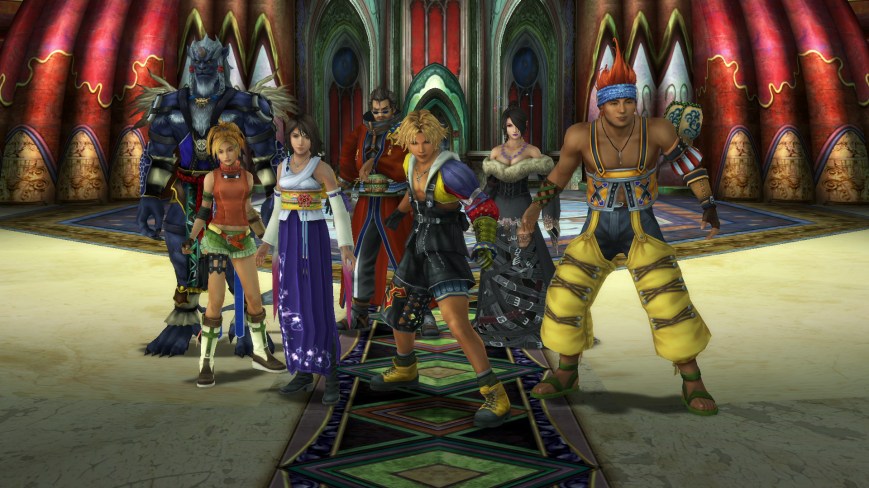
I do not have nearly as much time to game as I did when I was younger.  Hell, even a year ago.  It is an extremely rare occurrence for me to replay any game, in particular long-form games.  A combination of lack of time, and most games having a very long tail of grind at the end.  Few exceptions here.  For some reason FF games get replayed every 3-4 years, XCOM too.    That and the fact that there’s a plethora of new games that are just sitting in my library, screaming for playtime (Frostpunk, I hear you!)

With God of War winning game of the year, and an outstanding itch for decent combat mechanics after RDR2, it’s back in the chains again for me.  I opted for New Game+, which let’s you keep levels, skills, and all non-story based equipment.  For some reason, that let me keep the chains, which is a massive advantage.  I love the axe, but those chains are an AE cloud of damage that makes you nearly immune to damage for nearly every enemy but bosses.  So while I certainly upped the difficulty of enemies, it’s still easier than the first pass through.

But that’s less to do with the actual difficulty and more to do with me.

No Training Wheels

I played a fair chunk of GoW when it came out.  Killed some Valkyries.  Did all the side quests.  I was good at the game.  Time off has let some rust settle in, but it’s mostly shaken off now.  As with most games, there’s a gradual difficulty curve of enemies as you progress.  There are more of them, with more complex and damaging attacks at the tail.  Well… as a character/player, I’m already at the tail.  There are no skill upgrades left, and any armor boosts are simply numbers, not abilities.  I was trained to avoid damage, so more HP/Armor doesn’t really serve much right now.

Seen It

There’s a spot on my trip to the family cottage up north that still gives me goosebumps, after over 30 years of travel.  The effect is lesser today, but it’s still there.  It’s similar to re-watching a movie for the 30th time (Fifth Element is over that, I’m sure) and you still find parts to appreciate.

GoW is similar, in that I’ve danced this dance, but I still find joys in doing so again.  I look at different details.  I appreciate the background now since I’ve got a pretty solid idea of the foreground.  Facial twitches.  Sounds.  The rhythms of combat.  I’ve seen it all, but I didn’t really appreciate it.  Nice to have that opportunity again.

Puzzles

There are a couple within the game, though nothing terribly complex.  Most everything has to do with ringing bells within a specific timeframe. The challenge the first time was both finding said bells, and then finding the right order to ring them in.  At most 5 minutes of work for some spoils.

Redoing that part, maybe 30 seconds tops.  It’s lost the mystery, since there’s only one solution and once you know it, it never really feels the same again.  A bit like learning the workings of a magic trick.  Or visiting the backroom of a butcher’s shop. Ignorance really is bliss.

Nostalgia

There’s another reason I avoid replaying games.  Often times my memories are a much more positive experience than the actual game presents.  This is certainly easier with standalone games from the 90s/00s.  Goldeneye still plays amazing, but it doesn’t look like I remember.  My memory is selective, and usually focuses on the emotional highs/lows.  Many gamers will recall the fights against Sephiroth, but few remember the motorcycle or snowboarding games from FF7, unless just reminded.

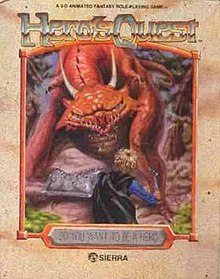
Remind me, I have some Quest for Glory games that need a reload…

Trust Issues

Mike Fisher (ex Squenix USA CEO) has an interesting post on rebuilding trust.  He was in place during the FF14 debacle from years ago, which is one of the silver linings in the gaming industry.

Small history check.  FF14 launched as a steaming pile, Squenix pulled the plug and re-released it 3 years later with the same overall engine, but a completely different gameplay loop.  Went from abysmal failure that tarnished the company rep, to the shining beacon of themepark MMOs.  Words do not do justice to how this game turned around.

While the main points of the article are aimed straight at EA, Blizzard, and Bethesda, the core message is a simple one.  The people who buy your games do so because they trust the company.  They are willing to give you the benefit of the doubt, and their money, with the hope that you will continue to deliver as you have in the past.  Losing that trust is a terrible thing, in particular with the ultra fans… and the long term consequences are severe.

And that’s accurate in a whole lot of things in life.  People follow leaders that they trust.  They will follow them into hell and back, give their lives for their leaders.  They can be fanatic at times, and be willing to overlook some major transgressions.  But at some point, those ultra-fans are the only ones left, and they’ve done such an amazing job at pushing away everyone else… you end up with a fraction of the business.

These past few years have been rough for the gaming giants.  There’s a culture that comes with certain companies.  Riot is simply known for being the cesspool of competitive gamers, there’s little they can do (or want to do) to change that.  EA will go to extreme lengths to dominate a market and nickel/dime you to death.  Activision will take all the lessons learned from one game, then ignore them for the next.  Bethesda will milk a franchise until there’s not but a husk that remains, with players hoping for a return to previous glory.

There are plenty of examples that I’m sure every gamer has experienced.

The good news is that this is leaving a massive gap to be filled by the mid-tier and indie developers.  Dead Cells, Celeste, FrostPunk, Into the Breach…all games that won awards from the relative shadows of the big companies.   Into the Breach is a prime example of trust building, since it’s the same company that brought use Faster Than Light (FTL), the amazing rogue-like spaceship game.

And it’s not like a lost cause is present.  No Man’s Sky is a thousand times better today than at launch – everyone should have a try.  Warframe at launch was horrible, and it’s now one of the best squad-based shooters.  Neither of them said that the gamers were wrong in their expectations.  They admitted fault, provided a plan, and then delivered.  A real plan.

I am utterly fascinated by game developers thinking that PR is the solution to a game’s woes.  In nearly all cases, it’s just adding more fuel to the fire.  PR rarely has any understanding of gaming culture.  And those that do, rarely have the power/authority to implement any actual change.  Trust comes from leaders.  When they stop taking accountability, people just move on.  There’s more than enough games for that.

Game of the Year

I’m not normally big on award shows.  Even less so for shows that focus on people with generally poor social skills.  Let’s face it, actors & dancers are trained to entertain… game designers not so much. That said, I think the idea is sound.  Having peer recognition is always a good thing.

This year had a lot of winners.  God of War won the big title.  Read Dead Redemption won a few related, Celeste a few, Dead Cells a couple, Fornite some.  There’s a significant portion (like 30%) that’s dedicated to e-sports folk.  In that regard, it’s like the opposite of the Oscars, where the technology portion is more celebrated than the people.

What’s interesting here is that there’s not all that much controversy.   God of War this year, Breath of the Wild before, Overwatch, Witcher3… all solid games.  You’d be a happy gamer if you played even half of what’s listed here.

Does make me think about what I played this year.  I agree that God of War was a clear standout, hitting near perfect notes on every aspect of the game.  The ending alone…

god-of-war-walkthrough-mothers-ashes

Those are giants, not mountains

Other notable highlights, in no particular order.

  • Read Dead Redemption 2 – lots of info lately on this one.  Sprawling epic story, feeling more like a simulation than a game.  Astounding level of detail.  Only weakness is the engine/controls
  • Spider-Man – a beautiful view of Marvel’s New York, with great visuals, controls, and story.  The randomness of events is fun, the various tasks throughout add a lot of lore.  Few games make travel feel as much fun as this one. It suffers a bit from Ubisoft’s icons-everywhere syndrome.
  • Monster Hunter World – The most beautiful of all grinds.  Each monster is unique, and there’s no better feeling than the final blow on a giant that can sneeze your death.  Because the gains are not incremental but instead plateaus, it makes the tail end of the game feel like hours without progress, then a gold mine.
  • Ni No Kuni 2 – Sequel to one of my favorite RPGs, but takes a more kitchen sink approach.  The art and combat mechanics are superb.  The first 75% of the game is pure JRPG, with a great story, minor backtracking, and continual progress.  The last 25% is an un-fun level grind – which is again a JRPG staple.
  • Pillars of Eternity 2 – I’ve yet to finish it, and can’t really tell which point of the game I’m at.  The story & mechanics are much improved on the previous.  What I can’t get over is the travel portion over the seas.  It’s minutia that I don’t find enjoyable…
  • WoW: Battle for Azeroth – I’ve written enough about this.  This expansion plus the whole Diablo:Immortal push has soured me tremendously on Blizzard.

As a trend, I notice that these are not 8 hour games.  Each one of them took weeks to get through (or not in PoE2’s case).  They are also not PvP games.  2 of them are PS4 exclusives as well… and combined with Horizon: Zero Dawn, you can spend a few hundred hours playing GotY candidates/winners.

In terms of things on my wish list:

  • Dead Cells – metroivania + roguelike
  • Celeste – a tough platformer (by a Canadian too!)
  • Frostpunk – a city builder, based on scenarios
  • Into the Breach – a tactical RPG with very short sessions
  • Divinity 2 – isometric RPG with was seems like sandbox mechanics

On top of the recent expansion to Warframe and upcoming season of Path of Exile.

For all the negative gaming stories that take up space in the news, there are some absolutely amazing games out there to play.  That’s the best part – having too much fun to have time to complain.

Bethesda

Let’s do all the dumb.

I’ve been a skeptic of Fallout 76 since it was announced.  Multiplayer games are hard, and Bethesda games have always been more about potential than delivery.  People are still playing FO4 and Skyrim because of the modding community.  Bethesda releases a large game, a big sandbox, plenty of bugs, and let’s the community make with it what they will.  I’ve thought for some time that was rather unique for such a large company, but it seems an understood deal.

FO76 seemed to be more of the same initially.  Quite a few folks were hopeful of simply having the original sandbox but with a multiplayer mod.  Not something that’s easy mind you, but Skyrim was in 2011 and Fallout 4 was in 2015.  It’s not like there wasn’t some amount of time here.

But as the game grew closer to release, it became clear of two things.

  1. It was Fallout 4 with a mod
  2. Finances trumped game decision making

Fallout Mod

FO76 uses the Creation Engine, which was first launched in 2011 for Skyrim.   It was in development for years prior to that.  That is a smart re-use of existing tools.  The error in this is that the engine was built for single player games, and had many years of coding changes with that mode specifically in mind.  It’s a bit like taking a base model car and being passionate about rally racing.  Then using that rally car for drag racing.   Hard to judge if it would have just been easier to go back to stock.

The impacts here are simply in the variety of bugs and the way the game runs.  There are plenty of posts/videos on how the beta ran.  That you could make client-side changes was standard in single player games – and it was here too.  That world speed was tied to frame rate was there.  AI pathing was there.  Pretty much most bugs that exist today in Fallout 4 (and addressed through mods) were present in FO76.

And that’s fine.  Games have bugs.  Releasing a game with bugs is normal.  The type and quantity of those bugs is a different matter.  It was pretty clear Bethesda needed the launch date to hit, even if it could have used another 6 months of work.  (Blizz anyone?)

This was for lack of better terms, an Early Access title released by a AAA developer.  Time will tell if it can get over that stigma.

Finances are King

By now everyone has heard of the bag issues.  The ultimate edition ($200) was supposed to come with a canvas bag, instead shipped with an extremely cheap nylon bag.

fo7620nylon20bag_t

So cheap you can’t find it at WalMart

The answer from Bethesda was that the canvas bags were too expensive to make.  Syncaine covers this point quite well.  The only people who wanted the bag were super fans, the ones that will be there no matter what.  They are the last people you want to piss off.  Imagine a US football game where face paint was banned from the stadium.

They then offered $5 of in-game credit (not enough to buy the virtual version of the bag) and expected that to be enough.  This is when the class action lawsuits were being formed, and frankly there was a decent chance the players would win.  Would be fairly easy to show that Bethesda knew a long time ago that canvas bags were not possible, yet they were still advertising them even after launch.  So now they are making canvas bags and letting people place tickets to get them.

Data Breach

And just last night, the ticketing system in Bethesda decided to make life ultra fun by granting access to players to the overall database.  There are two interesting laws that apply here.  GDPR is one, and that has a fine of up to 5% of worldwide revenue as it relates to data breaches.  The other is a very recent California law that states that if 500 people from that state are impacted, the company must advise all their users of the data breach.  This is why we’ve seen a fair amount of breaches in the news these past few weeks.

All the Dumb

If this was satire, then Bethesda would get the all-time trophy for trolling.  It’s a real masterclass.

If it isn’t, then Bethesda managed something impressive:

  • Had a beta to find bugs
  • Told gamers that it wouldn’t fix anything until after launch
  • Realized how dumb a position that was and fixed the game breaking ones a few days before launch
  • Took a game noted for its story / NPC interactions and removed said story / NPCs
  • Managed to deliver a ~50% metacritic ranking (lower than Bus Simulator 18)
  • Knowingly advertised one product while delivering another
  • Managed to insult their super fans
  • Told players too bad, and gave them virtual credit in their game (~$5)
  • Said credit was not sufficient to buy the virtual bag in the game
  • Realized they were facing a lawsuit, if not criminal charges for fraud and opted to deliver what was advertised instead
  • Discovered a bug in their ticketing system that caused a large data breach, with potential million dollar fines
  • All within couple months

As a case study, it will be hard to find someone else who can do this much damage to their brand in such a small amount of time.  All of it self-inflicted.  I wonder what the long-term impacts will be on the company, and just gaming as a whole.  Maybe this is enough of a crater of bad things that practices change.

Maybe not.

Virtual Game Stores

Consoles aren’t really part of this conversation, since they are closed ecosystems.  It’s not like you could get God of War from anything other than the PS store.

PCs though… there are so many options.  The giant is certainly Steam, but there are others around.  Important term to remember here, there are storefronts where you buy the game, and Content Delivery Networks (CDN) that allow you to download the game.  Let’s look at the options first.

GOG used to be solely about retro grames, but it’s a solid spot for some indie games, and things a bit out of the ordinary.  Built in CDN.

Green Man Gaming often has massive discounts with coupons, and integrates easily with Steam.  No CDN here.

Origin is used solely for EA games.  CDN included.  It’s own by EA though, so it’s the devil.  Not a whole lot of choice here if you want to play an EA game online.  Steam will even redirect you here.  Probably the worst UI and overhead of all the services I’ve used.

Blizzard has a launcher/storefront where they’ve started to include Activision games.  As a CDN it’s hard to compete with the download/install options, and the UI is extremely clean.  Makes you wonder why EA can’t do this…

ARC/Trion/Daybreak launchers all follow the same model as Blizzard but with a whole lot less money.  Every MMO seems to have it’s own launcher, but the ones that cover multiple games are the interesting bits.  In general because of the currency that can be shared between the games on offer.  They are serviceable.

Discord is about to launch their own game store to compete directly with Steam.  Sort of makes sense, given that most PC games have a Discord account in the first place.  The UI is similar to Steam (grey everywhere).  It remains to be seen what type of catalogue will be present.

Epic Games recently announced they will do something similar to Discord, but went into much more detail regarding the financials.  Epic will only take a 12% cut, have no forums, and a focus on review bombing.


The Juggernaut

Steam dominates for very simple reasons.

  • The damn thing works.  Full stop. I’ve never had it crash or fail.  Every other CDN has crashed at least once, if not multiple times (looking at you Origin).
  • It has a massive catalog, built over years.  For pretty much any game, if it isn’t on Steam, it’s likely not available elsewhere.  Exceptions apply to publisher-owned platforms (Origin/Blizzard).
  • It has sale events that feel like you’re getting stuff for free.  Who doesn’t like the holiday sale, where you can get games at 50-90% off?
  • Players have had it installed for years, so there’s a high level of familiarity with the system for people who have disposable income.
  • Simple refund process

It sucks for a similar set of reasons

  • It takes a massive share from developers … 30%+
  • It has so much crap, it’s almost impossible for the average player to find something “good” without depending on curated lists
  • It has forums, which developers need to manage without any administrative tools.  One bad post from someone with 5 minutes of gameplay can derail an entire game.
  • Review bombs are common place, and Valve has done a poor job of managing it
  • Steam opted to stop curating any content that wasn’t deemed illegal.  Gaming bloat/cloning is prolific.
  • It is the primary enabler of Early Access gaming, which is next worst trend after loot boxes.

For many players, the pros outweigh the cons.  When you look at gaming as a whole, Steam has opened up the entire globe to the concept of digital downloads and effective CDN management.  As a piece of technology, what it’s done is incredible.

As a service to gamers, it’s provided many more eyeballs on games than ever before.  It embraced Web2.0 before it was a thing, allowing the consumer to provide feedback to the developers and to other prospective buyers.  There are plenty of games I never would have found if not for Steam.

For developers, it provided a relatively low cost deployment option when physical media distribution costs were so high.  More things could be shipped.  The major downside to this is there is a significant amount of gamers who are toxic and can derail any developer with minimal effort.

But…the world Steam was built to address doesn’t really exist anymore.  It’s implemented the change it set out to push through.  PC gaming is prolific.  Indie developers are all over.  CDN are common.  The technology hurdle is solved.  The next hurdle is the economic management of a new gaming culture.

If  Epic can actually get a store front and CDN working, at less than half the cost of Steam, with no forums, and a managed review section, better developer tools… that’s a hell of an incentive for a developer to swap over.

RDR2 – Guns Down

I’ve reached the end of the road in RDR2.  Some thoughts.

*Spoilers, clearly*

There’s something to be said about the end of a story, and the feeling of being on-rails until the end.  Ever since Saint Denis, there was only one path for Arthur and the gang, and sure enough, it delivered.  The game had delivered all it’s splendor, and it was a choice to either keep exploring (and side missions) or take the main story to completion.

Given I had the best horse, full stats, and the best guns, there wasn’t much left to improve RPG-wise with Arthur.  The optional story bits had some interest, but they were starting to feel more like busywork that actual value.  Don’t get me wrong, each side quest is a decent nugget of storytelling and/or actin, but when all the mechanics have been revealed, there’s only so much blood left in that stone.

The rest of the main quest takes a rather dark path, at least as compared to the rest of the game.  The gang is clearly on edge being chased by the Pinkertons.  They somehow manage to tick off the army too, while instigating an ever-escalating war between the native tribe.   Cowboys and Indians are portrayed through stereotypes.  The model of the latter is deemed unacceptable in today’s society.  Rockstar does a so-so job of portraying the history of that culture being conquered by the american government.  Many a time Arthur will pipe up that the situation is very complex, but the story never actually does that justice.  It feels like window dressing.  Sort of like the Women’s Suffrage quest where all you do is drive a cart.  Or the one where you recover a black man’s wagon of doctor supplies.  I had more interaction with a random stranger who I saved from a bear trap.  Compared to other games, it’s more than enough.  Compared to some of the storylines in RDR2… it feels less.

The near entirety of the 5th act is focused on external forces and Dutch’s want to manipulate them for monetary gain.  There’s a descent into madness from the start of the game, but it really goes off the rails in the end – and quickly.  The gang can see the signs and slowly leave camp.  The wheels are coming off.

Chaos ensues, a few more robberies where Dutch leaves his gang to their fate, a final train robbery that just barely gets by and then the final show down.  Arthur finally gets the Pinkerton boss, and they come after him to the camp and it’s a mad-dash chase to get away.  After a confrontation with Dutch and another, he slowly fades away at the top of a cliff to see the sun set.  It’s a fitting end to a bad guy trying to do good in the world.

The game then continues with John Marsten 8 years later, trying to set up a new life.  I am not interested in that story.  Clearly he finds a good place, then the Pinkertons pick him up for the events of the first RDR.  There really aren’t enough loose ends for me to care to see the rest of the epilogue through.

Final Thoughts

RDR2 is one of the most complete and amazing games of the last 5 years.  It is an amazing story telling engine, a great effort at simulation, and a believable world.  It is massive without grind (more on this).  Arthur Morgan is well written and acted, so that I felt an attachment to the character and the gang’s plight.  The majority of other characters had nuance and fit in, with Mary being a high point, and Micah a low point.  The world systems and how they keep going even when you’re at a different point… that’s amazing.  Nearly every single NPC has their own life and schedule.

The downsides relate almost entirely to the gameplay mechanics.  The controls are slow and confusing.  Combat is a major part of the game, but it feels incredibly loose.  The travel time between activities is double what it should be.  I’m sure I spent 15-20% of my gameplay time just riding on my horse between places.  The fact that some quests will include quick travel TO the location but not BACK, make that point all the more solid.  It was one of the main reasons I stopped doing side quests – I didn’t want to spend 20 minutes travelling there and back. The engine feels like it’s 10 years old, with updated graphics.

I will have to compare to God of War here.  That game had amazing controls, a superb engine, the world felt real, the story was engaging… it is hard to find any part that wasn’t great or near-great.   It remains my gold standard for a console game.

That said, RDR2 is darn close and really a must play for anyone who has a console. I do hope they release it on PC, just to let a larger audience get a view as to what a massive achievement they have brought to the table.

RDR2 – The Great Demise

I am a firm believer in karma, rather than some arbitrary being that picks a favorite.  In that there are direct rewards for an action, and indirect rewards.  Life just finds a way to balance itself out.

*Spoilers.*

Last I left RDR2, I was heading into Saint Denis trying to find the big score so the gang could buy some land and freedom.  Well actually, I was there to rescue a kid that was taken from a mob boss.

There’s the adage of big fish, little pond that applies well to Dutch, the gang leader.  He espouses some amazing views from his pulpit, but they are just hot air.  From a player’s perspective, that seems somewhat obvious, but from the character perspective you can see the attachment.  As the game progresses, you can also see the cracks start to show.  Dutch’s plans never really work out, there’s always someone else a single step ahead.  He’s never as bright as he thinks he is.  Always trying to reach for the sun and getting burned at every step.

Every job in Saint Denis goes wrong, at different levels too.  The one that seems to go well, takes a massive nose dive when the Pinkertons show up.  You lose a lot of good people whom you’ve spent hours/days getting to know.  Things go so awry, that you end up stowing away on a ship to Cuba, get shipwrecked, lose all your money, and end up freeing a slave camp to get out of there alive.

The trip back to town… the game throws you in a semi-dream state with the only voice-song that I’ve seen so far.  (Neat effect – you see more deer if you’re honorable, you see more wolf is you’re dishonorable.  Very reflective of native mythology.)

When this finished, I just stopped for a bit and started thinking.  After all the hell that Arthur goes through, he’s still bent on finding his people and trying again.  He’s doubtful of Dutch, but still trusts in his intentions.  The entire gang really starts to question the sanity of the man, and the decisions over the past months/years.

Blackwater is the watershed moment.  It’s when all the luck runs out and the dues start being called in.  Where Dutch is focused on the micro, the world around him is just taking massive strides.  Day by day, mission my mission, each previous decision has repercussions on the next set of events.  When you find out why the bank job went south, it’s a really impressive piece of art.

I’m nearing the clear end point now.  Arthur’s journey towards the grave is assured, it’s all about the timing.  And for the walls of the house of Dutch to fall down.

RDR2 – Satchel Interlude

Mainly due to another game not actually being playable all weekend.

RDR2 has 3 main branches of activities. The main quest (MQ) is scripted like a very long interactive movie.  It gates a lot of the other content in the game, and the activities you can undertake.  So if you’re playing and wondering why something seems possible but isn’t, it’s usually due to the MQ.

A second branch is the stranger/sub-quest activities that present themselves.  These are preset activities that you can undertake and open up nuance to the world around you.  They are not as formal as the MQ since they rarely focus on the gang, but instead the world building around you.  Some of these quests require you to explore the world to complete, such as finding dinosaur bones, legendary animals, or trading cards.

The third branch is the sandbox and random events.  It has general directions but nothing specific or trackable.  It could be that you get a tip about a house you can break into, or you meet up with a gang taking some hostages.  It provides a significant amount of life to the world around you.  One track of this is the upgrade system, which is predicated on collecting specific items – typically from hunting.  Of great value are satchels, which improve your carrying capacity.

I opened up Saint Denis and Chapter 4.  I figured with nearly all the map open and access to most weapons, I could focus on general character improvement.  Camp has an upgrade location where you hand in perfect pelts and get credits for some decent upgrades (non-cosmetic).  Some of these are easy (deer), some of them are hard (badger), all of them require work.

Perfect Hunting

Hunting requires planning and preparation.  To get perfect pelts, you need to find 3-star animals.  First you need to find them!  Some are really found in specific spaces (panther, badger) or spawn at certain times.  They have a random chance to spawn with normal animals, but to detect them you first need to study the animal (with binoculars).  To kill them, you need the right weapon: Bow + small game arrow, Varmint Rifle, or Scoped Rifle.  If you don’t kill them in a single shot, or with the proper weapon, the quality of the pelt drops.

That sounds oddly simple.  Did I mention that animals can hear and smell you?  That they leave tracks you can follow?  That predators hunt other prey?  So the execution isn’t exactly straightforward.  In particular for animals that are more cagey than others (damn squirrels).

For most animals, you can carry their pelt in your belt or on the back of the horse.  For large animals (bison, elk, gator), you can only carry one at a time on the back of the horse.  And stuff on the horse will disappear if you leave the horse for too long, or fall off if you stumble.  Let’s just say it’s painful to hunt a Bison up north, then travel all the way south to hand it in, only to be ambushed on the road and lose the pelt.

Open World

The best part of hunting is that it forces you off the main road.  This has you find some neat hidden spots in the world, and some extra story.  Found an abandoned oil rig, where the owner was killed because he didn’t want to sell.  Found a bunch of cannibals.  Found some ghosts.  Some hidden treasures.  A jail break.  Thieves blowing up a safe.

You really get to appreciate the finer details within the game. And there are a lot of details.


RDR2 – The Dream Dies

Plot spoilers?  Can you actually do that for a prequel?

RDR1 is the closing chapter of the American frontier, the end of the West.  RDR2 is the same theme, but a larger scope since it’s set earlier.  It certainly is about the impacts to the main character, but it’s also a heck of a commentary on society.

I am just entering Chapter 4 (I guess 50%?), where you can start to see the wheels really come off the dream-wagon that Dutch is pushing.  Backtrack a bit, and you start off in a blizzard, in a run down town.  You move to a small frontier-like town that has only one street.  You then move to Rhodes which has a couple streets and electricity.  Then off to Saint Denis which is a large industrial town.  Each one feels like I’m travelling 10-20 years into the future.

The parallel to today’s urbanization is evident.  Small towns are drying up everywhere as people chase jobs/money in the “big city”.  Something like 90% of Canada lives within a 2 hour drive of the US border.  The people I know who live in small towns mostly work in nearby large cities, and have regular runs into the to do complex errands.  Driving an hour is easy for them.  People in the city freak out about a 5 minute walk.

RDR2 is predicated on the charm of Dutch’s american dream of freedom and choice.  He sells it well, and his flock certainly believe him.  As the world around them closes in, he makes more and more rash decisions that lead to even further disaster.  Just the fundamental principle of “get enough money to buy some land” makes no sense if Dutch really believed in freedom.

As much as the game has you playing as Arthur Morgan, the story has little to do with him.  It’s about watching the dreams and the people around you die a slow death.  Even the mail carriers are aware that they are no longer relevant in a world with carriages.  It’s incredibly depressing.

Spectacle

The true testament to the success of this game is in the use of spectacle to provide depression.  One mission has you find mementos of an old vet who has turned to drink – you empathize with his descent, as you slowly discover he was a slave trader.  Another has you destroy the livelyhood of an old blood family, burn down their house, and make their matriarch go off the deep end.  There’s a giant firefight in the middle, and the final view of the event is straight out of any period film.

I am convinced that West World changed the direction of this game.  Sure the themes are not identical, but the concept of a very grey western, dealing with oppression, lack of power, the chase… all of it feels refined.  RDR1 (and GTA V) had a lot more black/white decision points.  The characters filled archtetypes.  RDR2 just has people.  People that are driven by their own motivations rather than the plot.

Crafting your own story throughout is extremely personal but you are only making tiny changes on the larger path.  Do you want to rescue the lady being kidnapped for who knows what?  Do you feel the need to help the farmhands defend themselves, and then rob them?  Help or hinder the drunk who crashed his cart?  Arthur has a set path – he’s an outlaw through and through.  But maybe he’s more like Robin Hood than El Chapo.  Maybe you prefer quiet to guns blazing.

Seeing it Through

I really enjoy The Good, the Bad, and the Ugly.  I’ve seen my fair share of the Duke.  There very few good “happy” westerns.  The hero is not meant to win, he’s meant to barely survive.  Shane anyone?

I know how the next game starts, so I have a pretty darn good idea how this one will end.  The destination is still a bit cloudy, but that’s really in the details.  Dutch, Javier, John, and Bill all live.  The rest… who knows.  But that journey is ridiculously captivating.  Watching the world close in around, slowly picking away at the dream until there’s nothing left.  Seeing the world trying to accommodate them, but the old style not wanting to give in.  People fight so much harder when they think they are losing something, rather than trying to gain.  It’s quite a mirror to today’s society… making it all the more enjoyable to experience.