Acti-Blizz Lawsuit

I guess it’s current affairs and game related…

Riot Games had a similar suit in the past, which had relatively small impacts in their organization. There were a fair amount of reports on it too, Kotaku’s of note. Curious to the larger outcomes. The $10m payout is peanuts for that company.

In this case, Acti-Blizz is getting his with a state-level lawsuit over discrimination. Personal lawsuits in the US are a dime a dozen. State-level efforts, that frankly millions of dollars invested just making a case. They don’t get issued without a rather high level of confidence that it can be proven. The penalties are not financial – Acti-Blizz revenues are $2b per quarter, so $10m is a hiccup. The penalties here are public, which is weird that we’re in the mode today.

High odds here that there are few execs that are shuffled, maybe a could lose their jobs (Afrasiabi left last year), but I would be really surprised is anything meaningful happens outside of some larger pay-outs to some impacted people. I say this because the executive leadership within that company has been extremely consistent that the only thing that matters is money.

Sidebar – I am convinced that EA has been doing an internal review for years prepping for their eventual suit.

I do understand how these events come to pass. Gamer culture for most of its existence was a “bro” culture, in particular in the more competitive space. Hell, IT culture was full of “a/s/l” questions and then pouncing on anyone that claimed to be female. Picking on Acti-Blizz here, but it’s rampant across the industry. It’s better now, but that’s like comparing a forest fire to a house fire. There are still some big issues to sort out. Riot Games is an interesting example here, as they went to great lengths to build a corporate culture that was reflective of their gaming culture – competitive and aggressive. Wilting flowers got nowhere. Acti-Blizz seems on another level though, where it was outright abusive, and top brass was aware.

What I find the most interesting in all this is the response that Acti-Blizz put out afterwards (emphasis mine).

We are sickened by the reprehensible conduct of the DFEH to drag into the complaint the tragic suicide of an employee whose passing has no bearing whatsoever on this case and with no regard for her grieving family. While we find this behavior to be disgraceful and unprofessional, it is unfortunately an example of how they have conducted themselves throughout the course of their investigation. It is this type of irresponsible behavior from unaccountable State bureaucrats that are driving many of the State’s best businesses out of California.

I have experience in how this process works, though obviously in another country. The company is made aware of pending litigation (if individuals are not indicted), giving the company some time to prepare their statements. The legal team at Acti-Blizz had time to prepare this statement and get it approved. The wording is purposeful.

Ad-hominem arguments are an extremely effective defense – they question the ability of an individual. You’ve seen enough where the defense questions the integrity of a witness, not the actuals facts of the case. The media has conditioned us to look past the facts and at the ideas – Nancy Grace is the best example that comes to mind. But this only works on individuals. It’s a big challenge to sway public opinion on an organization that is established to support people’s rights.

I remain curious as to where this path goes.

Logistics & Analytics

I’m an analyst by training, with a somewhat disturbing fascination with numbers. Not so much in the discrete numbers but the story that numbers can tell. There are 3 main phases – the pure numbers, the sanitation of the numbers, and then the trend of the numbers. Reddit has a neat DataIsBeautiful section that presents the mid-point of analytics. This is the flex point where data goes from being objective to subjective. You can make numbers tell any kind of story… CNN and FoxNews use the same data sets to spew completely different opinions after all. That aside, making the numbers do something is the foundation of factory games.

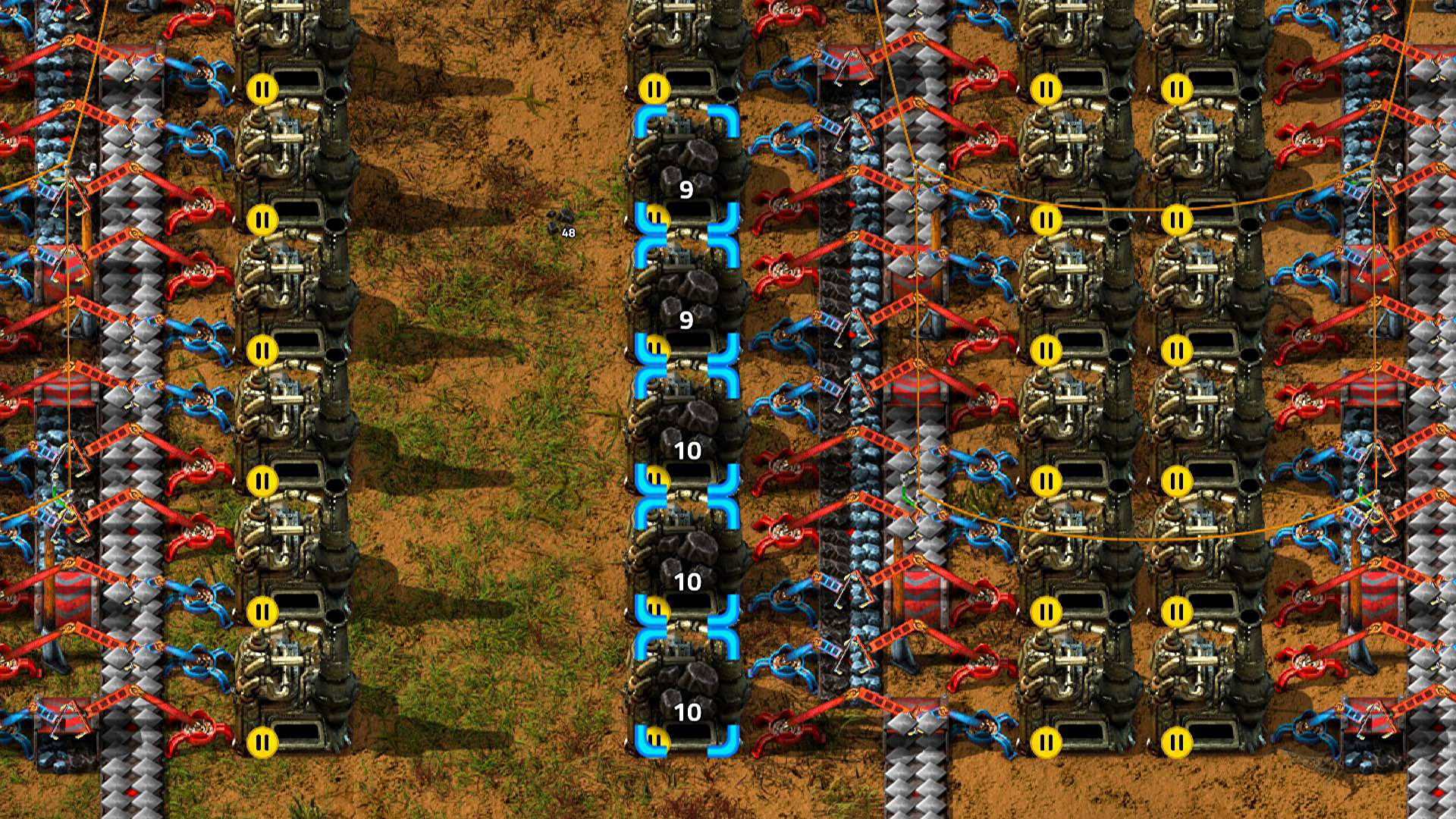
Factory games are a sort of inverted view, where the goal is set up and you are given some basic numbers to sort out. Like if I said, collect 100 lumber. You would go out and cut some trees to get there. Which trees, and where is up to you. Maybe you want big trees with a lot of lumber, or tons of smaller ones that are faster. Maybe you skip doing it and instead build a sawmill to speed up the process and save time later. The only thing that matters though, is getting 100 lumber.

At the start, factory games are simple affairs. Click a few buttons, collect things, make things, next. They quickly spiral to more complex things, were you need multiple steps working together, in order to meet an order. If I moved from 100 lumber and said make me 20 tables, well you’d need a saw, nails, and lacquer. Then I’d say, make me 50 houses. Then a town. Then a country. And so on.

The gains at the lumber space are linear. You will collect 100 lumber in 5 minutes of a game. Building a table though, each one may take a minute, so you’re 20mins to complete that task. And as you move farther along, more and more time to get there. Time to create is a limiting factor, but only in the linear sense. If you make more factories to make tables (say 20 of them), then it takes only a minute to make all of them. Of course, you now need 20x the speed of collecting the base material to feed the factories. And then the logistics of moving the material from the collectors to the factories.

But then you need to worry about space. You can’t just pop up a factory anywhere. Building them too far apart means you need to ship material all over the place. You will end up with “hubs” of factories that are closely linked and can share the supply chain. They need to be close enough to the base material and the transport method needs to support large volumes so that you always have material on hand to make things. Nothing worse than a factory sitting idle because it has no material to craft. And yet, you need real estate to build this stuff. There’s only so much land available to build upon, so things need to be tightly built next to each other to optimal.

Finally, you need to power all of this stuff. Sawmills might work with water, if they are near it. But if they are out in a field, then you need to get power to the mill. Same with the factory. Making power means finding enough sources of energy, and the mechanisms to process them, in order to over-supply your needs. You want more, so that you have flexibility to add more factories quickly. Not enough power means that your things run slower (if at all).

Frostpunk

Frostpunk is a really interesting game because it’s about failure avoidance. Most builders, if you step away, things just don’t progress. Frostpunk instead escalates bad events, either sickness, hunger, power issues, or ever increasing levels of cold. You rarely have enough resources to do anything, and need to send out expeditions to collect more materials. They take time to get there, time to get back, and there’s a chance they will die. You need to always be pushing the “safety blanket” level to best absorb the ever shifting disasters.

You’re limited in base resources, but also in power and location. Buildings fit into slots of sort, and you have a maximum in any area. Then you need to get power there, and importantly, heat the buildings where people are located (night buildings without worked don’t need heat, robots never need it).

It isn’t a factory game though, because it has multiple levels of RNG. Maybe you’ll get a giant 3 day storm, or maybe you find a huge hoard of coal. Your best plans can be completely trashed because of it. Factory games are about predictability. Frostpunk instead does a superb job explaining the limitations of a factory game.

Math Exercise

Factory games often benefit greatly from spreadsheets. Understanding the rates of items is key to optimization, so that you are as close as possible to the place where you are using 100% of capacity, without causing backlogs. If the table factory consumes 10 wood per minute, and you have 20 factories, then you need to be collecting at least 200 wood per minute. 150 per minute and then factories will stall. 250 per minute and you create an overstock of lumber that needs to be stored somewhere.

That’s a simple example. Multiple tiers of complexity later, you’re going to be consuming multiple products that are created at different rates with different material. Maybe factory 1 needs 100 wood per minute, and factory 2 needs 20… and factory 15 needs 75. Figuring out the base demands means you need to find more material and harvest more things. I’ll have a good example of this in a future post.

The spreadsheet helps to keep track of all the requirements, or the quick math needed to see how things work with each other. In particular if you’re looking to optimize, as even the smallest of numbers early on can have cascade effects at the tail end. The number of times I’ve had bottlenecks and tried to figure out why was often resolved through a look through the numbers.

Factorio tight design

It’s really hard to make a factory game, hence why there are so few. Factorio is the platinum standard. It spent 4 years in Early Access. Cripes, its hard to make any game, but the people who plays these games are looking at every detail. They are nitpicky by nature! So when something like this does come around, and it works, holy cow does it feel good.

Dyson Sphere Program

I rather enjoy hard sci-fi. Ringworld scratches a crazy itch, and it’s been revised a few times by scholars to be more accurate in terms of setting. I would guess that most people were introduced to the concept of a Dyson sphere through TNG’s episode with Scotty. The concept is amazing, but the practicality of completely enveloping a star at a planetary radius is just mind-boggling in scope. It’d be millions of Earths in size. You’d need multiple solar system’s worth of material to build just one.

Dyson Sphere Program is a game in Early Access that attempts to tell that story. Think Factorio but in a 3d world that’s representative of a cluster of stars. Factory builders are fascinating less for their results but for their elegant complexity. Building an automated supply chain that has dozens of steps, each sustainable and clean, is an amazing feeling. Right up there with an optimized SimCity in feeling (but not approach).

Early Access is a tough bag. There are thousands of games in that mode and few ever get off the ground, or give you something of value. For every Hades or Valheim, there are bins full of bad ideas and money grabs. DSP is a reflection of the former type, with an extremely well fleshed out structure present, with a clear start and middle. The ending, that is building an actual Dyson Sphere, is present but not as fleshed out as the rest.

Factory Builders

First, How to Build a Toaster from Scratch.

RTS games – let’s go back to Dune 2 – started the tend of collecting things, putting them in something to make something else. That concept of collecting, refinement, output is the foundation. Just imagine that, but dozens of steps, and each step itself using a different tool to collect or refine. Most idle games on are variants on this model, where progress is logarithmic, then you “reset” for more improvements to get further the next attempt.

Factory games do this without resets, and it’s almost entirely a numbers game. It’s a pretty spreadsheet. You don’t have a village resident with a weird demand for a baseball diamond that comes out of nowhere. You simply have a need to make more of something to start making something else. Production is not linear, as the factories themselves need a lot of components and themselves can only produce so much in a given time. You end up with factory lines to maximize the collection and production of items, then ship those items to the next chain.

The progress is incremental but noticeable. The best ones have clear phases that generally line up to manual, automation, and then optimization. The transition between phases is often followed with a dramatic drop in productivity, often with complete rebuilds to accommodate. The worst ones are slogs that provide painfully slow automation (sped up with MTX no doubt!), linear construction paths (item are used for only 1 purpose), or a set of obtuse mechanics.

The Good

The pace of growth and optimization feels good for the first good chunk of the game. Your first planet has most of the material you need to get going and the tutorials are sufficient enough to get the basics going. There are some systems that could use more explanation (terraforming for one given the soil material), and the technology tree could be revamped a tad, but on the whole this part feels just like any other factory game. Collect base materials, process them, make something, that makes something else, that makes more stuff, and so on.

If you enter DSP with an understanding of factory lines, this will be a somewhat smooth experience. If you don’t, then you may find it feels a bit like spaghetti, not so much because you lack space to build (there’s plenty of that) but you’re lacking the materials to move stuff around.

The research portion is well done, with the need for ever more complex materials to move forward with more complex research. Some things seem useless until you realize they are core to other super important materials. The early access issue here does have a few bits of things that have only 1 use, which I expect to change over time.

The logistics portion is an interesting dance. While you can unlock the ability to ship things across the planet pretty quickly, the power and transport vehicle requirements make it painful to get started. The snowball effect, once you ship your first titanium package between planets, is substantial. This is when you enter the mid-game.

The Middling

The largest pain point I have with any factory game is the minutiae of setting up belts and loaders. Early on it’s simple enough, you’re only building 1 or 2 things. When you need to build an oil refinement line, which has 50 refineries, it’s extremely annoying not to have the ability to blueprint layouts. Thankfully the game supports mods – and these are almost required in the mid-game. It’s somewhat ironic you can automate the creation of ships, but not of factories. The July 23rd patch is supposed to bring this in, I am super stoked!

The travel time between planets never really improves. I encountered an issue with power generation on one planet and it feels like wasted time having to go back and forth to sort everything out. The logistic vehicles are also speed/rate limited, so for ultra high-demand items, you’re going to need more stations rather than noticeable improve existing ones.

The mech improvements page has some major milestone improvements that are hidden in the text. Learning that you can fly to another planet was accidental. That I could warp, or stack sorters vertically even more so. All factory building games have an obtuse section of learning, where once you get it, then it changes your perspective on the game. DSP has a fair chunk of those – and the wiki doesn’t really help. YouTube videos for the win!

The Bad

Inventory management is painful, as are stack sizes that are inconsistent. Why does one thing stack to 10 and another to 200? Sure, you’re going to have storage chests lying around but with SO MANY items needed at any given time, it’s really hard to find out where they are. I’ve automated the creation of Oil Refineries, but I need to fly around the damn planet to find out where they are stored. Because Logistic Towers are limited to 5 slots and there are 2 dozen useful buildings, I’ll need to build a big complex to just store stuff.

Power generation has 5 phases. Wind, Coal, Solar, Hydrogen, Deuterium. The first 3 phases are all super quick and useful. Hydrogen feels almost accidental, especially once you collect from gas planets. It takes a long time to get to a place where that’s going to happen. Deuterium takes even longer as it’s a pain to collect. The early game has minor power issues, but the mid-game is when power generation is always an issue. And the method to address is (Accumulators + chargers) is it’s own logistical nightmare. When you’re low on power, things take longer to make, so it’s a giant snowball effect. And the game takes its sweet time to allow you to effectively store excess energy. That whole subsystem could be improved.

The actual Dyson Sphere portion feels like a different game, with it’s own interface. It has a very complex set of materials, a math-based construction period, and it’s own power generation system. You’re exposed to it quite early, but that version decays over time and it is not explained when you start. It’s friggin’ cool as all hell to see the sphere from the planet you’re on, but the system that underlies it all needs some more structure. Given this is the end game (and the name of the game), the devs are working on this point.

The Devs

5 devs, that’s it. How games like this and Valheim (FYI – the Valheim devs ALSO built Satisfactory) get built with tiny teams is beyond me, and frankly should make any studio over 50 in size start questioning a lot about their business models.

Patches seem to be almost weekly, and the devs are extremely forthright in their notes. It’s clear from their notes that they are responsive to player needs – optimizing belts was the most recent item that was a huge quality of life improvement.

Buy or Wait

There’s more here than in nearly any other factory game out there (save Factorio and Satisfactory). If the concept of building a vast production empire that covers multiple star systems intrigues you, then pick this up now. Be warned, you’re going to spend dozens of hours here… I’ve lost track of play sessions numerous times. Even if the game launched today, full release as-is, I’d highly recommend it.

I’ll have a few more posts in the future on this game…

Steam Deck

I own a Switch. My favorite games on it are all first party or exclusives. I bought it solely for Monster Hunter but have found it does a great job for other games too. The simplicity of Nintendo just works here, though I will be the first to point out the price points of everything after the console to be a bit absurd.

I own a PC and I have hundred of games. I’d argue that about 50% of my catalogue is best played with a controller. I’ve used Steam Link from my tablet to access games with no issue.

What both of these have in common is that they are fundamentally moved forward by quality games. XBOX sold like garbage for years because they only had exclusive FPS and racing games. Give me something like God of War and that’ll move units. Google Stadia had a really rough go to start because it lacked games, there’s some progress there I guess. But it’s still limited to network speed, which is a real pain in the butt. Mobile gaming needs some local footprint to reduce the network demands (e.g. gaming on the bus).

Steam Deck is not the first handheld PC, but it’s likely the one with the largest amount of backing. It’s directly competing with the Switch in terms of game quality, regardless of what anyone says. Bluetooth support alone (BTLE) is astounding that it’s not present in the Switch. It’s outside the Nintendo ecosystem… no question. But the sheer amount of games and peripherals available here are just mind blowing. That you can potentially play any game that’s on PC is a game changer (pun intended).

There’s the natural caveat that this could be another pipe dream from Valve, where the concept falls apart in the execution. Aside from Steam itself, Valve is notoriously bad at support post-launch. They have the best VR on the market, but it’s $1000 to start, which is beyond dumb.

I am not a person who lines up upon release to get something new. I’ll let all those lucky folks play with release 1.0 and wait for the next version. Not for the price drop, but the amount of patches that’ll be required to stabilize the darn thing.

As an aside, this to me really re-enforces the ultra niche appeal of customized PC rigs. Aside from the astounding costs of a high-end rig, the lack of mobility and need of major desk space to accommodate is the big hurdle. Gaming laptops give you the flexibility of some mobility and desk space, but they still cost a fair chunk. Getting a mobile PC rig for less than $500 that can play almost anything… that’s half the price of a smartphone.

I’m cautiously optimistic about this thing. We probably won’t see the true impacts until next summer (supply chain questions abound), and an ironed out system in time for the 2022 holiday season. Going to be a real interesting thing to watch.

Immortals Fenyx Rising

I picked this up on a Switch sale and played it through while on vacation. It’s ok.

The idea is simple enough – marry the map icon juggling of Assassin’s Creed and exploration of Breath of the Wild. The execution suffers for it because those two systems are wildly divergent in goals. Ubisoft is interested in the Achiever/Completionist player type. Nintendo is focused on the Exploration player type. It seems similar, but wow, much different.

Fenyx has all the trappings of an Ubisoft game. Towers to uncover the map. Icons of repetitive things to do, with no larger purpose than an actual in-game checklist. Parry-based combat. Mounts that serve little purpose. Subversive humour.

Fenyx takes a stride from Nintendo here in the exploration space. Early on you gain the ability to dbl jump and glide, which makes world traversal more pleasant – as it seems nearly everything is split on a vertical axis. Mounts are useless here because they can’t move up/down. It also comes chocked full of puzzles that fit into 3 main categories – moving blocks/spheres, shooting things with arrows, or the rare laser/knockout avoidance. Things start off easy enough, but the later trials are painfully complex or obtuse. Most of these are optional, but there are a few mandatory puzzles that I felt frustrated trying to complete the precise logic. BotW lets you solve most any puzzle the way you want, Fenyx has as specific solution to each.

The highlight is the main quest, which focuses on restoring 4 gods before climbing a literal mountain to encounter the last boss. They are caricatures or the greek pantheon, which is fine given the overall tone. There are enough hidden dirty jokes to make you chuckle along the way. Zeus is an interesting standout here… his lines are impressively delivered. His character development isn’t earned at all, and honestly not needed given that he doesn’t drive the plot. Your character Fenyx is about the purest person ever to encounter monsters… stopping at nothing to help everyone and everything. And the bad guy is just a bad guy – at least it’s not Kronos. There’s a setup in the plot for a sequel (it’s Ubisoft after all) since you don’t see Hades or Poseidon anywhere.

Thee exploration part is fun for a while, and the areas are distinct enough from each other to be thematic. There are no NPCs except for the gods, so it feels like an empty amusement park. The puzzles can be fun for a while, but they get super repetitive quickly. Once you have Phosphor’s double it dramatically simplified all “pressure plate” puzzles. Hade’s Wrath gives you a triple jump to negate a pile of puzzles. The ability to slow down arrows trivializes any shooting puzzle. Being able to lift giant stones gets rid of pushing puzzles as you can just walk out with things instead. It feels like these abilities are breaking the intent of the game, since everything is so contained. Oh, and you need to upgrade your stamina ASAP. There is nothing more frustrating that running out of stamina while climbing a wall, or when gliding around.

The combat portion is mostly about parrying. You can’t easily cancel moves, so you need to avoid mashing as much as possible. A well timed parry (plus a gear perk) will stun an enemy and make the fight trivial. Stealth is here too, and with a Phosphor perk you can chain attack a pile of enemies. Some enemies feel broken in their ability to chain stun you, but generally combat is the best part of the game. Sadly, it gets crazy repetitive and I turned down the difficulty to the lowest to be able to just ignore as much of it as possible.

While the game looks like it was built for a younger audience, that is far from the truth. Even on the easiest difficulty, death is a regular occurrence – especially in the puzzle sections. Mastery of player controls is essential to get all the way through. It does look good, and smart that for a Switch game it opts for less realistic graphics. It looks good.

Fenyx also has some DLC, and the game does give you a taste within the main content. Sadly, that content is the worst part of the game – timed puzzle completion. The controls and camera are quite poor (as with all AC games), so when you put a timer and expect precision, well I expect the game to support it in kind. Celeste this is not. Rare to find a game that does such a good job of pushing you away from DLC.

Fenyx is an interesting game, an attempt to marry divergent goals. It partially succeeds, if you avoid the checklist mentality of similar map-icon games. If you only play the main storyline you’re likely to have a good time – but it is absolutely not worth a full price game.

Loki

The joy of vacation is that the world keeps going while you’re away. It meant that by the time I came back the entire season of Loki was ready for a binge watch. And it is a worthwhile binge.

I won’t get into specific spoilers here, since that’s part of the ride. I will hit some broader strokes, which I think make this the most “comic book” of all the Disney series so far. The larger plot point tries to answer the question about free will or pre-destination.

The series deals with a time travel agency (TVA). You learn this in the first 5 minutes, and the set design is astounding. It’s borderline brutalist in architecture design, but also full of whimsy – making for a very anachronistic setting. Each episode has something going on within the TVA, and it always feels real. This is a big contrast to the Easter-egg-a-thon of episode 5, which is almost entirely CGI. Comics work because they don’t live in the grey. They have a base foundation from where people start, then end up in space or another dimension.

With the exception of the last episode, every other one manages to build an idea and then subvert expectations. It’s very close to Dr Who under Moffat, where it feels like a roller coaster in the dark, never quite sure of what twist is coming along, but it’s a fun ride. It’s supremely helpful that all the actors here do a great job with the material (casting Owen Wilson seems madly appropriate in his role). The last episode is almost entirely exposition, which I’ll get to in a bit.

I’d be remiss if I didn’t mention the development that Loki goes through. He’s one of the most interesting villains in the MCU, and has been in as many films as the Avengers (10+ years). MCU isn’t known for character development, and Loki was certainly in that package. He was interesting because you were never quite sure what his next crazy plan would be to betray everyone. He was consistent in his inconsistency – sort of like Jack Sparrow. That is not the case in this series – he goes through ample character development, to the point where he is all but unrecognizable by the end. It’s a bit weird that a being thousands of years old has a major change in a couple day’s adventures. He’s not causing any mischief – which is sort of his bag.

The last episode is pure comic book exposition. Love it or hate it, comics books follow a story line for months, then when it’s about to close, they put on bigger stakes or a bigger villain. Loki goes all in on this, and sets up phase 2 of the MCU multi-verse with the grace of a sledgehammer. Which, fine if it wasn’t preceded by 5 episodes of character progression. The sole saving grace in the last episode is that the character doing the exposition is frankly the most interesting character I’ve ever seen in MCU.

Some caution on the multi-verse… I read comics in the 80s when this took off. Without a leash, it goes off the rails super quick and nothing matters anymore because there’s another version to make up the gap. You get something like Sliders rather than Fringe. I’m less worried because it’s clear that Marvel has the larger plot points locked up 5-10 years down the road (as compared to DC), and yet the movie audience is not going to see these movies for the plot.

I liked Wandavision’s slow burn reveal, which was also wonderfully acted. I didn’t like Falcon and the Winter Soldier as it wasn’t episodic, with a really weird pace and structure. Loki feels like the best of the MCU series, while still being handcuffed to the larger story arcs.

Break Time

A much deserved one if I do say so. Cottage time for a bit…and all the big reno work is done.

My little piece of paradise

Hope you all get some time away from it all as well. Been a hell of a ride. Cheers.

Puzzle Boxes

There’s this weird intersect where virtual and physical items meet. You look at movies and the old Harryhausen stop-motion creatures existed for decades. It took Toy Story for industry to realize that digital effects could be a viable alternative. Sure, we still have some serious uncanny valley issues, Star Wars notably, but by and large most things are turning into digital assets.

D&D is a good example of something that has bucked the digital trend. Sure, there are some amazing D&D games, and WotC has some digital tools to help with sessions, but the real experience is still only available in a semi-live event. Two reasons… it’s a whole lot easier to design and adapt a session with physical media, especially with real-time curveballs. Second, the face to face aspects still aren’t working perfectly through video calls. There was a time where digital media looked like it would take over, but the advent of 3D printers and massive price drop in miniatures has reversed that trend.

I’ll roll back the clock to Myst for a minute. Revolutionary at the time, it was a 3D puzzle game that focused on logic and the environment. There was a spike in that type of game, but eventually it became saturated with rather poor clones and frankly, bad puzzle designs. We reached a point of brute force clicking to find hidden clues, or solve puzzles. The genre didn’t die though, it embraced that commodity aspect and went straight to Flash’s waiting arms. For a decent period, JayIsGames was the hub for escape room games. There were all sorts of games here, good and bad, with multiple coming out every week. Some were click fests, others key hunts… but there was some gold in there. Long logic-based quests to save a planet, or get out of jail. The genre was tailor made for digital, as the solutions only had 1 answer, and the assets and logic could be reused later on. If you have the chance, you should check out The Room series on mobile… a near perfect example of solid puzzle design. And yet…

In the mid 10’s we started to see Escape Rooms come out into the real world. You and some friends paid money to get locked into a room and have to solve a large set of logic puzzles within an hour. The beauty of these rooms is that while they require some thought to design, they need next to no upkeep for a very long time. You can set up 3-5 rooms and never change them for a year and people will still pay to do them. Mobile Escape rooms are not available, letting you have a similar experience (though MUCH less tactile) from the comfort of your house. They are pretty much multiplayer Myst games.

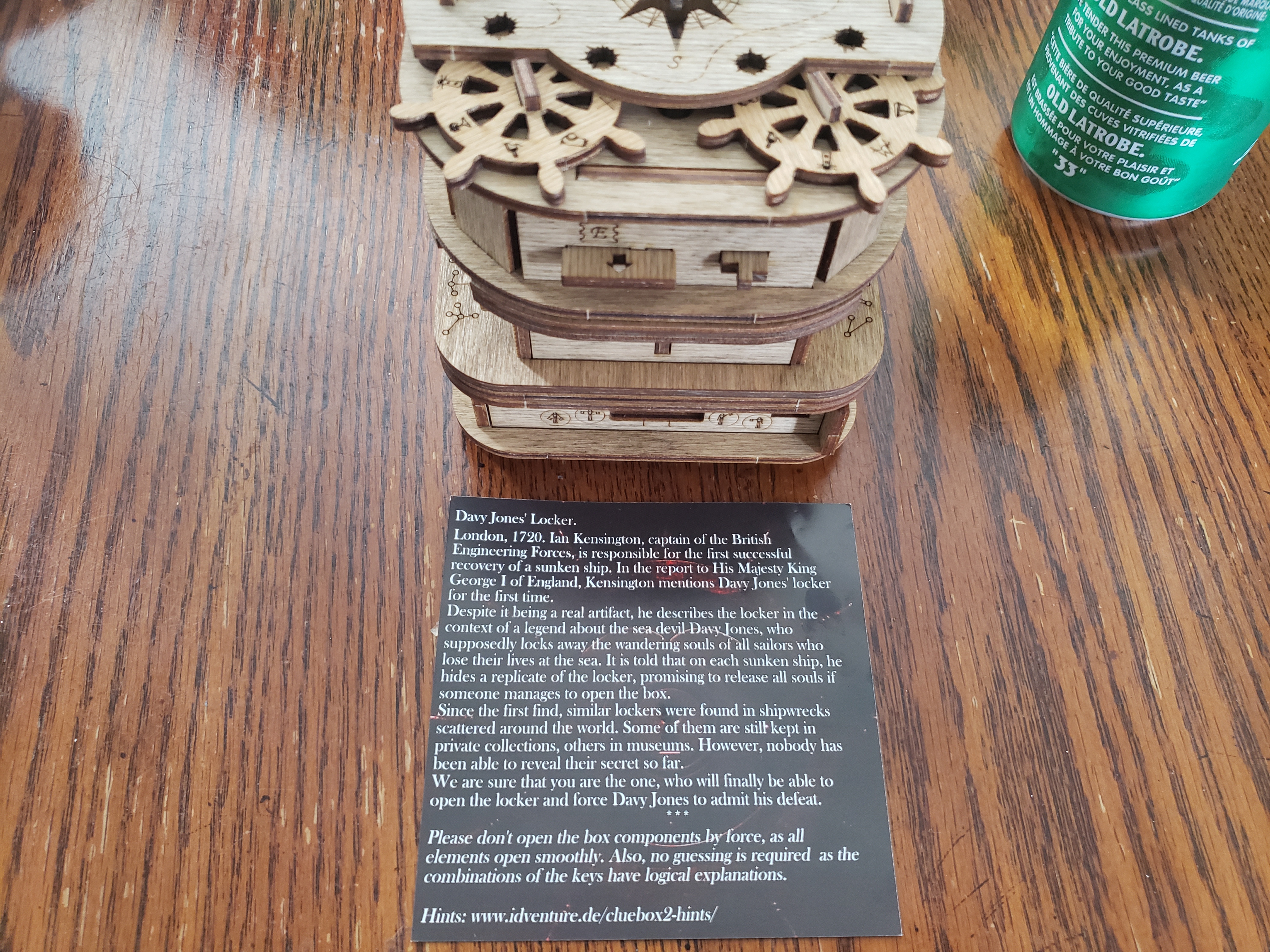
Roll the clock back even further, and you have old wooden puzzle kits. Slider puzzle. Rubik’s cubes. Things that kept you busy for a while until you unlocked the logical solution. They remained somewhat ‘simple’ because the cost of construction was so darn high. Mr Puzzle is a great window into the ever increasing complexity of puzzle designs. C&C machines + 3D printers have opened up a new world of puzzles and complexity. For $20-$50 you can get some real brain teasers that will get you really going crazy. I recently opted to pick up a pair of wooden puzzles, with multiple steps.

Beer for scale

It’s an impressive feat to take the concept of a puzzle room, in that you solve one puzzle and use that result to solve another, in a physical form. It took me over an hour each to solve the puzzles. Each time I was stumped and came across the solution, I was frankly amazed at how the logic was physically applied. Nothing felt cheap or a cheat to get through.

I’ve got my eldest taking a look at one of them now. It’s supremely fascinating to see a child’s brain at work at solving these things. Maybe someday I can show her Myst and where I cut my teeth on the genre.

Terra Nil

Most builder games have you break down nature to add technology. Nature is viewed as chaotic and random, whereas technology is clean, orderly, and proper. Civilization and SimCity are the grandfathers of that particular mindset, and truthfully, it is often the foundation of most urban engineer educations. Yet, it’s 2021 and this planet is having a hell of a time supporting us. We are going to be gone long before it. So perhaps our hubris that we somehow mastered the complexity of millions of years of evolution and balance is a tad off…

Ok, weird rant aside, there’s an interesting game making some social rounds on rebuilding greenery. We’ve seen a few of these in the past, though mostly relegated to terraforming Mars in some fashion. (And then, only terraforming so that it can be torn down and technology can take its place.) The game in question is Terra Nil, which is a rather small demo you can find on Steam.

Small in the sense of less than a gig in size, and effectively just the tutorial without the ability to save. You get to see the large brush concepts here, and a “full” playthrough is about 20 minutes. As much as it’s a game, there are metrics and bars and whatnot, it also feels more like building a zen garden.

There are no people in the demo, and all the technology in use has as a sole purpose to improve the expansion of nature. I used a solar dish to burn a field, to make ash, in order to grow a giant lush forest. I’ve dug trenches to increase the sprawl of water and then turned them into marshes.

The rules of the game are pretty simple, and the tutorial is more like “here’s things, figure it out” than actually helpful. But games are more than a set of buttons. The best of them put you in the conductor’s seat for a private journey that feels self directed. A movie where you can’t really see the edges of the set. There’s a spark here of that, some potential. Who knows what we’ll get in the end.

Mario Party

There are few games that can break up siblings like Mario Party. Back in the day we had an N64, and we’d huddle around the TV with my dad and play whatever multiplayer game was available. Wave Race, Mario Kart, GoldenEye, and Perfect Dark all got tons of playtime. They each were digestible pieces of excitement. My dad really loved the racing ones, I’d like to think it was more because they were truly 3D and he could follow.

But Mario Party – that thing I’m sure has caused more divorces than the set up of IKEA furniture.

The game concept is simple. You roll a die, move around a gameboard, collect coins and stars, then at the end of each round play a simple mini game to collect more coins. Social boardgames are exactly that. There are highs and lows, and some crazy trashtalking. Heck, sometimes you just get impressed at some folks ability. The games generally last for an hour, which is just the right amount of time.

Where Mario Party moves the needle is in the competitive and almost backstabbing efforts players can take. The mini-games are either 1v1v1v1, 2v2, or 3v1. You’re never really in a team for more than a minute or so. And they are always competitive – like you can knock another player off the map. In the older games you’d often team up with another player, and then one would betray the other because, you know, there can only be one.

The board also allows players to steal coins and stars from other players. Coins are easy enough to get, and they are a method to acquire items or stars (10 per). The player with the most stars wins, if people are tied, then the amount of coins determines. The original Mario Party has so many catch-up mechanics, and gave out stars like candy that you could easily see 3 or 4 stars move between players per turn. I can’t count how many times I thought I had an insurmountable lead on the last turn, only to end up losing because my stars were poached. Local multiplayer + going from lead to 3rd place = outrage and laughter.

My daughter got Mario Party for the Switch, so we gave it a shot just the two of us. It’d been quite a while since my last go, so I wasn’t quite sure what to expect. We opted for the Bobomb board, and 10 turns on normal.

Countdown completes and you’re in the middle, say goodbye to half your coins!

It’s interesting to see all the new bits they added to the board, so that dice control is more than just rolling the biggest number possible (it still is for a LOT mind you). Being able to add more die to your pool is pretty cool too! The size of the board feels good, and tons of branching paths. I recall this being a challenge in the original, where you could easily end up continually on the wrong end of the board (hence the catch up stuff). The mini-game variety is good, with a lot of close calls. The 3v1 games are still the highlight to me, because the odds are just not in anyone’s favour. I do have a general dislike for the rumble games…

The game still has catch up mechanics, my daughter was given a +5 die roll item in the last 3 turns and she used it to go from last to first. I lost a star to an NPC. The final score had me with 3 stars winning the game. That’s a whole lot less than the 8-12 stars from previous games. It does mean there’s less “stealing” wins here, and puts a whole lot more importance on each turn being successful. There wasn’t a point where there was more than a 1 star difference between any player… and I don’t recall that being the case before.

The winning part wasn’t the cool bit. It was really the reactions we both had for each mini-game. Some were mundane enough, others were both of us at the end of our chairs, or standing up with the tongue out. The classic hot potato game is a highlight of craziness. We both had smiles for an hour and had a blast getting all the way through.

I can see some fun games nights ahead. I keep getting impressed by the social aspect that Nintendo somehow keeps bottled up. Guess that’s why Mario Kart 8 has sold something like 35m copies – there’s just something about playing with other people and it not being about headshots that is missing in gaming. I’m oddly enthusiastic about a new Mario Golf!