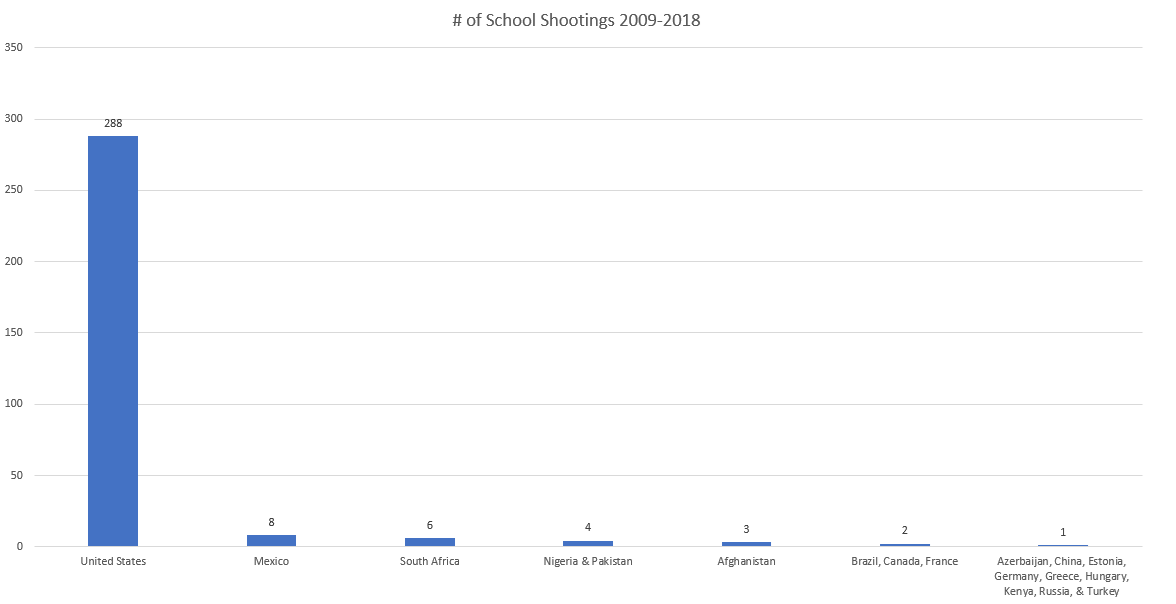
Not sure what’s worse: that the number keeps going up or that people simply accept it going up.

Not sure what’s worse: that the number keeps going up or that people simply accept it going up.
Right, to the point. This game needs a map and I am going to see if I can find a mod that does so. The world is absolutely beautiful, something I have rarely experienced. It does a fantastic job of providing atmosphere. Unfortunately, the atmosphere is so damn good, that just like in real life, I get lost in a forest that looks the same everywhere I turn. I do enjoy the exploration, but this is not a linear game and the multiple paths interconnect at various points, making it easy to get disoriented, and frustrating to find your bearing. Here I am reminded of manually drawing the EverQuest maps and printing them out in a binder…
And that’s about it in terms of issues.
Sure, the game is hard as nails in some spots, and you need borderline twitch reflexes to get through some bosses. The mechanics behind some skills/stats is not obvious, and potions become pretty much mandatory for bosses from the midpoint on. There’s great spell variety, and the ability to easily re-spec is amazing as some work much better than others depending on circumstances. There’s oodles of enemy variety, multiple methods to get through it. The distance between save points is (with 1 exception) entirely reasonable. The early part of Chapter 3 (the Pagoda) is the stuff of nightmares due to being knocked to your death continuously, but the other zones are a solid mix of exploration & risks. Enemy variety is extremely high, which is frankly amazing to see.
Bosses are generally on a progressive curve, secret bosses aside. If you find the first optional boss (Wandering Wight) hard, then it’s going to be a pain train all the way through. The game dramatically rewards aggressive play, and generally provides enough options to mitigate damage. It isn’t perfectly balanced, but what game truly is?
I’ve encountered a few game-breaking bugs, but less than I had expected. A few system crashes, one boss that was 100% invisible, and another that had frame skipping making it a nightmare to manage. At no point did I feel like I lost hours of work, as the checkpoint system is extremely generous, and death has no penalties aside from a short run back to where you were.
So far, Wukong is a very strange game to release in 2024. This is clearly not an indie endeavor, the production and sheer size of it all show that. It’s also not what the west would instinctively consider a AAA game, as the depth & complexity isn’t there. I’m sure there’s 30hrs of play in here if not more, with over 90 bosses to fight, which is absolutely a good number (Elden Ring has nearly 250). But compared to something like Suicide Squad, or Concord, or a myriad of other AAA games that have absolutely bombed and led to job cuts, this game is truly astounding. You’d be hard pressed to convince me that Star Wars Outlaws is a success, and truly makes me question where the industry is going. Maybe, just maybe, there’s some hope for the games industry if games like Wukong can be successful.
Perhaps I am in a melancholic mood. Perhaps the start of the school year has an ever larger impact as I know the time I have left with my kids is shrinking. Perhaps it’s just everything. I’m in the mood for an interactive story, and one that hits the feels.
I have an overly larger Steam library, and across the many, many years of gaming I have played only a select few have truly moved me. What Remains of Edith Finch is right in the top of that pile. Few games can accomplish in 40 hours what this game does in 2.
In broad strokes, you play as Edie, a young woman trying to piece together if her family has a curse. Everyone in her family tree has died, some in very odd circumstances. Using an anthology format, you relive those moments in a weird science format, never quite sure exactly what’s going on. Maybe you’re a shark rolling down a hill in a forest, or building a kingdom in your mind. The end culminates with closure, as what could possibly come from it.
What sets this game from all others is that the the stage itself feels real. The house and land you explore feels lived in, with character and clutter. That realism is juxtaposed with the surrealism of the vignettes, where each death is implicit, and surrounded by some fantastical events. It’s as if you’re listening to that uncle who can tell the most amazing stories, and getting to experience each.
I’ve played through a few times now. While none have had the impact of the first experience, each time there’s a zen that I get out of it. It’s also strange in that I can’t explain the effects, it has to be simply experienced. But like all art, the interpretation varies and what I get out of it certainly wouldn’t be what others could.
If you haven’t had a chance to play through, I still emphatically recommend What Remains of Edith Finch.
Like, really early thoughts.
It’s good.
Ok, seriously now. It’s a Souls-like in respect to shrines that heal & respawn enemies, a slosh of complex boss fights and a pile of dodging. Where it differs is that there’s no death penalty, no interconnected zones, no maps, no weapon selections, very fast combat, easy respecs, no stats, no real “choice”. It’s linear, which is quite a bit different than most games of late. The comparison just doesn’t hold.
My only gripe with the game thusfar is a lack of a map and the invisible walls. It makes exploration tedious.
The combat is relatively tight with a decent amount of options. You can’t dodge cancel, meaning you need to learn to pace attacks. Bosses have tells and it has yet to feel dramatically unfair. I expect to die a few times on every boss in order to learn their patterns, and that’s exactly what happens. The lack of weapon variety means that you need to adapt to the range of your staff, which removes risk vs. reward decisions, but there are still plenty of move options present. I have not yet found any world-traversal skills (e.g. hookshot, mounts, etc..) – maybe that comes later, though I can’t see much use for it yet.
The world looks amazing, and the music is awesome. The dialogue is horrendous, but the lore/background info is a lot of fun to read through. I’ve heard gripes of people not understanding the context behind the game (as it’s based on Journey to the West), but that’s really just western entitlement here. It may increase enjoyment of the overall plot, and given more context to the bad guys but it’s far from any deal breaker.
The rest of the mechanics I’m still discovering. Player progression is quite flexible, with unlimited respecs. Crafting is simplistic, and you can revert some of it. There are levels, but only in the context of giving you a single point to invest in a complex tree of options. It’s ok, but there doesn’t appear to be any depth here.
So back to my original thought. It’s good.
Steam Sale + good memories of KH1 & 2 + Steam Deck approved = I bought Kingdom Hearts 3 Re Mind.
It truly is quite an art to name a Kingdom Hearts game. Like someone is spinning a random wheel of words and just going with it. Dream Drop Distance. 2.8 Final Chapter Prologue. That said, the games are as convoluted as the story within Kingdom Hearts, where nothing ever makes any sense and there are seeming retcons & twists every hour.
Which begs the question as to why KH has such a large fan base in the first place? Well, the setting for one is rather unique. I’ve played a lot of games, and few have you charge Goofy into dragons, team up with Hercules, use Rapunzel’s hair as a whip, or control Mickey with a sword. There are none that put that all together. Second, the first two mainline games were constructed to be strong tactical games, with a long end game (ultra gear) and insanely well designed optional bosses. I’ve yet to play anything that resembled the rage/joy of Sephiroth in KH1. And finally, the cutscenes made it like you were playing a movie, which at the time was somewhat niche.
I’ve tried other games in the series. They are ok, not good. In fact, only the mainline games have scored over 80. Meh.
I was interested in KH3 when it came out, but was already quite a way from my console years. I figured at some point it would hit PC. Sadly, SquareEnix has some of the most maddening pricing models on the planet, and I wasn’t going to pay $90 for a 5 year old game. A sale which included all the games was the best option, and gave me a chance to replay KH1+KH2 to get familiarized again.
To the Meat of It
Kingdom Hearts 3 is an ok game, made especially dangerous for those with epilepsy. There was always a lot going on the screen in prior games, but here it dials it up to 11. Fights allow optional commands to be used, either a stronger spell, a separate weapon form (more on that), a contextual attack, or using a Disney Ride. You want to use a swinging pirate ship ride? Go ahead! I am not a fan.
Weapons come with alternate forms, that provide a specific boost. Whether defense, magic or some major ultra attack. You can “shoot” a weapon as well, which locks a target and blasts them with stuff. To make all weapons relevant for the duration of the game, you can now upgrade them, so that the choice is in their boosted effects rather than their stats.
Donald + Goofy are the same as in prior games. Thematic characters, specific to certain zones, still have special attacks. Same as before.
The Gummi Ship is still there, with generally the same content while fighting. When not fighting, the ship is used to explore a open world map in a 3D environment. It’s interesting side content, with some cool boss battles.
The worlds are at least 4x larger than KH3, which is almost all aspects is a downgrade. There’s only so much meaningful stuff you can put in a game, and this in turn makes it an empty map that you slog through a ton of basic enemies to reach anything fun. I mean, they look amazing, truly amazing and just like the movies. Yet there’s only so much frozen mountain top you can stand.
Boss battles still rock, and are a major highlight. I am beyond impressed at the complexity, diversity and originality that the devs put in here. All the way to the end, you’re going to have major battles that are just a pure joy to get through.
The story is a nightmare to follow, and unless you’re reading some wiki, won’t make a lick of sense. The cutscenes are very long, especially near the end. I’m sure there’s a good 12 hrs of cutscenes in this game, which truly doubles down on the interactive movie bit.
Optional content has always been an interesting feat of these games. In particular in collecting material for the best gear (some version of Ultima) and then optional bosses. Collecting material is tedious, the side games generally have horrid controls, and the rewards are all but required for the ReMind DLC. As in prior games the DLC is you fighting OrgXIII members, who are all on steroids and speed. Pattern recognition, knowing when to block or dodge is the only way to get through them. I did 4 of them and had enough. I’m all good for a challenge, but I don’t need 13 versions of the Sephiroth fight.
Unless you’re a Kingdom Hearts fan, there are ample games that do better mechanically and are easier to follow the storyline. If you are a KH fan, then odds are you already played the game. It filled a spot during the summer, and truthfully plays wonderfully on the Steam Deck.
Every summer tends to bring a different vibe to it. I remember being in my early 20s and not spending a single weekend in my own bed, spending as much time as possible up and about. As I’ve gotten older, I’ve found a better balance between busy and restful. Summers with kids has been absolutely amazing to experience. In the first part, the sheer amazement of new experiences for things I take for granted. The joy of discovery is certainly contagious. Then there’s the purity of it all, the near complete lack of stress and just plain enjoyment without thinking about bills, or work, or some stupid junk. And really, the best part about kids is the simple desire to just have fun. Almost all of them have that drive.
This summer has been a different pace. It’s been much less hectic and simply providing a space to relax with friends and family. Much less time in the car going to places, and more time just appreciating what we have. It’s been good.
In the gaming space, not a whole lot to report on. My gaming laptop has been on the shelf for a month+. The Steam Deck is the go-to device, and the sheer amount of games that are validated is quite mind blowing. The summer months push for portability and flexibility. I’ll get a small block of time while having a coffee waiting for the family to wake. It means that only a certain type of game works, and strategy ain’t on the list! Rogue-lites fit the bill properly. And the Kingdom Hearts series had a deep discount. In the fall, when the kids are back in school, I can give the FF14 expansion a shot.
Still a lot of time left to enjoy the summer months. I hope everyone (that is experiencing summer months) is able to take full advantage!
This is more for me, and honestly maybe the search engine virtual gods get this to the devs. From a prior post I mentioned that Techtonica has a communication issue, which perhaps is an identity issue. The launch of Laser Games (a weird FPS mode) instead of any news whatsoever on factory improvements wasn’t well received. In that space, I want to collect my thoughts on what should be on the future roadmap.
First and most importantly. Techtonica does not work well for large factories. You will have 2 machines producing wire, at MOST. This is fine as almost all the game has no need for it, but the late game portion would certainly benefit a lot from it.
New
Things that should be added to the game, that are likely resource intensive and will take time.
Change
Things that should be fundamentally changed as they don’t work. These are hard to do, but less so than new content as their purpose needs clarity.
Optimize
Mostly math-based changes, where the content itself is minor but the impacts are significant. Almost exclusively QoL, which is where Factory games shine.
I think Techtonica has more potential than other games, if only because the foundation itself seems more sound. Clearer communication and a more firm roadmap can help guide the player feedback for quicker development. It’s clear after playing that there’s a ton of potential here, I really hope the devs are able to focus their efforts and reach it.
What I love about Early Access games is that by and large, they are experimental. Or at least, the only ones I’m ever interested in. EA gives small teams the ability to grow an idea. Darkest Dungeon, Planet Crafter, Hades… all games that would not exist without EA.
Sometimes though, sometimes a dev has a small-ish idea and just goes straight to the deep end quickly. The game starts in one area, and then takes a massive turn into something completely different. In most cases, these “twists” generate a lot of negativity, which modifies the EA promotion algorithm, and then the devs have paved their way to obscurity.
I have three examples, of varying degrees here, all in the same factory-automation genre.
Dyson Sphere Program : an absolutely stellar game from start to finish, where its taken years to get the “math” right on optimization. PvE combat has always been in the roadmap, though the implementation is only half way there now, and has some rather obtuse requirements. The other half is sorely needed, and it’s taking the time it needs to bake. A result is that the reviews have gone from Overwhelmingly Positive, to Very Positive. It seems like a minor thing, but that has effectively removed it from many lists.
Techtonica : The game as it is now appears to be missing a fair chunk of content (like 2 more zones) and a lot of optimization (mid-tier? resources are not balanced). They had a somewhat clear roadmap and a very accelerated release framework – something close to every 6 weeks had a major patch. And then v0.5 released, with PvP laser tag and teleportation (this is akin to putting a garden simulator in CoD). A name for v0.6 was provided, but nothing about what was in it. Reaction to this has been extremely negative, where the devs have provided a mea culpa on poor communication and held a live stream to explain what’s next – which unfortunately had much more “we can’t talk about this yet” that folks wanted. It went from Very Positive to Mostly Positive, which frankly means only word of mouth can save it now.
Foundry : Only released a bit more than a month ago. The devs put out a journal asking for feedback on some system development, namely more time spent in the resource simulator of selling space stuff. Feedback on this was clear and unanimous – fix the game first. Devs responded that they heard loud and clear, and the reviews have stayed stable as Very Positive. I would like to think that this approach is a result of watching what happened with Techtonica.
EA is an interesting space. Devs get to test ideas and are in turn subsidized for that exploration. This is a two-way street, where there are now expectations on that funding. Clear communication is required, and the timing of it it matters. Satisfactory may have the gold standard here, but DSP is darn close – the language barrier here is why it’s all text, but it is fullsome text. Techtonica has a similar structure to Satisfactory, which does give me some hope that they can recover from this mistake. (And for clarity, the Laser Tag / teleportation is not the mistake, it’s that they didn’t communicate why they launched it instead of the clearly missing content.)
I’d like to think that the golden age of EA is moved on, where free money and loose promises are drowned out by a more realistic relationship with the community that keeps the devs afloat. Like it or not, there’s a recipe to success in EA, and it is much much more than simply pumping out a product. Given the lack of investment stability, EA is likely to be the place to get most funding, if you can figure out how to cheat the algorithm and build crazy word of mouth.
This post likely won’t hit as well if you haven’t played Hades, which may be my favorite roguelite of all time. Developers (Supergiant Games) have never made a bad game… heck, I’d go so far to say they’ve only made good games.
Hades 2 is certainly in EA. There’s missing half the content of Olympus (2 zones, 2 bosses), some NPCs have early art, and there’s still some rather “interesting” balancing bits to work out. So, what do you get here ?
If you played Hades, then most of this seems familiar. Hades 2 does add some interesting changes though.
The rest of the game is pretty much Hades, but all the edges sanded down. No more fighting the RNG gods a dozen times to get that 1 drop, you can queue it to craft based on other drop. There are menus that explain where things come from. The artifacts you get, in almost all cases, are useful. You generally have more control of choices before you start a run, though you still may want to end a run quickly if the first 3-4 rooms have truly bad RNG. High fear runs (Heat in Hades) do require specific builds… a piece that has yet to be sorted out yet (re-rolling rooms/boons are in cards, which cost too much to select in most runs).
Oh, it also plays amazing on the Steam Deck, with superb battery life.
If I was to guess, we won’t see the full release til 2025. What’s here has more polish than most of the stuff I’ve played this year, but given the prior track record of these devs, there’s still a fair chunk to go.
2020 feels like a generation ago and this particular game game at me for my first playthrough when my grandfather passed from COVID issues. As a result, it has a very particular place inside my skull, which results in overly rose-tinted glasses. The game is not perfect, but it’s so much better than its contemporaries that even 4 years later it’s a gold standard for open world story-telling.
Without really rehashing the core plot, you play as Jin Sakai, a samurai who is trying to find a path of redemption after his known world is turned inside out by the Mongol horde. It takes very broad strokes on the concepts of honor & duty being more important that results, and through Jin, you navigate multiple storylines that see how you and other NPCs try to find a viable future. Some people are blinded by rage, others by love. Some make a set of bad decisions that simply snowball to evil. If I were to truly summarize the entire storyline, it’s how people manage grief and find peace with themselves and others. So… a tad on the nose given my state of mind when I first played this game.
The PC re-release doesn’t add any new content (assuming you played the original and Iki Island), but it does add a ton of visual enhancements. Straight to the point here – Ghost of Tsushima is friggin’ beautiful. It takes large strides to force you to slow down and appreciate the environment, with very long vistas. Many of today’s games add a ton of stuff on the screen, and make it look realistic, but few decide to give you the horizon as a goal. If the Switch actually had processing power, the closest comparison would be the recent Zelda games.
Mechanically the game still feels ahead of it’s time, with an open world with relatively minor icon sprawl. You could play most of the game without the map, as there are plenty of in-game mechanics show you a way forward. A golden bird brings you to interesting content. Following white/black smoke plumes brings you to new quests. You see a lighthouse on the horizon, you can get there. Follow a road, you’ll encounter a chunk of content das a result. Combat is focused on the parry/dodge/counter mechanics of the time. Sure, you can opt to sneak everywhere (and honestly, it’s the only option when hostages are in the mix), but you can just run right into a camp and take everyone out “with honor” if that’s your choice.
The natural flaws here are in the set of values being presented. As a modern, western society, our core set of values conflicts with what’s presented. It seems simplistic and naive. Each NPC espouses a specific set of views that are monochromatic. Taken together they paint a complex painting, but as individual pieces there’s just not much there. (Do I think that Ubisoft’s AC Shadows, set 200 years later will do better? Hell no. AC is as historically accurate as a Dan Brown novel and purposefully built that way.)
4 years later, Ghost of Tsushima remains a shining example of open world design and story structure. It is meant to be experienced, rather than played. Not too many games fit that definition. And it still hits me as hard today as it did then. Feels a bit like time travelling…

