ME: Paragon & Renegade

I finished ME1 the other day. Replaying that in 2021 really shows how much the game was an incubator of ideas. Playing ME2 highlights that to a crazy degree. The MAKO is gone. Inventory is not longer a headache. The hacking mini-game is somewhat improved. Dialogue is more nuanced. The game is no longer 5 main quests and then 80% MAKO/empty-planet/same-building side quests. In nearly every respect, ME2 improves upon ME1.

Included, Paragon/Renegade are better balanced, which itself has evolved from KOTOR.

ME1 Choices

The challenge in ME1 is mostly around Renegade – in that nearly all the choices are objectively bad. Aside from perhaps the double crossing side quests on Noveria, the Renegade choices all focus on killing the person with whom you’re having a conversation. Ok, ok… hanging up on the Council felt good. Paragon choices, by comparison, were about you saving starving puppies. It’s not that people want to only play Paragon, it’s that the choices provided are “keep the story going” and “stop the conversation”. Most people are going to take the former, so it’s not really a choice. By the end of my playthrough, even after trying to take as may Renegade choices as possible, I was a clear goody-two-shoes.

The devs clearly spent cycles building this system, and the rates were abysmal for Renegade run throughs. Clearly an improved system was required.

ME2 Choices

There are two notable changes here. Fist are the interruption actions that can be taken while an NPC is talking. The paragon ones are simple enough. The Renegade ones are usually about punching people, or interrupting their speech. They are well placed, and with few exceptions you should be using them.

The second is the scope of the actions. The choice itself is less about the end result but more about the path to which you achieve it. The stolen chit side quest is a good example, where you physically intervene at the end when injustice is the outcome. (Weird side note – for the vendors you get Paragon/Renegade options to get discounts… makes no real sense…) The majority of the points aren’t directly related to outcomes, simply conversation paths. Each squad member has quite a few options to help move them along, and a certain preference to dialog options. Zaeed clearly is pure Renegade, while Jacob is almost entirely Paragon. There are also more dialogue options present, and through some game mindset calibration, you get taught that it’s good to explore all options as the consequences are story related, rather than outright rewards (as in ME1).

By the half-way mark in ME2, my Paragon and Renegade are relatively balanced. The Renegade choices are less about being bad, but more about the ends justifying the means. Punching that reporter running garbage stories on me feels good.

D&D Viewset

The concept of morality and choice stems, as nearly all RPG things, from D&D.

Video games prior to 2000 were pretty much all in the Lawful Good area… you were the plucky hero. As more RPGs came about, more choice was presented. Ultima famously brought in Virtues to reflect this in a different light, as people were “optimizing” the game by being as evil as possible. You can see these influences in all Black Isle and Bioware games.

ME1’s Paragon seemed to best fit with the Lawful Good mindset. Follow the rules, be good. Renegade was closer to Neutral Evil… there was some logic to the choices made after all. But you were still evil.

ME2 tweaked this, bringing them all closer to neutral. Paragon is closer to Neutral Good, while Renegade is somewhat closer to Chaotic Neutral – not bad, just a different set of rules. Moving away from the purity of choice allows more nuance into conversation, even in the middle of a game. It then focuses on the outcome of the decision as the reputation (e.g. you saved X) and less about how polite you were in doing so.

Other Games

Other Bioware-like games have come since, and each has tried to tweak the model somewhat. Pillars of Eternity is the more traditional D&D model. Tyranny only worries about Evil alignment (and does an excellent job!) Divinity is the outlier here, as it’s arguably larger than Baldur’s Gate 2 and has a rather complex morality system that is more outcome based (and reputation) than pure alignment. As BG3 continues, it will be interesting to see if it’s more in line with the older model or the new one.

Clearly it’s more complex to keep track of the outcomes of every decision rather than a point scale of good/bad. It’s a better experience though, and one that you really notice when it’s missing in an RPG that presents choice.

ME: Legendary

With FFX complete, time for another flash from the past. (FFX-2 maybe some other time…) Mass Effect: Legendary came out and with a whopping 100+ gigs of download done, off I go, JJ Abrams lens flare and all.

I mentioned this in the FFX playthrough, where knowledge is a double edged sword. I’ve played that game so many times now that there’s very little new or surprising, and yet I still find it a super enjoyable experience. Mass Effect I’ve played through maybe twice (?) in all the years since launch. My recollection of the story is somewhat hazy and frankly more emotional than firm. I recall the feeling of awe the first time I stepped into the Citadel, the frustration of the MAKO, wanting to punch certain companions. The actual story beats are a sort of deja vu effect, which makes me pause at times and think about how I handled it last time. The end result is that it feels much more like a game here than an experience. There are checkboxes to fill, skill points to assign, and inventory to manage rather than a story to uncover.

The game lens really highlights how successful Mass Effect was upon launch at hiding its foundations. You see a bunch of interesting people with interesting stories and just follow along, making what at the time was rather nuanced choices to impact the story. At the time we didn’t have true multi-branch stories… KOTOR had the start of it, Dragon Age had some key decisions, and I guess Fallout was the best example . No wonder people caught on to this model, and were rightfully peeved when ME3 dismissed most of it. Upon this replay,, the quest structure is much more obvious with multi-stage fetch quests, but for 14 years ago… wow.

Gameplay wise, I can see a lot of the improvements put in so far. Elevator wait times are gone!! There is an over abundance of lens flare – I really need to point it out. It’s one thing to have it in a cut scene but I find it painful when its in active gameplay. The visuals are super improved otherwise, with awesome framerates on a clearly antiquated game engine. Very impressive. The MAKO is better than I recall, but as Bel mentioned, it’s still the worst part of the game. Inventory management is better but I can’t say that it’s good. Character development and the biotic/tech powers are very meh. The combat itself is still as broken as ever unfortunately. The UI is cleaner, no question, but it has not aged well at all. Getting 1 shot from someone 100% behind cover is still there, and the AI has some really rough edges. I guess this is to be expected from a game that tried to merge action and RPG that many years ago…

Nitpicky, but I find this very distracting.

I’m not far along in the game… exploring space and whatnot. Again the game part, where its super focused in the Citadel then just goes huge open world once you get the ship. I do recall the first time I played I explored everything, where as this time I’m only landing on planets where there’s a clear reason. Those landing missions are smaller than I recall… or perhaps the zones themselves seem much smaller. I do recall the side quests having some interesting story beats – the Batarians in particular are fun to see again, if under-used.

The Paragon/Renegade bit in ME:1 is very heavy handed, there’s few opportunities for grey. It’s either admonish them or shoot them dead. The Batarian/asteroid quest in particular prompts you 6 times for the renegade choice, which are all variations of shooting the alien. I know this is better in ME:2. BioWare mentioned that ME had 92% of players go Paragon… which is painful as a dev to spend so many cycles on a mode no one really played. (Side note: this is why LFR exists in WoW… only 1% of players were completing raids prior to Firelands.)

Odd bit… the Origins/Steam achievements are displayed as % of user base. Landing on a planet is currently at 10% of all players… so either the metrics are wrong, or people have decided to buy the game and not play it. The achievements are really rinky dink too… sort of like getting points for putting your name down on a test. That the % are low is weird.

Still, the experience thusfar is enjoyable. BioWare clearly needed a win to keep the doors open, and what’s here is impressive in capturing the original experience with a minor coat of paint. In the negative light, this highlights to me how far BioWare has fallen from 2007. Games aren’t made by companies, the are made by people. The people who made Mass Effect did a hell of a job.

FFX Replay

Every now and then I give FFX a return. I don’t necessarily think it’s the pinnacle of gaming, nor the one with the strongest individual systems. I do think that on the whole, it delivers the most consistent and enjoyable experience of all the FF games.

I’ve had the FFX/X2 remake in Steam since it came out (and also on PS), so starting a new game is pretty easy. And with cloud saves, it’s even easier to remember what works and what doesn’t. A fun bit in FFX is the Al Bhed language, where a substitution cypher is required to read what people are saying. Using a previous save, you can load that cypher and start off clearly understanding everything. FFX-2 has a new game+ mode, but that’s because there are multiple endings. It’s a different take, a much simpler implementation that something like Chrono Cross’ (which does not get enough credit). So, all prepped and ready to go.

Knowledge

There’s an upside and downside to replaying a game. You can anticipate really cool moments (Luca’s cinematic), but also are never really surprised (the whole Jecht is sin bit). I prefer the more optimistic side, where it’s like reading a good book once again. And having 20 years of additional gaming experience certainly adds some flavour to the experience.

FFX is a rather linear game, all the way to Yunalesca. There are 3 battles in that linear path that are brutal if you are not prepared, and honestly, even if you are they are quite hard to manage. The idea of grinding out levels has some merit, but the structure is built so that it generally isn’t required – the random battles should get you where you need to be for any given fight. Post-Yunalesca you get access to a pile of side content that is practically required if you want to take on BFA and have a chance of success. Knowing how to tackle these side quests is super important, and I don’t think a “regular” player could find success here without some sort of guide.

And, as is with all FF games, the final stretch is completely disassociated with the rest of the game. The last zone can be left and returned at almost any time, and the point of no return is about 3 minutes of content from the final boss. It means ALL the content prior to that is relevant post-boss. FF12 has this. FF13 certainly does not. FF15… well that’s another story.

Oh, I should really mention that FFX is the only game without a crystal as a large piece of the story. No secret final boss, no giant crystals to block the path, no materia.

Side Quests

There are 3 major ones to track, and most of the smaller ones intersect with these. Some have aged well, others not so much.

Collecting Aeons – There are 3 hidden aeons to collect – Anima (who you know exists), Yojimbo (who is very interesting), and the Magus Sisters (required for another activity). In the normal game they aren’t too bad to acquire. In the re-release… they are crazy hard.

Collecting Celestial Weapons – Every character has an ultimate weapon which increases their damage and unlocks the damage limit on summons. There are 3 pieces per character, the weapon, the crest, and the sigil. Some are in simple chests, others require mini games to acquire. The Cactuar quest for Rikku is fun. The butterfly game for Kimahri, meh. Lulu’s lightning dodge requires some crazy concentration. And the notorious Chocobo dodger game for Tidus is rage inducing.

Monster Arena – This requires “capturing” 10 of each enemy in each zone, from the start to the end. You need a specific weapon to do so, and the last 2 zones are full of enemies that have tons of HP (multiple hits) and nasty counters (petrify, confuse, high damage). Once you have them, you can fight them in the arena. Collecting various groups of them opens up more difficult monsters, which provide more unique rewards in order to increase your power. If you want to hit for 99,999 damage per hit, then you’ll need to do the arena.

I am purposefully not including Blitzball. It’s more of a side game, whose purpose is best aligned with celestial weapons.

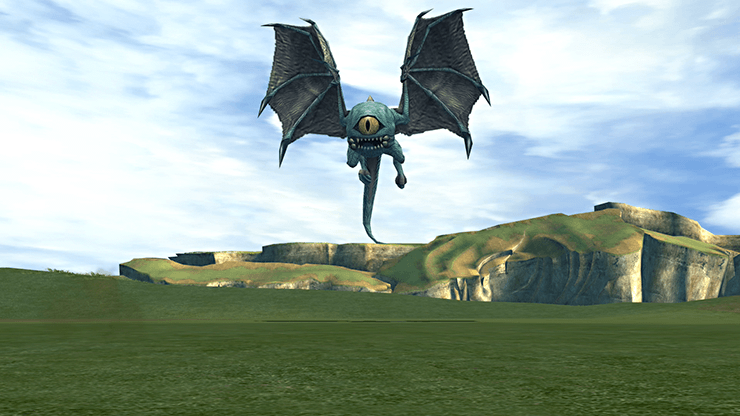
You are going to see a LOT of One-Eye in the monster arena.

Iteration

FF games have often had some sort of mini-game, often relating to summons, special weapons, and a long-term collection activity. Rarely are the activities intertwined, nor supported by even more mini-games. What’s really interesting to me is that FFX makes all the activities related to each other and does so at a level that no other is able to achieve. There’s nothing here that stands on its own, which takes a tremendous amount of design effort. It’s also interesting to see how the sub-activities don’t build entirely new systems that conflict with the rest of the game.

If I look at the FF12 hunting system, it’s an iteration to the Monster Arena concept, combined with the ultimate weapon hunts. FF13 in contrast, has both a hunting system AND an arena, the latter of which isn’t integrated into other activities. FF15 is more of a checklist of things, rather than a proper sub-game… plus the last quarter of that game makes no sense whatsoever.

It will be interesting to see how the trilogy remake of FF7 delivers on this model. Parts of it are there now, but the entire casino part is forthcoming and a huge part of the end game stuff (chocobo breeding). Those mini-games were heavily RNG influenced, which has gone out of style today. How they apply today’s gaming standards to that model is sure going to be fun to see.

WoW: Reactions to Reactions

The ‘gold standard’ I guess is Asmongold, who fits in a very specific niche of streamers of WoW. There’s no real scripting here, or much of a plan. More like the ramblings of a madman. He’d be at one end of the spectrum, Preach in the middle, and Bellular at the other. They all say the same thing, but take much different approaches to it. Evitel & Taliesin are a different group.

Point of clarity here – all of these people get paid to generate reactions from their viewers. They need to make a big deal of something in order to get eyeballs. There’s a (very) large difference between a concept and execution. They are not developers, simply focused lenses on the zeitgeist.

Anyhow, back to Asmongold for a bit. He posted an interesting rant today on Twitlonger that I think deserves some comment. At least in the broad strokes and then in relation to gaming dev as a whole. The larger thought is summed into two buckets.

Change Driver

Here’s why. It’s because instead of innovating the game, Blizzard has mired themselves down into micromanaging expansion-specific systems. Imagine how hard it is to balance all of that, I don’t envy the life of a WoW dev at all! However, it was not my decision to make character balance in WoW have more unnecessary complexities than a Rube Goldberg machine.

Which, if we take a seat in the armchair, is a fairly bang-on assessment of Blizzard’s mantra over recent years. The steadfast thought process that complexity == engagement. That they will spend months building complex system that are absolutely not wanted, only to patch them 6 months later so that they are in a workable state. That they’ll focus on building micro-systems that suck out all your time in minutiae.

Monthly (or daily) average users seems to be the only metric that matters to Blizzard, and as per previous post, that thing has been on an amazing nosedive for some time. If the players aren’t happy, the bigwigs aren’t happy, then it sucks something fierce to be a dev!

Humility

The developers lack the humility to give the playerbase what they want, and when they do, they lack the insight to give them what they need.

This quote really nails it fierce in terms of the friction between the playerbase and the developers. There was a time where the players had patience and understanding that the devs have a hard job. Things take time, but they will be good in the end. That’s been eroded for some time now, in the space where it just appears that the devs (or leads) don’t actually play the game. The alpha feedback for BfA was crystal clear in terms of how Azerite Power was broken. The devs ignored it all, deleted the forum, and then did a near complete 180 after almost a year of production.

I don’t recall anyone saying ‘hey, Torghast could really use talent trees and longer play sessions that are timed’. Is that not just Horrific Visions 2.0 but entirely focused on RNG? I don’t see anything to address the anima drought, which has been consistent since the start.

The point here isn’t that the client is right. I have enough experience to know that much. The point is that the client isn’t wrong. The client isn’t irrational. They may not understand the complexity of what’s required to deliver, and they may be absolutely horrible at explaining their needs, but that’s not their problem to solve – it’s the developers. I want to be paid, and I only get paid when my client gets what they asked for. So I’ve invested a LOT into business intake and analysis, with clear scope documents with signatures from all parties.

Blizzard is either unwilling or incapable (or both) of listening to feedback and integrating that into their dev cycles.

Larger Dev Work

I’m picking on Blizz here given the source material, but this really goes into the larger discussion of managing expectations. Look at the games over recent years that are up for GOTY. How does something like Hades even come along if not for engagement with the playerbase and open communication? How many successful launches exist where the penny pinchers are the ones making the final call? We get Alien: Colonial Marines, Anthem, or Cyberpunk instead. Things that either destroy what was left of those shops, or puts them so far back that it’s a mountain to climb back to where they once were.

Yes, games are a business. The largest business on the planet. But they are entertainment first, things were people interact and find joy. There’s a balance to be had between something being profitable, and something being created solely for profit. Passionate developers can keep things going (Ultima Online is still kicking!) if they have a dedicated playerbase.

I don’t know what the final answer is here. I have a backlog of amazing games from amazing developers to work through, and don’t really need the headache of making sense from non-sensical developers. But that’s just me. If the almighty dollar is what’s driving development, then I don’t see a happy ending. I guess there’s some wisp of hope that if other groups can do it, and succeed from it, perhaps the larger studios can learn something from it. Maybe.

Acti-Blizz : When Bylines Matter

The quarterly earning reports are out, and so are the pitchforks!

The Activision arm (they should just rebrand to Call of Duty, since every shop works on this) made mint. Not anywhere close to Fortnite’s billion $$$ pumping machine, but certainly some good numbers. A 43% operating margin is impressive, given their size. Not to mention some big year-over-year (YoY) growth. All of this makes sense given that we’re in a pandemic… more people are playing games and devs are really milking that micro-transaction cow for all its worth. Battle Passes + extra bits = major cash and extremely low dev effort. Course it helps when you lay off 10% of your staff when pulling in the money. Capitalism at it’s finest, after all. Stock value is the ultimate measure.

The Blizzard portion is where stuff gets really weird. If you recall, Shadowlands was touted as ‘making it the fastest-selling PC game of all time industry-wide’, which was obviously derided as hyperbole, but still sold a ton of copies. You would think that with that extra push, overall player numbers (I know there’s more than WoW) would have increased, as they had with other Activision properties. Not so much.

That is not a good trend to have, and explains a fair chunk of the restructure within Blizzard over recent years. This is all of Blizzard, yet the only big items that would be considered ‘delivered’ in this time frame are the 3 items above.

  • Heroes of the Storm is on life support, most of the team cut
  • Overwatch hasn’t had anything, resources are allocated to Overwatch 2
  • Starcraft 2 is done
  • Diablo 3 has had nothing (Necromancer was in 2017). Immortal still isn’t out.
  • Warcraft 3 reforged was Jan 2020, which may explain the horizontal line rather than down trend
  • Hearthstone has gone all over the map, and now has a battle pass.

That Blizzard somehow lost 5m people during the pandemic has got to be worrying for them. And yet…their revenue increased 7%. That money could theoretically come from the various microtransactions, but more than likely it comes from their 3.7m copies of Shadowland sales offsetting the other lost revenue.

Spurious Conjecture Time!

Think of the glut of quality games available to take our time today, games that allow multiplayer options. The need for an ‘all the time’ game is all but gone because there’s always something else. And Blizzard’s penchant for taking ages to launch anything (pre-pandemic as well) is not aligned to today’s industry. That they deliver late, and with massive balance issues (Hearthstone is 10x worse than WoW on this) is not helping. They make attract an audience with a drop, but they are clearly unable to sustain that paying audience.

I’ve written more than enough on WoW’s woes, plenty of bloggers have. It has a massive bot problem, you need to filter through levels of garbage gold boosted runs to find most social groups, and the last refuge is guilds. Sure, multiboxing is now banable, but is that not like 10 years too late? Mechanically the game is too focused on directing people to a single way of playing, to the detriment of other parts. While that’s not my cup of tea, and clearly not that of others, it still brings in some dough.

The other franchises… Immortal won’t work in the West and there are dozens of similar games in the East. Seriously, look at any app store and search for “action rpg” and you’ll find dozens. Diablo 4 is at least 2 years out. Overwatch 2 lost Jeff and was already 2+ years out. Diablo2 will be an interesting bit…seems higher prospects that the Warfraft3 re-release. There’s nothing else in the pipe, at least nothing announced. Any WoW expansion is at least 18 months out, likely more due to COVID.

Should we mention that Overwatch reported an increase in user base by 10m in 2020, and that they were averaging 10m monthly players in Nov 2020. Overwatch has had numerous ‘free weekends’ and then in September actually gave the game away for free for a short while. I don’t know too many stores that celebrate having a high number of window watchers, but here we are.

That leaves very few places of potential income, aside from selling access rights in China for streaming Overwatch.

Do the Math

Bobby Kotick is an amazing CEO, on the measures by which industry measures CEOs. He consistently delivers increased revenue, decrease operational costs, and thereby increase overall profits. He’s not the worst person on the planet either. He’s not subject to any sexual harassment claims, keeps on message all the time, and agreed for a 50% pay cut. He does his job and is really good at it.

That society has issues with his approach to cost cutting while also recording record profits… well hey, maybe stop buying his products.

The boycott was super effective!

And that gets us to the math problem on the table, the one that EA has certainly taken a stab at. (EA is a separate topic, yet you have to admit that they do at least invest in new IP, to varying degrees of success). EA buys out other studios, sees if it can make them profitable, and if not, absorbs the assets and shuts down the studio. The math and trends – which reminder, is all that matters to stakeholders – show that the Blizzard arm has some serious issues at hand.

They’ve dropped piles of players during the pandemic, while nearly everyone else has had an uptick. They launched a full price game and still only had 7% increase in revenue (not profits) compared to launching nothing the year prior. They have an anemic pipeline for income for the foreseeable future.

Blizzard may be profitable, but that trend is certainly not increasing. It’s a bad time to be a Blizzard employee right now.

MH: Floors and Ceilings

Way back when we still used paper and rolled dice, people enjoyed mathing out character power. It was never realistic to roll 18s for a character in D&D, nor frankly was it much fun, but everyone picked skills/talents that they thought best suited their needs. Not too many rogues with 2hnd proficiency, right? Even then, the stats were a small part of the game, the actual choices you made in any situation bore more weight. Negotiate with the brigands, target the kobold spell caster, search a room for traps. Character choices mattered so much as to the odd of success in future choices (ogre rogues aren’t going to do much dodging).

Computer games are similar, and games from the 90s really started adding complexity to player skill. Early games were nearly pass/fail, you were either good enough to avoid every source of damage or you died. More recent games allowed you to take more hits, or actively dodge. Some allow regenerating HP. This particular concept is the floor, the lowest point of skill were progress is still possible. The lower the floor, the more people can succeed. And as gaming has gone forward, it’s arguable that the floor has continually gotten lower, to make it more accessible. (See the whole EQ vs. WoW argument).

In the aughts, there was a desire to return to the difficulty of the past games, sort of relive those days. You get games like Ninja Gaiden, where while it takes a lot to die, there’s also enough complexity present to absolutely excel at the game and unlock more things. There’s a point where the improved player skill doesn’t provide more benefit (either in the game proper, or in PvP) and that concept is the ceiling. The higher the ceiling, again, the more accessible it is as people fell challenged by the content.

Monster Hunter

Monster Hunter is an eastern game, and whether we admit it or not, eastern games have much higher floors and often higher ceilings. “But what about this example of a hard western game?” Yes there are some, but % of whole, western games aren’t built for challenge in that sense.

The early Monster Hunter games had an abnormally high floor, and a moderately high ceiling, compared to other games. They were relatively niche in that sense, not so much because of the content, but because of the mechanics. Great games, no doubt, but not something anyone could consider relaxing.

MH4/Generations is where you can sort of pinpoint the drive for a wider audience. Some systems were streamlined, some focus on multiplayer, easier content to start, and quite a high level of complexity near the end.

World dropped the floor into the sub-sub basement. Ridiculously accessible, with a ton of streamlined components to allow people to get into the game rather smoothly. The whole Low Rank portion acts as a sort of tutorial, with many quality of life options (food, temporary boosts, better drop rates, etc..) Yet they also continually increased the skill ceiling. Nergigante was a massive wall of death, until you learned his patterns and how to dive. When you did, you could clear him in 3 minutes. Imagine taking more than 50 minutes to kill 1 monster, then being able to kill 3 in less than 10.

Rise further streamlines the systems, dramatically reducing the complexity of food for starters. Riding monsters adds more damage to the equation, and the whole vertical aspect with wirebugs is a super defensive option to get outta dodge. There’s barely a use for a Farcaster in Rise, where it was practically mandatory in World. Heck, the optional quests give you more than enough armor orbs to max out every single piece of gear’s defensive value with piles to spare.

Power Progression

This is the part where MH really excels. The difficulty curve of monsters is very well balanced against the type of monsters you have access. Low rank monsters, the skills on gear matter much less than just plain armor values. Kill a monster, look at the numbers, if they are higher, then you’re good!

High Rank things start to change. Skills start to matter, and you are going to want to stack certain ones to suit your weapon. Bow skills with a Switch Axe are not useful. Quick Sheath 3 turns on god mode for Long Swords but is useless for everyone else. Sure, armor is still important for the odd hit, but the skills matter more. By the time you get to the last 2 monsters, you’ve got access to the best armor values and some really good skills. But wait, there’s more!

If I was to build the highest defense value for Long Sword, each piece would have 76 but the skills would only benefit a Charge Blade. That would likely be enough to get through the content, but it would include a ton of deaths and a long battle clock. The game would be “complete”, but not the actual experience.

Instead, if you focus on the skills on armor and how they interact, you can get a much better experience. A decent Long Sword build would get me:

  • Attack Boost 7 = +10 attack and 10% attack bonus
  • Quick sheath 3 = super fast Iai attacks
  • Speed Sharpening 3 = 1 stroke sharpening to stay in highest damage mode
  • Weakness Exploit 3 = +50% crit chance for weak points
  • Critical Boost 3 = +40% critical damage

On a weapon with good base critical chance (Nargacuga is 40%) I’m a walking blender. Attack goes from 50 to 150 per hit. With a few more tweaks, I can boost it further, but that’s the game’s long tail.

Player Skill

MH is built on the concept of monster attack patterns. It may seem somewhat random, but each monster has multiple signals to let you know what’s coming. Rajang can be walking death if you’re not sure what’s going on, but take him on a few times and he’ll go down real quick. Magnamalo, an enemy with some crazy AE attacks that seem to come from everywhere, has some very large tells in his attacks.

And the player themselves has some factor here, as each monster has a stun value, that increases as the fight goes on. Once you know those values, you can commit attacks that would normally put you in danger knowing full well the monster will be stunned instead. Attacking Teostra’s head is normally a bad idea, but if you know that 2 more hits will give you a stun, then do it. Those numbers naturally change as your gear increases (as you do more damage), so it’s really about keeping all these numbers in your head.

Combine both together and it looks like a veritable dance, with nary a movement to waste.

This is a near perfect run, with only 1 missed move.

Monster Hunter has somehow find the balance to not only continually lower the floor of a game, and therefore make it more accessible to the general population, but also managed to keep a very ceiling to keep even the super number crunchers busy for a long time to come. I’m not at all saying it’s perfect, but when these games come around, they are often recognized for their achievements. I was a bit on the fence when I bought a Switch just for this game, but wow, I am absolutely not regretting that one bit.

MH:Rise – Rampage Part 2 (A+ Rank)

I’ve had to give this mode a couple more tries, and my thoughts on the mode have changed a tad. Refresher, this is the tower defence mode added in Rise, where you add structures to a layout, and then face off waves of monsters. This culminates with an Apex monster that deals crazy levels of damage (scaled so that you should be in the best armor, fully upgraded, but no decorations).

First I should explain why Rampages are required. For most of the game, Rampages are quests that gate progress to a new HR. You need to go through them, but once at max level they are entirely optional… just like every other quest. The rewards from Rampages are simple, but also hidden:

  • Defender Tickets. These are used to apply Ramp-up bonuses to weapons (e.g. +8 attack), craft Rampage weapons (don’t), or use in melding for Talismans
  • Monster drops: You’ll get 12-16 monsters in any given Rampage, they can all drop items from their loot pool. Side note – since carting is not a penalty, you’re best getting 2 palicoes with Pilfer to maximize loot chances
  • Apex quest unlocks: If you successfully complete a HR Rampage, you can unlock the monster for a solo quest. Not all of them, just 3. Azuros is the one you really want.

Apex monsters don’t have any special drops – there’s no armor or weapons from them. And they hit like friggin’ freight trains… They don’t have much more HP than a regular HR monster, but they deal tremendous damage – so you need to play nearly perfectly to kill them. So why bother? Because Apex solo hunts can give 4-8 Lazurite Jewels.

Those jewels are used for all top-tier decorations. And you’re going to need a lot of them. They have a chance to drop 1 on an Elder dragon hunt. I killed Apex Azuros and got 8.

And all of this is predicated on successfully completing a Rampage which is infinitely easier with multiple people playing. So how to do it solo?

Pick the Right Rampage

Success on a rampage is tied to the sub-quests (and are the same if you are solo or 4 players…) These smaller tasks give you significant upgrades for the battle, and you need to complete a LOT of them to get S rank score at the end. Getting Wyvernfire Artillery at the first gate is a huge advantage. Getting it before the Apex monster shows up is a requirement. There are some easy sub-quests and hard ones. The best one is the task to add 15 or 20 installations. You can add, remove, and add again all before the first wave shows up. Big perk.

The bad ones, from worst to least:

  • Apply a blight. These come from monsters of palicoes. I’ve never gotten this one.
  • Collect drops. You need 12, which likely will never happen solo
  • Dragonator/Wyvernshot: You need to spam the kiln to refresh the cooldown, non-stop to get this one. Meh.
  • Inflict a status. This is harder than blights, unless you are in melee mode and have a weapon with a high status infliction rate
  • Repel monster with X: YOU need to get the last hit. Not likely with Bombs. Canon and Ballista are possible, but you need to do this before the Apex monster.

When picking the Rampage, make sure you have a good set of sub-quests to optimize your level gains.

Optimal Layout

This part comes with practice…but for nearly every battle the layout of your installations will follow the same patterns. For the auto-installations:

Ballista: Set this up in the middle of the zone, so that they can hit as many enemies at once as possible. You can usually fit 3 smack in the middle, the rest put them as close as possible.

Canon: Set up the 2 near the gate. They will focus exclusively on the gate crashers.

Wyvern Artillery: Put these on the ground, and AIM THEM to where you want them to shoot. Before the Apex, have them cross lines in the middle of the zone. For the Apex, have them point to where the Apex prepares their ultimate move (they will stop moving, and each Apex picks the same spot).

Villagers: I only use them for the Apex battle and at the last ground slot. Fugen deals massive AE damage, Iori applies blight (meh), Hinoa and Minoa deal minor AE damage (meh), Yomogi deals machine gun damage AND gives a Gong effect (!!!), and finally Utushi makes monsters rideable. The last one, use it when the Apex monster summons friends.

Manual Installations: I prefer to have canons near the front gate, and back, with Ballista in the middle. I rarely use Machine Gun, since it’s a late unlock.

Dragonantor/Wyvernshot: If you can line this up, it’s major damage. The cooldown means 1 per wave, if not realistically 1 for the entire run.

When to Enter Battle

When the counter signal is active your damage shoots up to crazy amounts. You should be in combat with monsters at this point, as you can make quick work of most enemies. Yomogi also gives this boost, so pay attention and take those monsters out.

Losing the Rampage

When the 2nd gate goes down, you lose. You will lose if the Apex monster is able to get 4 ultimate attacks off. The first one you should interrupt with Wyvernshot (for 8k damage). The second you’ll have set up Wyvernfire Artillery to point to where the monster was charging their attack the first time, and deal damage to stun them. The third, you’re going to want to use Yomogi if you can, the damage is substantial. Using manual installations is a flip of the coin, you need to deal a TON of damage in a short period of time, which is more related to the level of your base than much else.

If the monster is charging an ultimate while their friends are around, you may have time to summon Utushi which will make a nearby monster rideable. Any attack will break the monster’s concentration (not to mention insane damage to the monster).

As long as you can stop the ultimate attacks, you should be able to clear any rampage.

Again, Why?

Rampages are the quickest method to get materials to meld for talismans. It used to be the last boss, but the amount of drops has diminished a fair bit. That said, 2.0 has reduced the requirement for talismans as you can craft more decorations. The real benefit, to me, is that completing a Rampage unlocks a solo version of the apex monster.

Farming Apex Azuros solo quest will give you a minimum of 4 Lazurite Jewels (I’ve seen up to 8). All other quests have a 50% chance to give you 1. Mastery Touch decoration needs 8 Jewels. So 1-2 Apex Azuros quest vs. 8-16 Elder Dragon quests. That math is easy.

What’s Next

Rampage is an interesting idea, clearly balanced for multiplayer. It would be really neat if Apex monsters had their own armor variants, to make it worthwhile to run them multiple times. I do think there’s a fair chunk of potential here, in particular if the sub-quests were tweaked to better support solo play and therefore open a few more play options during a run. I do really like that the best gear is not from Rampages, as it’s quite hard to optimize a run like you would a normal hunt. I can get Rajang down in 7 minutes… best Rampage so far is 19. So for an optional mode, it does the job quite well.

FFX – 20 Years!

Things just sort of sneak up on you when you’re not paying attention. Cripes, I can still clearly remember getting FFX on my PS2 and sitting down for long stretches to get through it. I lent the disk to a friend who lost it, then went out and bought it again. Then I got it for PS4. Then for PC. The only thing that would compete with FFX in time played is WoW.

Final Fantasy is anything but nowdays. I’ve played every iteration, and for a plethora of reasons have enjoyed that series much more than others (Breath of Fire or Dragon Quest are top of mind). There’s just something about a vanilla cake with new icing that gets me going – because at the basic level, all FF games are the same. Plucky heroes, crazy villains, weird gods, end of the world, and some crystals thrown in. Often there are cycles too. The mechanics may change, but the pieces are all the same.

There are all sort of categorizations for FF games. 1-6 tend to be grouped together as they were pixel based and isometric. 7-8 went for a more steampunk 3d look. 9 is a standalone homage to everything that preceded it. 10 and 12 are iterations on 7-8. 13 was a weird one that tried to streamline a bunch and 15 is the only FF I cannot bring myself to play through. I’ve ranked them in the past, and 10 always end up on top of my list. Less because of what it does, but more about how it does it so seamlessly.

The World

Spira is infinitely more interesting to me than any other setting. This is a world that undergoes an apocalypse every generation, and has done so for 1,000 years. How does a society even bother rebuilding in such circumstances? A world built on a lie is how, and what a lie. A world where agency doesn’t exist, and reverence is the only path. There are breaking factions, those that want to change, those that want to find the really ancient. The ‘linear’ path of the pilgrimage explores distinct yet related environments, each more challenging that the last. The sense of exploration and mounting difficulty is perfectly analogous to the journey of the main characters building strength for the final battle.

Consider any other FF game, where enemies at the end are harder than those in the starting zones. Why? Why is the bird at the end, found in the wild, harder than before? Spira gives a reason for it.

The People

The FF archetypes are all here, and the whole Tidus/Yuna relationship is one we’ve seen time and time again. Except to the point we reach when we understand the sacrifice, and then again the final twist on Tidus’ true origin. Everyone understands what’s going on but Tidus, all the way until the final bits. It’s a solemn march to death, and they all do it willingly. Fine, the voice acting can be irritating, but each character does have an arc to go through and they are different at the end than at the start.

And Seymour as a villain is really quite well done. No one will beat Kefka, but still this guy is something else. Nearly a demi-god when you first encounter him, his history and unwavering belief in what’s right is impressive. It helps that his boss battles are quite difficult as well. But importantly, he’s in the story nearly every inch, and right up there with Arthas when it comes to crazy enough to be sane.

The Mechanics

We may not think much of it now, but the Sphere grid was revolutionary at the time. It took the concept of jobs but took away the need to grind skill improvements. How many games have emulated this model since? Gone are the days of linear growth.

It’s also the last time that we truly get to see turn based combat in all it’s complexity. The Yunalesca battle was a nightmare if you were not properly anticipating the next moves, but a relative cakewalk once you did. Managing turns, understanding status, and interrupts was how the end part of the Monster Arena worked. And in the international version of the game, you could not take down Dark Aeons if you did not master the combat system.

And who can forget Blitzball? The gimmicky, complicated, painful process of getting Waka’s ultimate attack? No card games, limited randomness, just a purely tactical game. Not to mention a foundational piece of culture in the game world… not some bolt on.

The Package

FF9 was an amazing bookend to the series’ beginnings. We still see Vivi after all these years for a reason. FFX could not have worked without FF9 preceding it. That palate cleanser allowed for some very interesting ideas to be attempted here with impressive results that have just been iterated upon since, to various degrees of success. Heck, it was so successful that it was the first game to get a proper sequel. A sequel that tried to merge previous game mechanics into the same setting, with varying results.

And forevermore, this song will be burned into my psyche. 20 years feels like yesterday. Time for another playthrough.

Blizz and Jeff

Or, as he was once called, Tigole Bitties.

Jeff Kaplan left Blizzard after nearly 20 years last week. I can still recall the Legacy of Steel message boards way back in my EQ raiding days. Fires of Heaven may have been the big one, but LoS was right up there. Where EQ lacked general direction (other than ding!), it’s the guilds that really made sense of it all. Jeff’s passion for that structure, with a distinct focus on purpose, logic, and testing, drew the eyes of Blizzard and he was pulled on as an early dev for WoW.

It’s hard for people who weren’t there to understand the impact WoW had when it launched. EQ was evercrack and opened a pandoras box. WoW took that opportunity and filtered out nearly all the bad stuff in EQ so that it was accessible to more people.

The high polish and balance we take for granted today absolutely did not exist in EQ. The structured logic of progression at max level did not exist. Storyline did not exist. Quests were barely present. Week long spawns were gone. Trains were gone. Instances were created to avoid guild rotations of raids, which also removed the need for camps. XP death penalties left (imagine losing a level in 2021).

Now, I’m not saying this is all Jeff but I am saying that the initial launch of WoW was like a night and day version of EQ and without a shadow of a doubt would not have existed had Blizzard not gone looking for those guild leaders coming over. Jeff eventually came to be the overall lead and his last touch on WoW was the Lead Game Designer for Wrath. There’s some interesting bits where this expansion was the peak of WoW.

He then moved to Titan, the mystery project. That went belly up and he delivered the only new IP for Blizzard in 20 years. Which, you know, is massively successful to boot. His honest videos on game development and overall lack of hubris was something to behold, as compared to other franchise leads.

And now he’s moved on. There’s a lot of people who have.

What is Left

Which gets me to the Ship of Theseus paradox (this put a smile on my face when it was posited in WandaVision).

It is supposed that the famous ship sailed by the hero Theseus in a great battle was kept in a harbor as a museum piece, and as the years went by some of the wooden parts began to rot and were replaced by new ones; then, after a century or so, every part had been replaced. The question then is whether the “restored” ship is still the same object as the original.

If it is, then suppose the removed pieces were stored in a warehouse, and after the century, technology was developed that cured their rot and enabled them to be reassembled into a ship. Is this “reconstructed” ship the original ship? If it is, then what about the restored ship in the harbor still being the original ship as well?

We’re a long ways out from the founding of our golden companies… BioWare and Blizzard have the same name but there’s no leadership left from back then. My heart wants to believe that the heart of the company is more than it’s leadership team, but my brain says from experience that is never the case. It’s non-sensical to think that the people working at Blizz today have the same passion and importantly, ability to deliver the quality of yesteryear.

It’s not so much a bad thing, but a sad thing. All good things must come to an end.

MH: Rise – April Update

Might as well show the video to start

There’s a lot of people fainting in this video…

Monster Hunter has an impressive track record when it comes to releasing content over time, with significant content every couple months. Right now, a month from launch, the game is running 1.12 (that’s a lot of smaller patches). It takes about 30 or so hours to clear out all the main quests, including the 2 ‘hidden’ monsters. The gameplay loop is a mix of farming for better gear, and then materials to pull talismans (necklaces) which have a rather large RNG factor. This is a flip from World, where you gambled on decorations and crafted talismans. The ‘optimal’ farm for materials is the final boss, who takes 10-15 minutes to clear.

So what does 2.0 bring?

  • Chameleos, a returning elder dragon from MH4 (and others)
  • Teostra, a returning elder dragon last seen in MHW
  • Kushala Daora, a returning elder dragon last seen in MHW
  • Apex Rathalos and Diablos, end monsters for high level rampages
  • Some Apex monsters will have regular quests (not sure how gear drops will change…)
  • More layered armor! (think transmog, which avoid us looking like clowns)
  • The return of Hunter Rank (HR)
  • The return of Event quests (time-based events with unique rewards)
  • Paid DLC customization (hair, voice, palico, palamute, cahoot, etc.)
  • 1 free character edit (you have infinite of this in 1.12)
  • Palico/Palamute level increase to 50
  • New decorations

The trifecta of Chamelos, Teostra, and Kushala should work like a rock, paper, scissors. Elder dragons in general should add a new level of challenge and change up the meta a bit from the current high affinity (crit) / raw damage dominance. Weakness Exploit + Bow are scaling to crazy degrees, so it would be nice to have more strength from elemental attacks.

I’m sure that there are some other bits added. Mitzutsune in the video has blue bubbles which explode, that’s not in game right now. Maybe it’s Apex related… and that itself is scarier than anything else. Apex in a Rampage can kill me in 2 normal hits. HR Ranks should unlock other challenges, namely arena and rampage difficulty tiers.

And most elders in MHW had 1 hit kills that required quick movement… and since Rise has super improved quick movement, it should be an interesting twist – always needing to have 1 bug ready will certainly change my battles.

There’s a PILE here, and another large 3.0 update at the end of May. Impressive.