Wukong – End Game

6 Chapters. 81 bosses. A pile of mini bosses. What feels like new types of blisters.

Wukong is simply an amazing feat. I am not quite sure how a game like this can be built in today’s ecosystem. Scratch that, I can understand because we have things like Baldur’s Gate 3 and Elden Ring. But those games are a result of years of design investment and a series of games to get there. Game Science has 3 games under record, the first two of little notice here. They started work on Wukong in 2018 and this is the result. Wild.

I’ve gone over a fair chunk so far. The long and short of it is that the game hits some amazing highs and struggles to get through portions of tedium. Chapter 1 and 2 are relatively solid, exposing you to the fundamentals of the game and building confidence on the way forward. Fights are a challenge, but not particularly long.

Chapter 3 is the size of any other 2 chapters, double the difficulty and double the confusion on direction. The pagoda portion is a true nightmare, and once completed, what follows is massive in scale. Chapters 4 and 5 are relatively straightforward, and Chapter 6 is a tone turn with an open world approach. By the end of the game, the difficulty splits into a) a single easy attempt or b) death incarnate.

Where people struggle with the first optional boss (Wandering Wight), it is a drop compared to Erlang, Ying Tiger, or the Broken Shell. These are bosses where you need to dodge a half dozen times per attack chain, have limited options to attack, and need to make very good use of specific skills.

Erlang – the final optional boss. This is phase 1 of 4.

It is hard to state how magical it is that you can reset skill points, and try out different strategies per boss. I can easily say that the method used to beat a boss in Chapter 3 is vastly different than the tail end. Being able to move things around and experiment… that’s just crazy fun.

Where Wukong struggles is in the clarity of purpose and sheer length of the game. Poor descriptions, a lack of a map, and no real tracking of progress means you never really know where you are along the path. It is really easy to miss the secret areas per map, and moreso possible to lock yourself out of some rather powerful upgrades. A bit more clarity, or tracking options would be great! 81 bosses, of which nearly 70 are mandatory, is a HUGE amount of content. I am sure I spent more time on Erlang (above) than I did in all of Chapter 1. It’s not a complaint here… it’s just that compared to the rest of the absolutely amazing stuff here, these two items come out “ok”. Wouldn’t Rocksteady have liked for Suicide Squad to be “ok”?

I put in nearly 50 hours on Wukong, and don’t regret it for a minute. Put this on a watchlist, full price is worth it, and any sale is doubly so.

Diablo 4 – $150m in Cosmetics

Aside from WoW, I think Diablo may be the game with the highest amount of posts on this blog. To say that it was a massive factor in my gaming years is an understatement.

With that said, it may come as a surprise that I have not played and do not own Diablo 4. My personal boycott of Blizzard games (both Overwatch, the last 2 expansions of WoW included) has been rather easy to maintain since a) there are alternatives in the genre that are as good or better and b) have you seen the amount of quality non-Blizzard games out there? I keep posting more and more of them!

Though clearly Diablo 4 is played by a lot of people. It made $1b in box sales and an astonishing $150m in micro-transactions. All those micro-transactions are cosmetic, so folks out there are spending ~$10m a month for new rags. It’s just a lot to digest, you know?

People paid $70 for the box ($40 more for the expansion) and then paid another $11 of cosmetics. Ok, clearly that’s not what happened and rather a very small subset of the population spent money on battlepasses or individual cosmetics. Enough of them to inflate the %. Unless my math is wrong here, this is borderline MMO subscription numbers here. So I guess congrats to Blizzard on finding a monetization method that works? I guess this helps their execs sleep better on cushions of cash while they layoff more developers. That may be snark, but it’s also the entire farking point of being part of a multi-billion dollar enterprise, that when one part does well, it offsets another. But who am I to judge?

Back to topic. Clearly there are a lot of folks with disposable income and clearly there are companies willing to exchange virtual temporary goods for those dollars. Also, the Earth is round. Deep Rock Galactic and Path of Exile would not exist if that wasn’t the case. Color me impressed at how Blizzard is able to get people to part with their money, at such high rates. And I guess to those who have not bought any microtransactions, you should probably thank those that do, as they are the ones who are paying the server hosting fees and future development costs.

No wonder AAA game development hasn’t fully crashed. It keeps getting propped up by stories like this one and the hope that someone else can find a golden goose.

Balatro

I generally don’t like rogue-likes, and prefer rogue-lites. I think I’ve defined those a few times now, but the difference boils down to incremental in-game progress. Rogue-likes mean that YOU get better at the game, where rogue-lites mean the GAME gets easier. Something like Slay the Spire is -like, and Hades is -lite.

Balatro is a rogue-like game, using poker hands to progress. You have 8 rounds of 3 hands, with each 3rd hand being a specific challenge to surmount. You can modify the parameters of the game in a run through adding/removing cards, adding bonuses to cards, increasing the value of set hands (e.g. pair, straight) or by using Jokers. If you complete those 8 rounds, you’ll unlock a different difficulty modifier, so that the game is continually getting harder as you progress. Rather straightforward, until the Joker bit.

There are 150 Jokers in the game, and each adds a modifier to the game. The simple ones make more money, have more chips, or have a larger multiplier. The complex ones depend on you using a specific card, or randomly boosting an item, retrigger existing cards, or some other strange effect. The joy of a run is finding the right combination of jokers that maximize your points. Typically this is a combination of +multipliers, +chips, and x multipliers. RNG being RNG, odds are you are going to be trying multiple times (and re-rolling) to get what you want. Some runs go ultra smooth, others are bad from the start, and the perfect runs have you waiting til the last possible hand to decide if you win or not.

When I first started, I was hunting for cards that increased my chances of winning with a Flush, a relatively easy hand to make that pays out well. That worked a few times, but there was always a wall somewhere that stopped me – most often a boss that locked out all the benefits of a single suit, or forced me to play a specific card. When I pivoted to a hand-neutral strategy (play any card) that focused on multipliers, it changed everything. There’s still a lot of RNG in this mode, as you’re quite dependent on a subset of Jokers, but it seems a lot more forgiving.

Balatro has found the right balance between random and fair, with the drive for ‘one more run’. The hardest hand feels like it’s the first one, as after that you’re basically looking to break the rules, which feels like you’re always winning in some fashion. It’s a game that re-enforces my belief that the democratization of game development allows people with amazing ideas to share them with the world.

Also of note, this game works amazingly well on the Steam Deck. If you haven’t yet, give this game a shot – it’s up there as a GotY contender for sure.

Wukong – Mid-Point (I Think)

Right, to the point. This game needs a map and I am going to see if I can find a mod that does so. The world is absolutely beautiful, something I have rarely experienced. It does a fantastic job of providing atmosphere. Unfortunately, the atmosphere is so damn good, that just like in real life, I get lost in a forest that looks the same everywhere I turn. I do enjoy the exploration, but this is not a linear game and the multiple paths interconnect at various points, making it easy to get disoriented, and frustrating to find your bearing. Here I am reminded of manually drawing the EverQuest maps and printing them out in a binder…

And that’s about it in terms of issues.

Sure, the game is hard as nails in some spots, and you need borderline twitch reflexes to get through some bosses. The mechanics behind some skills/stats is not obvious, and potions become pretty much mandatory for bosses from the midpoint on. There’s great spell variety, and the ability to easily re-spec is amazing as some work much better than others depending on circumstances. There’s oodles of enemy variety, multiple methods to get through it. The distance between save points is (with 1 exception) entirely reasonable. The early part of Chapter 3 (the Pagoda) is the stuff of nightmares due to being knocked to your death continuously, but the other zones are a solid mix of exploration & risks. Enemy variety is extremely high, which is frankly amazing to see.

Bosses are generally on a progressive curve, secret bosses aside. If you find the first optional boss (Wandering Wight) hard, then it’s going to be a pain train all the way through. The game dramatically rewards aggressive play, and generally provides enough options to mitigate damage. It isn’t perfectly balanced, but what game truly is?

I’ve encountered a few game-breaking bugs, but less than I had expected. A few system crashes, one boss that was 100% invisible, and another that had frame skipping making it a nightmare to manage. At no point did I feel like I lost hours of work, as the checkpoint system is extremely generous, and death has no penalties aside from a short run back to where you were.

So far, Wukong is a very strange game to release in 2024. This is clearly not an indie endeavor, the production and sheer size of it all show that. It’s also not what the west would instinctively consider a AAA game, as the depth & complexity isn’t there. I’m sure there’s 30hrs of play in here if not more, with over 90 bosses to fight, which is absolutely a good number (Elden Ring has nearly 250). But compared to something like Suicide Squad, or Concord, or a myriad of other AAA games that have absolutely bombed and led to job cuts, this game is truly astounding. You’d be hard pressed to convince me that Star Wars Outlaws is a success, and truly makes me question where the industry is going. Maybe, just maybe, there’s some hope for the games industry if games like Wukong can be successful.

What Remains of Edith Finch – Revisit

Perhaps I am in a melancholic mood. Perhaps the start of the school year has an ever larger impact as I know the time I have left with my kids is shrinking. Perhaps it’s just everything. I’m in the mood for an interactive story, and one that hits the feels.

I have an overly larger Steam library, and across the many, many years of gaming I have played only a select few have truly moved me. What Remains of Edith Finch is right in the top of that pile. Few games can accomplish in 40 hours what this game does in 2.

In broad strokes, you play as Edie, a young woman trying to piece together if her family has a curse. Everyone in her family tree has died, some in very odd circumstances. Using an anthology format, you relive those moments in a weird science format, never quite sure exactly what’s going on. Maybe you’re a shark rolling down a hill in a forest, or building a kingdom in your mind. The end culminates with closure, as what could possibly come from it.

What sets this game from all others is that the the stage itself feels real. The house and land you explore feels lived in, with character and clutter. That realism is juxtaposed with the surrealism of the vignettes, where each death is implicit, and surrounded by some fantastical events. It’s as if you’re listening to that uncle who can tell the most amazing stories, and getting to experience each.

I’ve played through a few times now. While none have had the impact of the first experience, each time there’s a zen that I get out of it. It’s also strange in that I can’t explain the effects, it has to be simply experienced. But like all art, the interpretation varies and what I get out of it certainly wouldn’t be what others could.

If you haven’t had a chance to play through, I still emphatically recommend What Remains of Edith Finch.

Wukong : Early Thoughts

Like, really early thoughts.

It’s good.

Ok, seriously now. It’s a Souls-like in respect to shrines that heal & respawn enemies, a slosh of complex boss fights and a pile of dodging. Where it differs is that there’s no death penalty, no interconnected zones, no maps, no weapon selections, very fast combat, easy respecs, no stats, no real “choice”. It’s linear, which is quite a bit different than most games of late. The comparison just doesn’t hold.

My only gripe with the game thusfar is a lack of a map and the invisible walls. It makes exploration tedious.

The combat is relatively tight with a decent amount of options. You can’t dodge cancel, meaning you need to learn to pace attacks. Bosses have tells and it has yet to feel dramatically unfair. I expect to die a few times on every boss in order to learn their patterns, and that’s exactly what happens. The lack of weapon variety means that you need to adapt to the range of your staff, which removes risk vs. reward decisions, but there are still plenty of move options present. I have not yet found any world-traversal skills (e.g. hookshot, mounts, etc..) – maybe that comes later, though I can’t see much use for it yet.

The world looks amazing, and the music is awesome. The dialogue is horrendous, but the lore/background info is a lot of fun to read through. I’ve heard gripes of people not understanding the context behind the game (as it’s based on Journey to the West), but that’s really just western entitlement here. It may increase enjoyment of the overall plot, and given more context to the bad guys but it’s far from any deal breaker.

The rest of the mechanics I’m still discovering. Player progression is quite flexible, with unlimited respecs. Crafting is simplistic, and you can revert some of it. There are levels, but only in the context of giving you a single point to invest in a complex tree of options. It’s ok, but there doesn’t appear to be any depth here.

So back to my original thought. It’s good.

Kingdom Hearts 3 – whatever years later

Steam Sale + good memories of KH1 & 2 + Steam Deck approved = I bought Kingdom Hearts 3 Re Mind.

It truly is quite an art to name a Kingdom Hearts game. Like someone is spinning a random wheel of words and just going with it. Dream Drop Distance. 2.8 Final Chapter Prologue. That said, the games are as convoluted as the story within Kingdom Hearts, where nothing ever makes any sense and there are seeming retcons & twists every hour.

Which begs the question as to why KH has such a large fan base in the first place? Well, the setting for one is rather unique. I’ve played a lot of games, and few have you charge Goofy into dragons, team up with Hercules, use Rapunzel’s hair as a whip, or control Mickey with a sword. There are none that put that all together. Second, the first two mainline games were constructed to be strong tactical games, with a long end game (ultra gear) and insanely well designed optional bosses. I’ve yet to play anything that resembled the rage/joy of Sephiroth in KH1. And finally, the cutscenes made it like you were playing a movie, which at the time was somewhat niche.

I’ve tried other games in the series. They are ok, not good. In fact, only the mainline games have scored over 80. Meh.

I was interested in KH3 when it came out, but was already quite a way from my console years. I figured at some point it would hit PC. Sadly, SquareEnix has some of the most maddening pricing models on the planet, and I wasn’t going to pay $90 for a 5 year old game. A sale which included all the games was the best option, and gave me a chance to replay KH1+KH2 to get familiarized again.

To the Meat of It

Kingdom Hearts 3 is an ok game, made especially dangerous for those with epilepsy. There was always a lot going on the screen in prior games, but here it dials it up to 11. Fights allow optional commands to be used, either a stronger spell, a separate weapon form (more on that), a contextual attack, or using a Disney Ride. You want to use a swinging pirate ship ride? Go ahead! I am not a fan.

Weapons come with alternate forms, that provide a specific boost. Whether defense, magic or some major ultra attack. You can “shoot” a weapon as well, which locks a target and blasts them with stuff. To make all weapons relevant for the duration of the game, you can now upgrade them, so that the choice is in their boosted effects rather than their stats.

Donald + Goofy are the same as in prior games. Thematic characters, specific to certain zones, still have special attacks. Same as before.

The Gummi Ship is still there, with generally the same content while fighting. When not fighting, the ship is used to explore a open world map in a 3D environment. It’s interesting side content, with some cool boss battles.

The worlds are at least 4x larger than KH3, which is almost all aspects is a downgrade. There’s only so much meaningful stuff you can put in a game, and this in turn makes it an empty map that you slog through a ton of basic enemies to reach anything fun. I mean, they look amazing, truly amazing and just like the movies. Yet there’s only so much frozen mountain top you can stand.

Boss battles still rock, and are a major highlight. I am beyond impressed at the complexity, diversity and originality that the devs put in here. All the way to the end, you’re going to have major battles that are just a pure joy to get through.

The story is a nightmare to follow, and unless you’re reading some wiki, won’t make a lick of sense. The cutscenes are very long, especially near the end. I’m sure there’s a good 12 hrs of cutscenes in this game, which truly doubles down on the interactive movie bit.

Optional content has always been an interesting feat of these games. In particular in collecting material for the best gear (some version of Ultima) and then optional bosses. Collecting material is tedious, the side games generally have horrid controls, and the rewards are all but required for the ReMind DLC. As in prior games the DLC is you fighting OrgXIII members, who are all on steroids and speed. Pattern recognition, knowing when to block or dodge is the only way to get through them. I did 4 of them and had enough. I’m all good for a challenge, but I don’t need 13 versions of the Sephiroth fight.

Unless you’re a Kingdom Hearts fan, there are ample games that do better mechanically and are easier to follow the storyline. If you are a KH fan, then odds are you already played the game. It filled a spot during the summer, and truthfully plays wonderfully on the Steam Deck.

Vacation Time

Every summer tends to bring a different vibe to it. I remember being in my early 20s and not spending a single weekend in my own bed, spending as much time as possible up and about. As I’ve gotten older, I’ve found a better balance between busy and restful. Summers with kids has been absolutely amazing to experience. In the first part, the sheer amazement of new experiences for things I take for granted. The joy of discovery is certainly contagious. Then there’s the purity of it all, the near complete lack of stress and just plain enjoyment without thinking about bills, or work, or some stupid junk. And really, the best part about kids is the simple desire to just have fun. Almost all of them have that drive.

This summer has been a different pace. It’s been much less hectic and simply providing a space to relax with friends and family. Much less time in the car going to places, and more time just appreciating what we have. It’s been good.

In the gaming space, not a whole lot to report on. My gaming laptop has been on the shelf for a month+. The Steam Deck is the go-to device, and the sheer amount of games that are validated is quite mind blowing. The summer months push for portability and flexibility. I’ll get a small block of time while having a coffee waiting for the family to wake. It means that only a certain type of game works, and strategy ain’t on the list! Rogue-lites fit the bill properly. And the Kingdom Hearts series had a deep discount. In the fall, when the kids are back in school, I can give the FF14 expansion a shot.

Still a lot of time left to enjoy the summer months. I hope everyone (that is experiencing summer months) is able to take full advantage!

Techtonica – Wishlist Roadmap

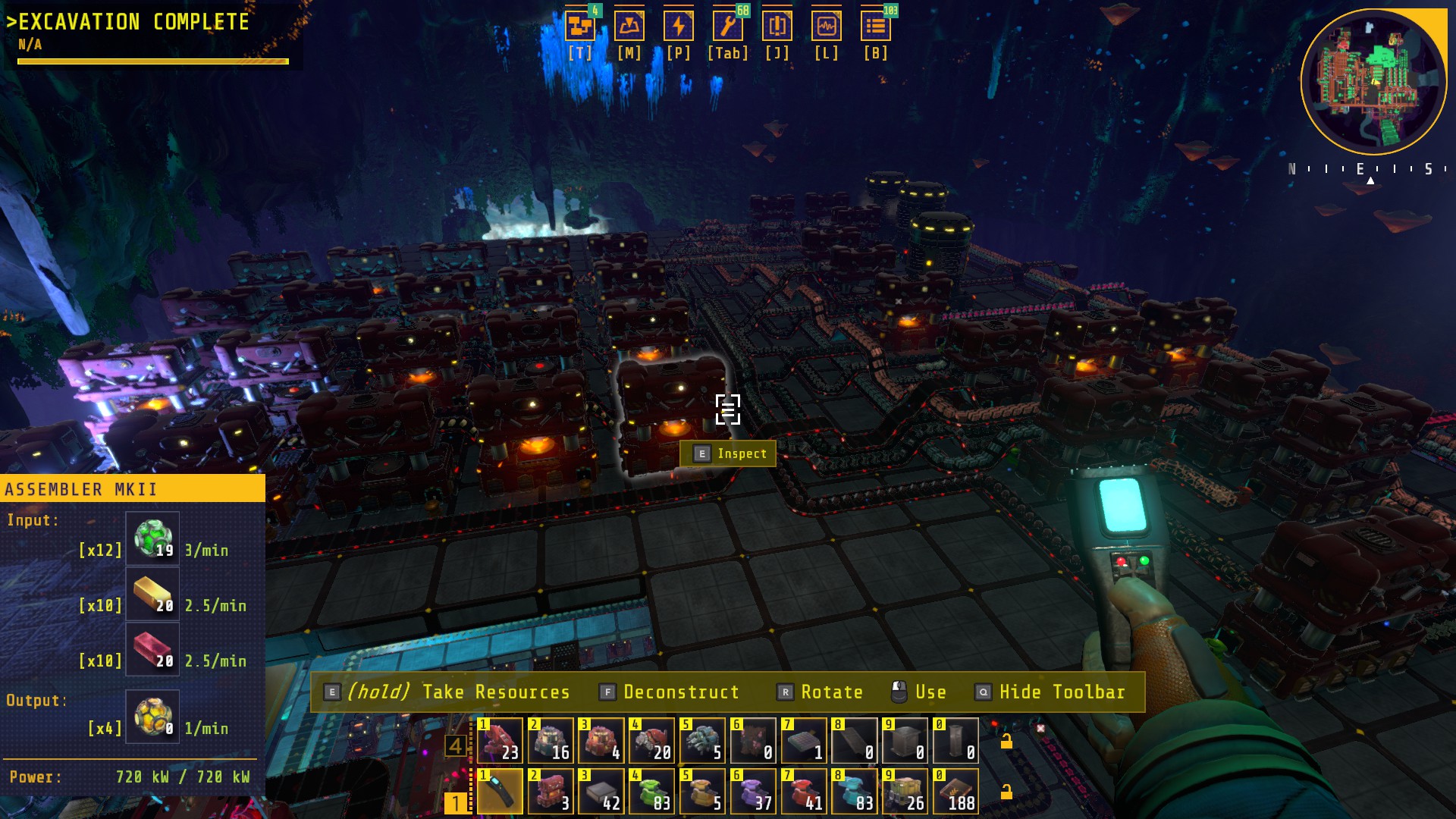
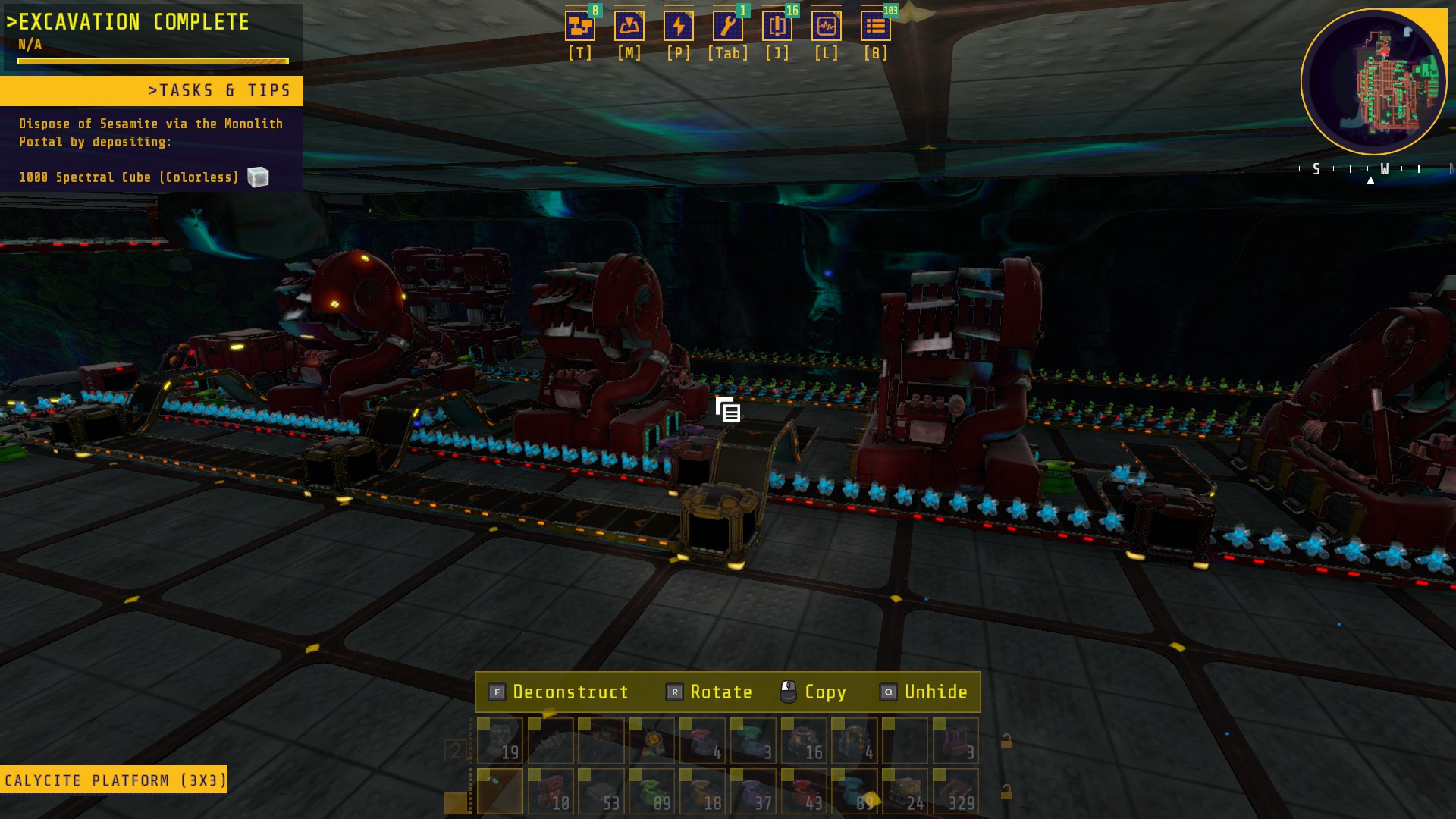
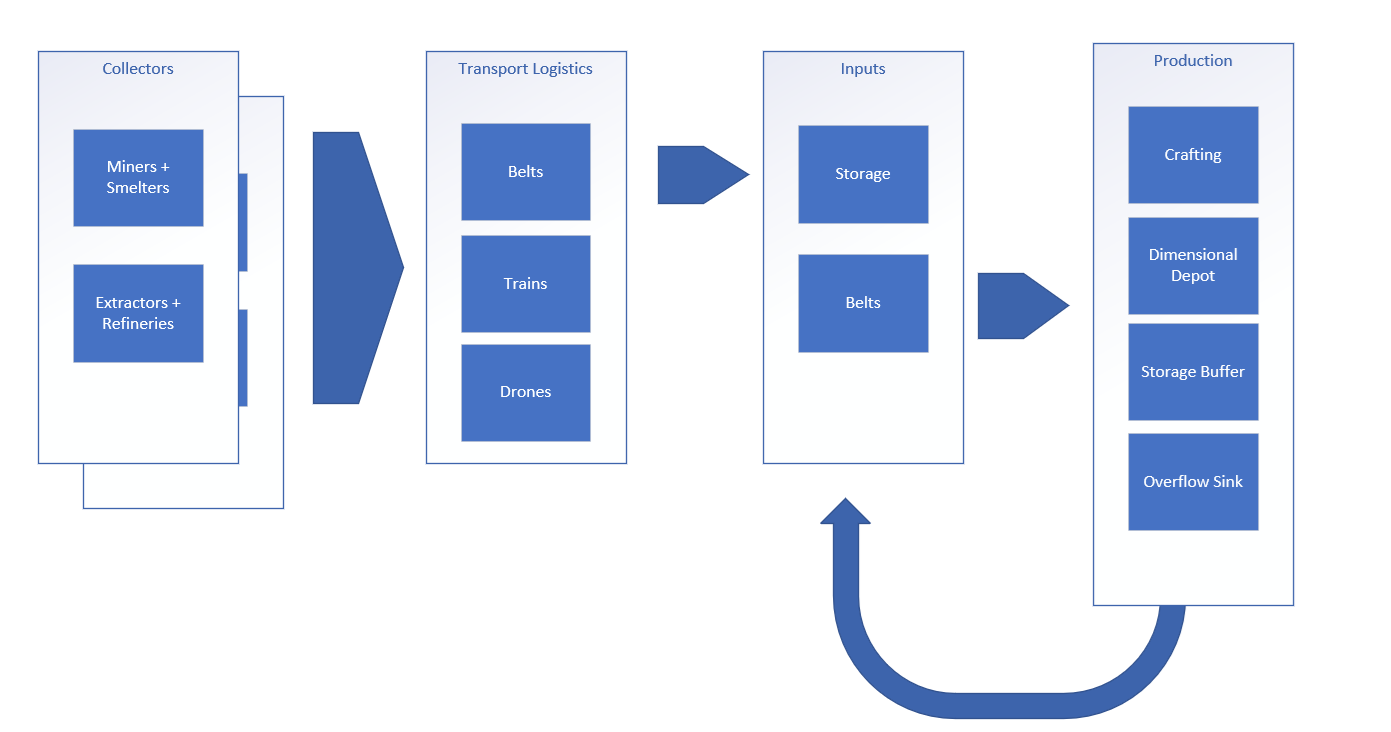
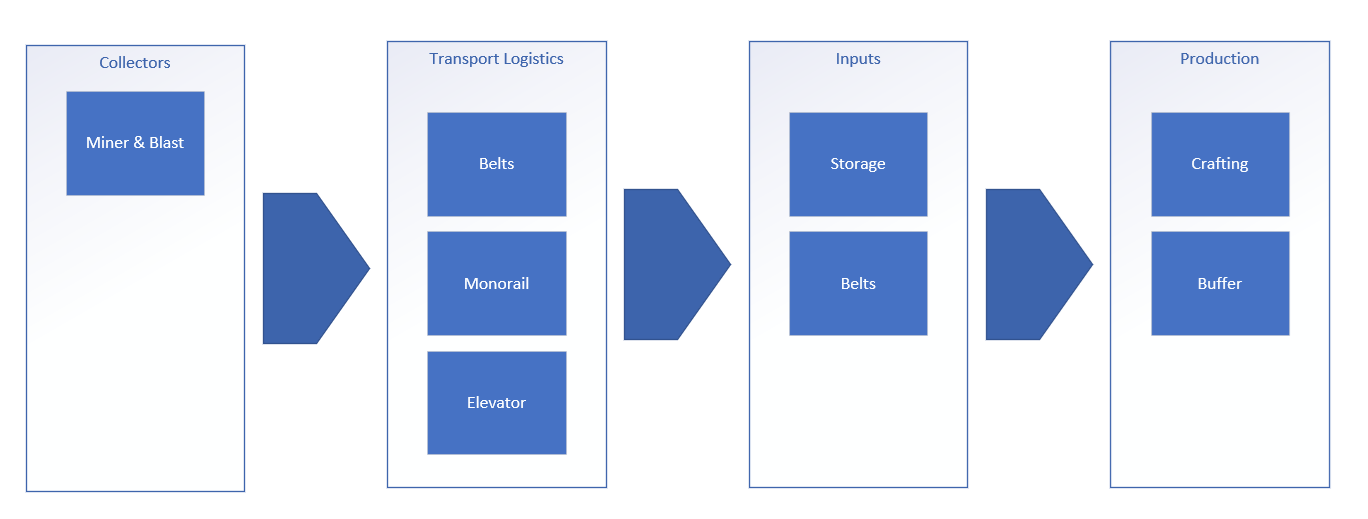
This is more for me, and honestly maybe the search engine virtual gods get this to the devs. From a prior post I mentioned that Techtonica has a communication issue, which perhaps is an identity issue. The launch of Laser Games (a weird FPS mode) instead of any news whatsoever on factory improvements wasn’t well received. In that space, I want to collect my thoughts on what should be on the future roadmap.

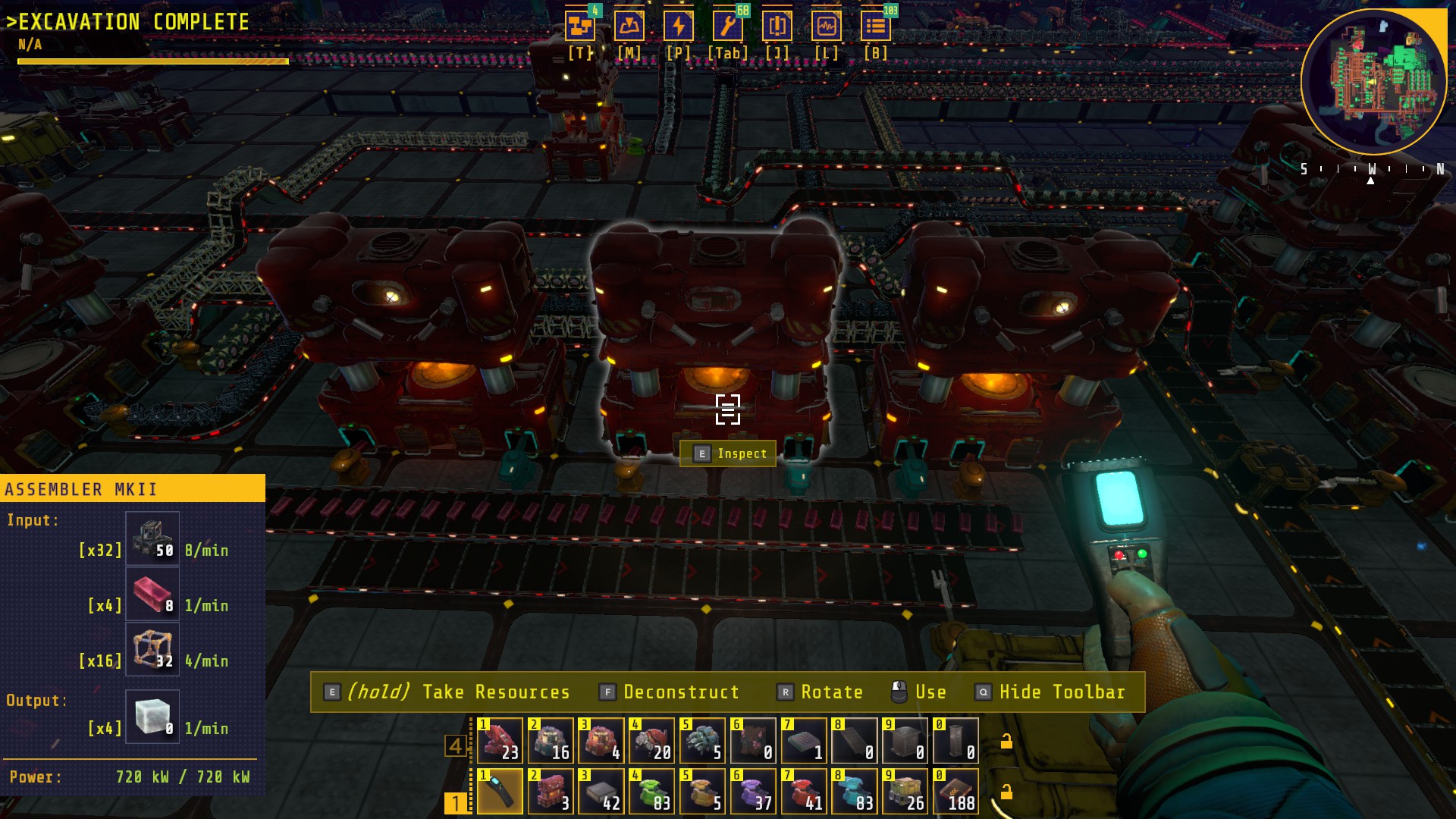
First and most importantly. Techtonica does not work well for large factories. You will have 2 machines producing wire, at MOST. This is fine as almost all the game has no need for it, but the late game portion would certainly benefit a lot from it.

New

Things that should be added to the game, that are likely resource intensive and will take time.

  • Resource Tier
    • Currently there are 2 tiers for minerals. I don’t think this game needs liquid resources, but it does need a 2nd tier for plant-based production. These are closed-loop items, and needed to optimize the 2nd tier of minerals. The issue is that it is not currently possible to have enough of this and it needs a 2nd tier.
  • Blast Tier Resources
    • Not all material can use Blast Tier resources, so new options are required allowing you to remove all first generation miners.
  • More Inserters
    • Stack filters are amazing, but they need filter options for mass production chains.
  • Research Station
    • Each station unlocks a new tier of research and base building options. Another is needed. Or perhaps, some use for the XRAY station as it currently has none outside of research unlocks (which could simply be a locked door instead).
  • Storyline
    • The game “ends” at the large elevator, a tremendous opportunity is present to expand the types of biomes present (only 1 currently), as well as more terraforming options. I think the MOLE is awesome, more please.
  • Blueprints
    • This is less important at lower scales. There are some niche use cases (Blast Charges).

Change

Things that should be fundamentally changed as they don’t work. These are hard to do, but less so than new content as their purpose needs clarity.

  • Inserters & Complex Crafting
    • Everything that requires 2 ingredients can be optimized with Stack Inserters.
    • Everything with 3 or more ingredients is a complex build, requiring direct belt inputs, rather than a bus. Either Fast Long inserters need to be added, or the recipes need to be modified.
  • Research Cores
    • The amount of space required to store these is beyond excessive. Making them smaller is not an option, but alternative storage options or compression is required for late game.
  • Trains / Mass Transport
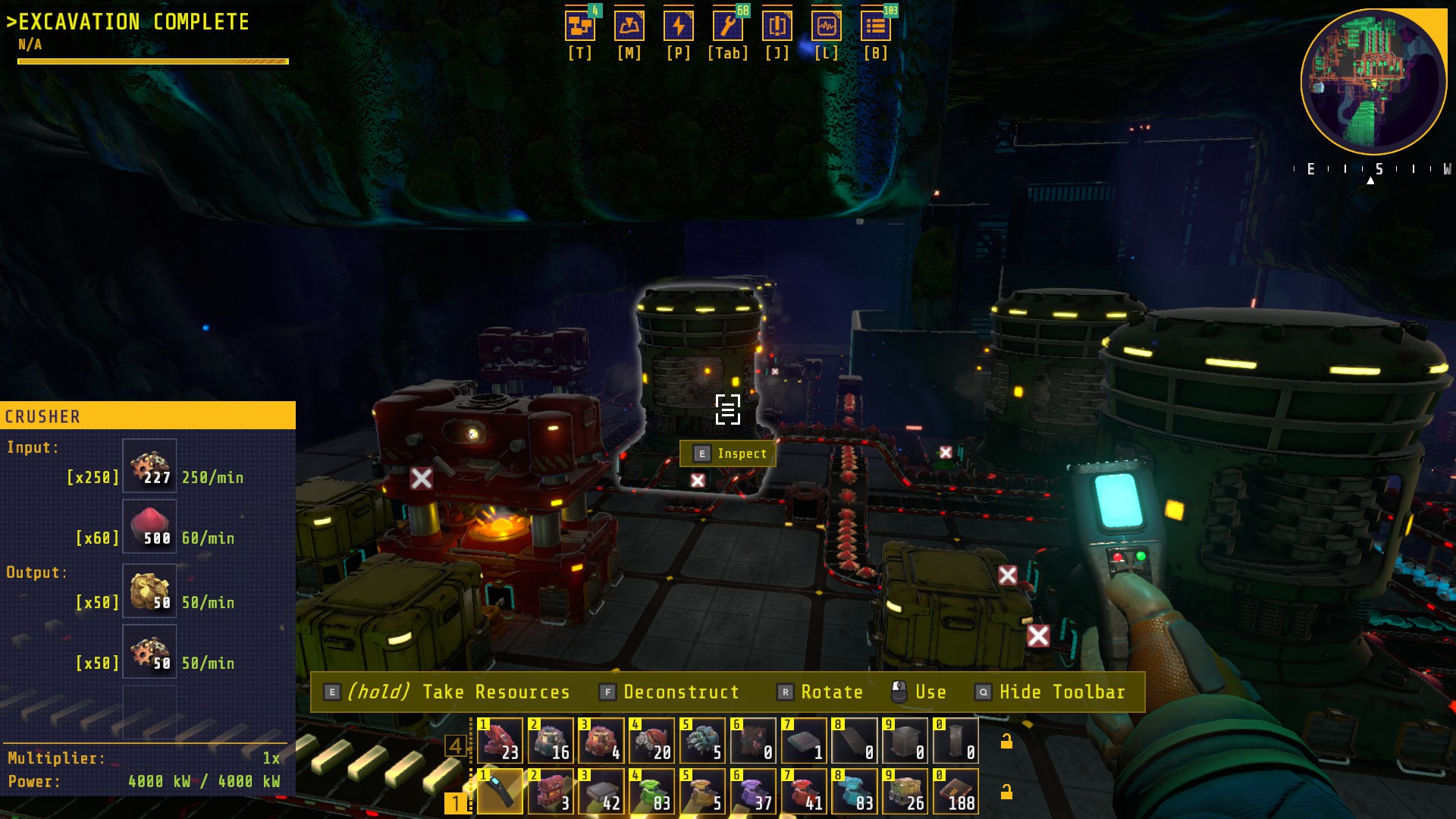
    • These are borderline OP once they are running and researched. However, they only work on 1 product at a time, meaning late game builds have dozens of trains and massive manually constructed logistic stations. It’s 5x larger than it needs to be. Logic filters would help.
  • Power Options
    • Tier 2 crank generators are 10x more powerful than their normal cousins, and something should be applied in the mid tier as scaling is an issue. I had over 60 normal cranks, and they were replaced with 7 tier 2. Transferring power between locations is also painfully complicated, and 99% of the time easier to simply use power floors for super long distances.
    • Atlantum should be an optional power source, it’s not used for much currently.
  • Concrete Production
    • Base building is cool! Having to pre-construct from a list of 50+ items is not, and your inventory cannot hold it all. This should be a concrete base item, a steel base item, and paint. Create a building tool that uses these products as base material to construct different shapes.
  • Research Acquisition
    • I like that you need to scan to unlock new research items. I like that most of these are locked behind rooms with material requirements to unlock. I absolutely hate that some research are in hidden caverns, under flower piles. The OmniSeeker tool needs to point towards missing research, as a sort of compass (it used to).
  • Exploration
    • Finding hidden nooks is amazing. There’s a pile of hidden stuff in the lower east corner. You need to dig like a madman to get to it. It looks amazing! And once you’ve seen the space and scanned it, you’ll never return. The entire game is based on one base at Victor, and some storage near the elevator (or a late game factory). It needs to leverage exploration to use the space explored.
  • Jetpack
    • It needs a vertical climb option, even if it needs Atlantum fuel to get there. Vertical factories are a nightmare to manage without it.

Optimize

Mostly math-based changes, where the content itself is minor but the impacts are significant. Almost exclusively QoL, which is where Factory games shine.

  • Mining ratios are generally OK.
  • Crafting ratios are ok in the early to mid game. At late game, you get into spaghetti as the ratios are fractional and not balanced. 7: 2.5 : 1 production chains require a hub/spoke model, which due to the way transport options are present, it just doesn’t work.
  • Alternative crafting recipes need to be more efficient. Especially the plant-based ones. They currently shift bottlenecks around, rather than getting rid of excess material.
  • Blast Core ratios are less about optimizing and more about absolutely stupid belt pathing. Getting 3 blast cores every 12 second to a blast miner feels like magic instead of math.
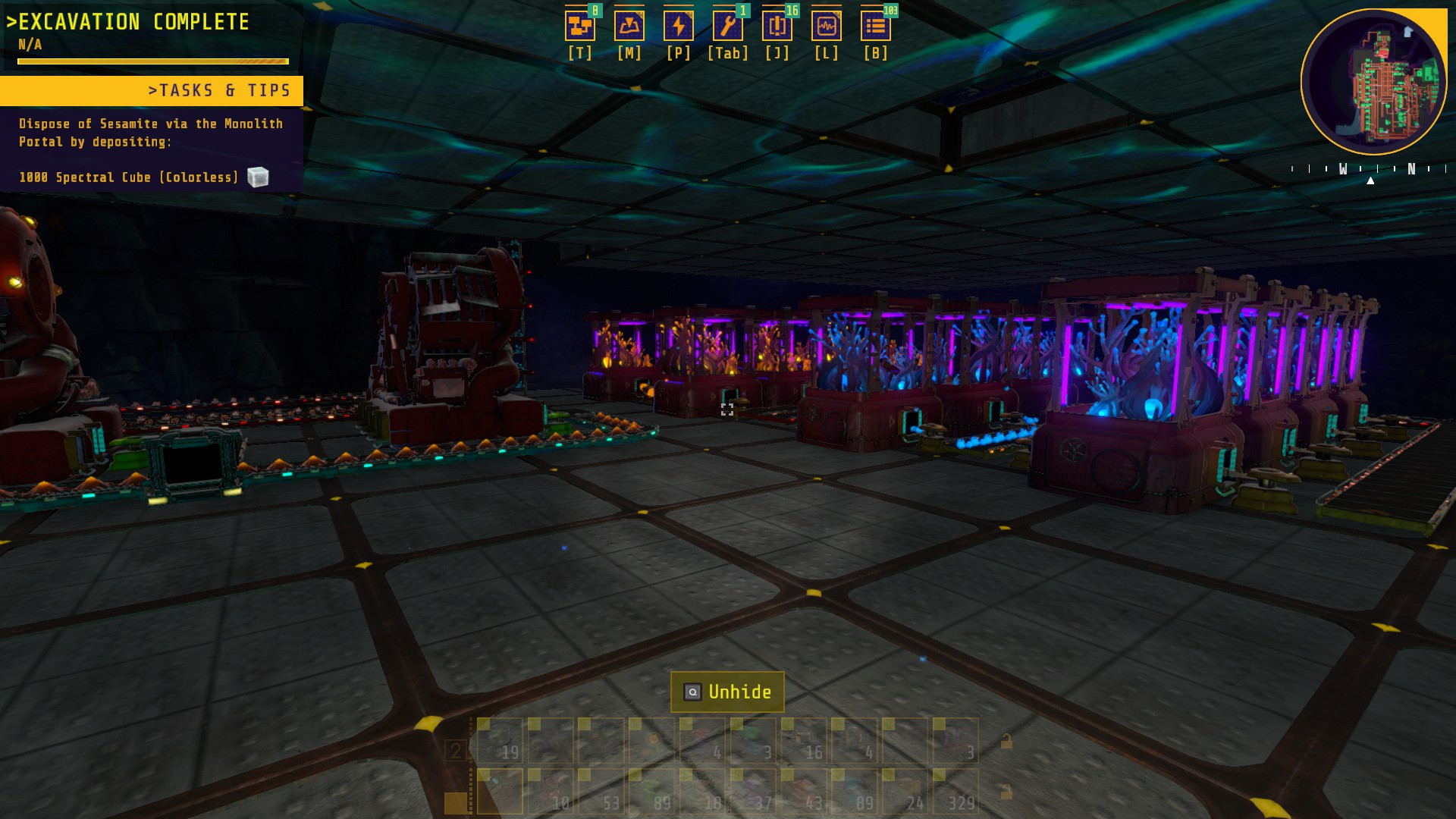
  • Seeds. There are not enough in the game in order to have a late-game build. They are not consumable, so it’s a closed loop and therefore math exercise. Either a new tier is added here, or a 10x ratio applied to the crafting path.
  • Stack Sizes need to be standardized to common levels. Say 5 (buildings), 50 (mid-tier material), 200 (base material), 500 (construction material). Why stack sizes of similar material are all different is mind blowing to me. It makes transporting things to unlock doors a pain when you need 20+ inventory slots of stuff. It also messes up storage containers.
  • Item destruction needs some tweaking. I’ve got a factory setup just to burn through excess materials. I truly think Satisfactory has the best model here with the SINK. It also takes much too long to unlock, so you’re going to have too much plant material for a long, long time.
  • Sand/Gravel needs a real purpose. Currently two uses, a very complex crafting process for alterative recipe or destroying things. I should not need 5 steps of crafting for an alternate recipe.

I think Techtonica has more potential than other games, if only because the foundation itself seems more sound. Clearer communication and a more firm roadmap can help guide the player feedback for quicker development. It’s clear after playing that there’s a ton of potential here, I really hope the devs are able to focus their efforts and reach it.