Story DLC Woes

The really great part about Legendary is that you get all the DLC right off the bat. This has no real meaning for ME1. ME2 brings a lot to the table

  • Kasumi is a new companion with an interesting loyalty mission
  • Lair of the Shadow Broker, which adds some lore bits to the story
  • Overlord, another story-based DLC with a tad less punch
  • Arrival, which has you solo in some stealth sections (and is therefore not fun)

All of these came out after ME2 launched, and aside from Kasumi, can be played post-suicide mission. This helps because ME2 doesn’t really end, similar to The Two Towers. It’s all open on the threat to come in ME3. It allows them to be a sort of intermission between ME2 and ME3.

ME3 has 3 main DLC.

  • From Ashes is the day 1 DLC with the Prothean companion
  • Omega has you team up with Aria to take back Omega over a long series of quests to prep for the final battle
  • Leviathan adds a crazy amount of lore to the game, like the Silmarillion did to LotR.

I’ll quickly pick on From Ashes for a minute. This DLC was clearly carved out of the main game – the companion you get is integrated with speech into nearly every quest, and is of the sole race you’ve been trying to find for 2 games. It was insulting at launch not to have this included and the reason I didn’t buy any ME3 DLC.

Omega is weird one that adds a lot of side content and some war points to the final battle. It looks truly amazing, and I could always use more Aria. It’s also one of the only missions in all of ME3 where the Renegade path is actually preferred. It doesn’t add to the the larger story and is entirely optional. You’re not missing out if you don’t play it (but you really should.)

Leviathan I had skipped on principle. I had heard some good things, but given that it was primarily focused on lore, why go after that after you’ve closed the final chapter? The quest itself is a mouse chase of sorts, with some interesting set pieces for combat (the water planet in particular clearly inspired Star Wars ep: 9). Spoilers I guess? Leviathan are the predecessors to everything. They created the Catalyst, who then created the Reapers in their image. Each cycle creates a new reaper, and there are thousands of them. Cycles aren’t exactly 10 years long in ME, more in the thousands. It’s so foundational to the understanding of the world around you, yet you get it after you complete the game. Legendary gives it to you at the start, where it clearly should have been from the start.
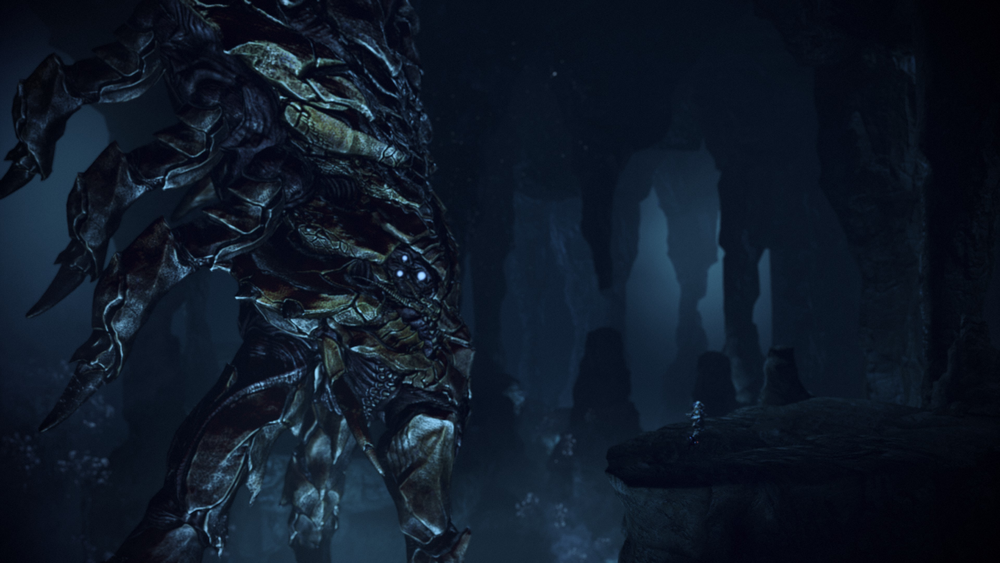
Don’t tell me that’s not an awesome sight!

Post-Credit Story

For a long time, games had a finite end. If you wanted more, you got an expansion pack that added a new chapter (e.g. Diablo 2: Lord of Destruction). Adding things to the middle of the story just didn’t happen, though mostly due to coding issues. It’s always easier to add to the outside of a construct than the middle – really just like renovations. It’s often easier to build a new house than renovate an existing one.

There are certainly plenty of games that have a mode post-credits. Bethesda and Rockstar excel at this. These games more easily integrate story DLC, if that story doesn’t directly impact the main game storyline. You can add a new mission with a new boss, as long as it doesn’t reference the main one. XCOM2 has a lot of this, yet the quality here is a challenge due to the difficulty scaling of combat.

And yet, the games that have a finite end, where the credits roll and you’re done, those have serious problems with DLC. Final Fantasy 13-2 addressed this by launching the DLC along with the game (see From Ashes as to why this wasn’t well received), so that it would integrate well. Final Fantasy 15 had story DLC (episodes) 6 months after launch, which added lore for each companion. FF15 sold nearly 9m copies, so the market for DLC was there. The episodes were launched, but some re-org in SQUENIX stopped all future DLC… though let’s be frank here, if the DLC met objectives there would have been more.

ME3 suffers from this challenge, where the player base is substantial, yet the story is clearly at an end. Launching DLC after the game is complete, no matter how interesting, doesn’t make sense. Folks have spent 20-40 hours getting through a rollercoaster of events, 100+ if you consider all the trilogy. There’s a sense of closure, and not much interest in opening up that door once again. At least in the larger population sense.

Game Trend

It’s interesting to see the larger game trends that Mass Effect created or expanded upon. It’s hard to explain how important ME was to gaming in the west – we didn’t really have anything remotely close to an action RPG at the time. Play ME3 and then Outriders… you’re going to see extremely similar models.

You’re also going to see how story DLC is handled, or not I suppose. Games with a finite end rarely go through the efforts of any story DLC. Heck, even games that don’t have a finite end don’t want to mess with the gold (e.g. God of War) as they know it’s never going to hit 100%, and probably not even hit 20%. If they ever want to add a new game to the series, then you have to go in with different player bases and can’t rely on the prior DLC content to have been experienced.

Mass Effect Andromeda didn’t have any (nor any sales of ‘season passes’ common for EA), which is a fairly decent bookmark to this topic.

Given the quality of the story DLC for ME3 and the overall apathy for the content, I would like to think this is the best outcome forward. If it’s important, put it in the main game. If not, then wait for a sequel.

ME2 : The Illusion of Choice

I completed the final suicide mission in ME2 the other night, and as with all other times, everyone survived. The largest playthrough difference here is that my Renegade score was nearly at par with my Paragon. In the aggregate I was a middle of the road player, yet in the absolute sense, everyone survived and I had Samara, which is objectively the same result as a pure Paragon run. This made me think more about the choices I had made in the game, and how they did or did not impact the end result.

This is arguably different than ME1, where the decision points are typically tied to major events and results in of themselves. ME2’s Paragon/Renegade approach is in the method by which you achieve a result, it’s a lot different.

I do want to state early on that I am fan of the ME2 approach.

Design

As children, most of us were exposed to “choose your own adventure” books. It felt like you were creating your own story. The truth is that someone else built some blocks and put a stream of logic decisions to connect them. Designing anything is exactly this process, games included.

Putting a consequential choice in a game means that you need to build at least 2 outcomes, either A or B. And then you need to keep track of that decision for the rest of the game. If you chose to let Kaidan die in ME1, Ash is there instead for ME2 and ME3. Context around that choice has impacts as well, and it is entirely common to have one decision impact a future one. The early Fallout RPGs had actions in one setting impact those in another, and even had to account for the non-linear quest design. Adding impactful choices can become extremely complex and if done incorrectly breaks immersion.

Divinity 2 does a superb job in this, yet also limits the impacts. The impacts of the choices only affect the act in which the choice takes place. You can kill a quest giver in one quest, blocking other quests. The influence of those choices are felt all along the game, in that your reputation may open other doors.

Long story short, the design approach of choice can become unmanageable.

Flavour

An alternative approach is to add choice in the approach of an outcome, rather than the outcome itself. Saren at the end of ME1 will die, no matter what choice you take. Either you talk him out (saving some battle time), or you go guns blazing. Or perhaps the larger goal is to reach the end of a building, and you can either go through the window, the main floor, or the elevator. In the larger picture, the major beats are all there, but perhaps you reach them in a different order.

Now, I realize that ME3 took a lot of flack on this because the final culmination of all these choices were mostly ignored, or perhaps the view that the choices were not reflective of the types of choices presented earlier. I’ll get to that when I complete ME3 and refresh the idea.

For ME2 however, there is plenty of flavor on each and every quest, which allows for some customization of the story, without impacting the major items. The Samara/Morinth choice doesn’t change any story beats, it changes the skin of the squadmate.

Compare it to something like Hades, where there is dialogue and events which can add flavor to future events. The devs have some interesting bits on how they keep track of all these events, allowing for continual new items to show up in the story. None are actual choices in the measured sense, but more related to recognition of experienced events – checkboxes of sorts. The devs were clear that this added a significant amount of complexity to their design, and yet, they are the items that add the most amount of charm to the game.

Game Metrics

The meaningful points of change in the game are not explicitly related to an in-game choice, or more accurately they are reflective of a lack of choice. Success on the suicide mission is entirely predicated on the amount of optional content you’ve completed. The 3 ship upgrades are required to complete the non-interactive entry to the final mission. Miss some, people die.

The final sets of mission success is based on you having completed the loyalty missions for given characters. You need to send a tech expert in the vents. If you have not completed the loyalty quests, anyone you send will die. If you have, and send a non-tech person, they die. There are 4 such “choices” in this final quest. Since these are end-of-game choices, they impact the story but not the final part of the game. Further, these choices are reflected as influence in ME3, less about changing the larger outcomes. In this sense, its more like Divinity 2.

The Illusion

The best choice is the one that’s predetermined, or the false choice. Best in the objective sense, where it can be anticipated, measured, controlled, and managed. The element of chaos is persistent, and when you purposefully inject that chaos, you create work for everyone. There’s the reality of choice paralysis. How many types of toothpaste do we really need? – which is a sort of false choice since it’s all the same company with a slightly different flavor, hoping you buy multiple.

Really think about it. How many truly impactful decisions do you make in a day? In a year? Bioshock Infinite was an entire game on this principle. Every choice was an illusion in the larger arc.

ME2 presents the player with a multitude of events that have the illusion of choice. Reinforced even because when you take that choice, an magical number goes up. If you were to stop playing before the last mission, you would be 99% the same as every other player. It does a tremendous job in the final act to present impactful choices, but those impacts are only felt in cutscenes rather than impacting future choices.

I posit that this presentation of final choice in ME2, and what is a minor cliffhanger, set up ME3 for very high expectations. More on how that worked once I complete the ME3 playthrough.

Social Commodity

Spurred from posts on TimetoLoot and Kaylriene, and the prospect of Bhagpuss having his own!

In my field of work (and it would appear the general population) the goal is commoditization. That is, taking a highly complex and integrated thing, and simplifying it to a degree where the user requires minimal understanding in order to consume. Photography is a good example. Up until digital cameras came about, you had to know how to use a camera, manage the film, store it, then bring it to a shop to get it developed. No wonder people treasured photographs, it took weeks to get to see the result. Today, a toddler can take a dozen pictures without effort and print them out at home (or put it in a digital frame).

Socially we understand commodities as mostly basic items. Water and electricity in developed nations are just there. This is not the case for billions of people on the planet. We go to the grocery store to get food (or order it online) while other needs to grow for sustenance.

In games, there’s the crazy complexity of something like D&D as compared to early Atari games of blocks of pixels. Getting that complexity to be simplified required a TON of work. You can play games that are mechanically as complex as D&D today, but with relatively simple interfaces making it a smoother experience. Games like Call of Duty sell millions of copies, not because it’s super complex and deep (it is) but because the skill floor is so dang low. Anyone and their grandpa can play.

People tend to gravitate to the law of least effort. That we are pretending having dialogue on something like Twitter for complex subjects is ample evidence of our group laziness. These things are easy to use, and certainly even easier to abuse. I suppose this is in-line with the general laws of conservation of energy…

Complexity and Demand

And yet we strive for additional complexity. Not so much because because we want to do more, but because we get bored (or oversaturated) with the status quo. We, as a society, are never content with what we have. I can make an omelette in my sleep, but I get a kick out of making a gourmet version. If I could find a stupid easy way to make one in 3 minutes, I’d find a way to add more to it!

There are limits to this however, a waterline of sorts. EQ certainly was revolutionary for the constructs it supported. The game part was pretty much UO in 3D, minus the PVP and housing. You went around camping spawns, looted and sold things, worked as a guild. It was certainly prettier than UO, and appeared to have more depth. Yet the key here was the social part, and that you could have synchronous chat AND gameplay at the same time. To play UO in a group you needed ICQ or some other chat tool. EQ had real time communication channels. Revolutionary at the time.

That innovation and accessibility made it a smash hit. It peaked at 450,000 users which was well double what UO ever achieved. But…

WoW

When WoW launched, it was entirely focused on delivering focused group content, with ease of access, and (at the time) a quality state. It hit 450,000 players in a month and 6 million in a year. Where EQ failed in the game aspect, WoW threw tons of resources to make it as accessible as possible, and for nearly 6 years was unassailable. Certainly helped that it looked amazing compared to pretty much anything else, and could run on a potato.

It’s not from a lack of trying here, the dark days of MMOs trying to beat down WoW are full of records of failures. Most of those related to trying to copy WoW, rather than understanding why it was successful in the first place. WoW had a sunk cost problem in the social space, where people had invested hundreds of hours with other people, on challenging (and again, quality) content. They didn’t have the time to invest the same in another game that had nowhere close to the same amount of accessible content. The other games wanted players to spend the same amount of time as WoW in theirs, effectively having to give up their roots. But for what? The grass was never greener.

Blizzard has a larger problem on their hands. The social part only works if the games have some semblance of quality and value as a social goal. It’s been a rather consistent trend that the individual’s goals are more important that the group’s, not to mention the tremendous lack of QA for 5+ years, and here we are. There are dozens of other games people can invest in.

Descent

People will point to the shard split as what killed UO. (It clearly didn’t, EQ provided a much better experience.) People will say that dungeon finder caused the downfall of WoW. (It also didn’t, this was after the crazy grind of Champions and the end of the WoW story of Arthas, and a significant design shift for Cataclysm. Oh, League of Legends launched too.)

People are hoarders, we keep things close that work (or don’t) until they are more trouble to keep than get rid of. Look in your residence and you’ll find plenty of things you don’t use but keep around because.

Games are not eternal. They are built for a specific purpose, founded on a set of principles and coding foundations. Changing those principles often requires code changes (WoW’s db changes for spells is a good example) and that process is both time consuming and risks alienating the existing population (*cough* NGE in SWG *cough*). UO hit a need at a given time, served it well, and when something more accessible came about, that took the spotlight. WoW is not competing against a single game here, it’s competing against an entire industry, the largest entertainment industry on the planet ($200 billion in games vs $50 billion in film).

Other Games

The smart people in the room figured this out 10 years ago, that WoW’s special sauce is in delivering chemical bursts of pleasure to the brain on a regular basis, and exploiting humanity’s desire for social connection. The most popular games on the planet require positive groups, where success is only achieved through many people working on the same goal. They also have a competitive aspect, where this group is measured more successful than the other (WoW world firsts ring a bell?)

Genshin Impact is (was?) super popular because it was a masterclass at accessible brain drugs. It’s a gacha machine that gives you everything you want, regular explosions of positive reinforcement, and the competitive nature of comparing your draws to someone else.

Publishers aren’t dumb, they are profit making machines. They know that the social fabric is what keeps games popular and people to irrationally (at times) fork over dough. CoD’s dominance is primarily because of the people you play with, and ability to measure against others. They put enough social hooks in it to force people to get the next iteration, even if there’s no improvements present, aside from new maps. How does FIFA have people buy the exact same product year after year, just with new rosters?

To happenstance deliver quality and accessibility is a near miracle, requiring a level of passion that doesn’t exist (or is actively squashed) in large organizations. Indie devs sometimes find this, and we’ve seen plenty of examples, through thousands of failures. For every Valheim, you get Shiplord by the shovelful. That EA and ActiBlizz do this is mechanical to exploit the maximum from the playerbase – can’t blame them, it works!

The Future

The demand for social is larger than ever, in the connected sense. The need for intuitive design abstracting complexity is the eternal frontier. People swear by iOS even though it does less than Android, because it just works. The gaming frontier is subject to the same drivers and won’t revolutionize until that joint nut is cracked.

How do you get millions of people to be social together, using an intuitive interface over a multi-dimensional complex game? For now, sci-fi is the only place for answers. It will come, there’s no question.

SteamPal and Mobility

The silver lining of this pandemic is the forced hand of increased mobility to do nearly everything. Restaurants have had to figure out ordering online and pickups. Hardware stores deal with curbside pickup. Offices with insane volumes of remote workers. Video chat for everything it seems. The resistance that work cannot be done without face to face interaction is dissipating, replaced with fatigue of somehow doing more in less time. Commuting may not have been good for the environment (1 bus is like 50 cars, and 1 Amazon driver seems to be worth a hundred), but the mental gains from that repose of life certainly were. Some good from this, and a new social challenge to surmount.

Gaming has for many years been a remote affair. You buy games online, download, and play. It’s not exactly remote, in the concept that you are still beholden to a desk or a couch. Mobile gaming is disparaged as a mobile phone nightmare, and I can’t really blame that view. While they are certainly able devices, they are missing the necessary inputs (controls) and outputs (video connections) to be proper alternatives. Great as diversions, and some of the biggest games on the planet, at least profit-wise, are mobile.

What we’ve had instead are either homebrew systems that need an engineering degree or proprietary boxes with poor battery performance and limited gamesets. The PSP and VITA were great ideas, as were the GBA and 3/DS. The latter of which was a real standout, notably for a stupidly long lasting battery and touch controls. Eventually we got the Switch, which smartly integrated with an app store with a large focus on 3rd party/indie games.

That store is garbage by the way, with an interface designed by a lead-eating chimp. It’s 2021 and a first year student could do a better job – it’s ridiculous the amount of money Nintendo is leaving on the table. The console itself however is mechanically superb. Great visuals in a mobile form, detachable and complex controllers. Easy docking for connection to an external screen. Easy to add more controllers. Doesn’t yet have wireless headphone support mind you, but that should be a firmware update. As an iterative view on consoles, it’s good.

But back to that horrid interface. Which I should add, has initial retail prices for way too long. Immortals Fenyx Rising sells for $30 retail now, but $60 on Switch. Sales seem to be once a year, so there’s some price resistance if people have something other than a Switch (and if surveys are any indication, that is certainly the case).

Steam

Lots of preamble to get to the interesting news about Steam working on their own handheld portable. There’s not much on it, other than the expectation of a larger reveal this year.

The less good to start… Valve has a history of launching very interesting ideas and then not following through. Steambox, Steam Controller, VR… not even talking about their games. Credit that it does a great job incubating ideas, but the follow-through is very rough. So while this is interesting, Valve has a poor track record for, oh, just about anything that isn’t the actual Steam store.

The good part is the actual Steam store. I have no real issues with Epic’s game store, but Steam really is the all-in-one solution. Nearly every game on the planet, with thousands added every month. Ongoing sales, curated lists, message boards, and a very impressive Big Picture Mode (which does great on remote play). The software part is extremely solid, which is extremely important for any console.

The question marks in this space are less hardware related and more so on the operating system. The reason consoles just plain work is the hardstamped hardware config and optimized OS. The CPU is one piece, the RAM another… but those are small peanuts to the video card. Nearly every PC game issue I’ve encountered was related to the video card – made worse with AMD and NVIDIA taking much different approaches to architecture. I don’t expect this thing to run Crysis at 4K, but there are certainly some expectations that games with controller support look decent and can actually run without continual device patches.

And then there’s the games. While PC traditionally focuses on mouse/keyboard controls, there are plenty that support controllers. With the world’s largest PC library, it will be a balancing act to figure out what games do and do not get support. CoD seems an option, until you realize that it requires nearly 300gb of data to even boot.

Finally, the mystery mark around Stadia & remote gameplay. The concept of remote gameplay is almost entirely predicated on amazing network speeds and tiny latency. Yes, there are server hardware pieces that need to be sorted out, given that the processing requirements are always in flux. The user experience is gaming is focused on input lag. If the SteamPal can support both local and remote gameplay… well that would be a rather crazy mixture.

Given the challenges in hardware development, I’d be amazed if this thing was consumer ready within 3 years, another 2 to work out the bug, and then 5 to optimize . While I’m certainly not holding my breath, I am oddly optimistic that this thing can actually work. Quite impressed with the prospect!

ME: Paragon & Renegade

I finished ME1 the other day. Replaying that in 2021 really shows how much the game was an incubator of ideas. Playing ME2 highlights that to a crazy degree. The MAKO is gone. Inventory is not longer a headache. The hacking mini-game is somewhat improved. Dialogue is more nuanced. The game is no longer 5 main quests and then 80% MAKO/empty-planet/same-building side quests. In nearly every respect, ME2 improves upon ME1.

Included, Paragon/Renegade are better balanced, which itself has evolved from KOTOR.

ME1 Choices

The challenge in ME1 is mostly around Renegade – in that nearly all the choices are objectively bad. Aside from perhaps the double crossing side quests on Noveria, the Renegade choices all focus on killing the person with whom you’re having a conversation. Ok, ok… hanging up on the Council felt good. Paragon choices, by comparison, were about you saving starving puppies. It’s not that people want to only play Paragon, it’s that the choices provided are “keep the story going” and “stop the conversation”. Most people are going to take the former, so it’s not really a choice. By the end of my playthrough, even after trying to take as may Renegade choices as possible, I was a clear goody-two-shoes.

The devs clearly spent cycles building this system, and the rates were abysmal for Renegade run throughs. Clearly an improved system was required.

ME2 Choices

There are two notable changes here. Fist are the interruption actions that can be taken while an NPC is talking. The paragon ones are simple enough. The Renegade ones are usually about punching people, or interrupting their speech. They are well placed, and with few exceptions you should be using them.

The second is the scope of the actions. The choice itself is less about the end result but more about the path to which you achieve it. The stolen chit side quest is a good example, where you physically intervene at the end when injustice is the outcome. (Weird side note – for the vendors you get Paragon/Renegade options to get discounts… makes no real sense…) The majority of the points aren’t directly related to outcomes, simply conversation paths. Each squad member has quite a few options to help move them along, and a certain preference to dialog options. Zaeed clearly is pure Renegade, while Jacob is almost entirely Paragon. There are also more dialogue options present, and through some game mindset calibration, you get taught that it’s good to explore all options as the consequences are story related, rather than outright rewards (as in ME1).

By the half-way mark in ME2, my Paragon and Renegade are relatively balanced. The Renegade choices are less about being bad, but more about the ends justifying the means. Punching that reporter running garbage stories on me feels good.

D&D Viewset

The concept of morality and choice stems, as nearly all RPG things, from D&D.

Video games prior to 2000 were pretty much all in the Lawful Good area… you were the plucky hero. As more RPGs came about, more choice was presented. Ultima famously brought in Virtues to reflect this in a different light, as people were “optimizing” the game by being as evil as possible. You can see these influences in all Black Isle and Bioware games.

ME1’s Paragon seemed to best fit with the Lawful Good mindset. Follow the rules, be good. Renegade was closer to Neutral Evil… there was some logic to the choices made after all. But you were still evil.

ME2 tweaked this, bringing them all closer to neutral. Paragon is closer to Neutral Good, while Renegade is somewhat closer to Chaotic Neutral – not bad, just a different set of rules. Moving away from the purity of choice allows more nuance into conversation, even in the middle of a game. It then focuses on the outcome of the decision as the reputation (e.g. you saved X) and less about how polite you were in doing so.

Other Games

Other Bioware-like games have come since, and each has tried to tweak the model somewhat. Pillars of Eternity is the more traditional D&D model. Tyranny only worries about Evil alignment (and does an excellent job!) Divinity is the outlier here, as it’s arguably larger than Baldur’s Gate 2 and has a rather complex morality system that is more outcome based (and reputation) than pure alignment. As BG3 continues, it will be interesting to see if it’s more in line with the older model or the new one.

Clearly it’s more complex to keep track of the outcomes of every decision rather than a point scale of good/bad. It’s a better experience though, and one that you really notice when it’s missing in an RPG that presents choice.

ME: Legendary

With FFX complete, time for another flash from the past. (FFX-2 maybe some other time…) Mass Effect: Legendary came out and with a whopping 100+ gigs of download done, off I go, JJ Abrams lens flare and all.

I mentioned this in the FFX playthrough, where knowledge is a double edged sword. I’ve played that game so many times now that there’s very little new or surprising, and yet I still find it a super enjoyable experience. Mass Effect I’ve played through maybe twice (?) in all the years since launch. My recollection of the story is somewhat hazy and frankly more emotional than firm. I recall the feeling of awe the first time I stepped into the Citadel, the frustration of the MAKO, wanting to punch certain companions. The actual story beats are a sort of deja vu effect, which makes me pause at times and think about how I handled it last time. The end result is that it feels much more like a game here than an experience. There are checkboxes to fill, skill points to assign, and inventory to manage rather than a story to uncover.

The game lens really highlights how successful Mass Effect was upon launch at hiding its foundations. You see a bunch of interesting people with interesting stories and just follow along, making what at the time was rather nuanced choices to impact the story. At the time we didn’t have true multi-branch stories… KOTOR had the start of it, Dragon Age had some key decisions, and I guess Fallout was the best example . No wonder people caught on to this model, and were rightfully peeved when ME3 dismissed most of it. Upon this replay,, the quest structure is much more obvious with multi-stage fetch quests, but for 14 years ago… wow.

Gameplay wise, I can see a lot of the improvements put in so far. Elevator wait times are gone!! There is an over abundance of lens flare – I really need to point it out. It’s one thing to have it in a cut scene but I find it painful when its in active gameplay. The visuals are super improved otherwise, with awesome framerates on a clearly antiquated game engine. Very impressive. The MAKO is better than I recall, but as Bel mentioned, it’s still the worst part of the game. Inventory management is better but I can’t say that it’s good. Character development and the biotic/tech powers are very meh. The combat itself is still as broken as ever unfortunately. The UI is cleaner, no question, but it has not aged well at all. Getting 1 shot from someone 100% behind cover is still there, and the AI has some really rough edges. I guess this is to be expected from a game that tried to merge action and RPG that many years ago…

Nitpicky, but I find this very distracting.

I’m not far along in the game… exploring space and whatnot. Again the game part, where its super focused in the Citadel then just goes huge open world once you get the ship. I do recall the first time I played I explored everything, where as this time I’m only landing on planets where there’s a clear reason. Those landing missions are smaller than I recall… or perhaps the zones themselves seem much smaller. I do recall the side quests having some interesting story beats – the Batarians in particular are fun to see again, if under-used.

The Paragon/Renegade bit in ME:1 is very heavy handed, there’s few opportunities for grey. It’s either admonish them or shoot them dead. The Batarian/asteroid quest in particular prompts you 6 times for the renegade choice, which are all variations of shooting the alien. I know this is better in ME:2. BioWare mentioned that ME had 92% of players go Paragon… which is painful as a dev to spend so many cycles on a mode no one really played. (Side note: this is why LFR exists in WoW… only 1% of players were completing raids prior to Firelands.)

Odd bit… the Origins/Steam achievements are displayed as % of user base. Landing on a planet is currently at 10% of all players… so either the metrics are wrong, or people have decided to buy the game and not play it. The achievements are really rinky dink too… sort of like getting points for putting your name down on a test. That the % are low is weird.

Still, the experience thusfar is enjoyable. BioWare clearly needed a win to keep the doors open, and what’s here is impressive in capturing the original experience with a minor coat of paint. In the negative light, this highlights to me how far BioWare has fallen from 2007. Games aren’t made by companies, the are made by people. The people who made Mass Effect did a hell of a job.

FFX Replay

Every now and then I give FFX a return. I don’t necessarily think it’s the pinnacle of gaming, nor the one with the strongest individual systems. I do think that on the whole, it delivers the most consistent and enjoyable experience of all the FF games.

I’ve had the FFX/X2 remake in Steam since it came out (and also on PS), so starting a new game is pretty easy. And with cloud saves, it’s even easier to remember what works and what doesn’t. A fun bit in FFX is the Al Bhed language, where a substitution cypher is required to read what people are saying. Using a previous save, you can load that cypher and start off clearly understanding everything. FFX-2 has a new game+ mode, but that’s because there are multiple endings. It’s a different take, a much simpler implementation that something like Chrono Cross’ (which does not get enough credit). So, all prepped and ready to go.

Knowledge

There’s an upside and downside to replaying a game. You can anticipate really cool moments (Luca’s cinematic), but also are never really surprised (the whole Jecht is sin bit). I prefer the more optimistic side, where it’s like reading a good book once again. And having 20 years of additional gaming experience certainly adds some flavour to the experience.

FFX is a rather linear game, all the way to Yunalesca. There are 3 battles in that linear path that are brutal if you are not prepared, and honestly, even if you are they are quite hard to manage. The idea of grinding out levels has some merit, but the structure is built so that it generally isn’t required – the random battles should get you where you need to be for any given fight. Post-Yunalesca you get access to a pile of side content that is practically required if you want to take on BFA and have a chance of success. Knowing how to tackle these side quests is super important, and I don’t think a “regular” player could find success here without some sort of guide.

And, as is with all FF games, the final stretch is completely disassociated with the rest of the game. The last zone can be left and returned at almost any time, and the point of no return is about 3 minutes of content from the final boss. It means ALL the content prior to that is relevant post-boss. FF12 has this. FF13 certainly does not. FF15… well that’s another story.

Oh, I should really mention that FFX is the only game without a crystal as a large piece of the story. No secret final boss, no giant crystals to block the path, no materia.

Side Quests

There are 3 major ones to track, and most of the smaller ones intersect with these. Some have aged well, others not so much.

Collecting Aeons – There are 3 hidden aeons to collect – Anima (who you know exists), Yojimbo (who is very interesting), and the Magus Sisters (required for another activity). In the normal game they aren’t too bad to acquire. In the re-release… they are crazy hard.

Collecting Celestial Weapons – Every character has an ultimate weapon which increases their damage and unlocks the damage limit on summons. There are 3 pieces per character, the weapon, the crest, and the sigil. Some are in simple chests, others require mini games to acquire. The Cactuar quest for Rikku is fun. The butterfly game for Kimahri, meh. Lulu’s lightning dodge requires some crazy concentration. And the notorious Chocobo dodger game for Tidus is rage inducing.

Monster Arena – This requires “capturing” 10 of each enemy in each zone, from the start to the end. You need a specific weapon to do so, and the last 2 zones are full of enemies that have tons of HP (multiple hits) and nasty counters (petrify, confuse, high damage). Once you have them, you can fight them in the arena. Collecting various groups of them opens up more difficult monsters, which provide more unique rewards in order to increase your power. If you want to hit for 99,999 damage per hit, then you’ll need to do the arena.

I am purposefully not including Blitzball. It’s more of a side game, whose purpose is best aligned with celestial weapons.

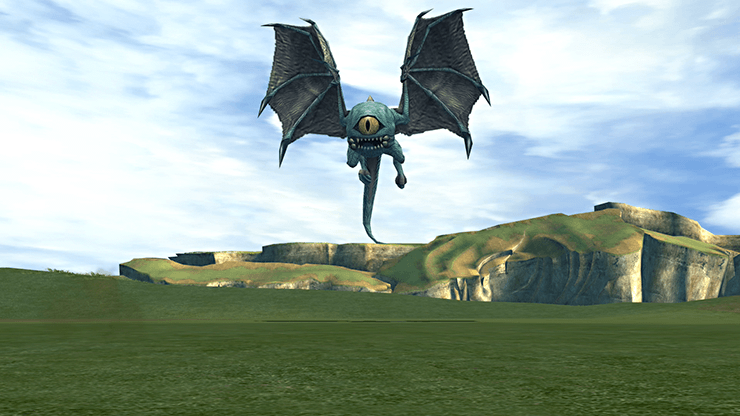
You are going to see a LOT of One-Eye in the monster arena.

Iteration

FF games have often had some sort of mini-game, often relating to summons, special weapons, and a long-term collection activity. Rarely are the activities intertwined, nor supported by even more mini-games. What’s really interesting to me is that FFX makes all the activities related to each other and does so at a level that no other is able to achieve. There’s nothing here that stands on its own, which takes a tremendous amount of design effort. It’s also interesting to see how the sub-activities don’t build entirely new systems that conflict with the rest of the game.

If I look at the FF12 hunting system, it’s an iteration to the Monster Arena concept, combined with the ultimate weapon hunts. FF13 in contrast, has both a hunting system AND an arena, the latter of which isn’t integrated into other activities. FF15 is more of a checklist of things, rather than a proper sub-game… plus the last quarter of that game makes no sense whatsoever.

It will be interesting to see how the trilogy remake of FF7 delivers on this model. Parts of it are there now, but the entire casino part is forthcoming and a huge part of the end game stuff (chocobo breeding). Those mini-games were heavily RNG influenced, which has gone out of style today. How they apply today’s gaming standards to that model is sure going to be fun to see.

Love, Death & Robots – Season 2

I’d been looking forward to this for some time, as I rather enjoyed the first season. I’ve been a fan of Heavy Metal since my younger years, if only because it often provided a raw view of Sci-Fi in visual medium. I do have a heck of a passion for long-form sci-fi, but truth be told, the short story format is often much more enjoyable. LD&R is all about short form stories, with 10min average duration for each short.

Season 2 is only 8 episodes, whereas season 1 was 18. It’s also much less excessive. You’re not going to find Aquila Rift’s 2 minute sex scene here. One short in particular is impressively violent, and another is a very difficult watch given the context.

Automated Customer Service

A humorous short and a killer automated vacuum cleaner. The pacing is good, and the context somewhat surreal. It lacks the larger questions of most sci-fi. I found it the weakest of all.

Ice

This one has very unique art style – in line with Zima Blue from prior season. It has a decent concept, about teenager social acceptance, this time through the lens of ‘modifications’. The final action bit feels like you’re there, and look brilliant. I think the art choice here is better for it, as it focuses on contrasts.

Pop Squad

This is a very hard watch the first time through, as you’re lacking the context for the first few minutes. It’s the longest of all the stories, and I’m going to avoid spoilers beyond. I enjoyed this story the most as it asks some fundamental questions and leaves plenty of room for discussion.

Snow in the Desert

A merc is hunted for his biological abilities. The themes here are more complex than the other stories, or at least appear so to me. The art here is photo-realistic, and makes it all pack a lot more punch. I find it has good pacing, but certainly has a sterotypical romance sub-plot that feels tacked on. Those should be earned, which is all but impossible in a short story.

The Tall Grass

This is the horror episode and I don’t quite follow why it’s here. I do enjoy the art style, and the panic within the story. But it’s based on multiple bad decisions, and then luck at the end. I don’t enjoy stories that depend entirely on crutches.

All Through the House

What if Christmas had a horror tinge? The shortest and most surreal stories in the anthology, it asks the simple question ‘what if you were naughty’ for Christmas…It’s frankly surreal and I ended up confused as to who the target audience is for this one.

Life Hutch

So if you want to see a Michael B Jordan likeness in a sort of prison room, this is up your alley. With shades of a larger storyline, this one suffers greatly with editing. Take the crazy robot from Red Planet and you have all you need to know about this story. Too bad, cause the backstory here seems infinitely more interesting.

The Drowned Giant

Now here’s an interesting one on the concept of major events, impacts, and longstanding memory. You’re never quite sure if this is a fever dream or real. How the larger un-answered questions remain – like are there other giants? It begs to ask what really is meaningful and how unique events eventually become integrated into local legend. This is a real black sheep episode as it had no external conflict, it’s just a journal of an interesting event. I found it captivating in its simple portrayal.

Overall

With only 8 episodes and less hard sci-fi theme, it was quite a bit different than season 1. As with that, there are some stories that will hit harder than others, some where you want to learn more, others where you need to watch again, and then some that you can do without. Same with any short-story book really.

I will say that it reinforces the concept that great sci-fi is about the people in sci-fi settings, not a plot for plot’s sake.

I am hopeful for a season 3!

Lord of the Rings – 20 Years Later

There’s something about the 1999-2001 timeframe where an explosion of ideas simply came to fruition. I’ll lay that cause, of all places, with Toy Story. That movie affirmed that CGI was here to stay and could be used as a tremendous storytelling tool (and also the end of Harryhausen). Frankly ushered in a new age of storytelling.

One of those films is Lord of the Rings (or series I guess). Fellowship of the Rings released in 2001, way back when I was still college. I had read the books multiple times while growing up, I think it was a sort of rite of passage for any geek. And the think about the books is that while they are highly descriptive, they also have a lot of room for interpretation. So to the cinema I headed with a bunch of geek school friends (a programmer class). I was not prepared for what was to happen.

There was always going to be some debate as to the construct of the films. While the first is linear, the last 2 are multiple storylines that swap between. And there are quite a few sub-storylines that take place. Removal of Tom Bombadil was somewhat expected, as he was always a sore thumb. Arwen taking more space was a welcome change. To take such complex and dense material, and yet remain faithful was practically unheard of at the time. The last attempt at faithful book adaptation was Dune, and that really did not work.

And, in my mind, the most important aspect of this film is that is was intended to be a series from the start and filmed all 3 back to back. The concept of a trilogy wasn’t new… I mean we did have Star Wars 20 years earlier. And yet, it wasn’t a trilogy in the concept where there are clear beginnings and endings to the films. You could, and if you have the bladder power should, watch all 3 films back to back to back. The success of this film series (and Harry Potter for youth) opened the door for a default trilogy story-telling mechanism.

The story opts not to start calmly, but in the middle of a massive battle. It’s hard to explain the impact this scene had… having that many extras hadn’t been done since the Ben-Hur days, and this threw even more on the plat. To have it all happen in lock step, then have Sauron come around swinging that mace… I still get raised hairs thinking about it. It sets the stage as to how epic the journey will be, and the quality of the effects throughout.

The film them slows down a tad, what with the Hobbits being generally slow folk, and then introduces the Nazgul who are rightfully dreadful. The whole effects while the ring is worn is jarring, doing a much better job than the book to explain the evilness of the effect. The battle with the Watcher and then the troll battle in Moria continually amped up the anxiety and adrenaline, with periods of quiet offsetting the chaos. It isn’t a film of non-stop action, it’s a film of ups and downs, reflecting the reality of a long journey. And then…

The Balrog and the pass. The slow reveal. The sound. In a movie theatre you could imagine the heat coming off the massive flaming demon. ‘You shall not pass!’ was meme worthy before memes existed. The fall of Gandalf and the mourning that followed are where most other films would have ended. The group barely got through and had to sacrifice the strongest member to do so.

The voyage to Galadriel is powerful yet seemingly too quick. The epic score and setting for the fall of Boromir (which technically was in the 2nd book) did an amazing job with marking how powerful the evil forces actually could be. Instead of whispers in the dark, they were out and about in the day.

It’s a rare event for a film to have two effective gut punches. 2 leads die, the party is split, and there’s less hope of success than at the start, all generally seen as ‘bad endings’. And then we get Enya.

I recall leaving the cinema and being in a sort of daze as to what I had just seen. I’d seen the Matrix a few years before and remember being sort of euphoric for the insanity of that film, but LotR was like having taken a rollercoaster, while listening to a heavy metal album, and being in a pie eating contest. I left the larger doors with my group, then just sat down on the curb nearby, trying to collect my thoughts. We had all read the book, so we knew what to expect… and yet we still came out surprised with how they put those ideas to image. You can read about the Balrog, you can look at the earlier images (Sargeras in WoW looks like early Balrogs), but they don’t do justice to what was on screen. I’m still amazed as to what WETA was able to accomplish 20 years ago.

I picked up the normal version, and then the extended version for home. I watch it every year. I read the books every other. There are subtleties to the films that really stand out when you get the context of the books – in particular the relationship between Gimli and Legolas. I’m still amazed by the scenery – and at some point will need to take a trip to NZ to fully appreciate it all.

Back to the original point. You can draw a line pre- and post- Matrix/LotR/Harry Potter. It started a new age of film making, of storytelling, of video game tie-ins (2 MMOs!) It was an impressive time, and remains an enjoyable experience to this day.

Jupiter’s Legacy

Perhaps this is riding the comic book adaptation wave, or the wave of comic book social critiques on hero worship. Jupiter’s Legacy is an odd series that attempts to transcribe complex comic concepts to visual media.

Setting the stage here… the bar for a successful comic book adaptation is quite high. The actors have to be solid, the effects believable, the script clean. We’re not comparing to Fantastic Four here, but the Marvel Universe and The Boys. Jupiter’s Legacy has none of these things. But it has an interesting thought, and you have more than enough time, so…

Based on a series by Mark Millar, who’s largest successes are based on deconstructing super heroes (Marvel Civil War, Old Man Logan), the underlying story is how does a golden age super-hero fit into today’s complex geo-political world. The world isn’t beset by bank robbers or purse snatches, but supervillains who will commit crazy atrocities, along with corporate controlled governments that care only for profit than people. The concept here is really interesting. The series has multiple challenges though, and while I can easily forgive the special effects, the writing and acting is much harder. Josh Duhamel is not someone with range or nuance. To pin an entire series around his character’s ‘do good’ mantra requires a crazy level of balance of crotchety and good intentions. Instead, he comes off as out of touch, overbearing, and unfocused. It’s not all his fault though, as the adaptation itself is really, really heavy handed.

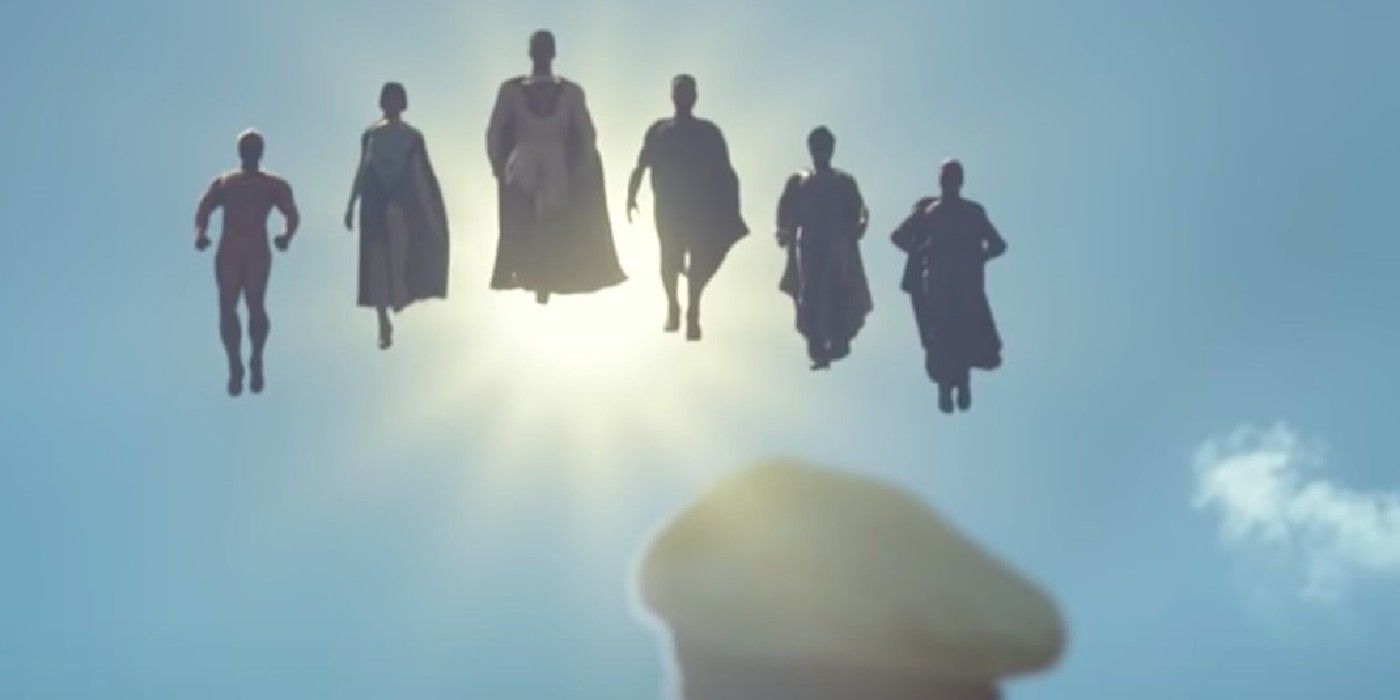
The first episode is borderline Power Rangers. A monster of the week setting in a rubber suit, lots of weird ninja moves, lots of speeches, and slow motion. It’s like 10 heroes vs 1 villain, none of whom are actually strong enough to take him solo. Which, you know, is borderline Thanos. He successfully kills 3 heroes, with little effort and is about to kill more when one hero decides it’s enough and with 1 punch kills the bad guy. There are multiple red flags in this battle that just don’t make any sense as there’s no stakes at hand, and no character build-up. The first scene in the series contradicts this battle too!

It doesn’t help that none of the main characters aren’t endearing in any form. The lead is called Mr Utopia and is an idealist that continually causes conflict in every situation. Lady Liberty flips flops between truth above all and mother instincts. Paragon is a try-hard that cannot please his father. Chloe is a drug addicted rebel with absolutely zero redeeming qualities. Brainwave is a pragmatist who can read minds… so it’s pretty damn clear where that arc goes. The mystery is Skyfox, who you’re told broke the code long ago and was exiled. Never why though.

And yet, the series does have some interesting mysteries to it. How they got their superpowers in the first place… how there are other superheroes (who appear technically to all be genetically related to the original 6), how the powers manifest. There’s a bit of LOST flavor here with visions and epic journeys. Since this portion of the story is the progress towards power, it’s actually quite interesting.

The concept at the start, how do golden age values work in a complex world… that’s never truly answered. There are no simple answers here, hence the complexity, but at the same time no real effort is put into that question. Kingdom Come told this story nearly 30 years ago, and did a much better job. I’ve yet to read Millar’s comics on this, but I’d have to assume they do better as well.

I’ve been somewhat negative on this so far, but it’s really because the potential here is so high and the delivery underwhelms. It’s not bad (there’s a lot of bad on Netflix) and is a decent watch if it’s raining outside. Season 2 is set up for some solid potential, and maybe this is just season 1 jitters (look at Parks and Rec!).